February, Sunday feelings, and Monday facts

DAB What’s New February 3, 2017

February lows and highs; Sunday feelings, Monday facts
3916 words


icicle

One.
February is the nadir of winter as well as the shortest and most variable month, with average snowfalls of 13 inches, highs of 35℉, and lows of 20℉ in Ann Arbor (U.S. Climate Data. Wikipedia). Even though not quite the coldest month February seems the wintriest, lacking the enticements of December holidays and the exhilaration of January’s new year. This February, a regular one without the extra day, allows only 20 business days to pay the challenging bills of academic urology. Educational and research expenses always exceed their funding streams and require clinical and philanthropic dollars to maintain them.

korlebu

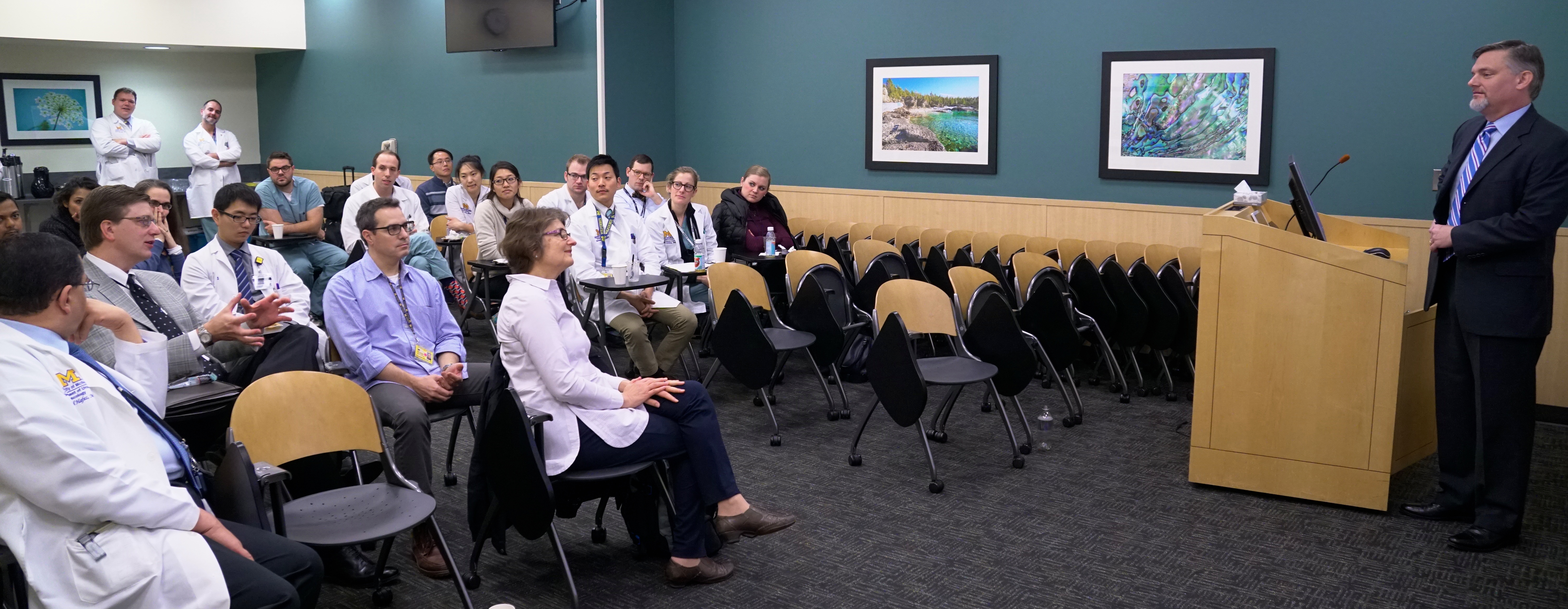
[Michigan team and the Korle-Bu and Military Hospital staff, Accra.]

Last month 3 faculty and 2 residents escaped Michigan winter for a week of operating and teaching in Ghana. Sue and the late Carl Van Appledorn initiated this yearly trip and other generous donors help offset its draw on clinical revenue. John Park, Casey Dauw, and our former faculty member Humphrey Atiemo (now Program Director at Henry Ford Hospital) accompanied by residents Yooni Yi (UM) and Dan Pucheril (HFH) spent a productive week in Accra. Casey led the team in performing the first successful percutaneous nephrolithotomy in that part of the world. The Korle-Bu Hospital, affiliated with the University of Ghana, is one of the largest teaching hospitals in Africa. John Park will give further details in an upcoming What’s New/Matula Thoughts.

casey-perc

[Casey at bat.]

Back here in the USA the economic side of health care is ambiguous. Governmental funding, public policy, regulation, corporatization of the clinical domain, market segmentation, and escalating costs in pharmacologic/technology industries are some factors in the turmoil. Most healthcare industries maintain the public trust and behave admirably in seeking profits and market share – we certainly see this in the companies with whom we deal such as Johnson & Johnson, Medtronic, Boston Scientific, Storz, etc.

A few egregious actors stand out. The Mylan company’s repackaging of a natural chemical (epinephrine, for which nature holds the patent) with a syringe and needle was a mildly clever gimmick, but creating a monopoly for this lifesaving device and raising the prices for a two-pack from $100 in 2007 to $608 in 2016 is greed beyond the bounds of public acceptance. Mylan’s half price “generic,” offered recently, is a pathetic peace-offering to the public – a generic of a generic is elementary Orwellian Newspeak. [Epinephrine auto-injectors for anaphylaxis. JAMA; 317:313, 2017.] Teva Pharmaceutical was another one of the six drug makers recently sued by 20 state lawmakers on price fixing. These two companies are the largest generic drug makers by market cap. (It must have been awkward for Mylan’s CEO Heather Bresch to justify EpiPen prices because of research and development expenses in testimony to the House Oversight and Government Reform Committee last October.) [M. Krey. Investor’s Business Daily. Mylan launches cheaper EpiPen generic amid drug pricing saga. 12/16/16.] Below: Table A from 10/5/16 letter from CMS Administrator Andrew Slavitt to Senator Ron Wyden regarding Medicaid and Medicare Part D Expenditures on EpiPen products.

table-epipen


search
Two.

Regulation for the public good is essential in a world economy of 7 billion people and GDP of $78 trillion. All businesses exist because of the public trust, going back to the early days of the limited-liability joint-stock company, a story explained in a book called The Company that Julian Wan gave me years ago [John Micklethwait & Adrian Woolridge. Modern Library, NY 2003.] Most US businesses understand their public responsibilities, but uncommon greedy actors erode public trust and diminish the standards for the rest.

Regulation is under attack. It is inevitable that government regulations dampen corporate bottom-lines and short-term economic growth, that is the nature of regulation, but few rational people can deny that serious regulation of highway traffic, airways, nuclear energy, banks, health care, etc. is in the public interest. Offensive governmental regulatory overreach is bound to happen in any complex bureaucracy and should be called out when discovered, but these instances hardly disprove the necessity for regulation by impartial public agencies and civil servants in a healthy democratic society.

By now, in February’s wintry days of cold and snow, the EpiPen story is old news, but we hope that the protective regulatory functions of governmental regulation do not get snowed over or subsumed by corporate world grudges. Like most things in life, balance is essential.


Three.

iran-blizzard

The world’s deadliest known snowstorm began this February day in 1972, lasting a full week and killing around 4,000 people. The blizzard centered on the city of Ardakan in southern Iran, the region of Shiraz, cultural capital of Iran and known for the eponymous grape. Storyteller Isak Dineson (Baroness Karen Blixen-Finecke, 1885-1962) linked that grape to urology in her short story, The Dreamers: “What is man when you come to think about him, but a minutely set, ingenious machine for turning, with infinite artfulness, the red wine of Shiraz into urine.” Blixen created coherent and compelling stories at a moment’s notice, and told her own life story in the 1934 book Out of Africa, that became a film in 1985 with Meryl Streep and Robert Redford. The complete passage in The Dreamers is particularly intriguing and relevant to urologists.

“ ‘Oh, Lincoln Forstner,’ said the noseless story-teller, ‘what is man, when you come to think upon him, but a minutely set, ingenious machine for turning, with infinite artfulness, the red wine of Shiraz into urine? You may even ask which is the more intense craving and pleasure: to drink or to make water. But in the meantime, what has been done? A song has been composed, a kiss taken, a slanderer slain, a prophet begotten, a righteous judgement given, a joke made…’ ”  [Isak Dinesen. Seven Gothic Tales. The Dreamers. 1934, Random House. P. 275.]

Blixen’s choice of Lincoln for the first name of one of the three central characters in her imaginative story is curious, for although it is a well-known surname it is an uncommon given name.

karen_blixen_and_thomas_dinesen_1920s

[Karen Blixen and brother Thomas Dineson on her farm in Kenya, c. 1920s. Royal Danish Library.]


Four.
Imagination is the ability to form ideas, images, and sensations without direct sensory input. The practice of medicine, its instruction, and its innovation demand imagination. The imagination to think through the plausibility of things, is inseparable from critical thinking. Observation and reasoning, experience and experiment, are feats of imagination that challenge dogma with new ideas in search of the best truth possible. Such creative thinking is a necessary, but often forgotten piece of the essential skeptical analysis that good physicians and scientists practice and instill in students, residents, fellows, and colleagues.

A recent Lancet article referred to the early American physician Benjamin Rush (1746-1813), who called imagination “… the pioneer of all other faculties.”

“When Rush spoke of imagination, he wasn’t talking about dragons or unicorns, he called that mental faculty fancy, and fancy had no place in medicine. Rather, Rush was talking about how the doctor’s mind gathered observations and experiences, shifting and shaping them until new truths became clear. Memory was a component of this imagination, and understanding resulted from it.” [S. Altschuler. The medical imagination. The Lancet. 388:2230, 2016.]

I’d challenge the claim that no hard line exists between those dragons or unicorns and the new ideas, hypotheses, and truths we hope to discover. Fanciful fiction, visual art, and music enrich mental milieus and provide metaphors, symmetries, dissonances, harmonies, and analogies that make clinical work and science sharper, more multidimensional, and of greater relevance than they would be without the “fancy.” E.O. Wilson infers this in his conclusion to Consilience, a book named for and about the unity of knowledge.

“The search for consilience might seem at first to imprison creativity. The opposite is true. A united system of knowledge is the surest means of identifying the still unexplored domains of reality. It provides a clear map of what is known, and frames the most productive questions for further inquiry. Historians of science often observe that asking the right question is more important than producing the right answer. The right answer to a trivial question is also trivial, but the right question, even when insoluble in exact form, is a guide to major discovery. And so it will ever be in the future excursions of science and imaginative flights of the arts.” [EO Wilson. Consilience. Alfred A. Knopf. New York.]

Creativity can also spring from irrational thought as a song in the new film La La Land suggests. Audition (The fools who dream) sung by Emma Stone: “A bit of madness is key, to give us new colors to see. Who knows where it will lead us and that’s why they need us.” Human exploration of reality requires consilience of all the tools we can muster, including scientific knowledge, historical facts, stories, and imaginative fancy.


Five.

puppet
When you read a story or experience visual art you may discover something new to which your brain can connect and that will illuminate other stuff in your brain at that moment or later on in reflections, dreams, or sudden denouements. Those connections provoke imagination, test reality, and elicit wisdom that affects your world view and your work. Insight and inspiration from art provide limitless opportunities in the practice, teaching, or investigation of medical care. The story of British pediatrician Harry Angelman (1915-1966) offers a minute and excellent example of illuminating connection.

“It was purely by chance that nearly thirty years ago (e.g., circa 1964) three handicapped children were admitted at various times to my children’s ward in England. They had a variety of disabilities and although at first sight they seemed to be suffering from different conditions I felt that there was a common cause for their illness. The diagnosis was purely a clinical one because in spite of technical investigations which today are more refined I was unable to establish scientific proof that the three children all had the same handicap. In view of this I hesitated to write about them in the medical journals. However, when on holiday in Italy I happened to see an oil painting in the Castelvecchio Museum in Verona called . . . a Boy with a Puppet. The boy’s laughing face and the fact that my patients exhibited jerky movements gave me the idea of writing an article about the three children with a title of Puppet Children. It was not a name that pleased all parents but it served as a means of combining the three little patients into a single group. Later the name was changed to Angelman syndrome. This article was published in 1965 and after some initial interest lay almost forgotten until the early eighties.” [Quotation from Charles Williams. Harry Angelman and the History of AS. Stay informed. USA: Angelman Syndrome Foundation. 2011.]

Giovanni Francesco Caroto (1480-1555), the Renaissance painter in Verona, created the Portrait of a Child with a Drawing and the circumstances of the subject will probably never come to light. It may well be a coincidence that the picture resembled the patients that provoked Angelman’s curiosity.

chromosomes

[Chromosome 15]

chr-15
Deletion or inactivation of genes on maternal chromosome 15 with silencing of the corresponding normal paternal chromosome is responsible for AS. Similar genomic imprinting, but with deletion or inactivation of paternal genes and silencing on the maternal side happens in Prader-Willi syndrome, that shows up more often in our pediatric urology clinics. These two conditions along with Beckwith-Wiedemann and Silver-Russell syndromes were early reported instances of human imprinting disorders. An excellent update on these conditions appeared last month in Science. [J. Cousin-Frankel. Fateful Imprints. Science. 355:122-125, 2017]


Six.
New residents. We just matched our new cohort of PGY1s, a stage of medical education once called internship, that starts each July to initiate the transition of medical students into specialists. The medical student is the last universal common ancestor in the evolution of a medical specialist. About 150 areas of focused practice (per American Board of Medical Specialties) are available to freshly minted MDs and those last universal common ancestors in medicine evolve into the new species of their chosen specialties during their residencies.

This educational experience is a primary reason we exist as a Department of Urology. The UMMS was formed to produce the next generation of physicians for the State of Michigan in 1850 when this mission required 2 years of medical school lectures to achieve the MD necessary to practice medicine. The medical school then needed only 5 faculty and 2 departments (Medicine as well as Surgery and Anatomy) to provide that education. Today’s world of specialty medicine requires 4 years of medical school (with lectures, laboratory work, and clinical experience) as well as graduate medical education in one of 100 areas of specialty training offered here in Ann Arbor. Our medical school faculty numbers 2500 in 30 departments. We educate, at any moment, about twice as many residents in specialties as medical students – and the period of residency training may be more than twice as long as medical school itself.

New members of the UM Urology family are: Juan Andino with BS, MBA, and MD degrees from UM; Chris Tam with BS from UC San Diego and MD from the University of Iowa; Robert Wang with BA and MD degrees from Washington University in St. Louis; and Colton Walker with BS from Stanford and MD from Louisiana State University in New Orleans. Who knows where they will lead us?


Seven.
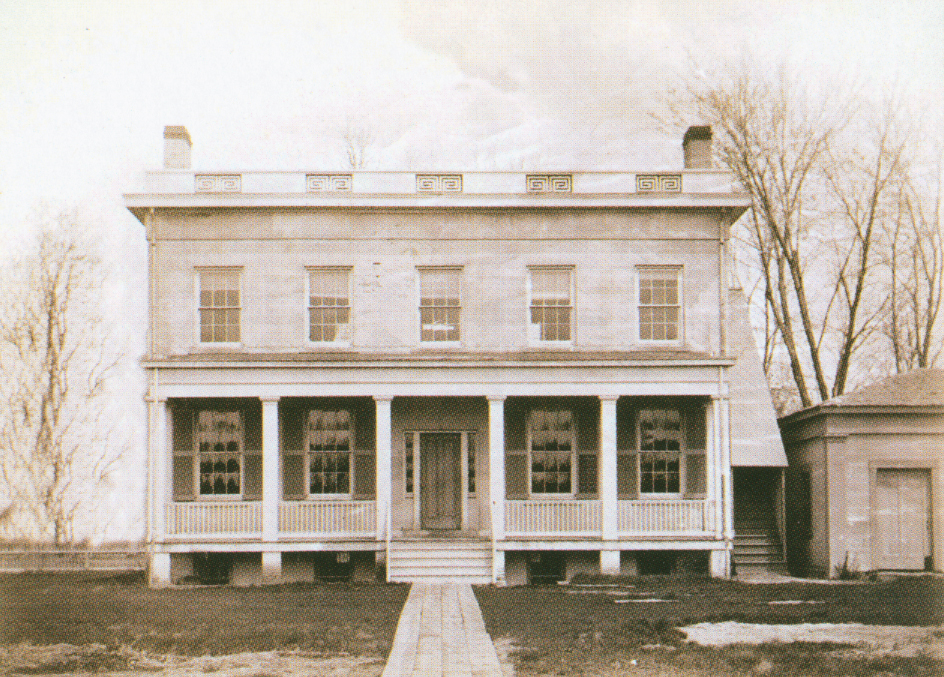
Darwin & Lincoln’s birth, on the same day in the same year, was the wonderful coincidence of February 12, 1809. Two more different circumstances for those neonates would be difficult to imagine although both families had roots in England. Both men had big imaginations that changed the world in positive ways that endure today. Darwin arrived in the center of the civilized world, Shrewsbury England, to a prosperous family. His grandfather, Dr. Erasmus Darwin, was one of the great thinkers of his time and his father Dr. Robert Darwin was a successful physician. The house where Charles Darwin was born was distinguished enough to have a name, The Mount. Abraham Lincoln was born in a small primitive cabin, now long gone, on the Sinking Spring farm on the western periphery of a nation barely 33 years in existence. The nearest town, Hodgenville, didn’t even get its name until 1826, long after the Lincoln family, short on money and education, had moved on.

400px-charles_darwin_photograph_by_herbert_rose_barraud_1881

[Above: Photo by Herbert Barraud, last known picture of Darwin. 1882. Huntington Library. Below: Last known high-quality Lincoln photo, March 6, 1865. Library of Congress.]

lincoln-warren-1865-03-06-jpeg

Darwin’s idea, The Origin of Species, contained the belief that species couldn’t breed with different species. The classic example of reproductive isolation that many of us recall from childhood was the mule, the result of a donkey and horse breaking the species barrier recreationally, but the resulting progeny was sterile and incapable of creating a further bloodline. That belief in a barrier to interbreeding, or hybridization as biologists term the process, has fallen away in the new era of genomic information. The Neanderthal and Denisovan genes in the Homo sapiens genome is a rather intimate example of species interbreeding. It turns out that hybridization has played an important role in evolution throughout most kingdoms of life.  The mule is joined by the liger (lion/tiger), Hawaiian duck (Mallard/Laysan duck), red wolf (coyote/gray wolf), and pizzly (polar/brown bear). Domestic dog and wolf interbreeding has given wolves a variant immune protein gene, β-defensin, that conveys a distinctive black pelt and improved canine distemper resistance to wolf/dog hybrids and their descendants. [Elizabeth Pennisi. Shaking up the tree of life. Science: 354:817-821, 2016.] In a practical sense for our work in healthcare, bacterial swapping of DNA presents great challenges. Darwin recognized a mighty force – nearly as mysterious and pervasive as gravity – that crops up way beyond biology. Even in social ebbs and flows of life, Darwinian forces are at play, for surely they have made markets, politics, and academia increasingly creative.


Eight.
LUCA. Central to the multiple facets of our interests and knowledge as clinicians, surgeons, and urologists, we are ultimately biologists. In that spirit, the mystery of how life began on Earth is an irresistible intellectual puzzle and if you align to the Darwinian line of the speculation the concept of a very simple common ancestor holds traction.

Such a single cell, bacterial-like organism would have begat the three great domains of life: archaea, bacteria, and later the eukaryotes. Of the 6 million protein-coding genes in DNA data banks, William Martin et al at Heinrich Heine University in Dusseldorf speculated that 355 were present in that most primitive of ancestors, called the Last Universal Common Ancestor (LUCA). These probably originated around volcanic sea vents that supplied just the right conditions. Whether or not LUCA came from sea vents, warm ponds, or other environments should become clearer as biologists dig deeper into our roots. LUCA might have looked like any of the archaea and bacteria we recognize today with stiff walled rods or cocci. More complex shapes required the flexible cell walls that came later with eukaryotes. LUCA probably existed as an anaerobe in a vent-like hydrothermal geochemical setting and was based upon 355 genes according to a paper from the Institute of Molecular Evolution at Heinrich Heine University in Düsseldorf.

luca

[Figure from MC Weiss, FL Sousa, N Mrnjavac et al. The physiology and habitat of the last universal common ancestor. Nature Microbiology. 1, Article number 16116, 2016.]

Much has happened since LUCA. Given the Darwinian trials of variation by error in the face of minor and gross environmental challenges over millions of millennia, new species developed in fits and starts. The Cambrian explosion of new creatures was one of many responses of speciation to planetary change. We humans seem to be at the far opposite end of the phylogenic spectrum from LUCA. Our complexity is not just a matter of our biology and our cerebral skills, but no less a matter of the social nuances that elaborate the human condition.


Nine.
A Fortunate Man. The classic study of an English general practitioner in the 1960s, alluded to on these pages last year sharpened my perspective as a physician. [John Berger, A Fortunate Man, Random House, NY 1967.] The ancient perspective of healthcare, documented since medical recipes in ancient early Egyptian papyri and Hippocratic writings, was a matter of dualities: one patient-one physician, one problem-one solution, and one teacher-one student. This changed in the past century due to medical specialties and technology that have introduced unmeasurable complexity. Patient care and medical education are no longer two-body problems, but are now part of a multidimensional healthcare matrix.

Even that multidimensional professional matrix is dwarfed by the complexity of patients with their own multidimensional physical, mental, familial, social, economic, political, and environmental comorbidities. You might lump all these comorbidities together and simply call them “the human condition” that Berger probed in A Fortunate Man, hinting that we really have little sense of what our patients are all about. However, as we practice our art, we become better at understanding the holograms of the patients as they present themselves in our clinics even in the short time frames at hand and the insistence of electronic health records and economics that force us to default to two-body problems (augmented with a few clever comorbidities that can permit a more realistic billing code).

Berger died last month (January 2) at 90 in the Parisian suburb where he lived. I didn’t know much about him since I read his book just last year (and I wish I could remember who told me to read it). Berger (pronounced BER-jer,) was known as a “provocative art critic” in the obituary by Randy Kennedy that included this example:

“He was a champion of realism during the rise of Abstract Expressionism, and he took on giants like Jackson Pollock, whom he criticized as a talented failure for being unable to ‘see or think beyond the decadence of the culture to which he belongs.’” [Kennedy. New York Times Tuesday January 3, 2017.]

The obituary ran for three columns and mentioned a number of Berger’s books, but not A Fortunate Man.


Ten.
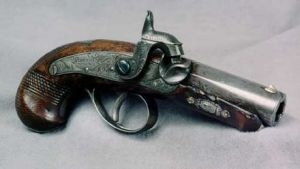
That other birthday celebrant of February 12, 1819, would also have been 198 years old this month. Human biology at its best wouldn’t have given Lincoln that chance, but it was political extremism that cut him down short of his potential fourscore and ten years. While Darwin’s ancestors provided more than a hint of greatness for their descendent, Lincoln’s ancestry offered no such clue, but his insatiable drive for education and personal distinction contrasted remarkably with the rest of his family. His improbable success in law and politics leveraged his even more unlikely ascent to the presidency of the United States. No one could have predicted that his ultimate comorbidity would have been an actor with a Philadelphia Derringer at Ford’s Theater on April 14, 1865.

currier-ives

wilkes_booths_deringer

rimfire-cartridge

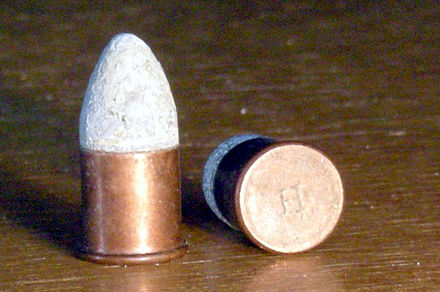
[Top: Currier & Ives print of assassination April 14, 1865. Middle: The actual Derringer. Bottom: 0.41-caliber Rimfire cartridge.]

Lincoln’s assassin jumped to the stage and escaped on a horse waiting near the backstage door. The following day he stopped near Beantown, Maryland (now Waldorf) seeking treatment at the home of Dr. Samuel Mudd, an acquaintance, for a broken left fibula. Mudd cut off Booth’s boot, splinted the leg, provided a shoe, and arranged for a local carpenter to make a pair of crutches. After catching some sleep at the doctor’s house Booth travelled on to Virginia where he was caught and killed on April 26. Mudd was arrested, charged with conspiracy, and imprisoned at Fort Jefferson in the Dry Tortugas. He tried to escape once, but became a good prisoner and was released after pardon by President Andrew Johnson on March 8, 1869. Mudd returned home to Maryland where he lived until January 10, 1883 dying of pneumonia at 49 years of age. Mudd’s grandson, Dr. Richard Mudd, unsuccessfully petitioned a number of presidents (Carter and Reagan) and also failed in other avenues to clear the family name of the stigma of aiding Booth. The family name remains Mudd.

600px-booth_escape_route-svg

[Booth escape route. Wikimedia Commons. Courtesy, National Park Service.]

Our world has changed enormously since Lincoln’s time. The American democracy is better, healthcare  is more effective, and the Earth even when viewed from far out in our solar system looks amazingly different (below); Edison’s electrical illumination, invented in 1880, has impacted both the visible planet and environment due to the fossil fuel consumption for those lights.

earth-earth-at-night-night-lights-41949

A short book on Darwin and Lincoln, Angels and Ages by Adam Gopnik [Alfred A. Knopf, NY 2009] noted:

“What all the first modern artists, from Whitman to van Gogh, have believed is that, for whatever reason, and however it came to be, we are capable of witnessing and experiencing the world as more than the sum of our instincts and appetites. Our altruism is not simply our appetites compounded; our appetites are not simply our altruism exposed. ‘Reason … must furnish all the materials for our future support and defense,’ Lincoln said, and reason alone can point us to its limits. We can argue about anything, even about the nature and meaning of our mysticisms. [Kenneth] Clark called our liberal faith ‘heroic materialism’ and said it wouldn’t be enough. Human materialism or mystical materialism, is closer to it, and it remains the best we have. Intimations of the numinous may begin and end in us, but they are as real as descriptions of the natural; Sunday feelings are as real as Monday facts. On this point, Darwin and Lincoln, along with all the other poets of modern life, would have agreed. There is more to a man than the breath in his body, if only on the hat on his head and the hope in his heart.”


[Footnotes: Numinous = inspiriting spiritual or awe-inspiring emotions. Mystical = having spiritual meaning neither apparent to sense or obvious to intelligence.]


David A. Bloom
University of Michigan, Department of Urology, Ann Arbor
2017 is here

DAB What’s New January 6, 2017
Free, efficient, and equal government
3752 words


grand-rounds

One.

Let’s not leave 2016 without a few comments about December. At Grand Rounds Andrew Peterson, visiting professor from Duke, and Daniela Wittmann gave excellent presentations on urologic cancer survivorship. Andrew explained his remarkable survivorship/reconstructive fellowship in Durham and Daniela gave a 10-year review of our uniquely successful Brandon survivorship program.

galens

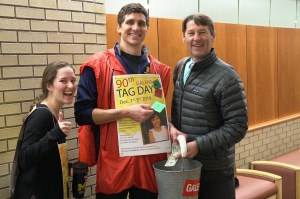
Medical students raise money for our Galens Society annual “Tag Days” in early December. Founded in 1914, Galens supports Mott Children’s Hospital and other organizations that benefit children in Washtenaw County. [Above: Paul Cederna of Plastic Surgery with MS1s Alex Tipaldi and Michael Klueh at the Taubman 2 Urology ACU.]

holiday-party

Our holiday party at Fox Hills entertained over 350 people with the expected surprise of Santa who had gifts for all the children (above). Pat Soter, her husband Jim, as well as Sandy and Bob Heskett, did the heavy lifting for this event and we thank them. Pat’s retirement leaves a major challenge filling her shoes. A faculty evening meeting (below) discussed residents progress, urology divisions, strategic planning, and John Stoffel’s stint as Acting Chair.

fac-mtg

Now that we are 6 days into 2017, Happy New Year from Michigan Medicine’s Department of Urology.


Two.

Liberty, once attained, is taken for granted. We grieve its loss, fight for it, but are not good at maintaining it. On this day in 1941 Franklin D. Roosevelt delivered his Four Freedoms State of the Union address. Pearl Harbor would happen 11 months later. FDR came to the presidency in turbulent times and became enormously popular, serving nearly 4 terms. Some people disparaged his social policies, yet few disputed his belief in essential freedoms: freedom of speech and expression, freedom of worship, freedom from want, and freedom from fear.

washington

[Washington @ Delaware. Sully 1819. Boston Fine Arts Museum]

The State of the Union address is prescribed by Article II Section 3 of the U.S. Constitution. George Washington gave the first to Congress in New York City on January 8, 1790, 9 months into office. The new government had recently come to power after 11 of 13 states accepted the Constitution, but North Carolina waited to ratify, pending a Bill of Rights. Washington’s address, praised North Carolina’s acceptance two months earlier. (Rhode Island became the last of the 13 original colonies to ratify, later that year on May 29.) That first State of the Union address at 1089 words (page 1 below) is shorter than any of its successors.

Washington set the tone in the opening sentences.

“Fellow Citizens of the Senate, and House of Representatives. I embrace with great satisfaction the opportunity, which now presents itself, of congratulating you on the present favourable prospects of our public affairs. The recent accession of the important State of North Carolina to the Constitution of the United States (of which official information has been received) —the rising credit and respectability of our Country — the general and increasing good will towards the Government of the Union —and the concord, peace and plenty, with which we are blessed, are circumstances, auspicious, in an eminent degree to our national prosperity.”

The conclusion was optimistic.

“The welfare of our Country is the great object to which our cares and efforts ought to be directed. And I shall derive great satisfaction from a co-operation with you, in the pleasing though arduous task of ensuring to our fellow Citizens the blessings, which they have a right to expect, from a free, efficient and equal Government.”

We anticipate President Trump’s State of the Union will seek reconciliation of political polarities without yielding on core issues that decided the election. Healthcare will be heavily weighted to the legislative agenda of Paul Ryan and operational agenda of HHS head Tom Price (UM alumnus and orthopedic surgeon).


Three.

Year 1 UMMG. The ability to practice and innovate in healthcare drew many of us to medical careers, but these freedoms have become constricted. Specialization, systemic organizational impingements, economics, and regulation drive much of the constriction. Some laws restrict conversations between patient and physician, as if healthcare providers were agents of government rather than citizens with first amendment rights (after all, free speech was first in the Bill of Rights).

Consumer discontent over healthcare delivery dominates the news, but discontent from the perspective of practitioners is equally important; dissatisfaction within healthcare professions affects delivery, efficiency, education, innovation, and pipeline of future practitioners. We can’t solve all the national and regional healthcare problems from Ann Arbor, but we can influence their solution and serve as a best-of-class example.

The structure, governance, and policies of the UM Health System have re-assembled over the past year. Our new Michigan Medicine governance is certainly less monumental than Washington’s new union in 1790 and contains key differences. Whereas the US federal system depends on a three-way balance of power, Michigan Medicine intends an integration of authority. “Silos” that evolved over the past 150 years at UM – namely the Medical School (UMMS) and its faculty, clinical departments, hospital administrative structure, and research enterprise – while related and sharing many of the same people, often worked at cross purposes to defend budgets, becoming archipelagos of cost centers.

One year ago the UMMS and its Health System merged the positions of Dean and EVPMA (Marschall Runge). Three vice dean positions were created: Clinical Vice Dean/President of UM Health System (David Spahlinger), Academic Vice Dean (Carol Bradford), and Scientific Vice Dean (TBD). A new UM Hospital Board with healthcare expertise and regental participation will oversee the entire health system and medical school.

The re-organized health system has 3 main operating units: Hospital Group I (Main & CVC), Hospital Group II (Mott & Women’s), and the UM Medical Group (UMMG, formerly the Faculty Group Practice = FGP) that manages ambulatory practices as well as regional affiliations. In the 2007 FGP, UM ambulatory activities were divided into 90 Ambulatory Care Units (ACUs) intended to function under local control by the healthcare providers to maximize lean principles. The ACUs have grown to 150 and Timothy Johnson was just named UMMG Executive Director. Tim ran the Multidisciplinary Melanoma Program, served as Division Chief of Cutaneous Surgery and Oncology, led the very successful Mohs Ambulatory Care Unit director, served as training director of the ACGME fellowship in Micrographic Surgery and Dermatologic Oncology, and is the Lewis and Lillian Becker Professor of Dermatology.

tim-johnson

Tim’s skin cancer programs involve over 25 departments, divisions, service lines, and centers, and consistently earn superb ratings of patient satisfaction, employee engagement, and access. His programs  generate significant grant funding, publications, and clinical trials.
New governance structure, expanded facilities, and growing affiliations should allow Michigan Medicine to carry out its missions no matter how the greater US healthcare system evolves. The UM has a history of innovative morphology beginning in 1869 when a faculty house became a hospital – the first occasion for a university to own and operate a hospital. While this originally happened for the purpose of teaching, the mission evolved to become a conjoined one of education, research, and state-of-the-art clinical care.


Four.

Inclusion of a hospital within the Medical School, extended medical education from classrooms to bedsides, a first step in building the UM Health System. Clinical and investigational laboratories later brought science into medical education and created new opportunity for investigation and innovation. An ambulatory care building in 1953 and offsite clinics carried UM into outpatient healthcare that is now expanding into homes, workplaces, and other daily living spaces of patients. This fourth dimension of healthcare (1=classroom, 2=bedside/OR, 3=ambulatory clinic, and 4=patient life circumstances) complements health services research, as practiced in our Dow HSR division, opening doors between medical schools and schools of public health, pharmacy, natural resources, nursing, kinesiology, and sociology. Our North Campus Research Center (NCRC), acquired from Pfizer, facilitates integration of all healthcare dimensions. [Below: David Canter Executive Director NCRC & Marschall Runge]

runge-cantor


Five.

Polar arguments related to the future of health care are being fought simultaneously in political battlegrounds and marketplaces. One argument is that health care is “too expensive” and we often hear that “we’re giving too much away.” The other argument was summarized in The Lancet cover quotation just before the November election: “Whichever way the election goes, one issue is certain: the next president of the USA will inherit a country in which deep health and health-care inequalities exist along multiple lines, including income, race, and gender.” [Editorial. “America decides.” The Lancet. 2016; 388: 2209]

There is little doubt that healthcare as deployed today is expensive and many factors account for this, significantly the insurance-based paradigm, corporatization of healthcare, and regulatory costs. Fee-for-service (FFS) factors and waste in the system are also blameworthy. Although both can be mitigated, waste will never be eliminated in human processes and FFS always finds a place in any free society. When people complain that too much is being given away, they are likely referring to suspicion that “other people” benefit from services that they, as taxpayers, support. This sense of unfairness is deeply seated.

Just as deeply seated at the other pole of belief is outrage over the unfairness of healthcare disparities. The right to healthcare, many will argue, is essential to life, liberty, and the pursuit of happiness, ideas deeply ingrained in American civic belief. No less important is the fact that it is in the public interest for everyone to have a basic level of health care. It is in your interest that the person next to you, next to your family members, next to your colleagues, and next to your friends – whether on the street, in a store, at a restaurant, or on a plane – doesn’t have TB, measles, Ebola, or some other communicable disease. It is in all of our interests that air and water quality are good. It is in our interest that violently mentally ill people are not disrupting work places or driving on streets. It is in your interest that homeless people have health care. Every civilized country recognizes some national responsibility to provide health care, differing mainly in the mechanisms and extent of coverage.

Reconciliation of these polar beliefs is a political problem, an economic problem, and a public policy problem. No simple solution or model will likely satisfy all these problems and beliefs. The public wants availability, affordability, and quality, but finds it easier to provide any two of these attributes instead of all three.


Six.

Federally Qualified Health Centers (FQHCs) provide one avenue to health care. These community-based organizations target underserved health care needs. Established to provide comprehensive health service to the medically underserved and reduce emergency room care, the FQHC mission has shifted to enhance health care services for underserved, underinsured, and uninsured individuals in urban and rural communities. Care is provided to all patients, including migrant workers and non-US citizens, regardless of ability to pay, based on sliding-fee scales established by FQHC community boards. In return for serving all patients FQHCs receive government cash grants, cost-based reimbursement for Medicaid patients, and malpractice coverage under the Federal Trot Claims Act (FTCA) of 1946. The ACA set aside $11 billion dollars over 5 years to cover FQHC costs. FQHCs serve one in 13 people in this country.

Some of the approximately 2000 FQHCs in the US are small operations, while others like the Hamilton FQHC in Flint are substantial enterprises. Two federal agencies oversee FQHCs. One is the Bureau of Primary Health Care, under the Health Resources and Services Administration (HRSA). The other is the Centers for Medicare and Medicaid Services (CMS), also under the Department of Health and Human Services (HHS). The Health Center Consolidation Act of 1996 (commonly called Section 330) brought together funding mechanisms for community health facilities, such as migrant/seasonal farmworker health centers, healthcare for the homeless, and health centers for residents of public housing. Previously, each of these organizations was provided grants under other mechanisms.

The Bureau of Primary Health Care is a part of the Health Resources and Services Administration (HRSA), of the United States Department of Health and Human Services. HRSA helps fund, staff and support a national network of health clinics for people who otherwise would have little or no access to care.

The Centers for Medicare & Medicaid Services (CMS), previously known as the Health Care Financing Administration (HCFA), is a federal agency within the United States Department of Health and Human Services (HHS) administering the Medicare program and partnering with state governments to administer Medicaid, the State Children’s Health Insurance Program (SCHIP), and health insurance portability standards. In addition to these programs, CMS has other responsibilities, including the administrative simplification standards from the Health Insurance Portability and Accountability Act of 1996 (HIPAA), quality standards in long-term care facilities (more commonly referred to as nursing homes) through its survey and certification process, clinical laboratory quality standards under the Clinical Laboratory Improvement Amendments, and oversight of HealthCare.gov.


Seven.

hamilton

The Hamilton Community Health Network (HCHN) began in 1982 as the Hamilton Family Health Center under St. Joseph’s Hospital (now Genesys Health System) in response to unmet healthcare needs in Flint, Michigan. Moving to the present site (now the administrative headquarters shown above) in 1988 it began receiving federal funds to provide healthcare for the growing homeless population. Becoming HCHN in 2001 the organization assumed financial and operational responsibility from Hurley Hospital for primary and preventive care at the hospital’s North Pointe facility, and the following year began operations at a combined medical-dental site in partnership with the Genesee County Health Department. Hamilton, now a part of a national network of primary care centers (Section 330E), provides comprehensive healthcare services for underserved urban, rural, and homeless populations in addition to operating a family medicine residency program under HSRA funding since 2014. Hamilton has 6 clinical sites: the Main Clinic, the Burton Clinic, the Dental North Clinic, the Clio Clinic, the Lapeer Clinic, and the North Pointe Clinic. The Main Clinic is a new $5 million facility of 31,000 square feet, funded by federal dollars, local grants, a capital campaign, and debt that has been totally paid off.

The pairing of urology and primary care practices is natural. The Hippocratic Oath 2000 years ago recognized the unique nature of urologic expertise and the need for specialists. Every human being will have urologic issues of one sort or another and there will never be enough urologists to “go around.” Working side-by-side with primary care providers, urologists can teach them, just as they can teach urologists, providing comprehensive health care where and when it is needed.

ham-board

[Above: Hamilton FQHC in Flint: Board of Directors. Below CMO Mike Giacalone Jr., CEO Clarence Pierce]

mike-clarence

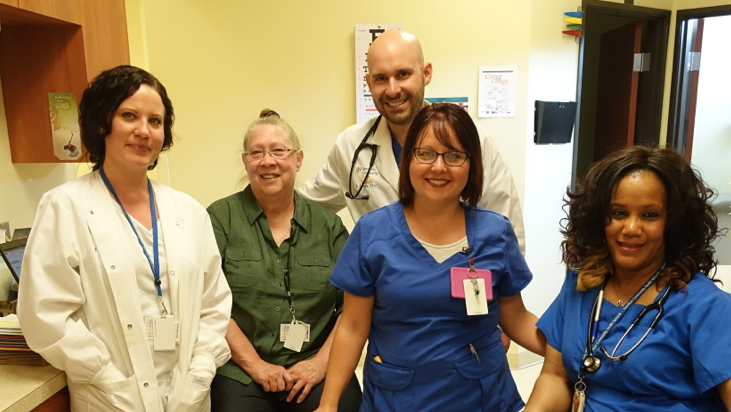
The UM Urology Department began clinics at Hamilton in 2015 working with an excellent clinical team including a superb physician’s assistant Ben Busuito (below). Urology clinics are now staffed nearly every week by myself, John Wei, John Stoffel, Anne Pelletier Cameron, Ganesh Palapattu, Meidee Goh, Chad Ellimoottil, and Gary Faerber – who has been coming back periodically from Salt Lake City. Our faculty have never been assigned to Hamilton nor subsidized to travel to clinics; we simply created the arrangement and our urologists saw the need and the opportunity. My clinic at Hamilton is streamlined for patients and providers, so my time in Flint is also a learning experience to improve our UM ACUs.

ben-team

[Clinic team: Melanie Slackta, Alice Yanity, Ben Busuito, Michelle Durall, Michelle Williams]


Eight.

True facts. Legendary professor Don Coffey at Johns Hopkins often admonished trainees: “You have to understand the difference between facts and true facts,” advice that resonates with me in this new milieu of fake news on social media. Don taught the importance of critical thinking and insistence on truth. The truth matters in science, in politics, and in all human interactions.

American philosopher Harry Frankfort wrote an important book entitled indelicately, but appropriately, On Bullshit (Princeton University Press, 2005) and this demanded a sequel the following year, On Truth (Alfred A. Knopf, 2006). Both books are worth your attention. (friend at Emory gave me a copy of the former book). If you’ve read them once you should read them again. True facts seem to have diminished influence today and false news is on the rise. Expect change in 2017. Worldwide social media communication will drive much of it, but dig critically for truth and its impostors.

orson_welles_war_of_the_worlds_1938

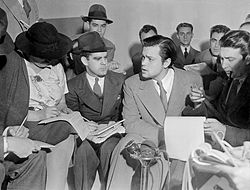
[Oct. 31, 1938: Orson Wells telling reporters no one expected the broadcast would cause public panic. Acme News Photos. Wikipedia]
The infamous War of the Worlds radio play in 1938 is a cautionary tale. The HG Wells story was directed and narrated by Orson Wells (no relation), but listeners who tuned in after the introduction misinterpreted the play as an actual alien invasion. Modern social media technology has increased the ease of dissemination of erroneous stories or deliberate manipulative propaganda. A single false story or conspiracy theory can spread around the planet in minutes to reach a sizable part of our 8 billion gullible global citizens. With print media and professional journalism on the decline, the world is dangerously vulnerable to manipulation by a random or purposeful catalyst.

The best defense against tomorrow’s War of the Worlds will be based on two foundering, elements of civilization. One is education – teaching critical thinking skills. That education needs to begin in grade school and sharpened later on the educational ladder in math, physics, physiology, and pharmacology just as well as in English, art history, or architecture. Broad critical thinking needs to continue in professional schools, graduate medical education, and beyond in our jobs and communities. The other element is a multiplicity of robust, trusted, and critical media sources providing timely scrutiny and analysis – and these are the fourth and fifth estates.


Nine.

Medieval social power structure can be conceptualized to three estates of the realm, namely the clergy, the nobility, and the commoners. The American colonies that united under George Washington disrupted that traditional model to create representational democracy and it is no mere coincidence that one of its early builders was a printer, Ben Franklin. Imperfect as it was and is, representational democracy surpasses anything else that has been attempted for civilized governance, but it demands an educated populace and continuous vigilance by the press, known as the fourth estate.

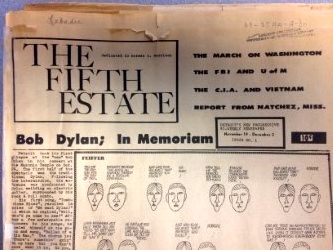
The immediacy of social media led to the concept of a fifth estate, consisting of web-based technologies. Curiously, that was the name of a countercultural underground newspaper, first published in 1965 in Detroit. The first issue included a review of a Bob Dylan concert, a “borrowed” Jules Feiffer cartoon, and announcement of a march in Washington. The periodical remains active and is believed to be the longest-running anarchist publication in English. The Fifth Estate archives are held here at the University of Michigan in the Labadie Collection at the Harlan Hatcher Library. [Below: First page first edition Nov 19-Dec 2, 1965. Courtesy UM Labadie Collection & Julie Herrada]

fifth

————————————————–

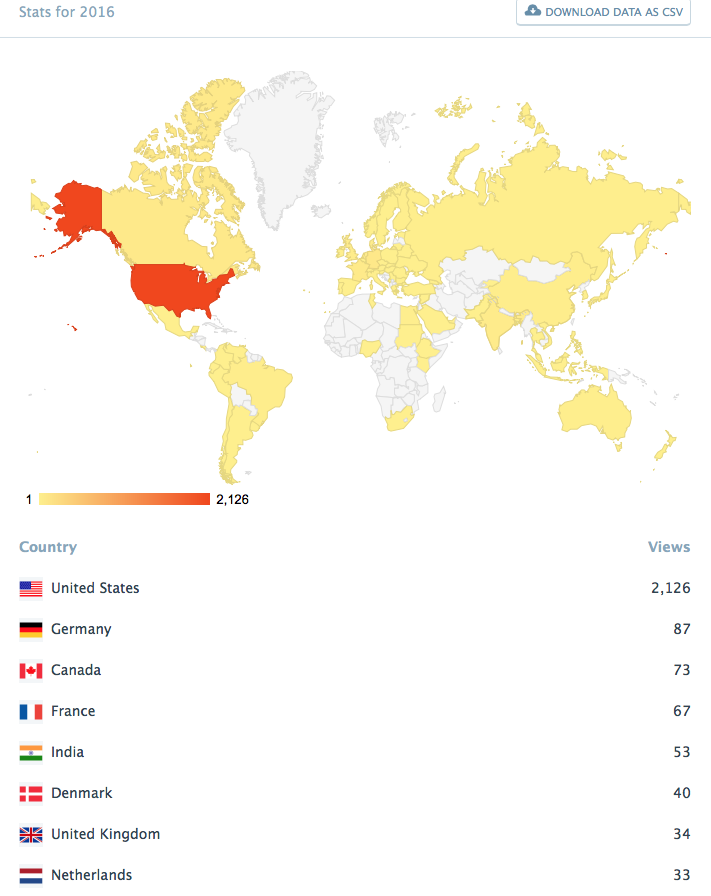
What’s New/Matula Thoughts, this particular small-scale electronic posting, was intended as monthly essay for colleagues and friends. It has worked its way around the global village although we can’t track the What’s New email version that gets forwarded beyond its initial recipients, we can track the MatulaThoughts website version through WordPress analytics.

stats-mid-dec

[Above: MatulaThoughts analytics in mid-December]

Most web postings of this sort feature short blurbs linked to aggregated articles that may, or may not, contain verifiable reporting or critical analysis. MatulaThoughts differs in that its 10 items contain some streams of continuity, random observations, and specific references usually to scientific literature. Striving to keep this under 4000 words, we view this as a monthly essay for Michigan Urology family and friends, recognizing that while many find time for only a cursory scan, others pick out one or more items to read more carefully. Some readers around the globe, however, read this better than I write it, and communicate back related observations, different opinions, or find mistakes I’ve made. My thanks, especially, to those critical analysts.


Ten.

The Fifth Estate, just as the fourth, was heralded as a boon to free speech, human liberty, and democracy. Outrageous claims or gross propaganda, however, bring a perverse twist to social media, abetted by public tolerance and even an appetite for fake news. The boundary between fake news (mainly enjoyed as entertainment) and true factual news is indistinct and the difference doesn’t seem to matter to many people. This imperils democracy for it cannot be doubted that truth matters in a free and civilized society. Social media can provoke a presumably rational person to enter a church and open fire on parishioners, to take weapons to “investigate” restaurants in distant cities, to target-shoot highway drivers, or “execute” policemen in their cars. The truth matters to all of us. Its distortion undermines civilization.

Truth matters in science and is absolute in the health professions. Deception in the reporting of a blood test, cut-and-pasted notes, conversations with colleagues or patients, or manipulated scientific results may sneak by in the workplace or in the literature for periods of time, but eventually get discovered and demand public scorn and long-standing distrust. One rascal, even among thousands of “honest brokers” diminishes the public trust. Trust matters in engineering, construction, food safety, nuclear power plants, the transportation industry, water standards, air quality, and so on. It matters too in journalism, law, politics, and life in a cosmopolitan world. Purposeful exploitation of truth, whether self-serving lie, propaganda, or mischief should be called out. A related deception is that of careless or deliberate plagiarism, when another person’s distinct intellectual property such as sentences, images, etc. are claimed as one’s own.

How then can we distinguish these threats to free speech from fiction? To me, fiction is the art of creating a story that entertains and may give insight to our lives. The proper purposes of fiction (that is, the purposes that civilized and educated people should accept) are distinct from propaganda, deception, and plagiarism.

Freedom of speech carries with it the responsibility to be critical and intolerant of gross distortions. Preservation of the freedoms we claim as humans (namely, life, liberty, and the pursuit of happiness) demands an attention that in this country we elevated to a cabinet-level status under Dwight Eisenhower in 1953. This was the Department of Health, Education, and Welfare (HEW) with the motto, “Hope is the anchor of life.” In 1979 the Department of Education was split out and HEW became the Department of Health and Human Services (HHS). These organizations have spent much taxpayer money and have done great good, but are complex and imperfect. These have been, I believe, the only cabinet-level departments created by presidential reorganization. The ability of the president to create or reorganize bureaucracies, as long as neither house of Congress passed a legislative veto, was removed after 1962. Fifteen executive cabinet-level departments currently exist.

hew-seal

[Above HEW seal; below HHS seal]

hhs-seal

Although seemingly arcane, these matters demand our attention for a free, efficient, and equal government.


David A. Bloom
University of Michigan, Department of Urology, Ann Arbor
Castling

DAB Matula Thoughts Nov 4, 2016


Matula Thoughts Logo2

3975 words

Preface. This monthly communication from the University of Michigan Department of Urology & David A. Bloom is usually sent by email or posted on line at matulathoughts.org on the first Friday of each month.

huron

One.  

Autumn has been spectacular at Michigan Urology academically and around Ann Arbor visually. Seasonal changes on the Huron River were up to high expectations as leaves colored out and birds headed south. You don’t have to travel far outside of town to see crop harvesting has wound down, while distracting political signs along the roads are highlighting our national political schizophrenia. [Above: Huron River near Wagner Road. Below: Waterloo Road east of Chelsea, Michigan]

silo


Nestled in the Midwest, we were spared Hurricane Matthew that hit Haiti, Florida, Georgia, and the Carolinas in October. The biggest regional surprise was the overtime World Series victory of the Chicago Cubs over the Cleveland Indians, both teams having contested well. Births and other happy events also perked up this season, but we suffered losses. Madeline Horton, secretary of Jack Lapides and mother of Suzanne Van Appledorn (wife of Carl Van Appledorn, Nesbit 1972) passed away last month a few weeks short of her 100th birthday. Madeline was our urology librarian, a job largely obviated by the internet. I fondly remember her gracious welcome when I joined the University of Michigan Section of Urology in the early years of Ed McGuire’s leadership.

Final rules for the Medicare Access and CHIP Reauthorization Act (MACRA) went into effect last month, instituting the Quality Payment Program (QPP) that begins its first performance period 58 days from now, by my count. This will significantly change the basis of physician payment and the rules are entrenched so deeply in federal regulation as to be practically bullet-proof from the impending presidential election or other short-term political processes. By November, it is pretty clear that another calendar year is coming to an end and it’s time to start serious planning for next year. Of course as a department of urology specifically, and as a large academic health center more generally, our planning has been on going in earnest for considerably longer than the past few days. Emerging out of many years of restricted capital investment in facilities and regional relationships we are in an unprecedented growth mode to more optimally fulfill our mission. This has been the first year of our new organizational paradigm for the University of Michigan Health System in which Executive Vice President for Medical Affairs of the University, Marschall Runge, added the Medical School deanship to his portfolio. A Health System Board along with Health System President, David Spahlinger, will manage the growing enterprise of hospital groups, medical practice, ambulatory clinics, regional affiliations, and other entities that have evolved to carry out our mission. These are good structural changes and superb individuals for the challenges ahead.

Our mission derives from our foundation as a public medical school in 1850 and is similar to the mission of all other medical schools, although the University of Michigan has long described itself as one of the “leaders and best”, a phrase that history shows we can rightly claim, for the most part. The mission is framed around three components – education, patient care, and research – deployed in that order as our medical school grew, adding its own contained hospital in 1869 and soon thereafter some of the world’s definitive basic science departments and research laboratories.


Two.  

Silos of expertise necessarily accrued as the medical school and health care center in Ann Arbor grew more complex with the result that the overall management became increasingly disconnected from the loci of expertise at its many workplaces. The gemba, a Japanese term related to the Lean Process Methodology of the Toyota Corporation, describes where work is performed – the workplace. As Toyota, and later Detroit automotive manufacturing came to understand, microeconomic gembas understand their products, customers, and processes better than higher-level managers or accountants. Process improvement, value creation, efficiency, customer satisfaction, and employee satisfaction are best arbitrated “where the work is done” (i.e. the gemba) rather than in distant offices by managerial accounting.

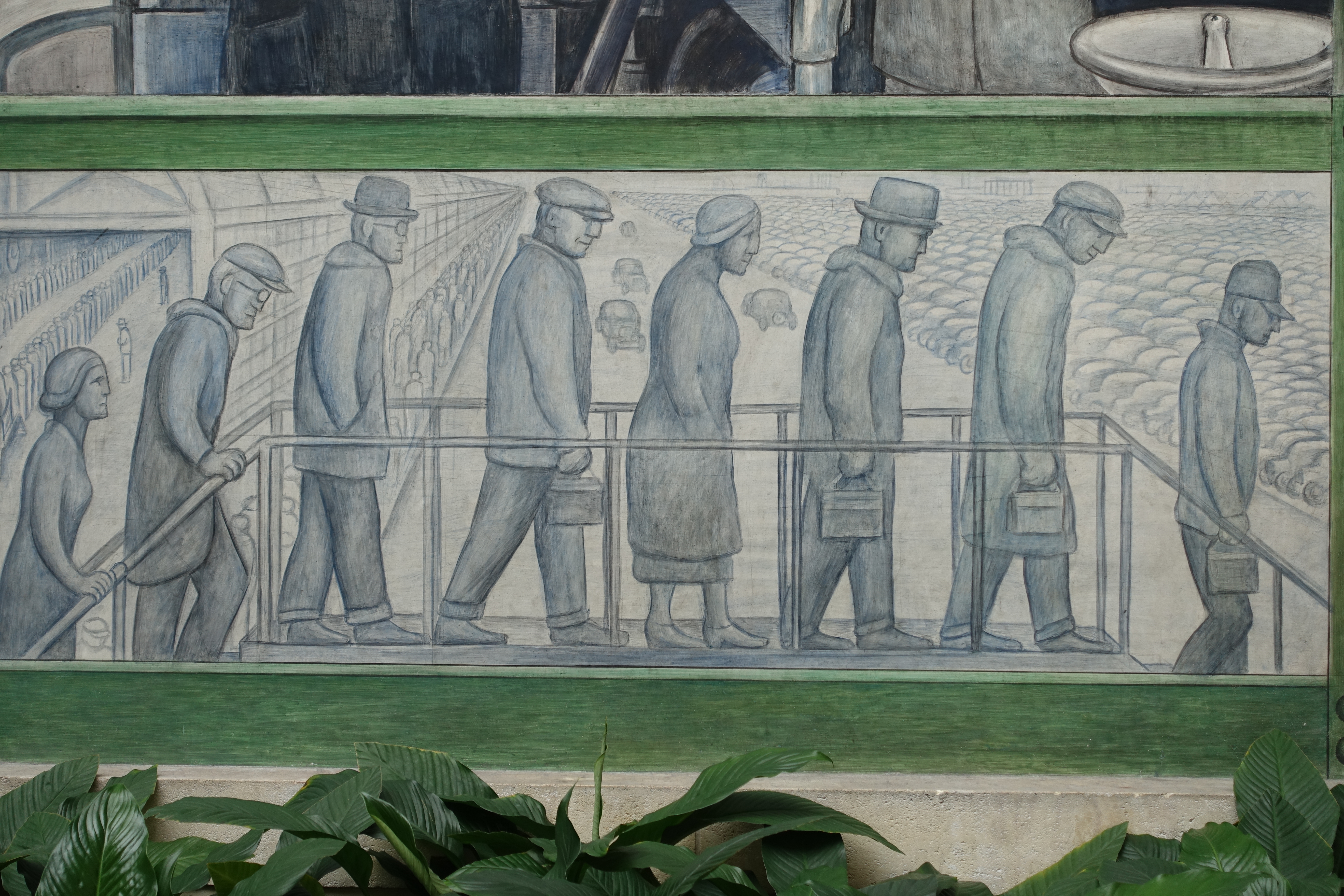
Oddly, just as forward-thinking western businesses are embracing lean process thinking, large health care systems and governmental organizations are more rigidly holding on to managerial accountancy with its concomitant archipelago of cost centers. Of course any organization needs to understand and mitigate its costs, but lean process experience has shown that efficiency and value are a natural result of letting the gemba work as an organic community, rather than forcing its functions by the levers of managerial accounting. [Below: going home from work, a Diego Rivera mural detail – Detroit Institute of Arts]

dsc03595

Anyway, back to the triple mission: the University of Michigan Health System exists to educate the next generation of physicians and scientists, to expand the knowledge and technology base of health care, and to do these things in a milieu of cutting edge clinical care. The central organizing principle at play, that is the essential deliverable (and moral center) is kind and excellent patient-centered care, as we describe it in our department.

The future in healthcare will depend on our ability to weave silos together and innovate, creating new ideas, devices, and methods. In a larger sense innovation is the ability to find better solutions for the needs of a changing environment.


Three.          

Leadership.  A recurring aspiration of the University of Michigan is that it produces the “leaders and the best.” That phrase is functionally adjectival as with the leaders and the best engineers, teachers, athletes, lawyers, nurses, chemists, or physicians, for example. The leaders and best is less meaningful as a noun, for what does it really mean to be “the best” if not the best of some particular thing. The same holds true for leadership, in my opinion. The aspiration to be “a leader” as a generality carries a bit of a selfish sense with it, whereas the aspiration to lead one’s team to do its job well or otherwise fulfill its mission is more socially virtuous. The difference is perhaps one between the captain of a football team versus travelling CEO’s who jump among companies to exercise their managerial or accounting gifts. Without deep knowledge and investment in a particular organization, an itinerant leader is unlikely to inspire most organizations and its people to achieve their best social destiny. Another way to look at this is whether the leader’s primary goal is to be “the boss” by leading, managing, and controlling employees to achieve organizational targets, in contrast to a goal of helping the organization achieve an optimal state for its stakeholders.

What does a urology department need in a leader? I submit that first and foremost it needs someone who loves and practices urology robustly; former dean Allen Lichter once said  – “for such a person patient care is a moral imperative, not something that is important enough unless it interferes with research.” Second, a clinical department needs an individual who understands the organizational mission and its history – these two things are inseparable, requiring more than just lip service to be truly known. Third, we require someone whom the faculty, residents, staff, and other stakeholders trust. Fourth, the department needs a person who can read the changing environment and find opportunities within it. Other attributes may be valued according to the specifics of each department, institution and moment in time, however “celebrity leadership” by itself should not be high on the list of qualities sought.


Four.                 

bruxelles_manneken_pis        

Until it fails, people don’t appreciate the beauty of a competent urinary system. Urologists are the essential attendants at that particular service station of life, but the necessity of professional detachment renders us susceptible to underestimating the angst and vulnerability of urologic patients. Finding the right balance between empathy and detachment is a personal matter, arbitrated by daily experience to the extent that we are influenced by our medical practices, role models (real and fictional), and general observations in life. To the extent that we pay attention to the real world around us and to the creative arts, we improve our practice of medicine.

Creative arts matter to medicine. The portrait of Dr. John Sassall by Berger & Mohr in A Fortunate Man, was an artful mix of empathy and detachment. The doctor had sufficient detachment to do what he needed medically for his patients, but retained unusual empathy for their social and economic comorbidities, even to his personal detriment.

In the visual arts for hundreds of years urinalysis, depicted by uroscopy flask (the matula), was the main symbol of medicine indicating the central importance of urine examination to understand disease. After 1816, when Laennec invented the stethoscope, the matula lost its place as the popular symbol of the medical profession. The stethoscope is certainly a less indelicate and a sturdier symbol than a glass urine flask. Imagine Gray’s Anatomy with the matula.

In literature Shakespeare was precocious in recognizing the fallacy of mistaking a clinical test for the actual patient when in this scene from Henry IV Falstaff asks a messenger what the physician thought of his uroscopy specimen:

“Sirrah, What says the doctor to my water?

He said, sir, the water itself was a good healthy water;

But for the party that owned it, he might have more diseases than he knew for.”

Visual art has only rarely portrayed urinary function. One example, the statue Manneken Pis (Little Man Pee, in Dutch. Above: Wikipedia illustration) designed by Hieronymus Duquesnoy the Elder around 1618-1619 has been stolen numerous times and the current version, dating from 1965, stands in Brussels. It is dressed in costumes according to a published schedule managed by “Friends of Manneken-Pis,” but I don’t know if University of Michigan colors have adorned it yet. Other versions of the statue exist regionally and in more distant sites in the world. Notice the arching back of the confident lad making his momentary mark on the world in front of him.

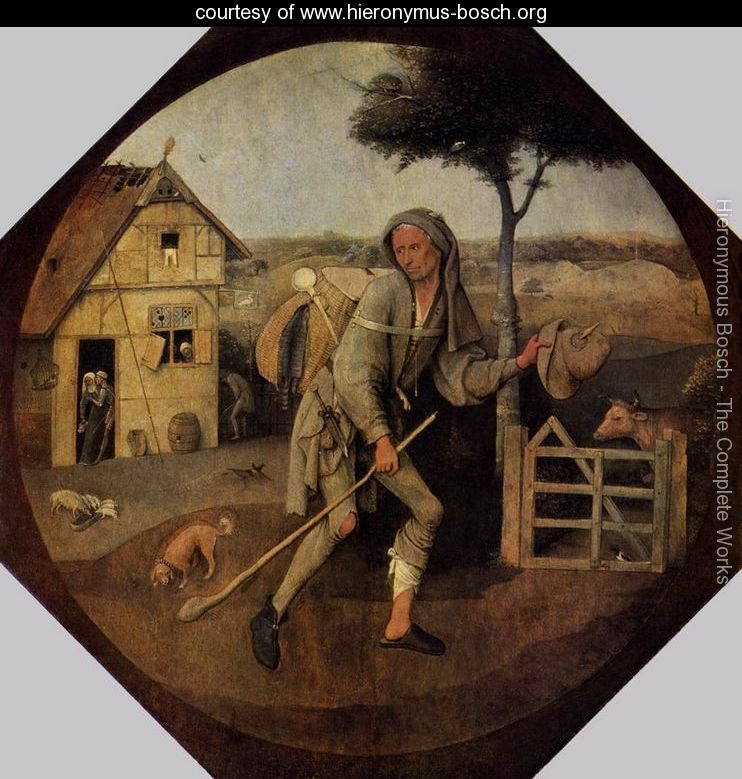
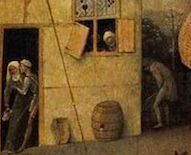
Depiction of urinary tract dysfunction in art is even less common than that of normal function. As common as dysuria and stranguria are for us humans, it’s rare to find them represented in the creative world. The Wayfarer, by Bosch, shows a man with the hunched-over posture typical of urinary distress, relegated to the central background of this curious painting. The painter, who died 500 years ago, lived in the historic low countries now called the Netherlands where he no doubt observed that characteristic posture often, as we do today in restrooms around the world.

the-wayfarer-large

[Hieronymus Bosch. Above: The Wayfarer. Below: voiding detail.]

bosch-detail

The impact of nocturnal enuresis showed up in All’s Quiet on the Western Front, where a young soldier suffered with that burden.

My point is that creative arts sharpen our perception and groom our mirror neurons to make us better attendants at life’s service stations.


Five.              

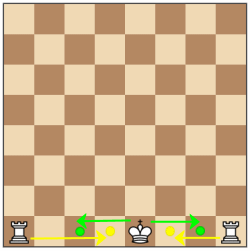
Castling. A few months ago this column referred to Richard Feynman’s metaphor related to mankind’s persistent search for central organizing principles, namely our curiosity to discover rules that govern the universe. He noted that, as we observe the “chess game of the world” and try to figure out how it works, every now and then “something like castling” occurs and blows our minds. That particular chess move is so far out of the box with respect to the other orderly rules and procedures of the game that it is, indeed, something of a miracle in that environment. (For chess aficionados the term rook may be preferable to castle, although castling sounds more appealing than rooking.)

castmove

It is human nature to seek rules. Prehistoric tribal priests, Ionian philosophers such as Aristotle, and recent scientists such as Feynman sought central organizing principles and rules. Unlike the explanations of the village priests, today’s principles of math, physics, chemistry, and biology are testable and verifiable or refutable. We have some ideas of why and how inorganic material things need to flow or seek equilibrium – principles of physics and chemistry govern their existence and fate. It is more of a mystery why biological things need to grow and humans, in particular, need to know things. No one has figured out, without invoking magical or religious paradigms, why our particulate niche in the universe is such as exception to what we perceive as the second law of thermodynamics. Perhaps our material, biological, and intellectual exception to the expanding and entropy-seeking universe is that strange miracle of “castling.” Bob Seger and The Silver Bullet Band expressed it more poetically in the 1980 song Against the Wind.

alaska

[Cosmic castling. Copper River. Kenai Peninsula, Alaska. Summer 2015]


Six.

It may seem an overstatement of human optimism to believe in the principle that the world you imagine is the world you are most likely to create, but a single person can have remarkable impact; Joan of Arc, Harriet Tubman, Abraham Lincoln, and Mahatma Gandhi are just a few examples. The impact of a single person, just as likely, can be darkly retrograde and numerous examples quickly come to mind.

Scientific thinking and modern technology have given mankind unprecedented tools to change the world with Albert Einstein and Steve Jobs as two of a myriad of other players. If you imagine a kind and just world, you will likely try to live by and spread those attributes. If you imagine a dog-eat-dog world and display that vision to those around you, that may likely become the reality you experience and leave behind. The possibility that a given leader can be good or bad for humanity might appear statistically random, that is stochastic, in terms of probability. On the other hand, if we carry the theme of castling to the idiosyncratic human experiment, it may not be so far-fetched to suggest that our genetic and epigenetic construction has built in a predilection to favor good over evil, making an individual more inclined to do the “right” rather than “wrong” thing at a given moment. That is, the elements leading up to a given personal decision are built upon individual upbringing, world-view, personal needs, perceived needs of our clan, and hope for the future. Adding all these elements, our prevailing human nature favors doing good, in the stoichiometric sense, most of the time.


Seven.

Where American health care will go next is unclear, no matter how the presidential election turns out next week. Problems abound in health care. The interface between patient and provider filling up with busy work and costs that distract from quality, safety, value, or satisfaction. Third party payers, regulators, public policy (even if well-intentioned) add an immense amount of “stuff” to be done before, during, and after the so-called patient encounter. While we prize innovation and the rewards of a free society, egregious exploitation of American healthcare consumers by industry seems to be getting worse and fuels demands for significant change. The EpiPen disgrace from the Pennsylvania company Mylan is only one of the many recent examples of human elements gone bad [JAMA 316:1439, 2016]. Why call out that one bad example among so many? My reason is simply that Mylan has made themselves such an easy target because they have been so sociopathically greedy.

Our urology silo has been a good one locally and internationally, by and large. This is evident now in the midst of the residency selection process wherein we advocate for our particular training program in Ann Arbor, our specialty having attracted many of the best and brightest of this year’s senior medical students. My colleague and friend Mike Mitchell once called urology (pediatric urology, in particular) “a lovely specialty.” We practice at the cutting edge of technology, we improve patient lives, we fix things that are broken, we have the gift of long relationships with patients, and we generally get along well within our professional arena. As a medical student and resident myself, years ago, the attributes and role models of urology attracted me into the field – and these features of our profession continue to attract the superb students and residents to follow us.

Healthcare is changing and the urology of tomorrow will differ from what I experienced in my career. We have already transitioned from roles as independent urologists such as that of our predecessors Hugh Cabot, Reed Nesbit, and Jack Lapides. Our work to educate, treat patients, and expand the knowledge base of urology requires subspecialization and teams, large teams that transcend clinics, offices, department, and operating rooms. The complexity of science, technology, and healthcare delivery made this change inevitable, with marketplace pressures and regulatory actions accelerating change. The fee-for-service that largely defined health care over the past century is being rapidly displaced by alternate payment methodology, with a sharp focus on value and performance in play today. These were vague terms in health care until recently. Value and performance metrics in other endeavors have achieved growing visibility, so we shouldn’t be surprised to find them crossing over into health care. Michael Lewis’s Moneyball brought these terms to popular attention for baseball in 2014, with the movie in 2011, and healthcare was bound to follow. No doubt some sense of player value governed Theo Epstein in breaking the curses of the Red Sock and Chicago Cubs with their World Series droughts of 86 and 108 years, although it’s unlikely he discovered a novel set of useful metrics.


Eight.

Value & performance. A paper in JAMA last month demands attention. Vivian Lee et al from the University of Utah offered an original investigation with the lengthy title “Implementation of a value-driven outcomes program to identify high variability in clinical costs and outcomes and association with reduced cost and improved quality.” [JAMA 2016; 316(10): 1061-1072] A matching opinion piece in the same issue by Michael Porter and Thomas Lee offered glowing support: “From volume to value in health care”. [JAMA 2016; 316 (10): 1047-1048] While it is clear that value and performance measures will be tools to replace the American fee-for-service paradigm, the details in the Utah study are important, in particular the idea of an “opportunity index” that allows healthcare teams to understand their costs and develop lean processes that improve not just costs, but also quality, safety, and that once-vague attribute value. If leading health care centers believe in a world of value-based healthcare, such a world surely can be created. That world, however, will largely be built on the special skills of specialties and the complex teams of future medicine, wherein urologists with their singular skill sets that will likely always be prized.


Nine.

Stainless steel, eggs, & sperm. Innovation is a fundamental characteristic of biology, and randomness is always in play. At the cellular level we see innovation from the random errors of genetic transcription and the utilitarian retention of the changes in these DNA sequences when they provide a particular advantage, so one could argue that random chance lies behind all things that happen. Choice, however, somehow slips into play with life. Even low levels of cellular organization make choices and, by extension purposefully innovate in their lives. Nematodes (round worms) and flatworms, such as C. elegans and planaria, seek comfort and food as they move above their microcosms to discover opportunities or deterrents. Their actions are purposeful with deliberate directional choices as opposed to random Brownian motion. Each move is original in its own way, exploring new territory or retreating from threats. In the larger animal kingdom we see choice in behaviors of vertebrates, and hominids have taken choice and innovation to entirely new levels.

One hundred years ago Harry Brearley figured out a way to improve the quality and value of gun barrels. Gun performance deteriorated quickly after use because of barrel corrosion from moisture and gases after combustion, so Brearley considered variety of additives to create steel alloys with better resistance and found chromium most effective. This was already being used in the manufacture of steel for airplane engines, but one particular variant alloy had been difficult to examine microscopically because the etching processes used to prepare the samples for examination were far less effective than usual. The corrosion resistance problem for engine manufacturing proved to be a solution for gunsmiths.

Human innovation continues to advance even more remarkably. At our recent Nesbit meeting, Sherman Silber (Nesbit 1973) presented innovative work in reproductive medicine showing how pluripotent stem cells derived from skin cells can create eggs and sperm with full reproductive potential in normal mice.


Ten.              

jiffy-silos

Silos. Silos are disparaged glibly in modern organizational discourse, but we owe them better appreciation. Some silos are storage vaults for coal, cement, or salt while others are biologic factories. Grain elevators, for example, store and ferment grain to produce silage for animal feed. Early farmers figured this out, probably noticing it by accident. After harvesting, clover, alfalfa, oats, rye, maize, or ordinary grasses are compressed in a closed space and after a brief aerobic phase, when trapped oxygen is consumed, anaerobic fermentation by desirable lactic acid bacteria begins to convert sugars to acids. Volatile fatty acids (acetic, lactic, butyric) are natural preservatives, lowering pH and creating a hostile environment for competing bacteria. Some microorganisms in the process produce vitamins such as folic acid or B12. Ever since the early days of farming indigenous microorganisms conducted successful fermentation, although modern farms utilize select strains of lactic acid bacteria or other microorganisms more efficiently. Because fermentation produces products that bacteria consume silage has less caloric content than the original forage, but the tradeoff is worthwhile due to the preservation and improved digestibility.

Thinking about silos, it seemed natural to take a trip to Chelsea, Michigan where the family-operated Chelsea Milling Company has been making baking mixes since 1930. Mabel White Holmes created the first prepared baking mix in the United States and her grandson, Howdy Holmes, presently runs this company of 300 employees producing 1.6 million boxes of products daily. Mabel White Holmes originally marketed her biscuit mix as “so easy even a man could do it” and Jiffy Mix with its memorable blue logo became one of America’s classic brands. Chelsea Milling makes and markets 19 mixes distributed to all 50 states and 32 countries. The Jiffy Mix corporate philosophy is employee-centric, much like Zingerman’s Community of Businesses and (we believe) the Department of Urology at the University of Michigan in the recognition of how silos build a community. The Jiffy Mix silos provide dry storage for wheat, while the people that work at the company provide the fermentation that makes and innovates superior products within a lean culture of thoughtful communication and collaborative decision-making. This is biologic castling.

wh-balcony

[Next occupant?]

Whether for storage of salt or biofactories for silage, silos are ultimately useful only when working together as parts of farms and communities. This an analogy holds true in the political arena, where consensus is as important as victory. Our national and international communities suffer from self-righteous siloism. Current political rhetoric lacks dignity and respect to the point of ugliness, although the most corrosive disrespect is the a priori claim that the American political system is rigged, whether by one party, the media, or another nation. It is nonsense to be outraged that other countries are into our emails and elections – that’s exactly what we do as a nation and indeed it is the business of large nations to gather intelligence on competitors and get a thumb on the scales when possible. If our candidates say foolish things and our firewalls are weak then we should own the blame. With 4 days to our next national elections, this incivility of discourse is a short slippery slope to civil instability, which will not be good for anyone. The effect on healthcare will consequential and international scientific media as influential as The Lancet have taken the unprecedented step of hosting a US Election 2016 website: www.thelancet.com/USElection2016.  Aside from parochial concerns such as healthcare, ultimately what will matter most for all of us on the planet after November 8 will be financial market and geopolitical stability – all other concerns pale in comparison.

leaves

[October driveway]


David A. Bloom

University of Michigan, Department of Urology, Ann Arbor

Matula Thoughts October 7, 2016

DAB What’s New Oct 7, 2016


Education, errors, & box scores

3931 words

giants-vs-cardinals

One.               Autumn is academic medicine’s high season.  With summer officially over the serious work is well underway for faculty promotions, graduate medical education (GME) in academic centers, and continuing medical education in professional meetings. Residency interviews are beginning. Coincidentally, this is also the definitive season for baseball as major league teams compete for its World Series. [Above: San Francisco Giants 6 – St. Louis Cardinals 2. Sept 15, 2016. Cueto pitching.]

With participants notching up their games, rookie mistakes become occasional, although errors never totally go away.  Performance measurements allow individuals to understand and improve their work, while inviting inevitable comparisons. Fielders in baseball, for example, are judged by errors: the number of times they fail to complete plays that could have been made by common effort, a term roughly equivalent to the reasonable and standard practice by which physicians are judged.

640px-jetererror

[Derek Jeter, Yankee shortstop. 8/24/08. Photographer Keith Allison]

It may seem awkward for physicians to talk of mistakes, however these conversations are not only necessary, but also healthy when done properly. We formalize these conversations in morbidity and mortality (M&M) conferences. Fortunately, most errors are minor if not trivial and are intrinsic to all biologic behaviors, indeed species variation itself is built on error. Health care cannot be expected to be exempt from error, for who among us has not missed a blood draw or an IV placement on first puncture? Who has not made a transcription error when typing an entry into today’s electronic medical record systems. (When I trained to become a surgeon, typing skills were not a required skill set; today many surgeons spend nearly as much time typing as operating – surely an epic waste of health care resources.) On the other hand, serious complications such as postoperative bleeding, deep venous thromboses, anastomotic leaks, or missed relevant comorbidities, bear inspections that should inspire personal and systemic improvements to minimize errors for future patients. While we take errors very seriously, we can’t let them disable us, for the next patient is always in line.

The point to make is that the conversation of error in health care is essential. The practice of medicine is, indeed, a practice and things that don’t turn out as intended need to be investigated to improve quality of practice. Charles Bosk’s 1979 book, Forgive and Remember, is a classic starting point. You can get a good summary of it in Robin Williamson’s review of its 2003 edition [J. Royal Society of Medicine. 2004 Mar; 97(3): 147-148]. While surgical fields have a long history of tough treatment of trainees, surgical training today (GME) is far less recriminating when errors are the result of earnest effort. [Below: Ed McGuire lecturing as emeritus professor to residents last year.]

mcguire-lecture

Two.           An astonishing array of events emblematic of our three-way mission initiated the 2016 academic high season of urology in Ann Arbor.

Inspiring Discovery was a celebration at North Campus Research Center focusing on partnerships with donors that fuel education and research. Tom Varbedian, distinguished Michigan alumnus, friend of our department, and retired ophthalmologist was among those honored, in his instance for support of medical students. He has funded 14 students over the years and 4 “Varbedian scholars” are presently here in medical school. [Below: Tom and some of his students]

varbedian-students

The evening was rich in meaningful stories of partnerships between donors and faculty to grow the conceptual basis and technology of health care while educating the next generation. Endowments are the key strength of Michigan’s future as a great academic medical center.

Dow Division Health Services Research Symposium targeted the topic of performance. The program by Jim Dupree, Khurshid Ghani, and Chad Ellimoottil featured our own and other world-wide experts who investigate and innovate health care delivery. This third biennial meeting included around 200 attendees.

screen-shot-2016-09-24-at-4-08-20-pm

Jerry Weisbach Lectureship last month brought Martin Gleave from Vancouver, BC to discuss his extraordinary work co-targeting the androgen receptor and adaptive survival pathways in advanced prostate cancer.

Nesbit alumni weekend featured Freddie Hamdy from Oxford University describing his unique randomized trial of active monitoring, radical prostatectomy, and radiotherapy for localized prostate cancer. Two NEJM papers from his group last month attracted international attention and Freddie’s talk to us was the first public presentation. At the cutting edge of reproductive medicine, Sherman Silber explained how the Y-chromosome is becoming redundant in the light of the incredible accomplishment of creating sperm and ova from skin fibroblasts. Many other talks filled the program. We were honored to have senior urologists Cheng-Yang Chang, Clair Cox, and Mark McQuiggan in the audience. Cheryl Lee (Chair at OSU) and Stu Wolf (Associate Dean at Austin’s Dell SOM) were honored at our alumni dinner and John Park won the John Konnak award for service to our department. A lively Nesbit tailgate party preceded the Wisconsin football game.

hamdy

[Above: Freddie Hamdy presents results of prostate cancer trial. Below: Freddie Hamdy, Marschall Runge, Sherman Silber, Jim Monte & Nesbit attendees]

nesbit-group

After the Nesbit tailgate we saw Michigan edge Wisconsin out 14-7. Next year’s Nesbit alumni reunion will align with the Air Force Academy game here in Ann Arbor.

coxs-wisc-game

[Clair & Clarice Cox tailgating]

The Montie Visiting Professor was Ian Thompson, Jr.,  Director of the Cancer Therapy & Research Center of the University of Texas in San Antonio. Ian (below) spent childhood years (1956-59) in Ann Arbor when his father was on the Michigan urology faculty. A West Point graduate, Ian became Colonel in the U.S. Army and chair of urology at University of Texas San Antonio. He is President of the American Board of Urology. He spoke to us on the future of prostate cancer detection and therapy, and heard superb presentations from our residents and fellows.

montie-thompson

[Ian Thompson, Jim Montie]

This past month has been rich in education. Although these costly events interrupt the clinical work that supplies their main funding, they are educationally essential and important for quality improvement and team alignment. Quality of care is improved by expanding the conceptual basis of medical practice, clinical skills and professionalism of the workforce, and delivery systems. Alignment of healthcare workers is critical to their success in teams. In the face of new technology, new diseases, and a changing socio-economic-political environment these educational efforts cannot be sacrificed to clinical throughput.

Three.           The attendant at the gas station of life was a picturesque metaphor of Dr. Horace Davenport as he taught first year physiology to medical students here in Ann Arbor in the later 20th century (re-quoted by us in July What’s New and Matula Thoughts). The actuality of a physician’s role is more complex, as Dr. Davenport well knew, and the irony of his specific term attendant in the midst of an academic medical center full of attendings was probably intentional. (Another irony is that today’s gas stations, in contrast to those of Davenport’s time, are mostly self-service).

A physician is better understood from the neuroscience perspective with respect to mirror neurons. Humans are not unique in having these sophisticated forms of quorum sensors that facilitate empathy, a phenomenon seen in certain other biologic species such as crows, elephants, and of course fellow primates. Humans, however, have tools, skills, and systems that allow highly developed ways to operationalize empathy.

Physicians can no longer speak so territorially about their roles because health care is provided as significantly by nurses, physician assistants, and other advanced practice providers (APPs). The awkward term health care provider has crept into general use, and while downplaying the physician as a professional, the new terminology is necessary in the team play of modern healthcare. Regulatory and corporate forces reduce health care services to commodity encounters that match diagnostic codes to treatment codes. Many encounters can be delegated to APPs working at high ends of their scopes of practice. While vaccinations, dental cleaning, and sports physicals can readily be commoditized, whether routine “well patient” check ups or visits for uncharacterized problems can be similarly commoditized in 15 to 30-minute encounters remains to be seen. Some patients need the magic of attention and intuition from a health care professional that is not readily translated to check lists or passed down the ladder of expertise.

Effective attendants at life’s service stations hone their skills to observe and listen carefully while practicing their craft. In the process of listening and observing they need not only determine a patient’s diagnosis and an attendant treatment (ICD 10 and corresponding CPT codes), but also must discover relevant issues of the context of that person’s life in terms of livelihood, family, neighborhood, or socioeconomic condition. Context amplifies or minimizes any diagnosis and therapy. Without understanding the patient’s life story, that is the ultimate co-morbidities, an actual encounter in the office may have little value to the patient. All this is to say that effective attendants (physician, medical assistant, nurse, advanced practice provider, etc.) must seek to understand the patient as fully as possible, although such understanding is illusive and always incomplete.

Four.              Rabbit holes in time.   An article earlier this year in The Lancet by Kingshuk Pal, “Could you wait a second,” described a clinic visit with a woman in her mid-thirties. The encounter was allocated for a mere 10 minutes in his National Health Service (NHS) clinic in London, and in spite of an earlier add-on patient Pal was back on time for the last patient of the morning. He assumed the visit would be a simple encounter for a prescription, and indeed things started out that way. In fact, Pal had seen the same lady in brief encounters twice before and his colleagues had seen her other times as well to write prescriptions after going through standardized template checklists. However, Pal noted:

“But things didn’t feel quite right. I interrupted my internal monologue to go back over what she had just said … There was something about the vehemence with which she had expressed herself that jarred.”

Follow-up questions led into a “rabbit hole” that revealed an unexpected terrible social situation of an abusive marriage. Pal called in appropriate support services and eventually the lady became able to take control of her life. The missed opportunities to uncover the critical social comorbidity (spousal abuse) that was the basis of all of the previous encounters with the well-intended NHS physicians surely would be considered errors in other occupations. Pal commented on earlier missed opportunities to rescue the patient:

“… each time we had stuck to our templates. We were focused on her medical needs. We had listened to what she said, but not what she meant. What had been left unsaid was how much she needed kindness, sympathy, and patience. For me to give her a few seconds of my silence so that she could finally break hers. I know if I had been busy, it would have seemed like that would take forever. But the passage of time is a peculiar thing. As strange as in a consultation as it is in Wonderland:

Alice: ‘How long is forever?’

White Rabbit: ‘Sometimes, just one second.” [The Lancet. 387:1900-1901, 2016]

Five.               Attending at the station. John Berger’s factual description of a rural English general practitioner in the 1960s is an understated gem of medical literature. Berger and photographer Jean Mohr spent six weeks with the doctor. More than shadowing him, they embedded in his practice, living with him and his wife in St. Briavels in the Forest of Dean, Gloucestershire. The physician, John Eskell, was named John Sassall for the book, A Fortunate Man: The Story of a Country Doctor, although accounts of patients and the community were otherwise factual. Berger and Mohr observed Eskell/Sassall in his clinic (called the surgery) and dispensary, as well as on his house calls.

a%20fortunate%20man-2

This somber book has underlying themes of optimism in human kindness, meaning, and extraordinary curiosity that some people, such as Eskell possess. Berger explains how the morbidity and comorbidities of patients became the personal burden of Eskell.

“I said that the price which Sassall pays for the achievement of his somewhat special position is that he has to face more nakedly than many other doctors the suffering of his patients and the sense of his own inadequacy. I want now to examine his sense of inadequacy.

There are occasions when any doctor may feel helpless: faced with a tragic incurable disease; faced with obstinacy and prejudice maintaining the very condition which has created the illness or unhappiness; faced with certain housing conditions; faced with poverty.

On most occasions Sassall is better placed than the average. He cannot cure the incurable. But because of his comparative intimacy with patients, and because the relations of a patient are also likely to be his patients, he is well-placed to challenge family obstinacy and prejudice. Likewise, because of the hegemony he enjoys within his district, his views tend to carry weight with housing committees, national assistance officers, etc. He can intercede for his patients on both a personal and bureaucratic level.”

Six.                 Personalized medicine. Comorbidities unquestionably impact illness, and without understanding them in at least some depth, physicians can hardly claim to deal out meaningful advice and therapy. Today we confuse recognition of comorbidities, by our ability to list billing codes, with actual understanding of comorbidity relevance and impact. Prominent in Sassall’s example is the matter of who he is outside the clinic and dispensary. He represents something positive in the community and accordingly he is not quite free to live a life that doesn’t impact favorably on him, his environment, or his profession. He accepted that “trade-off” when he accepted his role as a physician. Berger continues his explanation.

“He is probably more aware of making mistakes in diagnosis and treatment than most doctors. This is not because he makes more mistakes, but because he counts as mistakes what many doctors would – perhaps justifiably – call unfortunate complications. However, to balance such self-criticism he has the satisfaction of his reputation which brings him ‘difficult’ cases from far outside his own area. He suffers the doubts and enjoys the reputation of a professional idealist.

Yet his sense of inadequacy does not arise from this – although it may sometimes be prompted by an exaggerated sense of failure concerning a particular case. His sense of inadequacy is larger than the professional.

Do his patients deserve the lives they lead, or do they deserve better? Are they what they could be or are they suffering continual diminution? Do they ever have the opportunity to develop the potentialities which he has observed in them at certain moments? Are there not some who secretly wish to live in a sense that is impossible given the conditions of their actual lives? And facing this impossibility do they not then secretly wish to die?”  [Berger. A Fortunate Man. 1967. Vintage International Edition 1997. p. 132-133.]

sassall

[Jean Mohr photo p. 50]

The doctor confronts existential issues in these questions. Berger makes the case that Sassall’s biggest inadequacy was an inability to counter the comorbidities that framed the immediate morbidities of his patients. Sassall was an idealist who tried to fix morbidities and co-morbidities patient by patient. His intermittent successes fueled his perseverance.

Seven.           Mistakes. Medical practice in Eskell’s day was mainly the binary proposition of doctor and patient, family “comorbidity” notwithstanding. Physicians had far fewer tools at their disposal than today’s incredible armamentarium, but it requires teams to deploy modern healthcare’s tools. No single John Eskell can deliver today’s miracles, although confoundingly the complex paradigm of multidisciplinary team medicine greatly increases the opportunities for error. The complexity of healthcare today and the multiplicity of people involved in the teams delivering it, has magnified the chance for mistakes in the intervening half century.

The Journal of the American Medical Association recently introduced a new department, JAMA Professionalism, with an inaugural article on disclosure of medical error. The case summary described a dermatologist who had just performed skin biopsies on two patients only to discover that the instruments he had just used had not been sterilized. The ensuing discussion revolved around the issues of disclosure and analysis of the error to preclude its repetition. [W. Levinson, J. Yeung, S. Ginsburg. Disclosure of medical error. JAMA 316(7):764-765, 2016]

A phrase has stuck with me from John Shook, the insightful “zen-master” of lean processes: I can’t remember exactly where or when he said it, but it goes like this: for us to fulfill our role, we have to keep on learning. screen-shot-2016-09-11-at-8-17-58-pm

[John Shook on right with Jack Billi]

Eight.             Retrograde thoughts. Everyone brings a unique identity to their work, and in health care the idiosyncrasies of each practitioner resonate with particular specificity in the nature of his or her practice. The professional motivations, world-view, aspirations, distractions, personal demons, work-ethic, curiosity, consistency, empathy, attention to detail, ability to listen and observe, as well as commitment to community are unique to each practitioner and are manifested distinctly in each practice, and with each patient. A mandate for professionalism is intended to bind all these variables together in the practice of medicine, but this is necessarily a vague aspiration although a national trend seeks to define a professional standard and perhaps reduce it to metrics and benchmarks. A national set of professionalism standards or a GME curricular competency can never replace the role models of John Sassall/Eskell and so many others.

It may be subversive to suggest, in today’s world of measurement and precision in medicine, that if you can’t measure something of importance, you still can (and must) improve it. The discovery of what matters to a patient may not be readily measureable. On the other hand, for things that are measureable a certain degree of precision does not matter. Whether you weigh 170 pounds vs. 169.573 pounds, or whether your creatinine is 1.2 or 1.18746, or if your BP is 120/80 or 117.3/78.4 the precision is irrelevant. However, if your abdominal aortic aneurysm or renal transplant are managed by medications that you are reluctant to admit you can’t afford – that fact really matters.

Nine.              A growing body of literature punctures any remaining illusions of the perfection of medical practice. Atul Gawande’s Complications and Henry Marsh’s Do No Harm are good examples of this genre of story-telling and introspection. This type of work is instructive, although limited to single examples of individuals, sometimes approaching the point of titillation or voyeurism. Anecdotes certainly have value, acting like fables that accrue in our minds and bring us to greater wisdom in future actions. Lacking any real-time peer review and team-based process improvement, however, these personal denouements and anecdotes are unlikely to achieve larger scale in medical practice quality improvement.

Autopsy of errors or failures is more purposeful in driving deliberate changes in the ways we deploy work, whether in the structure of a clinic visit or the steps in an operative procedure. This turns out to be the very holistic idea of the Toyota Process Systems that has translated in western business as lean engineering. Reconsidering that pseudo-scientific phrase, if you can’t measure it you can’t understand or fix it – this adage is useful, but should not become dogma. Of course, measurement is essential to understanding and improving things, but measurement is not central to all sophisticated human processes. Ideas are central to understanding and progress, and measurement is only a tool used along the way to test hypotheses, measure performances, or test results.

henry_chadwick_baseball

Henry Chadwick (1824-1908) initiated the practice of recording statistics based on his experience in the game of cricket. He applied these methods to baseball after discovering the game in 1856 while “cricket reporter” for the New York Times. His box score for reporting the game, adapted from the cricket box score, has blossomed into contemporary baseball statistics of batting average, runs scored, base on balls, strike outs, runs batted in, earned run average, fielding percentage, and errors, to name a few before falling into the more complex Sabermetrics. Numbers can replicate or model a game, but they cannot substitute for the performance of the game itself.

1876boxscore

[1876 Box score: Wikipedia]


Ten.               Boston surgeon Ernest Amory Codman (1869-1940) was an intellectual successor to Chadwick in the realm of health care, where scoring is more complex than in baseball. [Below: Codman collecting data.]

codman

Eskell and Codman were obsessively committed to their work, but centered on the patient in different ways. Both men were mavericks. Codman focused on measureable outcome, he called this the end result idea, and believed that individual physicians and hospital record systems should keep relevant information. Eskell attended to the patient in the moment and in the environment. Each physician was overwhelmed by his own idea. Codman became alienated from his colleagues and went bankrupt self-publishing his book on the end-result idea, A Study in Hospital Efficiency.  Eskell focused on his immediate performance delivering health care one patient at a time, attentive to their inevitable comorbidities, but he ultimately committed suicide. Whether their unfortunate ends were due to highly sensitive mirror neurons overwhelmed by the woes of the world, or obsessive personalities that closed the door to sufficient joy to offset their burdens is a mystery.

The word detachment caught my attention when I finished surgical residency at UCLA. My inspirational chief was William P. Longmire, Jr. and, just as our completing residents and fellows and the Nesbit Society, I was given a diploma when I finished training. The Longmire Society logo was a symbol with four corners that read: Detachment, Method, Thoroughness, and Humility. At the time (it was 1977) I understood three of the attributes, but found detachment somewhat odd: why include that word?

Over the years. I’ve come to understand it better. Clearly, Codman and Eskell suffered from inadequate detachment. Dr. Longmire, a great surgeon, found the right balance. He knew his patients quite well, but had the necessary detachment to make a grand incision, put his hands in the abdomen, and fix most any problem with exquisite skill and judgment. He felt the need to warn young trainees to develop similar detachment.

The world is different today. Minimally invasive surgery, OR checklists, and electronic health records serve their purposes, but distance us from patients. Indeed, with robots a surgeon never needs to physically touch a patient, surrogates and checklists can stand in the way. Don’t get me wrong, I have benefitted from the robot and I believe in systems (although not obsessively). However, when it is not the surgeon’s hand that makes the incision and it’s not the surgeon’s hands in the body, the doctor-patient relationship is changed, even if in a subtle way. This is reminiscent of the old farmer’s adage: if you have ham and eggs for breakfast, the chicken was involved, but the pig was committed. The new tools, the regulations, scorekeeping, and the economics of health care have created an environment of significant detachment for our trainees. We no longer need to warn them to develop that sense, rather we need to inspire the right extent of involvement and commitment that will lead them into rabbit holes and other avenues of inquiry as caring attendants at the gas stations of life.

Health care performance is now judged by a multitude of variables, some worthy and others less so: patient outcomes may not be evident for years, peer review at M & M conferences drives quality improvement, and performance measures du jour, such as Press Ganey data, remind us of our public responsibility. Ultimately, our game has no final box score. The practice of medicine is an individual art, evolving as knowledge and technology accrue and as self-knowledge notches up, one hopes in lockstep with experience, patient by patient, whether in the springtime or autumn of our careers. Measurements can improve elements of our performances, but will never substitute for artful performance itself.

dsc01844

[Michigan 14 – Wisconsin 7,  Nesbit Weekend 2016]


David A. Bloom

University of Michigan, Department of Urology, Ann Arbor
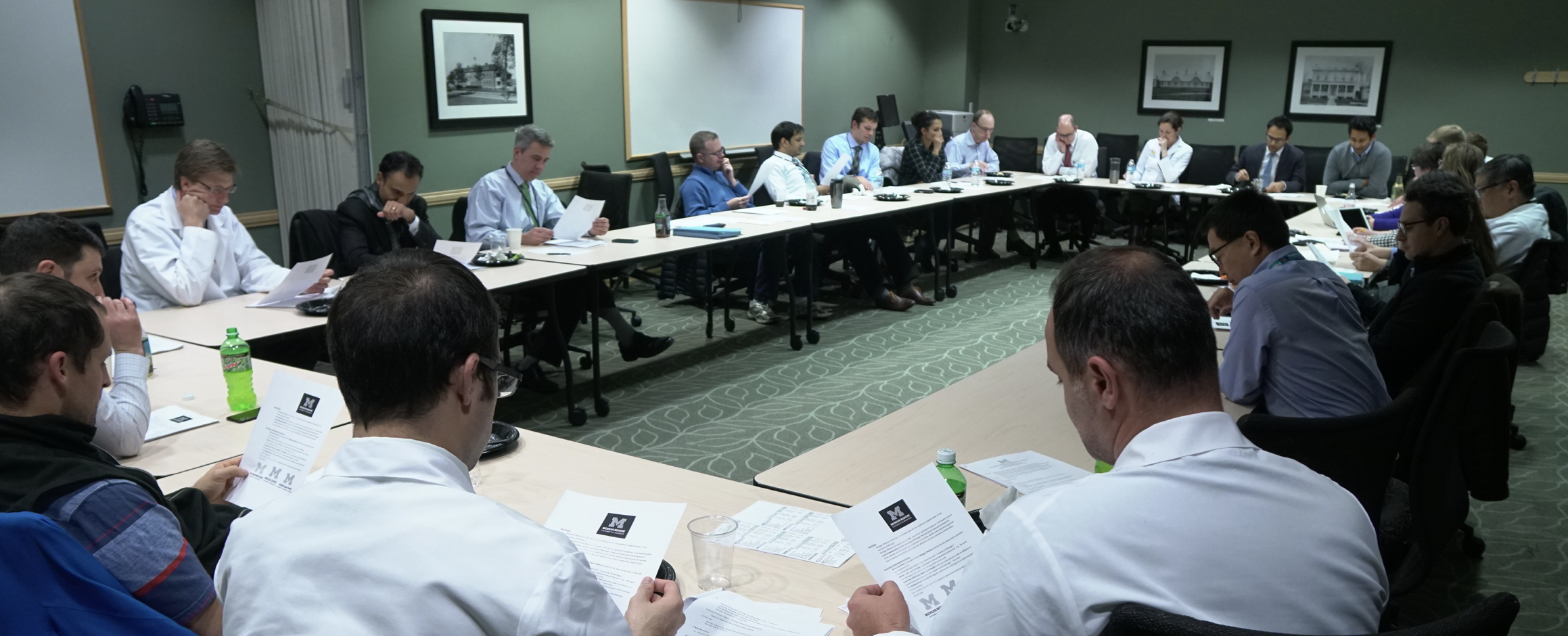
Matula Thoughts. September 2, 2016.

DAB What’s New Sept 2, 2016

Matula Thoughts. September 2, 2016. News & views.

3821 words


Sept 2016

One.   Summertime news.  Yesterday was the beginning of meteorological autumn and tomorrow is Michigan’s first football game of the season, here at home with Hawaii. Ann Arbor days were hot this summer, but are getting shorter, although not so short yet since we can travel between home and work in daylight at least in one of the directions. [Above: the drive on Huron Drive] September was the seventh month in the old Roman calendar when March served as the first month of ten in the year (see April 1st Matula Thoughts). Calendar reform added January and February to create a 12-month year and September got demoted to the ninth month, but retained its historic name.

       We had a good summer, overall, in spite of local, national, and worldwide tragedies admixt with the ongoing environmental degradation of which we are no longer innocent. Our particular geographic microcosm, however, has been mostly pleasant and constructive with the entry of new house officers, promotion of their seniors, incorporation of new fellows, and initiation of first year medical students. We enjoyed the Ann Arbor Summer Festival, Art Fairs, Chang-Duckett-Lapides lectureships, White Coat Ceremony, and lovely three-day weekends that come to an end with Labor Day on Monday. A few weeks back Mani Menon from Henry Ford Hospital gave a brilliant Grand Rounds talk on his remarkable achievement of translating radical prostatectomy to the robotic platform, and thus introducing a new paradigm of therapy worldwide (below: Mani Menon, Khurshid Ghani, Andy Brachulis). Stu Wolf had his last day a week ago and will now be doing his part to build a new medical school in Austin, Texas.

Menon

In mid-August we lost a wonderful colleague and pediatric surgeon, Dan Teitelbaum (pictured below), after a difficult struggle with brain cancer. Dan partnered with us in the Disorders of Sex Development program and was a world authority on pediatric gastrointestinal problems both clinically and in the research world. Dan was more than just a colleague, he was a kind, skilled, and reliable partner-in-care and his excellence made us better. We could always count on Dan. Brain cancer, all cancer, is an evil destroyer of the good things in life. We are making progress against cancers on many fronts, but not in time for Dan.

Dan

A road trip this summer to Toronto featured Sick Kids Hospital’s Gordon McLorie symposium for the latest news in pediatric urology. [Below: McLorie Symposium] The Olympics captured much attention during my visit north of the border and, flipping back and forth on television, it seemed that Canadian coverage favored more actual sports and news than broadcaster celebrities and opinions on American networks.

McLorie Symposium

Bruce Hornsby & The Noisemakers appeared back in Ann Arbor at the Summer Festival one evening. Many of us (of a certain age) recall the classic song, The End of the Innocence, Hornsby wrote with Don Henley in 1989. At the Power Center Hornsby and the Noisemakers expanded the piece into an amazing long version with riffs, explorations, and pleasing dissonances. I wondered if the composers intended some reference to Songs of Innocence and Experience by William Blake in 1789 and 1794, but in any case the piece struck me more meaningfully this summer than when I first heard it years ago. Jeff Daniels joined the Hornsby ensemble for an encore and performed his new composition on the iconic environmentalist Henry David Thoreau.

EO & JD

Back in 2009 Daniels and E.O. Wilson received honorary degrees from The University of Michigan (pictured above). Wilson, above on left, is our planet’s most credible spokesman for biodiversity. Recognizing this at a dinner in their honor, Daniels commented self-effacingly something like: “I really don’t know why I am here, for after all, my claim to fame is a film called Dumb and Dumber.” In fact, both honorees are substantial contributors to society and they have comfortably crossed intellectual boundaries. Daniels’ work, for example in The Newsroom, not only entertains, but also speaks to the better nature of mankind, offering an example of a trustworthy television journalist navigating the challenges of corporate broadcasting. Wilson, on the other hand, successfully ventured out from his academic world with the novel, Anthill.

Blake - innocence

[Title page: Songs of Innocence and Experience Showing the Two Contrary States of the Human Soul. 1826 edition. At Fitzwilliam Museum, Cambridge, UK]


Two.   Experience. A new season of academic medicine begins each September and renews the process of turning innocent medical school graduates into experienced urologists. Medical students cram our urology services to test out the idea of careers in urology and audition for 4 available PGY1 (intern) slots, while our residents quickly ascend their ladders of experience and our faculty hone their practices.

Consult DB

Above you see Julian Wan at Grand Rounds presenting awards to residents Duncan Morhardt, Amir Lebastchi, and Parth Shah for their achievements with consults in Julian’s innovative Tour de Consult. The next picture shows faculty and residents that same Thursday morning at 7 AM listening to talks from medical students. The newly redecorated conference room is a big improvement over its previous 1986 version, although we still run out of space.

Grand Round

Our residents, however, are enjoying ample private space in their new residents’ room we gained recently and which was significantly upgraded thanks to contributions by Jens Sönksen (Nesbit 1996) and a number of other alumni. [See picture on our matching departmental Instagram https://www.instagram.com/umichurology/, courtesy Pat Soter]

This autumn we expect 21 clinical clerks (six 4th year medical students from UM and 15 from other medical schools) to rotate with us. The individual Grand Rounds presentations they make during their stints over the course of my career at Michigan get better and better in sophistication of presentation skills and subject mastery, indicating that the next generation of urologists should surpass us. Later this autumn a subset of our faculty will personally interview about 40 other students from a pool of 350 applicants. In December we will rank all applicants just as they will rank us, a computer will do the matching and by February we will know the names of our next 4 entering residents.

Autumn will also be busy with sectional and subspecialty conferences, national meetings of the American College of Surgeons and other organizations. Abstracts will be due for next year’s big clinical congress of The American Urological Association in Boston. Family life restructures for many of our faculty when children head back to school. Also this fall a presidential election will take place, so make arrangements now so you can vote on Tuesday, November 8.  I’ve learned from sad experience that busy clinicians and staff cannot count on finding a voting window during election day unless they have made deliberate plans, like absentee ballots, far in advance. Unprepared, you may get lucky – or not.


Three.

Radio tuner 1920s

Far from the town crier and printed circular, radio was a big step in the dissemination of news. Radio itself began in 19th century, arguably with the wireless telegraphy patent of Guglielmo Marconi in 1896, but the first tuning system, patented a century ago, brought choice and accessibility to the public. Ernst Alexanderson, an engineer for General Electric in Schenectady, New York, developed the selective tuning system. Station choices grew on AM radio [Above: vintage radio tuner c. 1920s, Wikipedia] and later with FM, thanks to generous regulation and commercial competition. When I spent a year training in Great Britain as a resident in 1976-77 only 4 radio choices were available on my radio, in addition to an off-shore “pirate” station, because government tightly controlled airwaves.

1939_RCA_Television_Advertisement-1

[Radio & Television Magazine X (2): June, 1939. NY: Popular Book Corporation]

Television portended the end of radio after the first public television broadcast in 1927 and color TV in the 1960s made the medium even more irresistible. The prophecy was wrong, however, as radio rebounded with multiple new consumer channels and TV became just the newer communication layer. Radio stations provided “narrow networks” of sports talk shows, partisan political commentary channels, business news stations, religious channels, local news, weather, and some splices to television channels. Reemergence of radio’s early variety shows appeared with Garrison Keillor and the ubiquity of NPR gave radio large new audiences; the final broadcast of A Prairie Home Companion this past July 2 completed its extraordinary 42-season run. Commercial satellite radio produced an explosion of new radio species for an astonishing range of human interests from Elvis to POTUS Politics. Cable TV ended the domination of broadcasting networks, although the proliferation of new television channels added only precious few of quality.

Radio and television “news”, however maintained a sense of integrity with trusted journalist/broadcasters such as Edward R. Murrow who told it clean and straight, in contrast to advertising or propaganda. At some point, however, the term “content” subsumed “news” and clarity began to vanish. Entertainment mingled with news broadcasts and trusted news broadcasters appeared in fictional stories further blurring the border between truth and fiction.

Podcasts, cable and satellite media, and other innovations offered content to seriously compete with network television and the movie industry. Home Box Office (HBO) produced its first original movie for cable TV in 1983 (The Terry Fox Story) and other memorable films and series followed including Breaking Bad (2008-2013) and The Newsroom (2012-2014) with Jeff Daniels who should inspire a future generation of good journalists. (What Game of Thrones inspires is not so clear). Personal phones, computers, and video streaming bring yet newer layers and innovations to communication, information, and entertainment. Mini-series binge-watching eroded prime time network television while Netflix’s video streaming expanded into a new model of content production. Abandoning the pilot and sequential release of episodes, House of Cards (2013) offered an entire series for immediate consumption. The bottom line: new communication technologies add new layers rather than replacing the older media.


Four.

Alex Zazlovsky

Quorum sensing.  A few months ago at Grand Rounds Alex Zaslovsky, representing the lab of Ganesh Palapattu, gave an excellent presentation showing how platelets communicate with tumor cells to help them metastasize.

A process much like bacterial quorum sensing seems to be occurring, and perhaps this type of communication is prevalent throughout all life forms, whether gaining a consensus in a microbial biome to release endotoxin or a majority in a society for an election or an action on an issue. Strictly speaking, quorum sensing is a matter of individual gene regulation in response to news of cell population density. In other words, gene expression is coordinated according to the size and needs of the population. In the larger sense, quorum sensing allows individuals, that by themselves may be insignificant, to become superorganisms. Bacteria thus act in congress like multicellular organisms and this process works in bigger species such as social insects, fish, mammals, and likely all biologic creatures in ways we have yet to understand. This phenomenon brings us back to the seminal work of E.O. Wilson who linked ant pheromones to sociobiology and then to human consilience.

Quorum sensing is basically a matter of getting news, that is acquiring information about the environment so as to change or maintain behaviors. Weather (temperature, humidity, and pressure) is a form of news, but news about other creatures (one’s own species and different ones) also has great relevance for the immediate and intermediate future. Just as people learn individualistically, they collect news idiosyncratically. A hurricane or a full solar eclipse in mid-day gets everyone’s attention, but most news we need or crave is more discrete, while the media we employ to collect it are many and increasing in variety. Newspapers, radio, television, personal computers, and smart phones expand human quorum sensing and newsgathering far beyond the wildest expectations of Gutenberg with his printing press. New forms of social media layer upon each other and get tested in the market. Michigan Urology has its regular What’s New email, web site, Facebook page, Twitter Account, Matula Thoughts blog, and will now test out a weekly Instagram photograph that we hope will attract not only viewing interest, but also contributions from the readership.

We started putting Matula Thoughts on a web site three years ago mainly as an archive and an alternate access because our What’s New email list was getting cumbersome. While we don’t know much of our ultimate email audience, due to multiple forwarding, the matulathoughts.org web site provides visibility of readership as seen in the snapshot below of the first 6 months of 2016.

MT readership 2016


Five.   Thoreau away thoughts.  Coming into work one day this summer I was listening to an audio book by Chris Anderson, the head of TED Talks, and had just come to his optimistic conclusion about mankind when I stepped out of my car on the Taubman lot and was offended by a bunch of pistachio nutshells someone had dumped on the deck. My first thought was “What jerk did this?” but after reconsidering I thought Why should I care?

Pistachio

After all I was wearing shoes and those shells weren’t going to hurt my feet. They don’t harm the environment, aside from minor aesthetic degradation, and even so some modern artist might consider the pattern a compelling expression of random human graffiti. Possibly I myself had been such a jerk making similar transgressions in the past, before my sensibilities (presumably) matured. No sharp demarcation exists between the clueless citizen and the clinically certified narcissist, although most of us can tell the difference at any moment. Another label for the parking lot perpetrator springing to mind was the less complimentary anatomical term for the gastrointestinal tract terminus, a word that has an important place in organizational theory (RI Sutton, The No Asshole Rule, The Hachette Book Group, 2007). Thanks to the ubiquitous cell phone camera I was able to record this minor breech of civility for a teaching opportunity. The lesson being that the environment is our nest, but general appreciation of its limits is poor, in spite of great thinkers from Lucretius to Henry David Thoreau to E.O. Wilson who have tried to raise our sensibility.

Thoreau

Thoreau was a curious fellow, best known for his Walden Pond seclusion, possibly because he didn’t consider himself very sociable. The above daguerreotype was taken in response to a request by Calvin R. Greene, a Thoreau disciple living in Rochester, Michigan. Greene began corresponding with Thoreau in January, 1856 and asked for a photographic image, that Thoreau initially denied, saying: “You may rely on it that you have the best of me in my books, and that I am not worth seeing personally – the stuttering, blundering, clodhopper that I am.” Greene’s persistence paid off and in June of that year Thoreau sat for three daguerreotypes at 50 cents each in Worchester, MA at the Daguerrean Palace of Benjamin Maxham. Henry David must have at least liked the third image, sending it to Greene, noting: “… which my friends think is pretty good – though better looking than I.” [Image and description, National Portrait Gallery, Washington, DC]


Six.   News. It’s a nice coincidence that NEWS could be an acronym for north, east, west, and south. The reality, though, is that the English term arrived in the 14th century as a plural form of “new” information. For 14th century English village folk, relevant news included weather, gossip, crop issues, births & deaths, accidents, plague, and war. In turn over time town criers, newspapers, radio, and television carried news among villages, through cities, and across continents. A new profession arose as journalists pieced events together and investigated them to derive factual stories. Photographs and today’s video clips offer powerful encapsulations of news in images and voices. Aggregation of news and targeting it to audiences with narrow interests is not new, we saw it in People magazine, the Racing Form, and Popular Mechanics, but daily news aggregation on the internet compiles information on a global scale and devastated the business model of investigative journalism. The Newsroom attended to the tensions between regurgitated information, narrative truth, and corporate self-interest. Human quorum sensing is immeasurably more complex than that of E.coli, although the basic principles must be quite similar. The variety of ways to collect and disseminate news from quorum sensing to Instagram will continue to expand, and each of our growing number will adapt our own methods and devices to capture what we will.

Newsboys Pose c 1890 copy

[Ann Arbor newsboys c. 1890]


Seven.    Urology news & Ig Nobel Thoughts. Later this month the 2016 Annual Ig Nobel Prize Ceremony takes place at Harvard’s Sanders Theater (September 22) to introduce 10 prizewinners for accomplishments “that make people laugh then think.” We expect no winners from the ranks of UM Urology, although it is worth mentioning that one winner last year was a study of mammalian urination times that found “golden rule” wherein urination times ranged around 21 seconds regardless of the species or bladder volume. This work, published in PNAS (a curious acronymic homonym), begs further investigation to explore gender differences, age effects, and the relations to various pathologies such as BPH [Yang et al Proc Nat Acad Sci 111:11932, 2014]. Notably, the first reference in the paper was Frank Hinman, Jr.’s book On Micturition (1971). The Ig Nobelists, however, missed Hinman’s smaller limited edition book called The Art and Science of Piddling [Vespasian Press, San Francisco, 1999] Hinman (shown below) playfully censored the retromingent stream of the rhinoceros on the book cover. To what end this unusual direction of micturition has evolved remain unclear, but extinction may void the species before an explanation is discovered.

Piddling

Hinman-office copy


Eight.   Photography. If you happen by the National Archives, as we did on a brief visit to Washington this summer, you might spot the Daguerre Memorial on Ninth Street by the Department of Justice. American sculptor Jonathan Scott Hartley (born in Albany, NY 1844, deceased 1912) produced the relief bust of Louis Daguerre honored by a female figure representing fame while a garland encircles the globe in homage to the universality of photography. Harley also made busts of Nathaniel Hawthorne, Washington Irving, and Ralph Waldo Emerson, Thoreau’s friend and colleague.

Daguerr Statue

Daguerreotypes transitioned to portable film cameras and now digital images on universal camera phones that allow great visibility of the particulars of the world. Visual images are fundamental to modern communication and newsgathering. Walking near the Daguerreotype monument we noticed a discarded snuff can in a planter box similar the pistachio shell arrangement shown earlier, further evidence that the great pageant of humanity marches forward and continues to leave its mark, although now subject to universal documentation.

Skoal

A yearly photographic competition of The Lancet, called Highlights,  further opens the door to the world’s cellphones and cameras. Last year’s contest yielded 12 winners detailing: a ruined hospital in western Syria, moments of patient care, community action, a poster showing health advantages of raised beds with mosquito nets, smoking prevention, Ebola hot zone management, road traffic accidents, cleft lip repair, and the politics of social justice. [Lancet. Palmer & Mullan. Highlights 2015: pictures of health. 386:2463, 2015]


Nine.   A somber note. Last month this column concluded with reference to the Hiroshima bomb, an existential threat that has increased since 1945 by many orders of magnitude. There is little question what Henry David Thoreau, among many wise thinkers of the past and present would say on this matter of nuclear weapons: they must be contained and their spread prevented. Failing that, a doomsday scenario is not unlikely and only luck has prevented this from happening so far. A new book, My Journey to the Nuclear Brink by William Perry (US Secretary of Defense 1994 – 1997), explains our precarious situation better than anything else I’ve read. You can understand his point in a “Cliff’s Notes” fashion by going directly to Perry’s website, but his book is quite compelling and readable. Perry, currently emeritus professor at Stanford University and senior fellow at its Hoover Institution, founded the William J Perry Project in 2013(http://www.wjperryproject.org/), a non-profit organization intended to educate the public on the current dangers of nuclear weapons. Addressing close calls of the past, Perry reveals that the Cuban Missile Crisis came far closer to the brink that most people suspected, but for two unreported “mistakes” on both sides of the conflict (USA and Soviet Union) that prevented nuclear deployment. Today the risk is greater and more complex as the weapons are far more massive and numerous than 71 years ago over Hiroshima. Opportunities for accidents, terrorism, rogue nations, territorial disputes, or mistaken perceptions of “responsible” nations are too many to count.

AtomicEffects-p7a

[Above, Hiroshima before blast, above ground zero, with 1000 foot circles marked; below, after the explosion with not much left standing.]

AtomicEffects-p7b


Ten.

Cassandra

Cassandra. In Greek mythology, Cassandra was a curious prophet, who turned out to be an ineffective communicator. Attempting to seduce her, Apollo gave her the power of prophecy, but when she refused his advances he spat into her mouth with the curse that no one would believe her prophecies. Prophecy skepticism has endured since her time. Right or wrong, but forecasts require consideration, especially when backed by information, whether in the form of news or other information. [Cassandra, in front of burning Troy, by Evelyn De Morgan, 1898]

The current likelihood of a nuclear incident is great and in recognition of this an exercise called Mighty Saber was held last year by the Defense Threat Reduction Agency at Fort Belvoir, Virginia to simulate a detonation in a US city and trace the origin of the device. An article by Richard Stone in Science concluded: “… to have any chance of unraveling the details of a nuclear attack, investigators have to lay the scientific groundwork – while hoping it will never be needed.” [Stone. Science. 351:1138, 2016]

The world is full of danger and nuclear devices are but one of a number of catastrophic threats. This fact needs to be acknowledged as people go to the polls to vote for their legitimate self-interests that may involve party loyalties, economic matters, civil rights, first and second amendments, immigration, border security, health care equity, public education, government size, gender issues, free speech, law enforcement, etc. Our ultimate self-interest, however, is immediate survival of our species and the security of our children’s future. With this in mind we individually must make the best choices we can for the elections at hand. Just as importantly we, as a society, must do a far better job of leadership succession to prepare educated and wise future civil leaders rather than leaving succession up to random populists, celebrities, or narcissists who crave power and the ultimate corner offices. Geopolitical and world market stability are severely challenged and we are terribly short of good leaders and great ideas. The grim political landscape at hand, however, doesn’t give anyone of us the right to be aloof from the politics and processes of representational government.

You may ask what does all this have to do with our profession, our patients, our trainees, and our science? The answer is – everything. Our successors won’t consider us innocent if we hand over to them a diminished future in a dysfunctional society on a damaged planet. Join the important political conversations, the next generation is counting on it.


Thanks for reading Matula Thoughts for this first Friday of September, and on future first Fridays if you are so disposed.

David A. Bloom

University of Michigan, Department of Urology, Ann Arbor
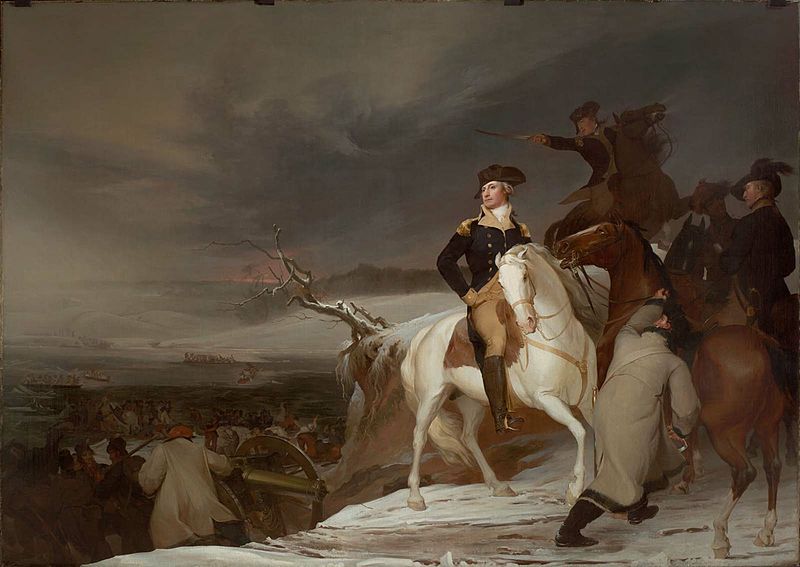
Matula Thoughts August 5, 2016

Matula_Logo1

Matula Thoughts – August 5, 2016


Summertime field notes, superheroes, and retrograde thoughts.
3975 words


Art Fair

Patient experience. Walking through the Art Fairs last month after great lectures from visiting professors, my thoughts wandered to Matula Thoughts/What’s New, this electronic communication that has become my habit for the past 16 years. It may be presumptuous to think that anyone would spend 20 minutes or more reading this monthly packet approaching 4000 words. Certainly, UM urology residents and faculty are too busy to give this more than a glance, and that’s OK by me. Of the 10 items usually offered I’d be happy if most folks just skimmed them and perhaps discovered one of enough interest to read in detail. Conversely, some alumni and friends hold me to account for each word and fact, and they are enough for me to know that this communication (What’s New email and Matula Thoughts website) is more than my whistling in the wind.


The_Doctor_Luke_Fildes copy

One.

Art & medicine. Luke Fildes’s painting, The Doctor, shown here last month, deserves further consideration in the afterglow of Don Nakayama’s Chang Lecture on Art & Medicine. [1892, Tate Gallery]. The duality of the doctor-patient relationship, ever so central to our profession, has gotten complicated by changes in technology, growth of subspecialties, necessity of teams and systems, and the sheer expense of modern healthcare. As Fildes shows, medical relationships in the pediatric world extend beyond twosomes and this actually pertains for all ages, since no one is an island. That nuance notwithstanding, the patient experience through the ages and into the complexity of today remains the central organizing principle of medicine.

Nakayama & Chang

[Dr. Chang & Don Nakayama]

An article in JAMA recently explored the patient experience via the Hospital Consumer Assessment of Healthcare Providers & Systems (HCAHPS) Survey. Delivered to random samples of newly discharged adult inpatients, the 32 items queried are measurements of patient experience that parlay into hospital quality comparisons and impact payments. [Tefera, Lehrman, Conway. Measurement of the patient experience. JAMA 315:2167, 2016]

It is unfortunate that health care systems and professional organizations hadn’t previously focused similar attention on patient experience and only now are compelled to investigate and improve it by the survey. We may chafe and groan at HCAHPS, but it reflects well on representational government working on behalf of its smallest and most important common denominator – individual people.

Everyone deserves a good experience when they need health care whether for childbirth, vaccination, otitis, UTI, injury, other ailments and disabilities, or the end of life. If for nothing more than “the golden rule” all of us in health care should constantly fine-tune our work to make patient care experiences uniformly excellent because, after all, we all become patients at points in life. The individual patient care experience is the essential deliverable of medicine and the epicenter of academic health care centers from the first day of medical school to the last day of practice, after which we all surely will become patients again.


Twitter invasion

Two.

Educating doctors. Last week’s White Coat Ceremony was the first day of medical school class for Michigan’s of 2020. Deans Rajesh Mangulkar and Steven Gay with their admissions team assembled this splendid 170th UMMS class. Unifying ceremonies are important cultural practices and this one is an exciting milestone for students and a pleasant occasion for the faculty who will be teaching the concepts, skills, and professionalism of medicine. Families in attendance held restless infants, took pictures, and applauded daughters and sons. A “doctor in the family,” for most of the audience, happens once in a blue moon, a rare circumstance of joy, and certainly evidence of success and luck in parenting. The attentive audience for the 172 new students entertained only rare social media diversions. Julian Wan represented our department on stage.

Dee at White Coat

Dee Fenner’s keynote talk resonated deeply. She described her career as a female pelvic surgeon and its impact on patients and on herself. Dee talked about the symbolism of the white coat and skewered today’s hype about “personalized medicine”, saying that medicine is always rightly personalized; our ability to tailor health care to the individual genome is just a matter of using better tools.  Alumni president (MCAS) Louito Edje said: “This medical school is the birthplace of experts. You have just taken the first step toward becoming one of those experts.” She recommended cultivation of three fundamental attitudes to knowledge: humility, adaptability, and generosity. Students then came to the stage and announced their names and origins before getting “cloaked.”

Cloaking

The ceremony passes quickly, but is long remembered. Students shortly immerse in intense learning, although medical school is kinder today with less grading, rare attrition, and greater attention to personal success and matters of team work.

New student

My favorite “new medical student story” concerns the late Horace Davenport. He had retired before I arrived in Ann Arbor, but remained active in the medical students’ Victor Vaughn Society that met monthly at a faculty home for a talk over dinner. Davenport, an international expert in physiology, was a superb and fearsome teacher as one student, Joseph J. Weiss (UMMS 1961), recalled from the fall of 1957.

“In our first physiology lecture Dr. Horace Davenport grabbed our attention by announcing that the first person to answer his question correctly would receive an ‘A’ in physiology and be exempt from any examinations or attendance. The question was: ‘What happened in 1623? The context implied an event of significant impact to human knowledge. After a long pause the amphitheater echoed with answers: the discovery of America, the landing of the pilgrim fathers, the death of Leonardo da Vinci. Then Nancy Zuzow called out: ‘The publication of William Harvey’s The Heart and its Circulation’. There was sudden silence. She must be right. How clever of her. Of course a physiologist would see this landmark publication as an event to which we should give homage. Who would have thought that Nancy was so smart? Even Dr. Davenport was impressed. He asked her to stand, and acknowledged that she had provided the first intelligent response. ‘However,’ he noted, ‘that publication occurred in 1628.’ No one could follow up up on Nancy’s response. Dr. Davenport looked around the room, sensed our ignorance, realized we had nothing more to offer, and then said: ‘1623 was the publication of Shakespeare’s First Folio.’ He announced that we would now move on and ‘return to our roles as attendants at the gas station of life”,’ and began his first in a series of three lectures on the ABC of Acid-Base Chemistry.” [Medicine at Michigan, Fall, 2000.  Weiss, a rheumatologist who practiced in Livonia, passed away in October 2015.  Zuzow died in 1964, while chief resident in OB GYN at St. Joseph Mercy, of a cerebral hemorrhage.]

First folio


Three.

New Perspectives. Visiting professors bring different perspectives and last month the Department of Urology initiated its new academic season with several superb visitors. Distinguished pediatric surgeon Don Nakayama gave our 10th annual Chang Lecture on Art and Medicine on the Diego Rivera Detroit Industry Murals. [Below: full house for Nakayama at Ford Auditorium]

Chang Lecture

I’ve been asked what relevance an art and medicine lecture has for a urology department’s faculty, residents, staff, alumni, and friends. Davenport would not have questioned the matter. This year, in particular, the lecture made perfect sense with Don’s discussion of what can now be called the orchiectomy panel in the Detroit Institute of Arts murals. Hundreds of thousands of people have viewed this work since 1933, including the surgical panel that art historians labeled “brain surgery” – a description unchallenged until Don revealed the scene represented an orchiectomy. His Chang Lecture explained the logic of Rivera’s choice.

Nelsons

Grossmans

Drach

[Top: Caleb & Sandy Nelson; Middle: Bart & Amy Grossman, Bottom: George Drach]

The day after the Chang Lecture, Caleb Nelson (Nesbit 2003) from Boston Children’s Hospital and Bart Grossman (Nesbit 1977) of MD Anderson Hospital in Houston delivered superb Duckett and Lapides Lectures. Caleb discussed the important NIH vesicoureteral reflux study while Bart brought us up to date on bladder cancer, greatly expanding my knowledge regarding the rapid advances in its pathogenesis and therapy. George Drach from the University of Pennsylvania provided a clear and instructive update on Medicaid coverage for children. Concurrent staff training went well thanks to those who stayed behind from this yearly academic morning to manage phones, clinics, and inevitable emergencies.

Lapides Lecture

[Above: Lapides Lecture, Danto Auditorium]


Tortise on post

Four.

Observation & reasoning. Don Coffey, legendary scientist and Johns Hopkins urology scholar, retired recently. Among his numerous memorable sayings he sometimes mentioned an old southern phrase: “if you see a turtle on a fencepost, it ain’t no coincidence.” A tortoise on a post isn’t some random situation that happens once in a blue moon, it is more likely the result of a purposeful and explainable action. (Of course, it is also not a nice thing.) Coffey was arguing for the importance of reflective and critical thinking as we stumble through the world and try to make sense of it, whether on a summertime pasture, in an art gallery, or in a laboratory examining Western blots.

[Above: tortoise sculpture on post. Mike Hommel’s yard AA, summer, 2016. Below: Coffey]

Coffey

feynman1

Richard Feynman (above), Nobel Laureate Physicist, offered a related metaphor.

“What do we mean by ‘understanding’ something? We can imagine that this complicated array of moving things which constitutes ‘the world’ is something like a great chess game being played by the gods, and we are observers of the game. We do not know what the rules of the game are; all we are allowed to do is to watch the playing. Of course if we watch long enough we may eventually catch on to a few of the rules… (Every once in a while something like castling is going on that we still do not understand).” [RP Feynman. Six Easy Pieces. 1995 Addison-Wesley. P.24]

Observation, reasoning, and experimentation are the fundamental parts of the scientific method that allows us to figure things out. Feynman’s castling allusion is brilliant.

EO Wilson_face0

[EO Wilson at UM LSI Convocation 2004]

E.O. Wilson went further with his thoughts on consilience, the unity of knowledge.

“You will see at once why I believe that the Enlightenment thinkers of the seventeenth and eighteenth centuries got it mostly right the first time. The assumptions they made of a lawful material world, the intrinsic unity of knowledge, and the potential of indefinite human progress are the ones we still take most readily into our hearts, suffer without, and find maximally rewarding through intellectual advance. The greatest enterprise of the mind has always been and always will be the attempted linkage of the sciences and humanities. The ongoing fragmentation of knowledge and resulting chaos in philosophy are not reflections of the real world, but artifacts of scholarship. The propositions of the original Enlightenment are increasing favored by objective evidence, especially from the natural sciences.” [Wilson. Consilience. P. 8. 1998]


superheroes

Five.

Superheros. Somewhat to our cultural disadvantage our brains are hardwired to favor physical performance, entertainment, and appearances over intellectual leaps of greatness. We celebrate actors, athletes, politicians, musicians, and cartoons far more than great intellects. Worse, intellectuals in many periods of history were deliberately purged.

Coffey, Feynman, and Wilson are real superheroes of our time. Their ideas have been hugely consequential and they individually are role models of character and intellect. Another name to add to the superhero list is Tu Youyou (屠呦呦). My friend Marston Linehan first alerted me to her incredible story and discovery of artemisinin. It is also a story of how the better nature of humanity is subject to the dark side of our species and the nations we let govern us.

Born in Ningbo, Zhejiang, China in 1930 Tu Youyou attended Peking University Medical School, developed an interest in pharmacology, and after graduation in 1955 began research at the Academy of Traditional Chinese Medicine in Beijing. This was a tricky time to be a scientist in Maoist China. Ruling authorities favored peasants as the essential revolutionary class and in May 1966, the Cultural Revolution launched violent class struggle with persecution of the “bourgeois and revisionist” elements. The Nine Black Categories (landlords, rich farmers, anti-revolutionaries, malcontents, right-wingers, traitors, spies, presumed capitalists, and intellectuals) were cruelly relocated to work or forage in the countryside while neo-revolutionaries disestablished the national status quo.

In 1967 as North Vietnamese troops contended in jungle combat with US forces, chloroquine-resistant malaria was taking a heavy toll on both sides. Mao Zedong launched a secret drug discovery project, Project 523, that Tu Youyou joined while her husband, a metallurgical engineer, was banished to the countryside and their daughter was placed in a Beijing nursery. Screening traditional Chinese herbs for anti-plasmodial effects Tu found Artemisia (sweet wormwood or quinghao) mentioned in a text 1,600 years old, called Emergency Prescriptions Kept Up One’s Sleeve (in translation). She led a team that developed an artemisinin-based drug combination, publishing the work anonymously in 1977, the year after the revolution had largely wound down and only in 1981 personally presented the work to World Health Organization (WHO). Artemisinin regimens are listed in the WHO catalog of “Essential Medicines.” Tu won the 2011 Lasker-DeBakey Clinical Medical Research Award and in 2015 the Nobel Prize In Physiology or Medicine for this work.

Artemisia

[Above: Artemisia annua. Below: Tu Youyou with teacher Lou Zhicen in 1951]

Tu_Youyou_and_Lou_Zhicen_in_1951.TIF


Six.

It may be a human conceit to think of ourselves as the singular species on Earth capable of self-improvement. Considering the impact of Coffey, Feynman, Wilson, and Tu among other intellectual superheroes, imagination at their levels seems a rarity in the universe. Yet, any sentient creature wants to improve its comfort as well as its immediate and future prospects, for who is to say that a whale, a dolphin, a gorilla, or an elephant cannot somehow imagine a more comfortable, happier, or otherwise better tomorrow? In anticipation of another day, birds make nests, ants make tunnels, and bees make hives.

We humans have extraordinary powers of language, skill (with our cherished opposable thumbs), and imagination that provide unprecedented capacity to improve ourselves. Accordingly we easily imagine ourselves in better situations, whether physically, materially, intellectually, or morally, and as it is said, if we can imagine something we probably can create it.

Imagination of a better tomorrow is part of the drive for change as we consider our political future, although this can be risky. The intoxicating saying out with the old and in with the new has led to such things as the United States of America in 1776 or the Maastricht Treaty and European Union in 1992. Change, however, does not always produce happy alternatives, as evidenced by the Third Reich, the dissolution of Yugoslavia, the Arab Spring, or Venezuela’s Chavez era. Disestablishment does not predictably improve life for most people. The human construct, at its best and most creative, rests on a fragile establishment of geopolitical, economic, and environmental stability. The status quo that has been established may be imperfect, but is disestablished only at considerable risk.

Representational government and cosmopolitan society seem to be the best-case scenario for what might be called the human experiment wherein various factions of a diverse population come together to create a just social agenda and build a better tomorrow. The threat to this utopian scenario comes from factionalisms and tribalisms that insert narrow self -interests and litmus tests for cooperation into any consensus for agenda. We see this in the mid-east, in the European Zone, and in American presidential election cycles. Generally ignored or forgotten by competing factions and litmus-testers is the worst-case scenario of civil collapse. We experienced limited episodes of this in two World Wars, southeastern Asian catastrophes, central African genocides, Yugoslavia’s dissolution, and the collapse of Syria to name some instances. However sturdy we think human civilization may be, it is only a thin veneer in a random and dangerous universe. Civil implosions of one sort or another occur intermittently in complex societies, however we must become better at predicting them, circumventing them, and most importantly preventing their dissemination. Their catastrophic nature surpasses any sectarian interests or individual beliefs beyond the survival of civilization itself.


Moon June 17, 2016

Seven.

The Blue Moon, mentioned earlier, is a picturesque metaphor for an uncommon event. It’s actually not random, inasmuch as a blue moon is a second full moon in a given month (or other calendar period), so the next one can be accurately predicted. Since a full moon occurs about every 29.5 days, on the uncommon occasions it appears at the very beginning of a month, there is a chance of Blue Moon within that same month. The next Blue Moon we can expect will be January 31, 2018.

The song is a familiar one. It was originally “MGM song #225 Prayer (Oh Lord Make Me a Movie Star)” by Richard Rogers and Lorenz Hart in 1933. Other lyrics were applied, but none stuck until Hart wrote Blue Moon in 1935.

Nothing is visually different between blue moons or any other full moons. I took this picture (above) of a nearly full moon this June after some trial and error. A full moon is a beautiful thing and can’t help but give anyone a sense of the small individual human context. Friend and colleague Philip Ransley, now working mainly in Pakistan, spent much of his career aligning his visiting professorships around the world with lunar eclipses and lugging telescopes and cameras along with his pediatric urology slides. Receiving the Pediatric Urology Medal in 2001, barely a month after the tragic event of September 11, 2001, he spoke on lunar-solar rhythms, shadows, and their relationship to the human narrative: “… I would like to lead you into my other life, a life dominated by gravity and its sales rep, time. It has been brought home to us very forcibly how gravity rules our lives and how it governs everything that moves in the universe.” [Ransley. Chasing the moon’s shadow J. Urol. 168:1671, 2002]

PGR2

[PG Ransley c. 2005]

Ransley is currently working in Karachi, Pakistan at the Sindh Institute of Urology and Transplantation, the largest center of urology, nephrology, and renal transplantation in SE Asia. The pediatric urology unit at SIUT is named The Philip G. Ransley Department. [Sultan, S. Front. Pediatr. 2:88, 2014]


Eight.

Ruthless foragers. Earlier this summer a friend and colleague from Boston Children’s Hospital, David Diamond, brought me along for a bluefish excursion off of Cape Cod. These formidable eating machines travel up and down the Atlantic coast foraging for smaller fish. Like many other targets of human consumption, blue fish are not as plentiful as they once were, although they are hardly endangered today.

BluefishBiomass_Sept2015

[From Atlantic States Marine Fisheries Commission]

Just as we label ourselves Homo sapiens, the bluefish are Pomatomus saltatrix. Both, coincidentally, were named by Linnaeus, the botanist who got his start as a proto-urologist, treating venereal disease in mid 18th century Stockholm. His binomial classification system (Genus, species) is the basis of zoological conversation, although genomic reclassification will upend many assumptions. Also like us, the bluefish is the only extant species of its genus – Pomatomidae for the fish and Hominidae for us. Thus we are both either the end of a biologic family line or the beginning of something new. Our fellow hominids, such as Neanderthals, Denisovans, or Homo floresiensis didn’t last much beyond 30,000 years ago, although they left some of their DNA with us. It may be a long shot, but I hope H. sapiens can go another 30,000 years.

Bluefish

[Bove: ruthless foragers]

Teeth

Like us, Pomatomus saltatrix are ruthless foragers, eating voraciously well past the point of hunger. Their teeth are hard and sharp, reminding me of the piranha I caught on an unexpected visit to the Hato Piñero Jungle when attending a neurogenic bladder meeting in Venezuela some 20 years ago. Lest you think me a serious fisherman, I disclose there’ve not been many fish in between these two.

Pirhana

[one of 4 piranha geni (Pristobrycon, Pygocentrus, Pygopristis, & Serrasalmus that include over 60 species]

Linnaeus gave bluefish a scientific name in 1754, describing the scar-like line on the gill cover and feeding frenzy behavior (tomos for cut and poma for cover; saltatrix for jumper, as in somersault). I learned this from the book Blues, by author John Hersey (1914-1993), who was better known for his Pulitzer novel, A Bell for Adano (1944) or his other nonfiction book, Hiroshima (1946). [Below: Hersey]

Johnhersey

Michigan trivia: Hersey lettered in football at Yale where he was coached by UM alumnus Gerald Ford who was an assistant coach in football and boxing for several years before admission to Yale’s law school. Hersey became a journalist after college and graduate school in Cambridge. In the winter of 1945-46 while in Japan reporting for The New Yorker on the reconstruction after the war he met a Jesuit missionary who survived the Hiroshima bomb, and through him and other survivors put together an unforgettable narrative of the event. The bluefish story came later (1987).


Nine.

Today & tomorrow. Today is the start of the Summer Olympics in Rio de Janeiro, Brazil where 500,000 visitors are expected, presumably well covered and armed with insect repellent due to fears of Zika, an arbovirus related to dengue, yellow fever, Japanese encephalitis, and West Nile viruses.
Tomorrow is a sobering anniversary. I was 11 days old, on August 6, 1945, when, at 8:15 AM, a burst of energy 600 meters above the Aioi Bridge in Hiroshima, Japan incinerated half the city’s population of 340,000 people. Don Nakayama wrote a compelling article on the surgeons of Hiroshima at Ground Zero, detailing individual stories of professional heroism. [D. Nakayama. Surgeons at Ground Zero of the Atomic Age. J. Surg. Ed. 71:444, 2014] We reflect on Hiroshima (and Nagasaki) not only to honor the fallen innocents and to re-learn the terrible consequences of armed conflict, but also to recognize how close we are to self-extermination. A new book by former Secretary of Defense, William Perry, makes this possibility very clear, showing how much closer we came to that brink during the Cuban Missile Crisis. [Perry. My Journey at the Nuclear Brink. Stanford University Press. 2016]


Ten.

Self-determination vs. self-termination. Life, and our species in particular, is far less common in the known universe than Blue Moons, it might be said, although those moons actually are mere artifacts of calendars and imagination. Art and medicine are distinguishing features of our species, Homo sapiens 1.0. The ancient cave dwelling illustrations of handprints on the walls and galloping horses, are evidence of our primeval need to express ourselves by making images. The need to care for each other (“medicine” is not quite the right word) is an extension from the fact that we are perhaps the only species that needs direct physical assistance to deliver our progeny. If our species is to have a future version (Homo sapiens 2.0) we will have to check ourselves pretty quickly before we terminate ourselves, through war and genocide, consumption of planetary resources, or degradation of the environment. While representational government, nationally and internationally, may be our best hope to prevent termination we will have to represent ourselves a lot better. That’s a fact whether here in Ann Arbor, in Washington DC, in China, Africa, Asia, or Europe.

Tribalism resonates with many deep human needs and it has gotten our species along this far, but H. sapiens 2.0 will have to make the jump from tribalist behavior to global cosmopolitanism. Sebastian Junger, a well-known war journalist, has written a compelling book that explores the human need for a sense of community that he describes by the title, Tribe. While we need better sense of community in complex cosmopolitan society, we cannot accept primitive tribalism, sectarianism, or nativism of exclusivity that exacerbate conflict among the “isms.” Tribalism cannot create an optimal or even a good human future whether the version is Brexist or ISIS, paths retrograde to human progress and the wellbeing of humanity in general.

Girl with pearl

[Girl with Pearl Earing, Vermeer, c. 1665, & viewers at Mauritius Museum, The Hague]

Reflections on art and medicine lead to cosmopolitan and humanitarian thought and behavior. Humanistic reflection, shared broadly, should track us more closely to a utopian scenario, rather than to catastrophe that is only a random contingency away.

Tulp

[Anatomy Lesson of Nicolaes Tulp. Rembrandt, 1632. Mauritius Museum, The Hague]


Thank you for reading our Matula Thoughts.

David A. Bloom
University of Michigan, Department of Urology, Ann Arbor
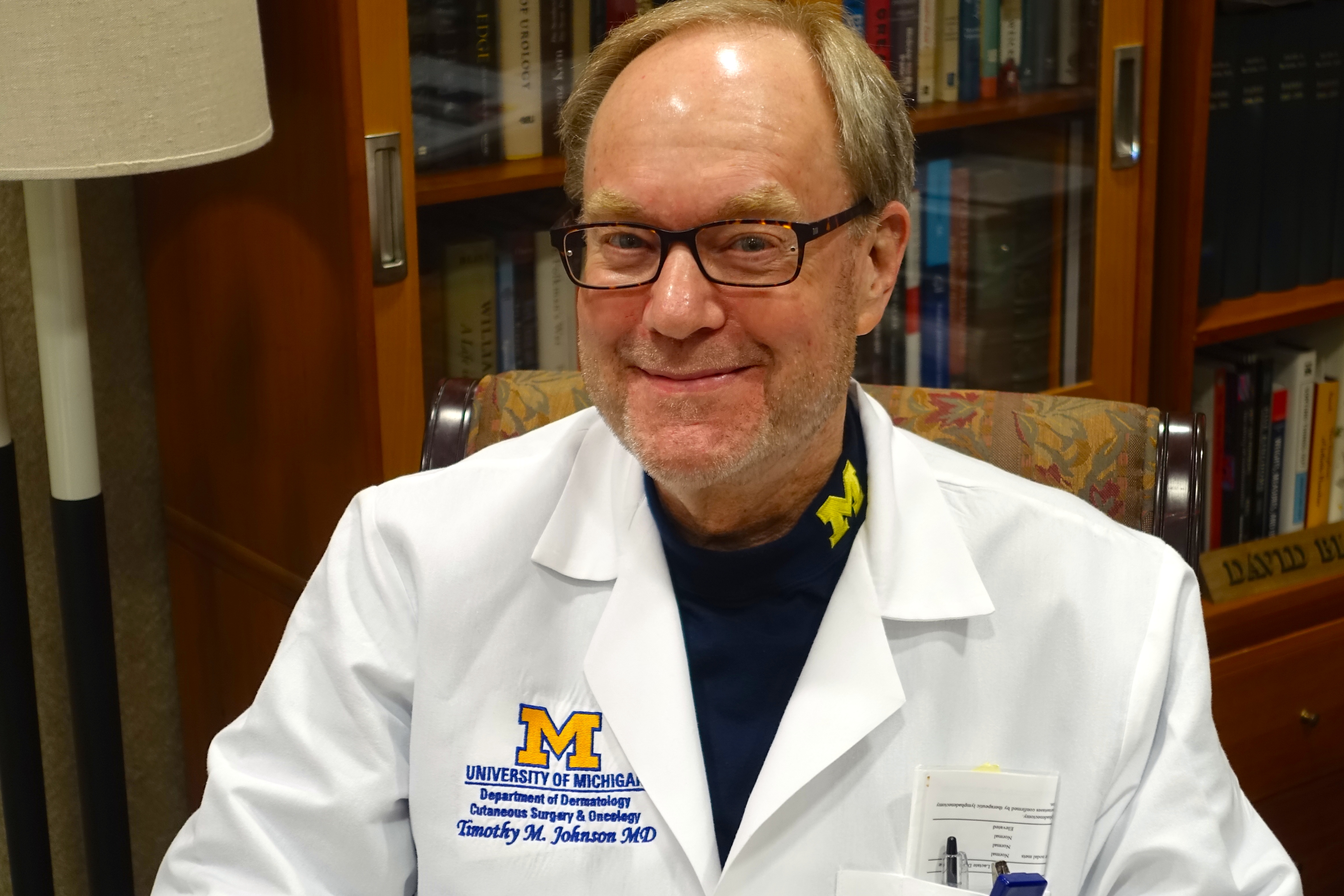
Commencement 2016

DAB What’s New –July 1, 2016

Matula_Logo1

3805 words

 Birthing Couple_16681983_5x5-150dpi

One.  

Like the matula, this African birthing figure is a rich symbol for the healing arts, or “medicine”, if you apply that term as a generality. We hominids, unlike most other creatures, need some help with delivery of babies. Usually, birthing assistants offer emotional support and necessary physical aid while nature takes its course, but sometimes the midwife or physician will be life-saving. Birth assistance, as depicted above, has been going on since the dawn of mankind; each generation teaches its successors how best to do the job, based on experience, knowledge, and the technology available. [Figure: JAMA cover and St. Louis Art Museum. Birthing Couple. C. 1200. Niger Delta]

            Another cycle of teaching the next generation begins today in Ann Arbor as medical students transition into house officers, new fellows morph into subspecialists, and new faculty begin careers as urologists, educators, and leaders. Incoming residents feel a sense of life’s infinite potential, yet their careers will pass by in the blink of time’s eye. These thoughts came to mind as I reflected on the recent loss of Carl Van Appledorn and paused by his residency class picture of 1972.

Van Appeldorn 1972

[Front: 2nd from left Ananias Diokno, Ed Tank 3rd from left, John Konnak 4th, Jack Lapides 5th; top row – Bill Hyndman 4th from L, Carl 7th, Dan Karsch 8th, Lee Underwood 9th, Sherman Silber far right]

My residency training began in 1971 at UCLA and the surgery department picture hangs on my office wall [below]. One of my former senior residents, Jim Skow, still practices thoracic surgery in California, but I think most others senior to me then have hung up their stethoscopes. One chief resident, Mike McArthur, retired to run The Caldwell Family Zoo in Tyler, Texas. A number of my fellow interns are still working: Erick Albert (urologist in Lodi, California), Arnie Brody (hand surgeon in Pittsburgh), Ron Busuttil (Chair of Surgery at UCLA), David Confer (urologist in Tulsa, OK), John Cook (general and vascular surgeon in Billings, Montana), Jon Kaswick (urologist at Kaiser in LA), Doug McConnell (recently retired from cardiothoracic surgery in Long Beach and Redding, CA), Edward Lewis Clark Pritchett III (cardiologist at Duke), and Eric Zimmerman (neurosurgeon in Traverse City). I have lost track of most of the others (we started with 18 surgery interns and ended with 5 chiefs).

DAB 1971

A few faculty who taught me at UCLA are still working. I saw Bob Smith at the AUA last month, Rick Ehrlich maintains simultaneous extraordinary careers in urology as well as photography, and Shlomo Raz is quite busy at UCLA.

DAB, RBS  

[Above: DAB & Bob Smith; below Rick at AAP 2010]

RME

            When I finished training, board certification lasted a lifetime, hospital credentialing was rudimentary, and one’s frame of reference as a physician was largely centered on individual performance, skills, and drive. Relationships to larger systems, while important and necessary, were secondary concerns. Since then the dynamic has reversed and large systems such as the electronic medical record, peer review, MOC, RVUs, and checklists dominate individuals. Credentialing, provider enrollment, and billing have become complex and require substantial infrastructures. Proposed MACRA regulations, replacing the Sustainable Growth Rate method of physician reimbursement and published last April, prescribe financial penalties for single and small (2-9 practitioner) medical practices. The end is probably in sight for the traditional duality of health care with one patient and one provider at a time. For better and for worse, teams and systems are replacing individuals.


Two.

Five UM chief residents and four fellows graduated from our training program last month and we celebrated over dinner at the Art Museum to honor them and their families. Rebekah Beach, Miriam Hadj-Moussa, Michael Kozminski, Amy Li, and Galaxy Shah, plus Abdul Al Ruwaily, Sapan Ambani, Chad Ellimoottil, and Yahir Santiago-Lastra completed residency and fellowships. Their next career steps disperse them to Seattle, Phoenix, Grand Rapids, Duluth, Saudi Arabia, San Diego, and Ann Arbor. Below, 4 chiefs honor our reconstructive urology faculty member Bahaa Malaeb with the Silver Cystoscope Award.

Chiefs 2016

As these trainees leave, a new cycle of health care education begins in Ann Arbor and the UM Health System enters its first fiscal year under a new organizational model. To understand this change, a little history is helpful.      The University of Michigan began in 1817 in Detroit and moved to Ann Arbor in 1837, but didn’t establish a medical school until 1850. Back then, doctors were educated by two years of lectures and anatomy dissection. They studied ancient and fairly static topics, but change was in the air as the modern conceptual basis of medicine was on the verge of consolidation. Germ theory, pathology, biochemistry, physiology, and anesthesiology were joining the conversation of health care. Medical schools became places not just for lectures and anatomy dissection, but places with laboratories for the study of human biology and disease, as well as surgery.
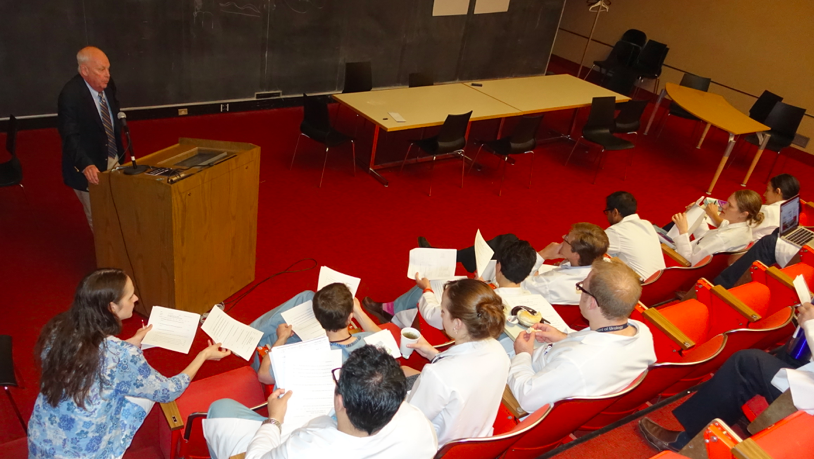
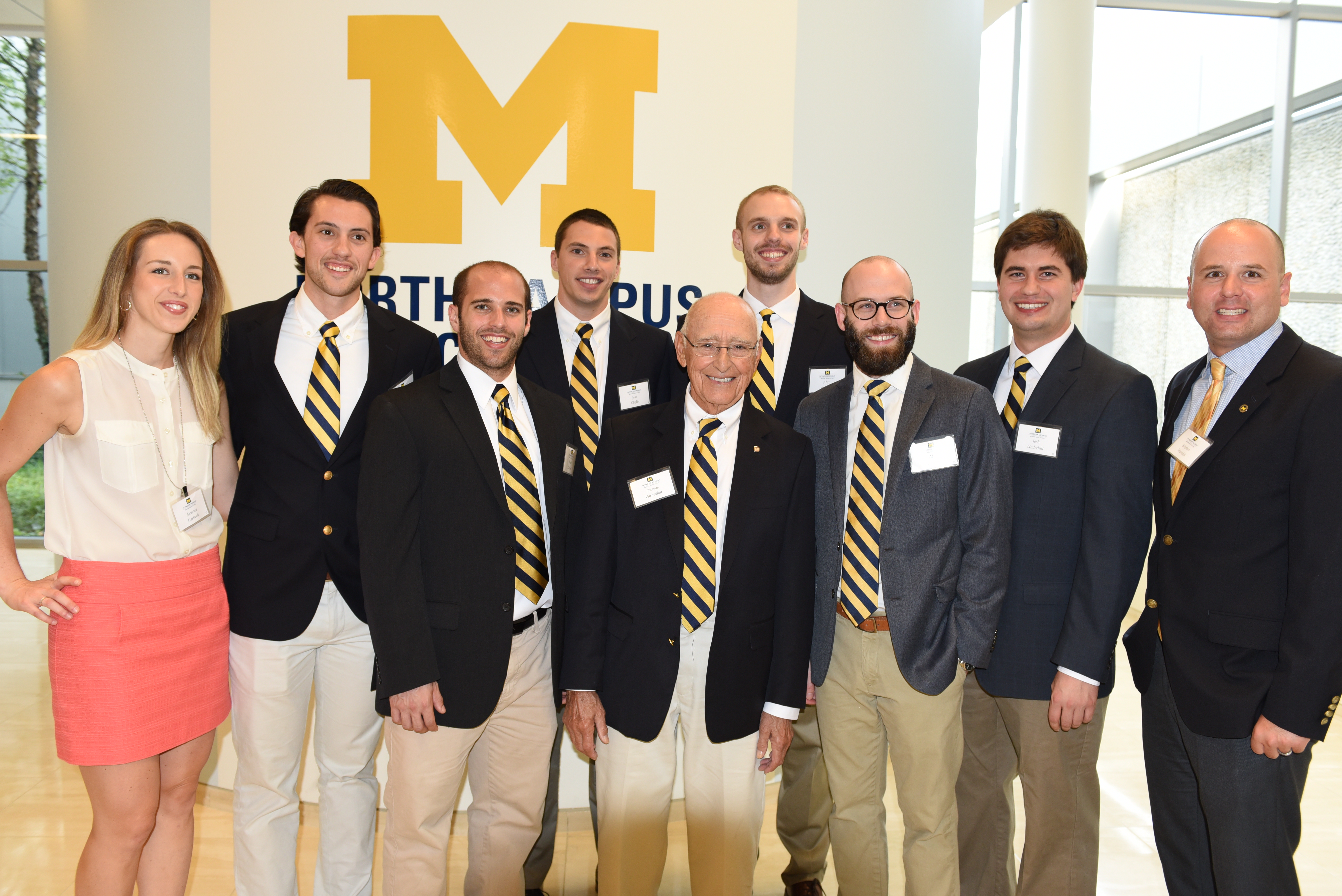
Med School Bldg

[Above: Medical School; below: faculty house/first hospital]

Ist hosp

In 1867, a UM faculty house was converted into a dormitory for patients undergoing surgery in the medical school, making the University of Michigan the first university to own and operate a hospital. The medical school curriculum grew in complexity and length to 4 years, adding “basic science” laboratories and the “clinical laboratories” of bedside instruction. The hospital necessarily enlarged in scale, functions, personnel, and equipment.  By the late 19th century, some medical student graduates began to spend a year or more in the hospital and medical school learning new skills and fields of practice.


Three.          

            The UM AMC. By 1910, when the Flexner report reformed medical education, budgets of UM hospital ($70,000/year) and medical school ($83,000/year) were comparable. Management of the two organizations diverged increasingly in the 20th century, requiring different sets of expertise. Hospital management followed the business model of American industry, centered on the principles of managerial accounting with cost centers, unit margins, accrual accounting, capital allocation, etc. Medical school management more closely followed academic principles of not-for-profit organizations with budgets decentralized to academic units that had their own goals and measures of success.

Cabot copy

Hugh Cabot, world renowned urologist, arrived from Boston in late 1919, attracted by the full-time salary model and opportunity to build a multi-specialty surgery department in Ann Arbor. He became medical school dean in 1921 and by 1926 opened a modern hospital of 1000 beds with specialties that defined the states-of-the art in medicine and surgery. That year Cabot’s first trainees, Charles Huggins and Reed Nesbit, began postgraduate medical education. Cabot’s confrontational personality produced significant backlash as he built his medical mecca, an integrated group practice. He was abrasive and blind to the value of diversity, either in opinions that differed from his own or in people themselves. Regional physicians disliked him and ultimately the regents fired him, “in the interests of greater harmony”, on February 11, 1930.

Hosp 26

Without a dean, the Medical School was run by its Executive Committee for 3 years, and a third financial enterprise became important in addition to hospital and medical school systems. This was the business of professional services. Senior professors then could independently bill for their professional services through their own offices and other employees were paid by those professors or the hospital. The lines between medical school, hospital, and professional offices regarding “who paid for what” were contested.

            It was natural for the hospital to provide outpatient services and in 1953 it opened a new building for the 24 departmentally-based ambulatory clinics (this is now the Med Inn Building) that quickly saw 20,000 patients monthly. While hospitals share many similarities with ambulatory care facilities, the work flows and challenges are actually quite different. Dissatisfaction grew over the next 50 years as physicians found themselves marginalized in the systemic clinical decision-making as medical care became increasingly complex, specialized, and expensive. Accounting methodologies for hospital and medical school differed. Matt Comstock, our Senior Finance Executive, explains it well:The entire university follows GASB (government accounting standards) when filing financial reports.  But the units within the University have had differences in how accounting standards were (and still are) applied internally to “run the business.”  The hospital followed more traditional accrual accounting standards that line up with GASB for external reporting. The UMMS used a  “sources/uses” view (think cash) for many years.” As hospital directors managed the space, capital allocations, and personnel for the departmentally-based outpatient clinics, tensions grew between hospital managerial accountancy and departmental/faculty academic missions.

Another factor arose in the latter half of the 20th century when academic medical centers made NIH funding a priority in the academic mission and failed to recognize that their essential deliverable needed to be patient care. This is the moral epicenter of academic medicine. When done right, it drives the rest of the mission and creates a healthy financial margin. Our motto in the Urology Department has become kind and excellent patient-centered care, thoroughly integrated with education and innovation at all levels. This cannot be accomplished by the providers alone, it requires an integrated systemic effort in this era of complex, team-based health care. An archipelago of cost centers cannot accomplish this task. As Toyota’s Lean Process Systems have taught western business – productivity, efficiency, and workplace satisfaction are maximized when key stakeholders participate in decisions about their work. In other words, process improvement is best accomplished by the people executing the processes.


Four.

            Archipelagos of costs centers. This metaphor comes from my friend Doug McConnell who stopped in AA with his wife Bonny on their retirement tour. We recounted similar experiences in health systems, such as seeing patients on hold in operating rooms after surgery was completed, because the recovery room was full due to nursing staff shortages in an ICU. The costs of an idle staffed OR far outweigh any saved ICU nursing position. Delay or cancellation of subsequent patients adds to cost and frustration. Downstream effects from one “efficient” cost center can sabotage an entire hospital.

Although ambulatory care activities led the way for UMHS restructuring, we still have much to gain in terms of better management of our entire enterprise in a patient-centric fashion. Just as Ford, Chrysler, and GM learned, managerial control by accounting (the archipelago of cost centers managed by regulation of supply and demand) is a failed experiment of western business, and lean process systems as developed by Toyota produces better products, with greater efficiency, and greater satisfaction for all customers.

            In 2007, UM hospital transferred ambulatory care operations to the clinical faculty, organized in the form of a Faculty Group Practice (FGP). Led by dean Jim Woolliscroft and associate dean for clinical affairs David Spahlinger, it consisted of the clinical chairs and elected positions from 5 clinical cohorts. With a book of business of 0.8 billion dollars, it was a risky venture, as the FGP assumed all of the downside risk, half the upside risk (the other half to split with the hospital), and no capital dollars. Ambulatory activities were split into 90 ambulatory care units (ACUs) functioning under the principle of keeping local decisions as close to “where the work is done” as possible.

Before merger of Medical School and Hospital Finance Offices in 2009, the two offices were not only competitive, but in the 1990s were so suspicious of each other that their staffs were prohibited from sharing information. This situation was reflective of systemic dysfunction related to structure, governance, and personality conditions that incented competitive silos. The merger brought Medical School financial reporting to the more traditional accrual view of the world, but also brought clinical and academic values to the processes, personnel, and capital of health care business.

Further changes this year aim to create a more integrated organization with a balanced mission of education, clinical practice, and research, but centered on an essential deliverable of kind and excellent patient care. Entering FY 2017, we have 150 ACUs and are applying our operational ACU principles throughout the larger UM Health System.


Five.

UM AHC reorganization. On January 1, 2016 our EVPMA, Marschall Runge, incorporated the title and functions of Medical School Dean in his office. The new organizational chart under him features 3 senior associate deans: 1.) clinical senior associate dean & president of the UMHS, David Spahlinger; 2.) academic senior associate dean, Carol Bradford, effective July 1; and 3.) scientific senior associate dean, TBD.

            The UMHS under David Spahlinger as its president features 3 operational units: a.) the UM Medical Group (UMMG, formerly the FGP); b.) Hospital Group I (UM Main Hospital and the CVC); and Hospital Group II (Mott & Women’s Hospital). Each hospital group will be managed under a leadership triad consisting of physician, nursing, and administrative leaders with a committee representing key stakeholders, namely “the people who do the work.”  The pieces of this new matrix are still coming into position – it is a work in progress, but the immediate challenges are:

a.)           Maximizing the patient experience and minimizing waste in clinical operations while enhancing the trifold academic mission.

b.)           Consolidation of large health systems around UMHS. Our educational programs (800 medical students & Ph.D. candidates, 1100 residents & fellows in 100 different areas of focused clinical practice, plus many other health education learning groups) require 400,000 covered lives locally and at least 3.5 million lives regionally.

c.)           Changing health care laws and regulations that force reimbursement away from individual professional payments to alternative methods such as bundled payments, episode of care payments, payments (or penalties) based on notions of value and quality (still incompletely defined or understood).

Accordingly, we need urgent investment to increase the scale and work-flow of our clinical operations.


Six.

            A new season begins. Today, July 1, our new residents and fellows enter into this mix of change. The new residents (“interns”) are called PGY 1s (postgraduate year ones) as they enter the career-defining stage of medical education, a time that exceeds the years spent in medical school. New house officers & fellows are in search of competency. Our job as faculty, along with senior residents and fellows, is to help them acquire the skills, professionalism, and hunger for excellence that will distinguish them as our colleagues and successors. It is a tall order and while they seek professional competency during residency, attainment of mastery will be a lifelong pursuit.

            Daniel Pink, in his book Drive, claims that humans need autonomy, mastery, and purpose if they are to achieve success and fulfillment in life. Purpose is readily found in most health care careers. Autonomy, while necessarily threatened by the larger systems and regulations, is still found in medicine. Mastery of a skill, or task, it is said, requires around 10,000 hours of practice. Urology, however, is more than a single skill, and judging empirically from the length of residency and fellowship training, it is easy to extrapolate that the hours necessary for mastery of urology exceeds 30,000. 

            Our profession, however, is the practice of medicine – a continuous process – so self-education is never done. Hunger for excellence drives  good doctors who continue to learn, on a daily basis from patients, from colleagues, and from experiences that fuel curiosity. Drive for excellence is a part of the professionalism that society expects from its physicians and other health care workers.


Seven.          

Summer art fair.  I had lived in Ann Arbor for 10 years before attending an Art Fair and thus deliberately began our Duckett Lecture in Pediatric Urology as the first educational event of each new fiscal/academic year on Friday of the Art Fair. We hold simultaneous staff training for the non-physicians of our department and then give the afternoon free to everyone (except for a skeleton crew to staff the phones, consults, urgencies) as a time to visit the Art Fairs or stay home and “reboot” for the new academic year. It is costly to drop a business day from our books, but we justified this as both an education/training morning and a yearly “afternoon off” birthday gift for our employees. This year (Friday July 22) the Duckett lecturer will be Caleb Nelson (Nesbit 2004), faculty member at Harvard and the Boston Children’s Hospital.

Caleb

[Above: Caleb Nelson. Below: Bart Grossman]

Bart 2016

In 2006 we added the Lapides Lecture to broaden the scope of the morning, and this year it will be Bart Grossman (Nesbit 1997), our former Urology Section Chief (2003-2004), currently professor at MD Anderson Hospital in Houston.

Building on the art fair theme, we added the Chang Lecture on Art & Medicine in 2007 to kick off the academic events. This year, Don Nakayama, a distinguished pediatric surgeon, will be speaking about his novel discovery in the Diego Rivera murals at the Detroit Institute of Arts. This will be on Thursday at 5 PM July 21 in Ford Amphitheater University Hospital.

Nakayama

Don Nakayama


Eight.            

Professions & commodities. Society recognizes a difference between a profession such as medical practice, and a commodity such as pork bellies. The principle value of a commodity is the commodity itself, assumed (although not always accurately) to be of a standard quality. The value of a professional service, while assumed by its status as professional to be of an acceptable standard, is more nuanced. While an acceptable standard is expected, society anticipates a higher level of duty and service than from a commodity and accordingly society allows professions to set their standards and train their successors. Professions are constantly evolving as science, practice, and technology provide new tools and new challenges. Society also shapes new expectations and demands. A pork belly, for the most part, will always be a pork belly whether you hold one in your hands today or imagine one in 50 years. Care of today’s patient with bladder cancer will be very different from that of a patient in another half century. The stories of today’s pork bellies will not be closely intertwined with the commodity 50 years hence. The same is not so true as with treatment of bladder cancer, which will be built upon many stories of discovery, trial, failure, and tragedy going forward.


Nine.

Lasker. One way to understand the practice and science of medicine today, and to anticipate the opportunities and needs of tomorrow, is through stories of discovery. These are represented (although incompletely) in major recognitions such as the Nobel Prize or Lasker Awards and deserve more attention in our cultural literacy, so I like to highlight them from time to time. The Lasker program turned 70 years old last year and its Basic Medical Research Award went to Evelyn Witkin, for work demonstrating responses of bacteria to DNA damage and to Stephen Elledge for showing the molecular mechanisms by which eukaryotic cells recognize and respond to DNA damage. The Lasker-DeBakey Clinical Medical Research Award went to James Allison for enabling T-cells to attack cancer cells by removing “checkpoints” on these “bad guys” that normally inhibit the T-cells. Notice DeBakey’s name enjoined to the Lasker clinical award (DeBakey was mentioned in May’s What’s New/Matula Thoughts). The work celebrated in last year’s Laskers will no doubt influence urology, among other fields, in years to come. Allison’s immunotherapy work has already profoundly changed the face of melanoma management. [Pomeroy. The Lasker Awards at 70. JAMA. 314: 1117, 2015]

            If you go to the Lasker Foundation web page you can find the Essay Contest with three superb essays in 2016 by a Ph.D. student (David Ottenheimer at Johns Hopkins on modern neuroscience tools for psychiatric illness), a second year medical student (Therese Korndorf at U. Illinois Peoria on the bacterial social network and quorum sensing), and a pediatrics resident at LA Children’s (Unikora Yang on DNA editing with CRISPR). This is open to medical students, residents, graduate students, and postdocs. First prize yields $10,000. Maybe one of our learners will get inspired to write a 2017 essay.


Ten.

            Commencement. The first day of medical school is offset for a month after the interns and older residents began their cycle. The White Coat Ceremony marks the start of our next 4-year medical school curriculum when students and families assemble at Hill Auditorium Saturday 10 AM July 30. New students will walk across the stage, announce their names and schools of origin, and receive white coats from the Medical School, pins from the Alumni Society, and stethoscopes provided by clinical faculty and several donors. The short white coats, symbols of medical student education, will be traded for the longer white coats of residents and faculty 4 years from now. The White Coat Ceremony, open to the public, is a lovely occasion to reconnect with our purpose of medical education. It would be a shame for a Michigan faculty member to miss the chance to do this at least once in a career.

The stethoscope inclusion began 15 years ago under Allen Lichter’s deanship, believing that the white coat and pin needed more symbolic weight to match the moment. The stethoscope is today’s “badge of office” for physicians and it’s certainly a substantial gift – the high quality ones we give out cost over $225 each. Stethoscopes connect us to patients and are a fitting metaphor for listening to the patient, in a larger sense than hearing heartbeats. Before the stethoscope was invented (by Laennec in Paris in 1816) the symbol for medical practice was the matula – the glass flask used by doctors to examine urine. This device, evident in paintings and sculptures, was a perfect metaphor for observation: the clinician’s “gaze”. More practically, the matula was the tool of uroscopy.

            The African nativity scene, the uroscopy matula, and now the stethoscope are symbols of the practice of medicine, each reflecting progressive implementation of technology and each reflecting the human skills of comforting, observing, and reflective listening. Economic, social, and regulatory pressures on healthcare professions, medicine in particular, seem to be increasing and are  “commoditizing” services that human culture has, until now, largely left to the realm of the professions. Admittedly, many medical services can be readily commoditized, such as immunizations, screening physical exams, dental hygiene, and podiatry. These are important tasks that all people need and require training and skill, but can be delivered as standard practices. Expertise deploys along a bell-shaped curve of quality, but these can be efficiently standardized by algorithms and check-lists.

            Other medical services such as managing patients with UTIs, hypospadias, neurogenic bladder, stress incontinence, medullary sponge kidney, or prostate cancer involve more than simple checklists or single skill-sets. Even “episode-of-care” approaches will fail to capture the holistic approach that patients need for specific complaints, in the complex context of their comorbidities, families, and lifelong needs and aspirations.

            The Luke Fildes painting of 1891 represents the professional side of medicine better than most images. The artist’s first son, Philip, died of TB in 1877 and the doctor at the bedside inspired this great painting. A later son, Paul, would become an eminent physician with a complex career that encompassed roles both in the discovery of sulphonamide action and the alleged use of Botulin toxin to assassinate top Nazi Reinhard Heydrich in 1942. The toxin story, probably fanciful, doesn’t diminish the richness of the father’s metaphor for the profession of medicine. In fact, the tale expands any related dialogue to an unexpected dimension. Consider dropping in at Hill Auditorium in 4 weeks for our Medical School Commencement (Saturday, this year at 10 AM) and starting conversations with your professional successors as they initiate their journeys.

The_Doctor_Luke_Fildes copy


Thanks for reading What’s New and Matula Thoughts.


David A. Bloom

Matula Thoughts February 5, 2016

DAB What’s New February 5, 2016


Legendary Jedi Masters, teams,  & other considerations

3779 words

UM Hospital Postcard2

One.               Ninety years ago a massive hospital opened for business here in Ann Arbor, although its intent at that moment was not just ordinary hospital business. The intention was advanced clinical care, medical education, and research. These activities on that hill, comprising the three-fold mission of our medical school, would have substantial impact throughout the world of health care. Health care was evolving from the work of solo practitioners armed with their hands and a few tools to specialty based teams armed with deep knowledge of their fields and incredible technologies. Michigan’s first 2 urology trainees began their residency training that same year.

The advanced clinical care, medical education, and research offered at Michigan were at the cutting edges of possibility in 1926 and changed medical practice, pedagogy, and discovery over the next century. Hugh Cabot, chair of the surgery department and dean at the time, was the force behind the building (shown above in an antique post card) dominating this small university town. In addition to building the hospital, Cabot put together the University’s first coherent multispecialty group practice.  He also was Michigan’s first academic urologist with a strong record of clinical innovation, scholarly achievement and, beginning that year in 1926, urologic education. His first two trainees in Ann Arbor would come to fame well beyond this town and their field of urology, having gotten their start standing on Cabot’s shoulders, as it might be said. Reed Nesbit came from California, remaining at the University of Michigan for an extraordinary period of clinical innovation, education, and leadership in American medicine lasting more than 40 years. Charles Huggins came from Boston and would go on to win the Nobel Prize for demonstrating the hormonal dependency of prostate cancer. We’ve not quite matched that first cohort of residency training, although we have trained many superb urologists in the intervening 90 years.
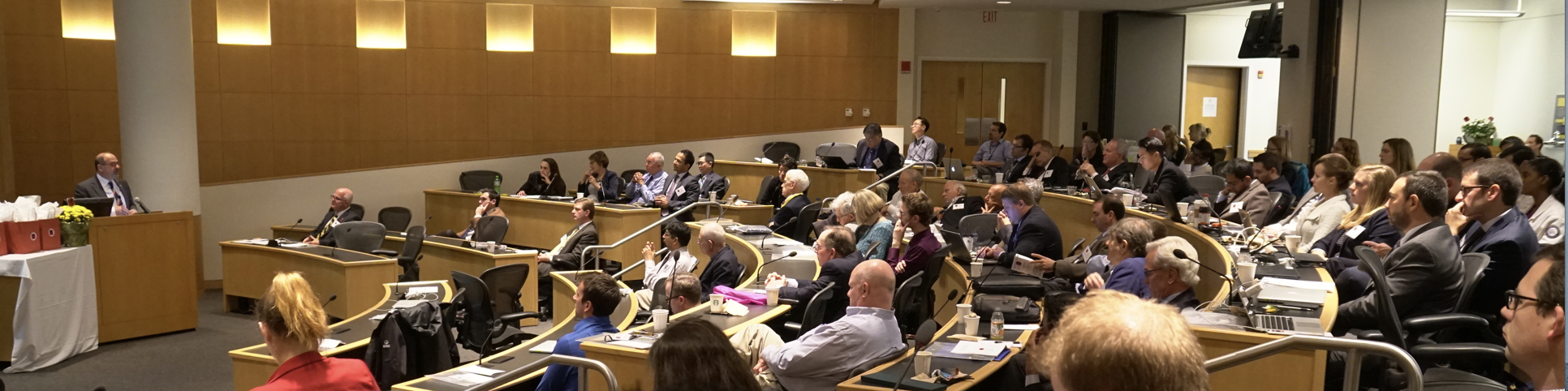
The world of specialty training has changed much since those autocratic days of graduate medical education when It was considered somewhat of a gift for the few experts like Cabot to allow younger doctors such as Huggins and Nesbit to assist them clinically as, in exchange, they mentored and educated those trainees. Cabot realized that while educating the next generation was part of his duty it distracted him from his other obligations as well as costing time and money, yet somehow he decided to select those two young men to come work with him in Ann Arbor in 1926. This duty has gotten more expensive and distracting with onerous regulation and recognition that trainees are also “customers” in today’s world. As customers – along with patients, referring docs, our employees, and the public in general – their opinions and “satisfaction” concerning our efforts matters. We now measure satisfaction with tools such as the Likert Scale, although as we train the next generation of health care professionals their immediate satisfaction and pleasure are not our only responsibility to them and society.
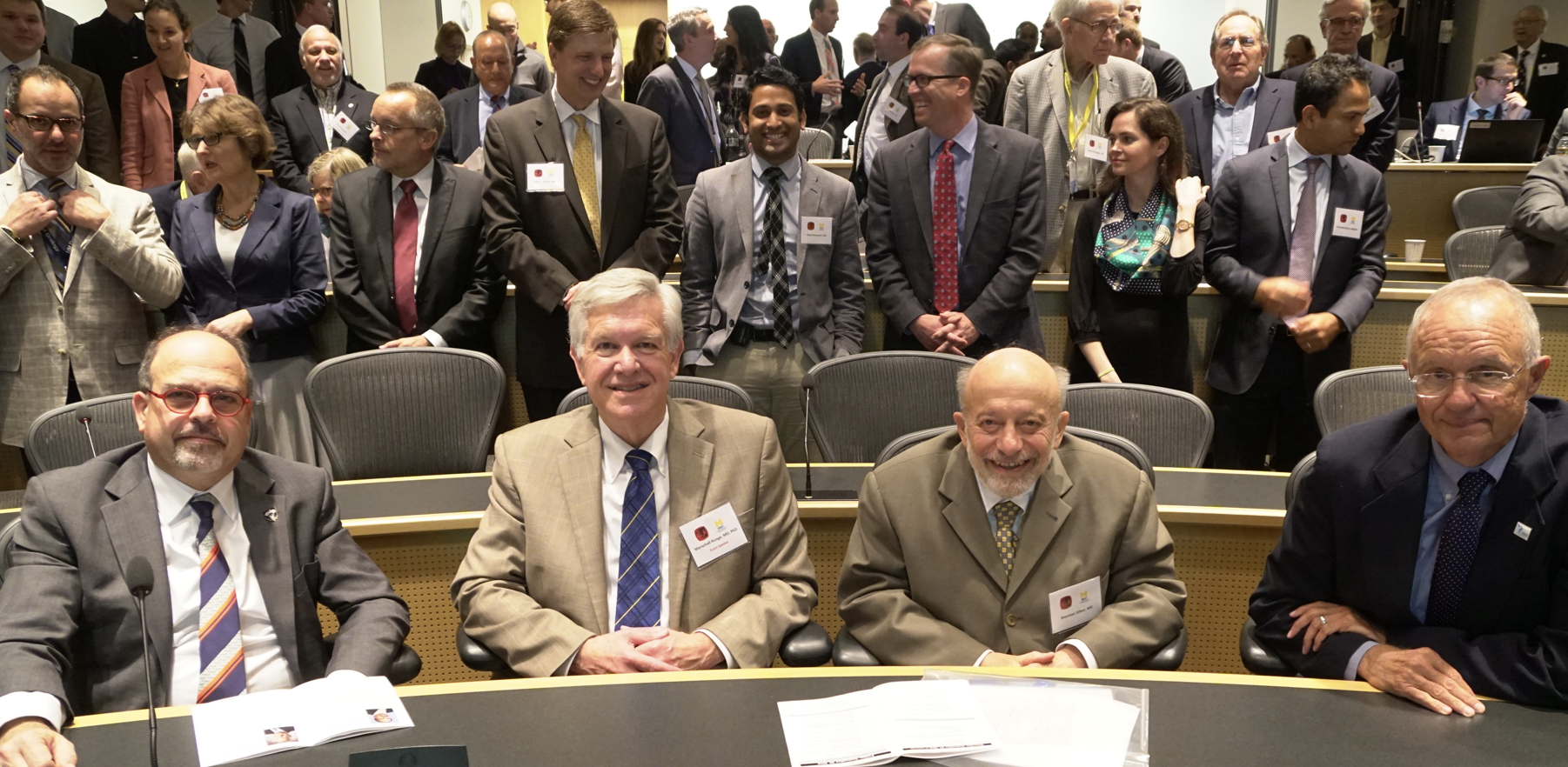


Two.              The University of Michigan was the first university to own and operate a hospital, going back to 1869 when a faculty building was converted into a dormitory for patients undergoing surgery in the Medical School building. Nearly 60 years later the building, shown above in 1926, was the hospital’s fourth iteration. Built on the side of a hill, the front entrance was actually on the 5th floor of the structure. The admixture of a university and a hospital makes excellent sense in terms of the missions of education, research, and clinical care, although the operational implementation has been challenging. Complicating the challenge is the growing complexity of universities, the increasing specialization of modern health care, new and expensive technology, the economic/regulatory environment, aging populations, expanding comorbidities, international instability, and climate change. Yet for all these reasons, the role of the academic health center in large and strong universities makes more sense than ever. The basic unit of a university is its academic department while the basic unit of a health care center is the so-called service line, the smallest team unit that delivers a specific clinical service. Yet like any biological cells, these basic units are co-dependent. Our challenge is joining them together to create excellent clinical care, education, and research.


Three.           A primary necessity in academic medicine is its regeneration through the selection and education of its successors. This annual ritual brings new cohorts of medical students into residency programs, and four interns (PGY1s) will comprise Michigan’s class of 2022. This is twice Cabot’s inaugural class and seems about right for us now. Clinical practice has become far more complex since the days of Cabot and Nesbit, so residency training accordingly encompasses a greater range of knowledge and skills. The actual number of trainees is based upon clinical volume, institutional factors, and faculty talent. Whether four will be the right number in the future will be a topic of faculty conversation as we continue to match manpower to mission.

Faculty serve not just as clinician-teachers, but also as coaches and mentors, and after accounting for all residents and fellows our faculty to trainee ratio is 1:1. Although the public and much of the rest of academia view medical educators as people standing in front of students in classrooms, that is actually a rare circumstance. Our classrooms are operating rooms, patient bedsides, clinics, laboratories, offices, coffee shops, and cafeterias. These places comprise the gemba of medical education (the Japanese term gemba refers to the place where the work is done and is part of lean process terminology). The subjects include basic sciences, clinical sciences, surgical techniques, professionalism, E & M coding, research techniques, health care delivery, population management, team work, leadership, and teaching itself (pedagogy).

Residency training is the career-defining stage of medical education and one could claim it is the signature product of an academic health center, usually exceeding (sometimes more than twice) the time spent in medical school. Furthermore the numbers of our residency trainees here in Ann Arbor are roughly double those of medical students at any moment. In addition to the subjects mentioned above residents are coached to develop the habits of lifelong learning and teaching. Confounding these goals are regulatory pressures including the duty hour restrictions.
Five Michigan students wanted to go into urology this year and they all did extraordinarily well. Entering our program this summer will be Adam Cole (UM), Lauren Corona from Wayne State, Scott Hawken (UM), and Udit Singhal from Wright State. If our program allowed 8 residents per year we would have also kept our other 3 Michigan students, for I believe all 8 will add to urology and society very positively. And of course, they will be Nesbit Society members someday soon. David Kozminski will be going to the excellent Albany program to train with Nesbit alumnus Barry Kogan. Naveen Krishnan will be at Indiana (our sister Big 10 residency where Mike Koch is chair) and Heiko Yang will train at the University of California in San Francisco with Peter Carroll. I’m jealous of Barry, Mike, and Peter for getting these three superb students.


Four.              The Likert psychometric scale is commonly used in questionnaires that are becoming a large piece in the value equation of health care. Rensis Likert, the originator of the idea, grew up in Cheyenne, Wyoming. His father was an engineer for the Union Pacific Railroad and Rensis followed his dad working for the railroad during its 1922 strike. That experience in workplace conflict led to a lifetime interest in organizational behavior and communication failure. Likert then travelled east to the University of Michigan, obtaining a B.A. in economics and psychology in 1926. He continued east to Columbia University for a Ph.D. in psychology in 1932, where his thesis developed the idea of a system for measuring attitudes based on a 5-point scale ranging from “strongly agree” to “strongly disagree.” It was hardly a novel idea for students to rate their teachers, although evaluation was usually behind the teacher’s back, on occasions resulting in voting with one’s feet to find another teacher or mentor. The Likert Survey Scale, however, was the first validated psychometric evaluation system and it found broad use across many fields. In educational arenas it would give students a voice in their instruction and also provided the teacher a sense of the satisfaction of their audience.

Teachers, however, can become enslaved to evaluations and accordingly pander to their subjects, an outcome that does not result in effective teaching or mentoring. Effective teachers and coaches may need to push team members beyond levels of comfort. Popular culture makes this point nicely in the story of Star Wars, for who can forget Yoda pushing Luke Skywalker beyond his tolerance until the youngster bowed to his internal Likert rating of “strongly disagreeable” and walked away from his training prematurely, to the advantage of the dark force.

Yoda

[The legendary Jedi Master]

Sometimes we need to hear “disagreeable things” and to feel uncomfortable. The business author Jim Collins talks about the need for leaders to confront “the brutal reality” of situations. Health care no less than the business world has its share of brutal realities. We fail to train medicine’s future Jedi knights effectively if we protect them excessively from over-work or take pains to wrap criticism in flowery packaging. There were times during my residencies that I worked more than 80 hours a week, by choice or by necessity. Yet probably just as often my weekly work hours amounted to less. It is often claimed in the educational world that expertise in topics such as chess, piloting, or golf takes 10,000 hours of practice or experience. Perhaps urological skill takes more, a number that empirically looks like 20,000. Considering the rapidly changing basis of technology and science, as well as the modeling of professionalism and the need for vacations and some down time, five to six years at 80 hours a week goes by quickly.

Patient care, particularly in the surgical world, is not perfectly predictable and workplace service line demands and workforce culture should set the pace. If reasonable limits are consistently exceeded for no good clinical or educational limits, institutional leadership (program directors, chairs, or deans) must recognize and address the matter, or alternatively residents should air their grievances or vote with their feet. It is unfortunate that a few historic bad apples in the world of graduate medical education (e.g. the Libby Zion case) precipitated the present obsessive national regulation of resident work days.


Five.               Likert’s career. After graduate school Likert found a job with the Department of Agriculture and during WWII became Director of Program Surveys for the USDA and as the war progressed he also helped the Office of War Information, the Department of Treasury, the Federal Reserve Board, and the US Strategic Bombing Survey.

Likert, Rensis

At the war’s end political forces in Congress forced the Department of Agriculture to stop its social survey work. Likert’s team accepted an offer from the University of Michigan in 1946 to form the Social Research Center, that in turn became the Institute for Social Research (ISR) in 1949 when Dorwin Cartwright moved his Center for Group Dynamics from MIT to Ann Arbor. Michigan’s ISR fielded the 1954 double blind trials for the Salk polio vaccine. Likert remained director of ISR until his retirement in 1970. While his work centered around the attitudes of individuals he  also studied the function of teams in terms of management styles in the business world. He and his wife Jane applied their findings to educational settings, recognizing 4 basic styles: a.) exploitive authoritative, b.) benevolent authoritative, c.) consultative systems, and d.) participative systems. His elaboration of the linking-pin model is relevant in complex organizations today. Likert died in 1981 and is buried in Ann Arbor’s Forest Hill Cemetery.


Six.                 Pendulums swing in organizational systems, as is their nature. In previous iterations of health care education, just as in previous generations of athletic coaching, many learners suffered more than was necessary to achieve mastery of their games. In response, peer organizations such as Residency Review Committees, ACGME, NCAA, and even the United States Government assumed roles overseeing the respective training grounds. Oversight organizations, however, tend to become self righteous and in the pursuit of added value create regulatory over-reach evident now in the constraints of duty hour regulations and the mandated EHR.

While few can deny that a national standard for electronic health records is necessary, the EHR law went way beyond creating a standard to imposing cumbersome systems that traded away personalized health care and physician efficiency for billing efficiency and corporate enrichment. “Meaningful use constraints,” checklist orientation, and workflow standardization have altered the relationships between patients and providers to the satisfaction of neither.

People come to health care providers to solve problems, but problems are bound up in stories. Rarely is a patient’s story simple enough to be reduced to an ICD-10 code that may be addressed by a therapy expressed in a CPT code. This is not the personalized medicine that people desire. Let’s say that you have a large painful ureteral stone (ICD-10 N20.1) that might be solved by expulsive therapy, ESWL (CPT 50590), or ureteroscopy (CPT 52356). The choice takes a discussion that must account for many personal needs wrapped up in the patient’s story, a story that doesn’t easily fit the EHR checklist. The patient’s narrative is likely to involve significant comorbidities (as discussed here a few months ago ….) that may be physical, mental, or social. Furthermore, not all diagnoses, therapies, or co-morbidities actually have codes. For all the 150,000 ICD-10 codes and additional thousands of CPT codes in the books I often find myself at the computer during clinic struggling to find  a code that fits the problem I think I have discovered in a patient or the code for the solution I have in mind.

The failure of our massively expensive EHRs and health care organizations to respect the role and power of narrative in the essential transactions of kind and excellent patient care is gnawing at the heart of health care. While the exploitive-authoritative model Likert experienced at the Union Pacific Railroad is dissolving in most forward-thinking businesses it is establishing itself in healthcare. For this reason we can expect growing physician dissatisfaction to express itself in such things as unions and other forms of protest.


Seven.   

Coaches

[Three contemporary Jedi Masters of coaching and team-building – Chalmers “Bump” Elliott in center, Bruce Elliott and Fritz Seyferth on left and right]

Discussions of coaching and mentoring often default to the world of sports. This is no surprise since athletics have been a universal cultural experience throughout human history and remain even more so today from preschool to the Superbowl and from refugee camps to elite universities. The idea of coaching has crept from the athletic world into business organizations and professional work. We know today, through the examples of the sports world and the ideas of lean engineering that the best coaching is done at the gemba, or at least with the gemba close in sight or in mind.  Most great coaches will tell you that they are only standing on the shoulders of those who coached them or inspired them as coaches, and the individuals above would offer names such as Fritz Crisler, Pete Elliott, Jim Young, Bo Schembechler, and others including their high school coaches or examples from other sports.

All coaches share some similarities, although even within the athletic world coaching styles differ according to the nature of the sport or the culture of an institution as well as the personality of the coach and the needs of a particular team. Certain coaches are more exploitive authoritative than benevolent authoritative, according to Likert’s model, but most successful ones will have some consultative and participative elements even if not overtly visible. In fact all good coaches learn from each others’ plays and styles, in addition to learning from those they coach – for after all, the coach is a part of the team.

Not so long ago, in the days of Hugh Cabot and Henry Ford for example, leaders presumed they “knew it all” and that their decisions were final and best. The idea of the “wisdom of crowds,” as James Surowiecki and Scott Page explained in their books, was not a common belief.


Eight.             Coach Harbaugh got his team off to a good start last month at the Citrus Bowl, a stadium that we learned resulted from one of FDR’s WPA projects. Team size in American football today consists of 11 players in play per side, although when the first American football game was played on November 6, 1869 each team had 25 players. It was Rutgers vs. Princeton and who would have guessed that one of them would join the Big Ten nearly 150 years later? Rules then were set by the host school. In 1873 Yale, Rutgers, and Princeton agreed on some standard rules and set the teams at 20 players per side. Walter Camp of Yale in 1880 led rule changes that set the size at 11 players and introduced the snap to replace the scrum (scrummage), a method of restarting a play, taken from rugby.

Citrus Bowl

Team size was an issue for the Supreme Court, on this particular day coincidentally in 1937, when FDR attempted an historic over-reach. Article II of U.S. Constitution leaves it to Congress to determine the number of Supreme Court justices. The Judiciary Act of 1789 started our nation off with 6 justices. With growth of the nation Congress increased the number to correspond with the number of judicial circuits: 7 in 1807, 9 in 1837, and 10 in 1863. In 1866 Congress passed an act that the next 3 justices to retire would not be replaced, thus attempting to scale back the court, however in 1869 the Circuit Judges Act returned the number to 9.

President Franklin Roosevelt in 1937 on this day proposed a plan to enlarge the court by adding an additional justice for each who reached the age of 70 years 6 months, but refused to retire – up to a maximum of 15 justices. The motivation was more political than an attempt to match manpower to mission. The court-packing plan failed to muster enough support in Congress, although the president was still able to pack the court ultimately appointing a total of seven justices and elevating Harlan Fiske Stone to Chief Justice. A good coach might have cautioned FDR against interfering with the authority and structure of another branch (the judicial) of government, but presidents and other CEOs have a poor record of coachability. Clearly Roosevelt’s proposal was a moment of executive over-reach, but in his defense all branches of government, all agencies, and most organizations of any sort are self-programmed to over-reach. That is the Darwinian nature of things. Not just our presidents and leaders, but each of us needs some sort of coaching to keep our values, our missions, and our daily work in balance. I’ve found this very important in my time as chair, with the coaching of David Bachrach, a former administrator here at UM and later at MD Anderson.

Bachrachs

After a short time in any leadership position, surrounded inevitably with its own “zones of yes,” most of us start to yield to the dark side of the force in figuring that we have all the answers. A wise coach who has played in the game extensively, can find clarity, and doesn’t mind telling you unpleasant things you need to hear, is essential for success of the organization – and that success is ultimately the success that counts.


Nine.              Cells and organizations. Last month we also mentioned that the first use of the term cell, as a basic unit of life, appeared in Robert Hooke’s book Micrographia in 1665. The changes between Micrographia and today have been incredible and even a great mind like Hooke’s couldn’t have predicted today’s world of science and health care.

Micrographia

When Cabot, however, opened Michigan’s University Hospital 90 years ago he likely could have predicted most of today’s big issues in health care. These include specialization, new discovery, expensive technology, regulation from numerous quarters, third party payment systems, demographic changes, and increasing dependency on regional and national economies. The changes are coming at rapid fire and no single health care system is prepared to manage them. The changes impact the nature and financing of health care and all aspects of its educational and research components. Nevertheless, the basic dynamic of the doctor-patient relationship (in our Department of Urology we call this the essential deliverable of kind and excellent patient-centered care) and the basic dynamic of the teacher-student (or faculty-resident, coach-learner, mentor-mentee) are unlikely to change. This scenario predates the days of recorded history and is echoed in most human endeavors throughout classrooms, athletic fields, and in gembas everywhere.


Ten.

Chrtres cathedral

If someday your travels take you to the Loire Valley and town of Chartres in France you will notice a large and impressive cathedral that dominates the town, much as our hospital did here in Ann Arbor 7 centuries later. The church is one of 1031 World Heritage Sites, although to the discredit of our species ISIS is assiduously working to reduce that number. The south rose window at Chartres dates from 1221-1230 and beneath the spectacular dominating rose window sit 5 lancet windows, the central one featuring Mary carrying Christ. The lateral lancet windows illustrate New Testament evangelists on the shoulders of Old Testament prophets looking up at the Messiah.
Shoulders

(Left to right: Jeremiah carrying Luke (shown below in detail), Isaiah carrying Matthew, Ezekiel carrying John, Daniel carrying Mark.)

The metaphor of finding new perspective from the shoulders of giants long precedes this image and has been employed many times subsequently, most notably in Isaac Newton’s letter of 1676 to his intellectual rival Robert Hooke: “What Des-Cartes did was a good step. You have added much several ways & especially in taking the colours of thin plates into philosophical consideration. If I have seen further it is by standing on the sholders of Giants.” Coleridge said it again in 1828: “The dwarf sees further than the giant, when he has the giant’s shoulders to mount on.” Our teachers, mentors, and coaches become giants for us when we catch a glimmer of their perspectives, insights, and art. In their minds they may not at all consider themselves “giants” and nor do we even though our students, residents, and colleagues use our shoulders for a little start to their careers. All of us teachers and mentors of one sort or another in our lives, that’s how civilization works. Hippocrates, Osler, Cabot, Nesbit, Lapides, Schembechler, and Elliott achieved great distinction as giants in their times and fields, exemplifying the path for the rest of us.
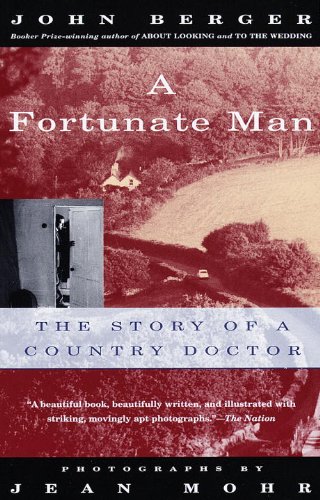
 

We will get an extra day at the end of this month and it will be a Monday. Think of it as a glitch in The Matrix.

Best wishes and thanks for reading What’s New and Matula Thoughts this month.


David A. Bloom

Department of Urology, Ann Arbor