Matula Thoughts December 2, 2016

Politics, nutcrackers, and earthly delights
3799 words

One.

election-2016-copy

This has been a year of political surprises with Brexit, the Columbian failure to reconcile with FARC, and the American presidential election. The weekend after our election I happened to be at the Fourth Quinquennial John W. Duckett Festschrift at the Union League of Philadelphia. This venerable institution was founded in 1862 as a patriotic society to support the policies of Abraham Lincoln, whose ideas seem so obvious and mainstream today, but they split the United States nearly permanently at that time. In a Union League reading room you see our friend and colleague George Drach contemplating the meaning of the election for healthcare. Just this past summer George spoke at our Duckett/Lapides Symposium on the implications of the MACRA law, passed earlier this spring with strong bipartisan support. Whether or not the Affordable Care Act (ACA) and MACRA disappear, healthcare policy, regulation, and economics are going to get evermore contentious and confusing. Politics may be easy to distain, but they surround us and shape our lives. This milestone day, December 2, is worth recalling for two examples of politics and ideologies that led nations and people sadly astray.

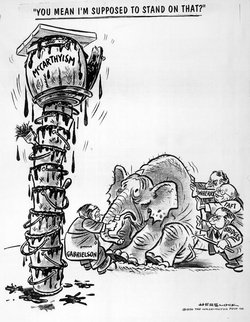
First example: red scares. The Cold War, following WWII, instilled legitimate anxiety over the spread of communism in the West where scoundrels capitalized on that fear and created the Second Red Scare (1947-57). A First Red Scare (1919) followed WWI and the Bolshevik Revolution of 1917. Both phenomena occurred during times of patriotic intensity and exploited fears of communism. The second scare lasted far longer than the first and came to be known as McCarthyism after its central figure Joseph McCarthy, US Senator from Wisconsin.
herblock1950

[Above: Herblock cartoon March 29, 1950 Washington Post, introducing the term McCarthyism.] Paranoia crossed the United States from Washington to Hollywood and left its effects in Ann Arbor, where 3 faculty members were dismissed by the University for refusing to testify to the House Un-American Activities Committee (HUAC). Mark Nickerson (UMMS Pharmacology), H. Chandler Davis (UM Mathematics), and Clement Markert (UM Biology), suspected of membership in the Communist Party, were called to Lansing on May 10, 1954 to testify before an HUAC sub-committee. The professors refused to answer certain questions, claiming Fifth Amendment privilege, and UM President Harlan Hatcher promptly suspended them pending a faculty inquiry related to “intellectual integrity.” Nickerson was fired out of concern that he was damaging the reputation of the Medical School and University. He went on to a distinguished career in Canada. Davis was also fired and later served jail time for contempt of Congress. Markert was retained but left UM soon thereafter. While this breech of their civil rights passed public muster in the Red Scare fervor, the breech of their tenure rights (Regents bylaw 509) tripped up the university and caused an academic firestorm. The American Association of University Professors would later ask the UM to make “a significant gesture of reconciliation” and that became the annual Davis, Markert, Nickerson Lecture on Academic and Intellectual Freedom. [James Tobin. Seeing Red. Medicine at Michigan Spring, 2009; 11:14-15] That second Red Scare began to wind down later in 1954 on this day, December 2, when the United States Senate voted 65 to 22 to censure McCarthy for “conduct that tends to bring the Senate into dishonor and disrepute.”
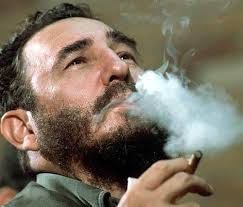
castro

Second example: smoke and mirrors. On this day in 1961 Fidel Castro, in a nationally broadcast speech, announced that Cuba would adopt Communism, surprising us in the north and setting off a chain of events with the Cuban Missile Crisis the following year that nearly brought the world to nuclear confrontation. A recent book by former Secretary of Defense William Perry (My Journey at the Nuclear Brink – mentioned here a few months back) offers a frightening account of that time and a more frightening preview of the world ahead of us now. While Castro’s iron grip endured for a half century his ideological experiment failed and he died just 7 days ago. Venezuela under Hugo Chavez tried to reprise the Cuban experiment, but that too didn’t turn out well for its people. Chavez died in 2013 after treatment in Cuba for unspecified malignancy. Both dictators rode waves of populism in their countries, where celebrity ideology support them even to this day, in spite of the economic and social disintegration they left behind, showing once again that populism usually turns out poorly for the populace at the end of the day. [Picture above: Wikipedia]


Two.
colors

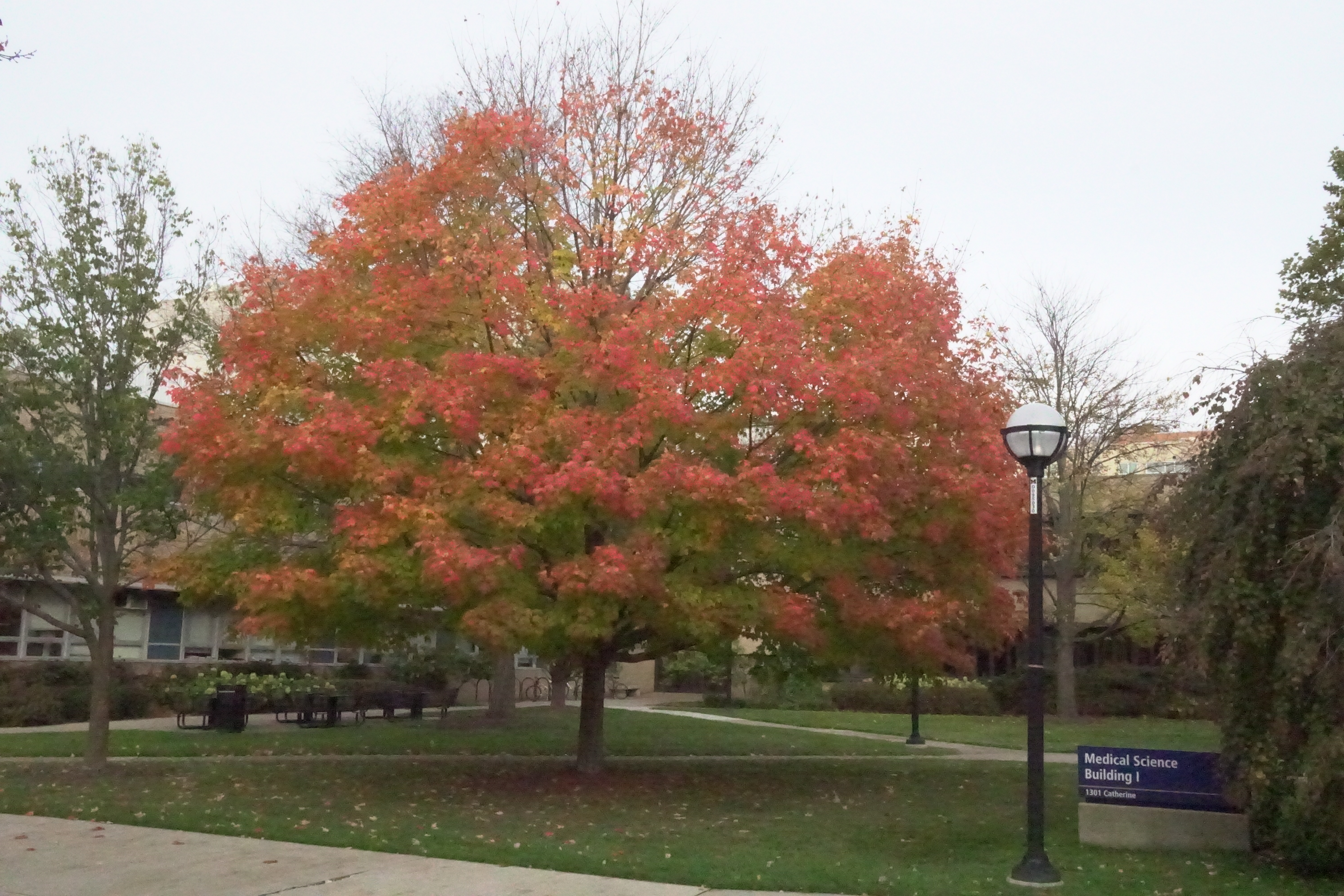
Autumn colors peaked late this year, reaching well into November in Ann Arbor even past election day. After a nontraditional election season the people spoke and the transition of power is following its honorable historical precedents. What this will mean in terms of health care remains to be seen. The ACA will be problematic to unravel and, with it or without it, deployment of fair and excellent health care, the mission of academic medical centers, and the stability of the health care industry are at risk regardless of whatever party dominates the day. Healthcare has been a hard nut to crack in America and a viable menu of choices for its deployment remains elusive.
The University of Michigan urology microcosm, however, seems reasonably in balance. Last month we completed residency application interviews for more than 60 prospective trainees. The four to match here will begin their 5 years of residency in July of 2017 and graduate in 2022. [Above Medical School foliage. Below view from Bank of Ann Arbor headquarters]

baa

Last month was also notable for its super supermoon (below). The moon’s orbit came so close to the earth that it was larger and brighter than any time since January 26, 1948. Having missed it back then, I took the picture below on November 12. To a lesser degree supermoons occur every 14 months when a full moon occurs at its perigee (closest encounter). More periodically the moon’s oval orbit elongates to create the super supermoon effect.
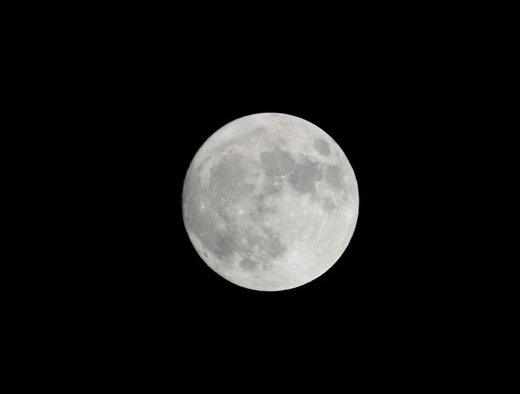
supermoon

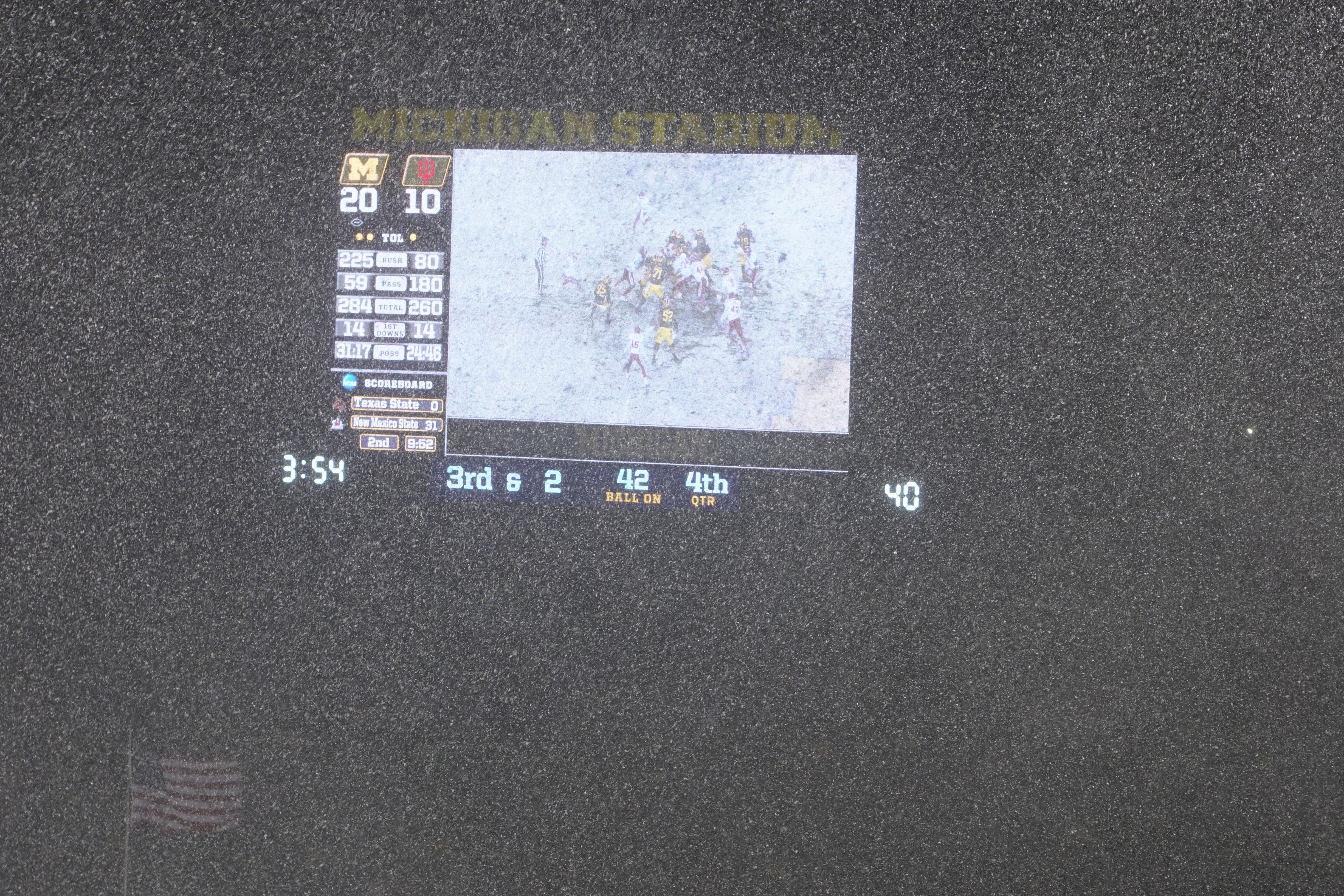
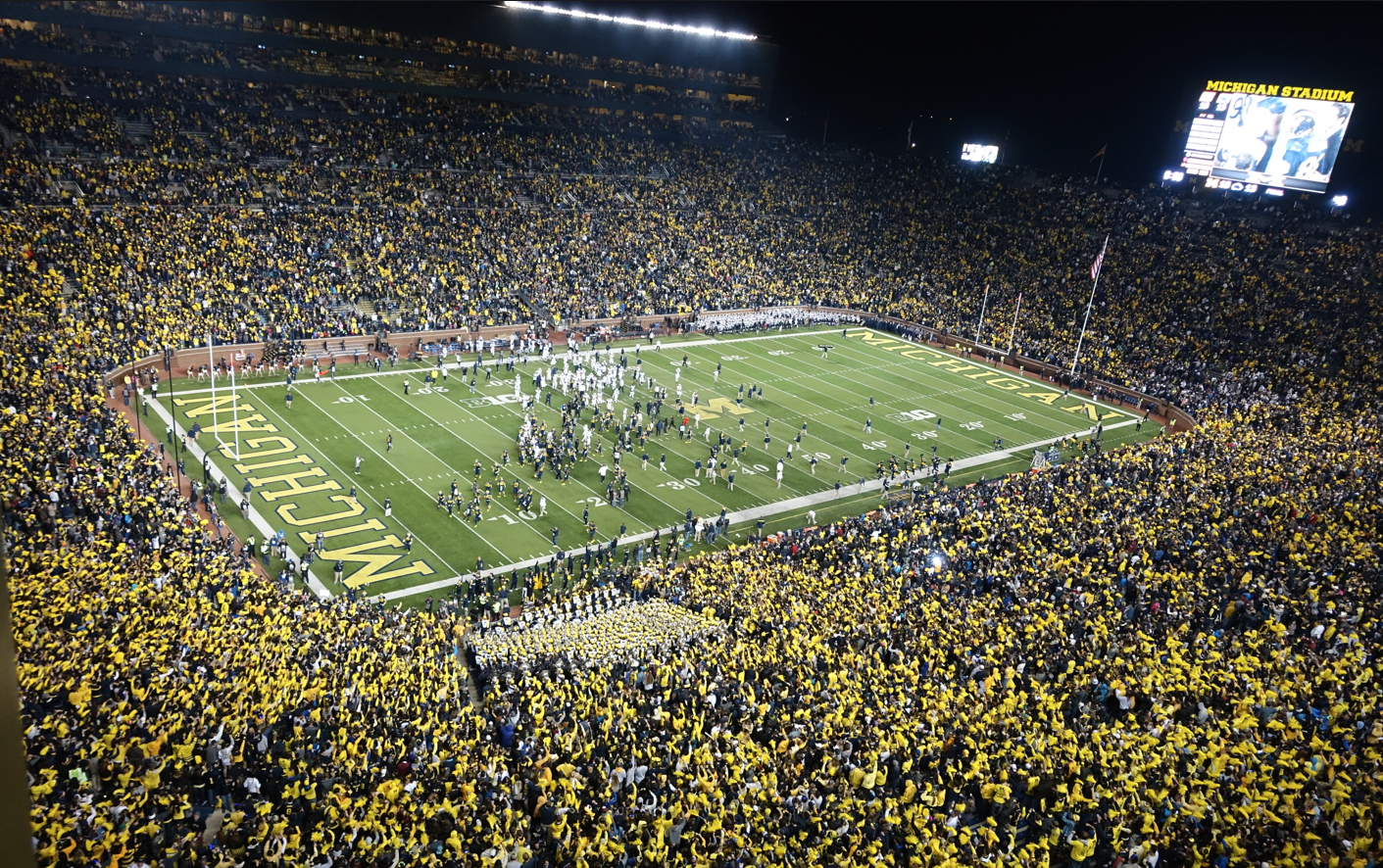
Michigan Football’s last home game was an exciting victory over Indiana, bringing the first seasonal snowstorm in the fourth quarter when we also saw snow angels on the field during time outs.
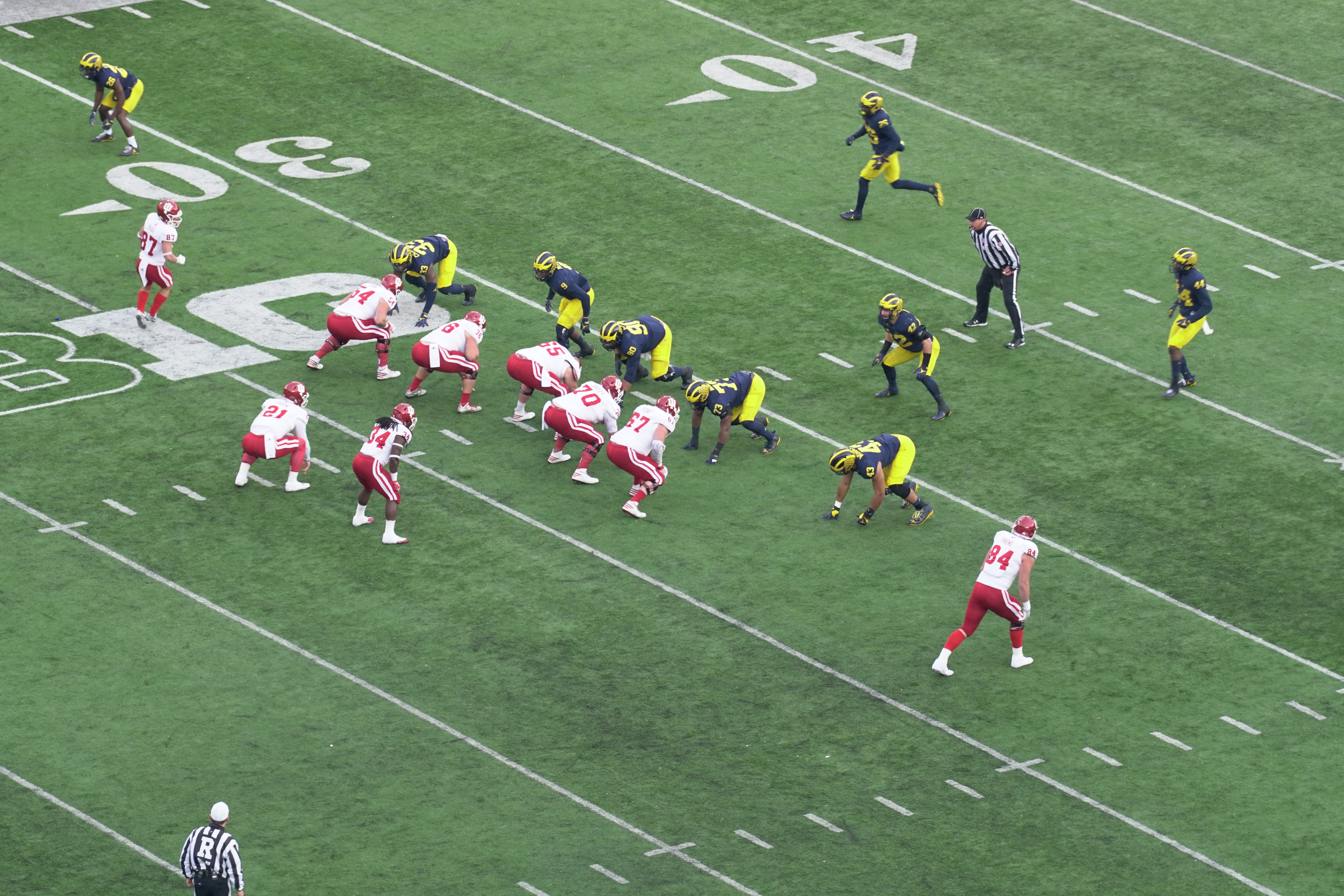
first-quarter

[Above: first quarter. Below: fourth quarter from Sincock suite]

snowy-4th

um-20-iu-10

The season ended a week later with an unprecedented double overtime loss in Columbus.


Three.
We shouldn’t leave 2016 without mentioning once again, Jheronimus van Aken, the Flemish painter known as Hieronymus Bosch who died 500 years ago. His Garden of Earthly Delights, a triptych in The Prado, depicts strangely imagined hedonistic days of mankind between the Garden of Eden on the viewer’s left and the Last Judgment on the right. Bosch painted the work around 1497, which for historical perspective was five years after Columbus landed on a Bahamian island and claimed the adjacent continent of diverse people, flora, and fauna for the King and Queen of a nation thousands of miles away.

el_jardin_de_las_delicias_de_el_bosco-1

Bosch also painted a strange work called The Wayfarer, mentioned here last month for its stranguria depiction. The world of Hieronymus Bosch around 1500 was probably a pretty grim place, although not devoid of earthly delights, as he imagined in his triptych. A later triptych, The Last Judgement (c. 1527) by another Dutch artist Lucas van Leyden, depicts the actual day of judgment in the middle panel flanked by heaven on the left on hell on the right.
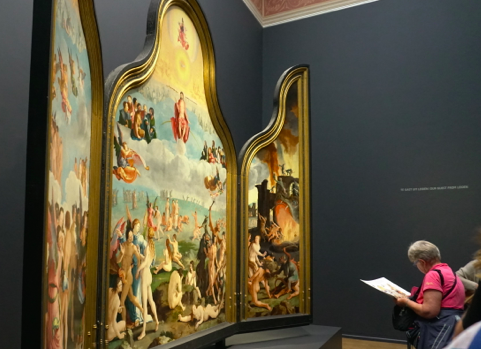
van-leyden

The times of Bosch and van Leyden were framed by fierce religiosity that juxtaposed nations and perpetrated conflicts negating the very values of the religions. Earthly delights, in the minds of those artists and most of their contemporaries, were only a brief interlude before the Heaven and Hell that defined mankind. Native Americans, suffering the European invasion, had no pretension to those ecclesiastical visions of heaven and hell, but rather sought to make the most of their experiential present, albeit with respect to their forefathers and the spirits of their present-day world. It was quite a contrast of civilizations and the Europeans surely brought dimensions of ecclesiastical and actual hell to North America.
Ecclesiastical visions have rightly become personal matters in most of western society. The separation of church and state, as espoused in The Constitution, was a forward step in the self-determination of mankind, although it remains under constant challenge at home and abroad. If The Garden of Earthly Delights is all we can expect in life (before Heaven or Hell) then it should be fair and just, and health care is central to the mix of basic expectations.


Four.
screen-shot-2016-11-01-at-10-36-49-pm

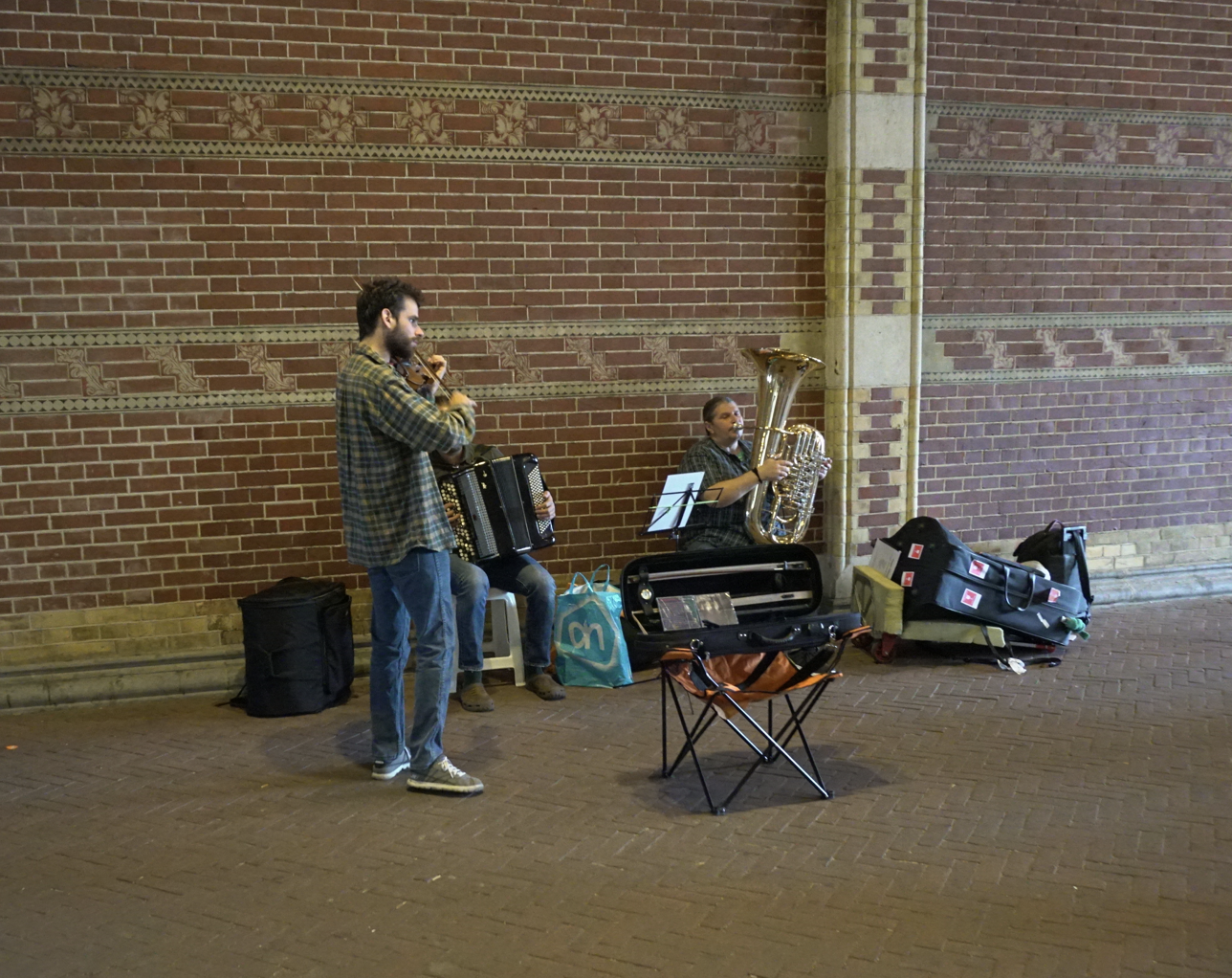
After viewing van Leyden’s triptych at the Rijksmuseum in Amsterdam early this autumn, while en route to a pediatric urology meeting, I was stopped in my tracks by street musicians playing an enchanting soft tuba staccato note that morphed into the familiar beginning of Vivaldi’s Concerto No. 4, “The Winter.” It hardly felt like winter at the moment, but it was a beautiful interlude. Known as The Red Priest (Il Prete Rosso) Antonio Vivaldi wrote The Four Seasons around 1723 and published it in 1725, coincidentally in Amsterdam. Vivaldi clearly was familiar with the nastiness of freezing rain and treachery of icy paths as seen in the narrative that accompanied his piece (below).

Allegro non molto
To tremble from cold in the icy snow,
In the harsh breath of a horrid wind;
To run, stamping one’s feet every moment,
Our teeth chattering in the extreme cold
Largo
Before the fire to pass peaceful,
Contented days while the rain outside pours down.
Allegro
We tread the icy path slowly and cautiously,
for fear of tripping and falling.
Then turn abruptly, slip, crash on the ground and,
rising, hasten on across the ice lest it cracks up.
We feel the chill north winds course through the home
despite the locked and bolted doors…
this is winter, which nonetheless
brings its own delights.

Winter Solstice will be here soon (December 21) and after that interlude of shortest daylight, each passing day will be a step closer to spring, in spite of “the harsh breath of a horrid wind.”


Five.
Mirror neurons again. Since I read John Berger’s A Fortunate Man last summer, Dr. John Sassall and his deep empathy for his patients in an impoverished English hamlet have haunted me. The lives of those people in the mid 1960s were perhaps not so far removed those Bosch depicted across the North Sea before the Industrial Revolution. While Sassall may seem hypersensitive, he was not so different from the rest of us but for our lesser imaginations. The journalist’s impressions of Sassall’s thoughts are worth repeating.

“Do his patients deserve the lives they lead, or do they deserve better? Are they what they could be or are they suffering continual diminution? Do they ever have the opportunity to develop the potentialities which he has observed in them at certain moments? Are there not some who secretly wish to live in a sense that is impossible given the conditions of their actual lives? And facing this impossibility do they not then secretly wish to die?” [Berger. A Fortunate Man. p. 133]
lange

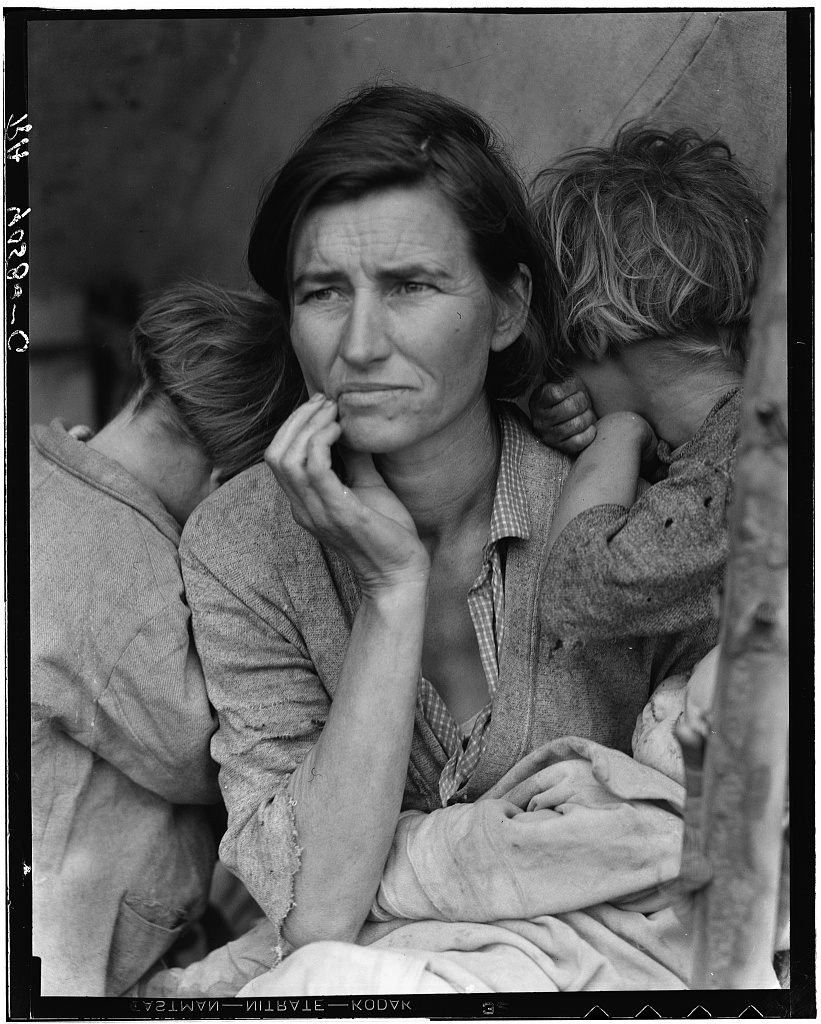
[Classic photo of Dorothea Lange. Destitute pea pickers in California – mother of 7. 1936. Library of Congress.]
My daughter Emily, a young English professor at Columbia, teaches Aristotle’s three methods of persuasion: ethos, logos, and pathos. Visual art, Dorothea Lange’s photography for example, captures the suffering that troubled Sassall so greatly and should trouble us too. We are insulated from pathos by the professional boundaries of ethos and the logos of our science, metrics, and computers. The grim thoughts of Sassall stretch the role of a physician. Yet, who in society has a greater mandate to defend mankind’s well-being specifically and generally? Clergymen, teachers, and rare politicians share this charge, but day-in and day-out, healthcare providers are most consistently on the front lines with some of the best tools to ameliorate the daily pains and continual diminutions of individuals around us. Urologists and other specialists may claim turf protection, but can’t forget that they are physicians first and foremost. Berger’s last sentence was most likely targeted to the difficult days at end-of-life, the time when the garden of earthly delights has run out – familiar terrain for most urologists.
The toll of pathos was considered by Jennifer Best, from the University of Washington in Seattle in A Piece of My Mind column in JAMA called The Things We Have Lost [JAMA 316:1871, 2016].

“When most people consider the grief endured by physicians in training, they look first to the devastating narratives of patient care – sudden illness, agonizing decline, putrid decay, untimely death, haunting errors, and crushing uncertainty. Even more than a decade from residency, I am pierced by these tragic moments and faces – each still heart-shatteringly vivid.”

Best goes on from this opening statement to suggest not only confronting these griefs in “curricular endeavors” such rounds or narrative sessions with trainees, but also considering personal losses as we play out our roles in what she calls physicianship. Her claim is that when we accept the role of healthcare provider, we step into a new identity and lose some of our freer, ad lib, selves. Growing our sense of empathy, yet maintaining resilience is the challenge. Best rejects counter arguments that her considerations are “first-world problems” or that because “it could be so much worse” we need not be overly concerned with professional fragility. Her column offers a good footnote to A Fortunate Man.


Six.
Department of complaints. We spoke last autumn at some length on medical error and argued that our profession can never be free from it. Error is a fundamental property of life and intrinsic to all its processes. We study error in healthcare to minimize it and fortunately most error is nonlethal, although even when trivial it can hurt. The University of Michigan Health System, like any large scale enterprise, has many processes susceptible to error. With 2 million ambulatory care visits and 50,000 major surgical procedures yearly countless opportunities arise for untoward events ranging from missed blood draws to serious complications in ICUs. Every complaint is a gift, of a sort, providing opportunity for improvements in individual actions, processes, and structures. I recently heard complaints that targeted team leadership factors and the “hotel” functions of hospitalization.
Complaint A. Who is my doctor? Patients generally are thankful about their care from the doctors, nurses, and other members of the team, however fumbled handoffs or inability to identify the responsible member of a healthcare team on any given day are vexing. You can find analogies for this in baseball or air travel industries where the buck stops with the general manager of the team or the pilot. Both endeavors, like health care, require complicated teams, but each fan or traveler can usually identify who is in charge. Health care teams and systems need to make their ladders of responsibility more visible.
Complaint B. Must I share a room? Double room occupancy at UM Main Hospital is a vestige of an older era of health care, but is no longer acceptable for a variety of reasons including privacy, infection control, safety, comfort, and patient satisfaction. Our failure to convert the remaining double rooms over the past 20 years is an embarrassment today and correction is in the works, but  it’s nearly a billion-dollar fix including a new patient tower estimated to open in 2021.


Seven.
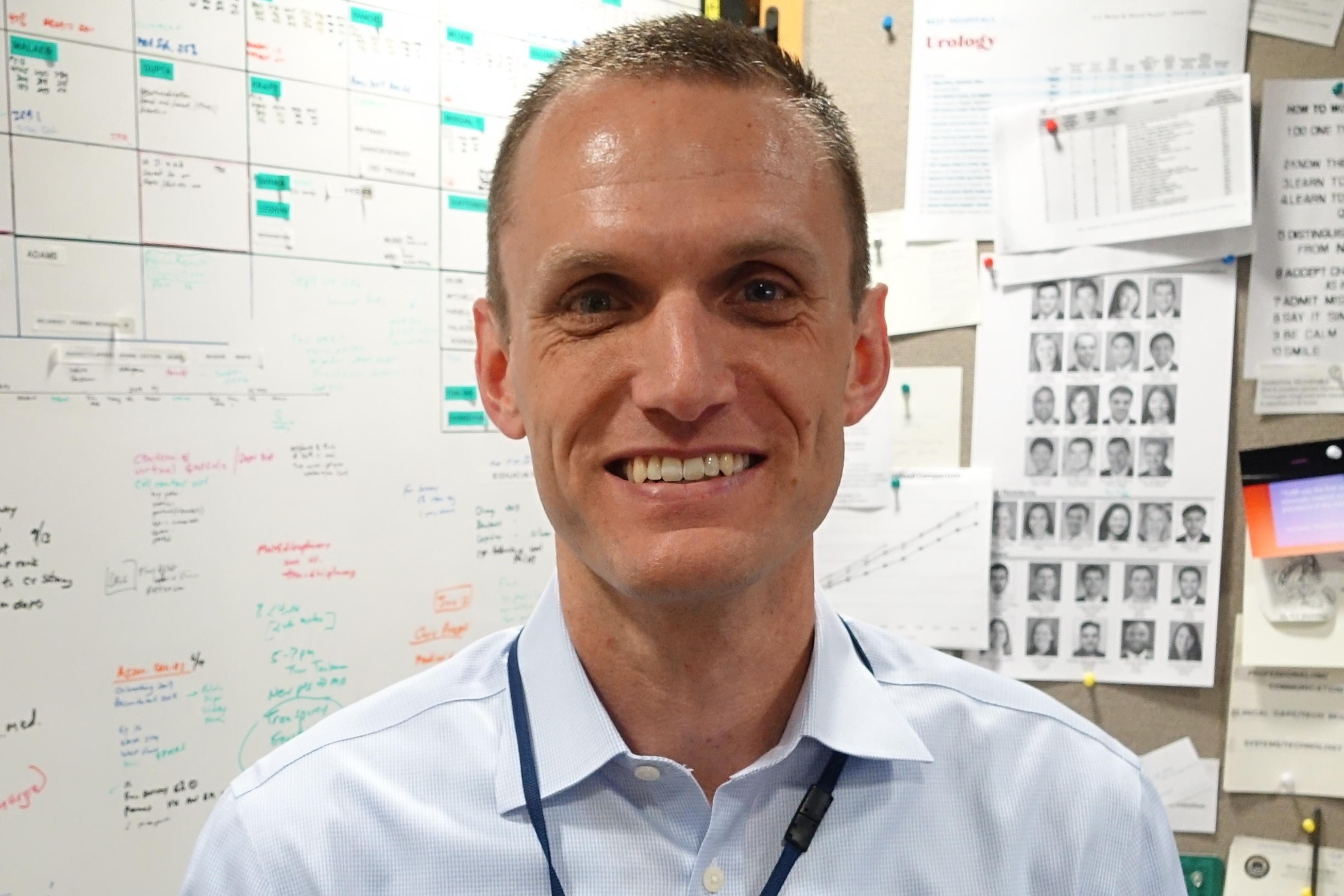
MACRAnyms. Acronyms abound in most occupations and populate the shop talk that distinguishes workers from the public at large. The big acronym for health care in 2017 is MACRA – the Medicare Access and CHIP Reauthorization Act of 2015. Sponsored by Congressional Representative Michael Burgess (R-TX-26) this act removes the sustainable growth rate methodology for the determination of physician payments and extends aspects of Medicare and the State Children’s Health Insurance Program (CHIP). I can’t pretend to understand this large and complex set of regulations outside of a few salient details, but fortunately we have experts among us at Michigan such as Tim Peterson (below – Medical Director Population Health Office UMMG). Like many well-intended public policies, unintended consequences are inevitable in MACRA, so the better we educate ourselves the more capable we will be to help patients lost in the regulatory shuffle and the greater likelihood we will have to protect the mission and values of healthcare education, clinical delivery, and research.
peterson-tim


MACRA attempts to displace the dominant model of physician payment from fee for service (FFS) to payment for value. While it is fashionable to vilify the motivational factors of FFS as a driver of health care expenses (and presumably unnecessary services) there is risk in terms of motivating the restraint of healthcare services. I also recognize a healthcare safety net is direct of a civilized society; universal access to health care is in the national interest. I equally recognize the downside of a system that does not reward work in terms of time and quality.
The intent of MACRA in shifting payment from FFS to payment for quality and value, set by complex government formulas, is an unproven experiment. Market forces should largely determine value and quality, while professional organizations should set basic standards for services. National healthcare cannot be left exclusively to the invisible hand of the market or the heavy hand of government. Healthcare affects everyone, employs one in six people in this country, and is a huge piece of our economy. The present systems of healthcare (there is no single “system”) need huge improvement, but changing it on a massive scale can be dangerously disruptive.
We need various systems of healthcare in simultaneous play, from the private and the public sectors to provide equity, excellence, innovation, and value. The private sector can best supply competition, value, innovation, and stakeholder responsiveness. The public system can best supply the safety net, equity, rules, education, and research. No single system, set of laws, organization, or paradigm can do it alone and we must be suspicious of any grand “answer,” for healthcare is a very hard nut to crack.


Eight.

nutcrackercollection
The nutcracker comes to mind at this time of year – not for the compression of urologic structures by the superior mesenteric artery and aorta, but for the ballet based on ETA Hoffmann’s story in 1816, Nutcracker and Mouse King. [Above: Nutcracker collection. Wikimedia Commons] The original story featured a nutcracker whose jaw was broken by an unusually hard nut, triggering political intrigue, revenge, hate, battle, and murder. Alexandre Dumas in 1844 lightened and popularized the story as The Tale of the Nutcracker, that became the basis for Tchaikovsky’s ballet in 1892. It is a rare American community in December where you can’t find an amateur or professional version to attend. You can read a synopsis of the morbid original story in Wikipedia (and perhaps give a modest annual contribution to keep that great public good afloat).
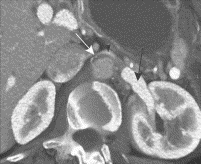
Our own great cardiologist, Kim Eagle, years back as editor of the NEJM section Images in Clinical Medicine, published a classic image of a 52 year-old woman with mild episodic gross hematuria from renal vein compression by the superior mesenteric artery. [Kimura & Araki. NEJM. 335:171, 1996] Improved CT technology offers a better image (below) in a more recent paper from the Mayo Clinic Proceedings. [Kurklinsky & Rooke. Mayo Clinic Proceedings 85:552, 2010]
nutcracker

[Computed tomographic venogram: nutcracker phenomenon.
Distended left renal vein (black arrow) compressed between
aorta and superior mesenteric artery.]


Nine.
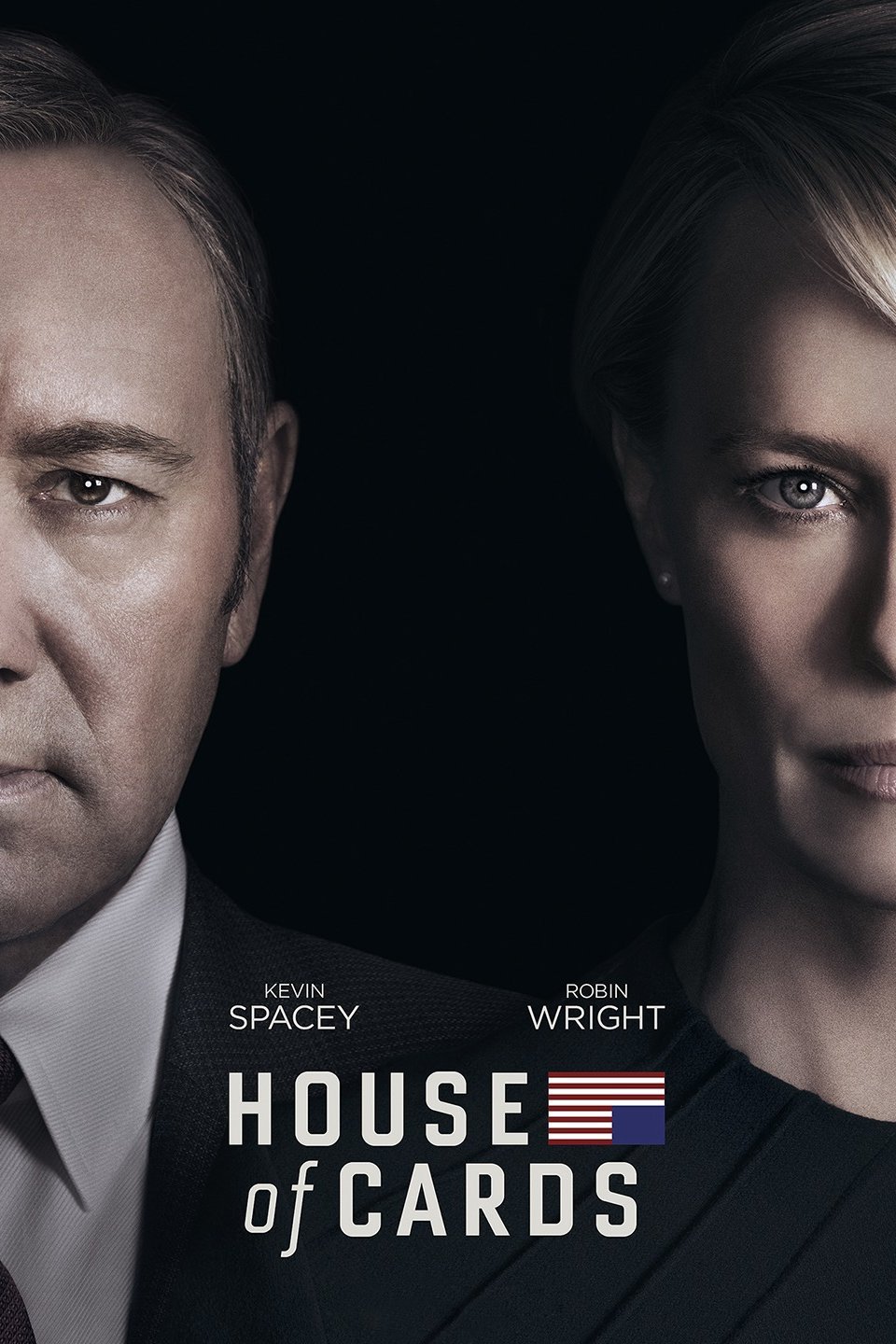
Nutcracker politics continue to play out in life and art. The innovative House of Cards on Netflix is a very dark modern political nutcracker story. People need politics, crave leadership, and tolerate a fair amount of nut cracking.
house-of-cards

Ideology and celebrity can hijack brains like zombie viruses resulting in political choices and actions that prove contradictory to an individual’s ultimate interests. Politics, a term derived from the Greek “of citizens”, is the process of decision-making and governance of stakeholders. Political systems are frameworks that define acceptable political methods in a given society. Confucius, Plato, Aristotle and countless other thinkers have advanced political thought throughout the history of mankind. Formal politics prescribe public elections, national healthcare policy, and self-government as in our UM Health System. Informal politics are at play in all human activities, real and fictional, even as portrayed in The Nutcracker or House of Cards, where acceptable political methods get conveniently perverted to attain political power.

Politics, whether played fairly or unfairly, are essential to operationalize democracy, which is more of a biologic phenomenon, perhaps akin to quorum sensing, than an ideology or mere political system. This amazing universe of possibilities has arisen from 23 pairs of human chromosomes, their 3 billion base pairs, and 21,000 genes. Civilization is a house of chromosomes.


Ten.
Political parties developed to create candidates for public elections since the days of our first and last politically independent president, George Washington. Our present bivalent political system dates from 1854 when the USA has had two main parties, the then-dominant Democratic Party and an upstart party of anti-slavery activists, modernizers, ex-Whigs, and ex-Free Soldiers. The upstarts coalesced into a Republican Party that held its first official convention in Jackson, Michigan July 6, 1854. Within 4 years Republicans dominated all northern states and in 1860 they won control of both houses and their candidate Abraham Lincoln was elected president. He had a tough presidency and many expected little of him, but Lincoln rose to the occasion of the office and the issues of the day. Two years into his single term, the Union League of Philadelphia was founded. One room (below) features portraits of every Republican president of the United States.

repub-pres

Democratic and Republican parties dominated the American political landscape since Lincoln’s time, while other parties have failed to gain leverage. The Constitution, Green, Libertarian, and other small parties continue to field candidates but attract only small numbers of followers. Candidates for office independent of political party are not uncommon in local elections, but rare in higher office. Washington was the last independent president. Bernie Sanders is the longest serving independent in the history of the US Congress, although he aligns with Democrats. The Socialist Party of America, founded in 1901, never produced much of a winning ticket and dissolved in 1972. The Communist Party USA founded in 1919 was closely tied to the US labor movement, but never gained enough foothold to even have warranted the Red Scares; examples of its failed experiments near to us and in distant nations have dispelled serious interest in modern literate nations.
The 2016 election is over. Democrats will need to reconcile with Republicans and vice versa. The voting closely split the country and each party needs to learn from the other. More importantly both parties need to govern effectively, wisely, cooperatively, and justly. Health care policy is a muddle in the middle of things. Ultimately, though, what really matters above all is financial world-market stability and geopolitical stability. Without these, little else remains, so as with every president – we hope for the best.

political-promises-copy

[A cautionary slogan for politicians: Glen Arbor Fourth of July Parade, 2012 – Decker’s septic pumping truck with slogan: “another truckload of political promises.”]


Thanks for reading Matula Thoughts this first Friday in December, 2016 – and best holiday wishes.

David A. Bloom
University of Michigan, Department of Urology, Ann Arbor

Castling

DAB Matula Thoughts Nov 4, 2016


Matula Thoughts Logo2

3975 words

Preface. This monthly communication from the University of Michigan Department of Urology & David A. Bloom is usually sent by email or posted on line at matulathoughts.org on the first Friday of each month.

huron

One.  

Autumn has been spectacular at Michigan Urology academically and around Ann Arbor visually. Seasonal changes on the Huron River were up to high expectations as leaves colored out and birds headed south. You don’t have to travel far outside of town to see crop harvesting has wound down, while distracting political signs along the roads are highlighting our national political schizophrenia. [Above: Huron River near Wagner Road. Below: Waterloo Road east of Chelsea, Michigan]

silo


Nestled in the Midwest, we were spared Hurricane Matthew that hit Haiti, Florida, Georgia, and the Carolinas in October. The biggest regional surprise was the overtime World Series victory of the Chicago Cubs over the Cleveland Indians, both teams having contested well. Births and other happy events also perked up this season, but we suffered losses. Madeline Horton, secretary of Jack Lapides and mother of Suzanne Van Appledorn (wife of Carl Van Appledorn, Nesbit 1972) passed away last month a few weeks short of her 100th birthday. Madeline was our urology librarian, a job largely obviated by the internet. I fondly remember her gracious welcome when I joined the University of Michigan Section of Urology in the early years of Ed McGuire’s leadership.

Final rules for the Medicare Access and CHIP Reauthorization Act (MACRA) went into effect last month, instituting the Quality Payment Program (QPP) that begins its first performance period 58 days from now, by my count. This will significantly change the basis of physician payment and the rules are entrenched so deeply in federal regulation as to be practically bullet-proof from the impending presidential election or other short-term political processes. By November, it is pretty clear that another calendar year is coming to an end and it’s time to start serious planning for next year. Of course as a department of urology specifically, and as a large academic health center more generally, our planning has been on going in earnest for considerably longer than the past few days. Emerging out of many years of restricted capital investment in facilities and regional relationships we are in an unprecedented growth mode to more optimally fulfill our mission. This has been the first year of our new organizational paradigm for the University of Michigan Health System in which Executive Vice President for Medical Affairs of the University, Marschall Runge, added the Medical School deanship to his portfolio. A Health System Board along with Health System President, David Spahlinger, will manage the growing enterprise of hospital groups, medical practice, ambulatory clinics, regional affiliations, and other entities that have evolved to carry out our mission. These are good structural changes and superb individuals for the challenges ahead.

Our mission derives from our foundation as a public medical school in 1850 and is similar to the mission of all other medical schools, although the University of Michigan has long described itself as one of the “leaders and best”, a phrase that history shows we can rightly claim, for the most part. The mission is framed around three components – education, patient care, and research – deployed in that order as our medical school grew, adding its own contained hospital in 1869 and soon thereafter some of the world’s definitive basic science departments and research laboratories.


Two.  

Silos of expertise necessarily accrued as the medical school and health care center in Ann Arbor grew more complex with the result that the overall management became increasingly disconnected from the loci of expertise at its many workplaces. The gemba, a Japanese term related to the Lean Process Methodology of the Toyota Corporation, describes where work is performed – the workplace. As Toyota, and later Detroit automotive manufacturing came to understand, microeconomic gembas understand their products, customers, and processes better than higher-level managers or accountants. Process improvement, value creation, efficiency, customer satisfaction, and employee satisfaction are best arbitrated “where the work is done” (i.e. the gemba) rather than in distant offices by managerial accounting.

Oddly, just as forward-thinking western businesses are embracing lean process thinking, large health care systems and governmental organizations are more rigidly holding on to managerial accountancy with its concomitant archipelago of cost centers. Of course any organization needs to understand and mitigate its costs, but lean process experience has shown that efficiency and value are a natural result of letting the gemba work as an organic community, rather than forcing its functions by the levers of managerial accounting. [Below: going home from work, a Diego Rivera mural detail – Detroit Institute of Arts]

dsc03595

Anyway, back to the triple mission: the University of Michigan Health System exists to educate the next generation of physicians and scientists, to expand the knowledge and technology base of health care, and to do these things in a milieu of cutting edge clinical care. The central organizing principle at play, that is the essential deliverable (and moral center) is kind and excellent patient-centered care, as we describe it in our department.

The future in healthcare will depend on our ability to weave silos together and innovate, creating new ideas, devices, and methods. In a larger sense innovation is the ability to find better solutions for the needs of a changing environment.


Three.          

Leadership.  A recurring aspiration of the University of Michigan is that it produces the “leaders and the best.” That phrase is functionally adjectival as with the leaders and the best engineers, teachers, athletes, lawyers, nurses, chemists, or physicians, for example. The leaders and best is less meaningful as a noun, for what does it really mean to be “the best” if not the best of some particular thing. The same holds true for leadership, in my opinion. The aspiration to be “a leader” as a generality carries a bit of a selfish sense with it, whereas the aspiration to lead one’s team to do its job well or otherwise fulfill its mission is more socially virtuous. The difference is perhaps one between the captain of a football team versus travelling CEO’s who jump among companies to exercise their managerial or accounting gifts. Without deep knowledge and investment in a particular organization, an itinerant leader is unlikely to inspire most organizations and its people to achieve their best social destiny. Another way to look at this is whether the leader’s primary goal is to be “the boss” by leading, managing, and controlling employees to achieve organizational targets, in contrast to a goal of helping the organization achieve an optimal state for its stakeholders.

What does a urology department need in a leader? I submit that first and foremost it needs someone who loves and practices urology robustly; former dean Allen Lichter once said  – “for such a person patient care is a moral imperative, not something that is important enough unless it interferes with research.” Second, a clinical department needs an individual who understands the organizational mission and its history – these two things are inseparable, requiring more than just lip service to be truly known. Third, we require someone whom the faculty, residents, staff, and other stakeholders trust. Fourth, the department needs a person who can read the changing environment and find opportunities within it. Other attributes may be valued according to the specifics of each department, institution and moment in time, however “celebrity leadership” by itself should not be high on the list of qualities sought.


Four.                 

bruxelles_manneken_pis        

Until it fails, people don’t appreciate the beauty of a competent urinary system. Urologists are the essential attendants at that particular service station of life, but the necessity of professional detachment renders us susceptible to underestimating the angst and vulnerability of urologic patients. Finding the right balance between empathy and detachment is a personal matter, arbitrated by daily experience to the extent that we are influenced by our medical practices, role models (real and fictional), and general observations in life. To the extent that we pay attention to the real world around us and to the creative arts, we improve our practice of medicine.

Creative arts matter to medicine. The portrait of Dr. John Sassall by Berger & Mohr in A Fortunate Man, was an artful mix of empathy and detachment. The doctor had sufficient detachment to do what he needed medically for his patients, but retained unusual empathy for their social and economic comorbidities, even to his personal detriment.

In the visual arts for hundreds of years urinalysis, depicted by uroscopy flask (the matula), was the main symbol of medicine indicating the central importance of urine examination to understand disease. After 1816, when Laennec invented the stethoscope, the matula lost its place as the popular symbol of the medical profession. The stethoscope is certainly a less indelicate and a sturdier symbol than a glass urine flask. Imagine Gray’s Anatomy with the matula.

In literature Shakespeare was precocious in recognizing the fallacy of mistaking a clinical test for the actual patient when in this scene from Henry IV Falstaff asks a messenger what the physician thought of his uroscopy specimen:

“Sirrah, What says the doctor to my water?

He said, sir, the water itself was a good healthy water;

But for the party that owned it, he might have more diseases than he knew for.”

Visual art has only rarely portrayed urinary function. One example, the statue Manneken Pis (Little Man Pee, in Dutch. Above: Wikipedia illustration) designed by Hieronymus Duquesnoy the Elder around 1618-1619 has been stolen numerous times and the current version, dating from 1965, stands in Brussels. It is dressed in costumes according to a published schedule managed by “Friends of Manneken-Pis,” but I don’t know if University of Michigan colors have adorned it yet. Other versions of the statue exist regionally and in more distant sites in the world. Notice the arching back of the confident lad making his momentary mark on the world in front of him.

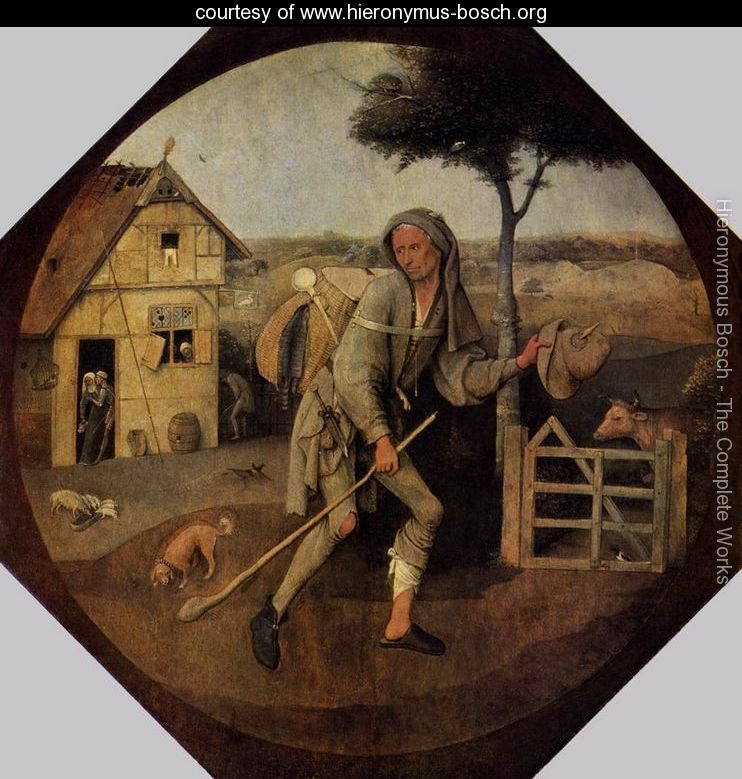
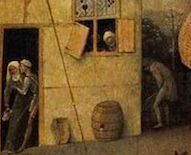
Depiction of urinary tract dysfunction in art is even less common than that of normal function. As common as dysuria and stranguria are for us humans, it’s rare to find them represented in the creative world. The Wayfarer, by Bosch, shows a man with the hunched-over posture typical of urinary distress, relegated to the central background of this curious painting. The painter, who died 500 years ago, lived in the historic low countries now called the Netherlands where he no doubt observed that characteristic posture often, as we do today in restrooms around the world.

the-wayfarer-large

[Hieronymus Bosch. Above: The Wayfarer. Below: voiding detail.]

bosch-detail

The impact of nocturnal enuresis showed up in All’s Quiet on the Western Front, where a young soldier suffered with that burden.

My point is that creative arts sharpen our perception and groom our mirror neurons to make us better attendants at life’s service stations.


Five.              

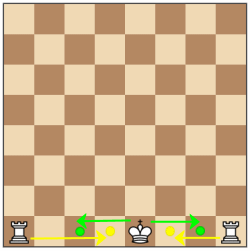
Castling. A few months ago this column referred to Richard Feynman’s metaphor related to mankind’s persistent search for central organizing principles, namely our curiosity to discover rules that govern the universe. He noted that, as we observe the “chess game of the world” and try to figure out how it works, every now and then “something like castling” occurs and blows our minds. That particular chess move is so far out of the box with respect to the other orderly rules and procedures of the game that it is, indeed, something of a miracle in that environment. (For chess aficionados the term rook may be preferable to castle, although castling sounds more appealing than rooking.)

castmove

It is human nature to seek rules. Prehistoric tribal priests, Ionian philosophers such as Aristotle, and recent scientists such as Feynman sought central organizing principles and rules. Unlike the explanations of the village priests, today’s principles of math, physics, chemistry, and biology are testable and verifiable or refutable. We have some ideas of why and how inorganic material things need to flow or seek equilibrium – principles of physics and chemistry govern their existence and fate. It is more of a mystery why biological things need to grow and humans, in particular, need to know things. No one has figured out, without invoking magical or religious paradigms, why our particulate niche in the universe is such as exception to what we perceive as the second law of thermodynamics. Perhaps our material, biological, and intellectual exception to the expanding and entropy-seeking universe is that strange miracle of “castling.” Bob Seger and The Silver Bullet Band expressed it more poetically in the 1980 song Against the Wind.

alaska

[Cosmic castling. Copper River. Kenai Peninsula, Alaska. Summer 2015]


Six.

It may seem an overstatement of human optimism to believe in the principle that the world you imagine is the world you are most likely to create, but a single person can have remarkable impact; Joan of Arc, Harriet Tubman, Abraham Lincoln, and Mahatma Gandhi are just a few examples. The impact of a single person, just as likely, can be darkly retrograde and numerous examples quickly come to mind.

Scientific thinking and modern technology have given mankind unprecedented tools to change the world with Albert Einstein and Steve Jobs as two of a myriad of other players. If you imagine a kind and just world, you will likely try to live by and spread those attributes. If you imagine a dog-eat-dog world and display that vision to those around you, that may likely become the reality you experience and leave behind. The possibility that a given leader can be good or bad for humanity might appear statistically random, that is stochastic, in terms of probability. On the other hand, if we carry the theme of castling to the idiosyncratic human experiment, it may not be so far-fetched to suggest that our genetic and epigenetic construction has built in a predilection to favor good over evil, making an individual more inclined to do the “right” rather than “wrong” thing at a given moment. That is, the elements leading up to a given personal decision are built upon individual upbringing, world-view, personal needs, perceived needs of our clan, and hope for the future. Adding all these elements, our prevailing human nature favors doing good, in the stoichiometric sense, most of the time.


Seven.

Where American health care will go next is unclear, no matter how the presidential election turns out next week. Problems abound in health care. The interface between patient and provider filling up with busy work and costs that distract from quality, safety, value, or satisfaction. Third party payers, regulators, public policy (even if well-intentioned) add an immense amount of “stuff” to be done before, during, and after the so-called patient encounter. While we prize innovation and the rewards of a free society, egregious exploitation of American healthcare consumers by industry seems to be getting worse and fuels demands for significant change. The EpiPen disgrace from the Pennsylvania company Mylan is only one of the many recent examples of human elements gone bad [JAMA 316:1439, 2016]. Why call out that one bad example among so many? My reason is simply that Mylan has made themselves such an easy target because they have been so sociopathically greedy.

Our urology silo has been a good one locally and internationally, by and large. This is evident now in the midst of the residency selection process wherein we advocate for our particular training program in Ann Arbor, our specialty having attracted many of the best and brightest of this year’s senior medical students. My colleague and friend Mike Mitchell once called urology (pediatric urology, in particular) “a lovely specialty.” We practice at the cutting edge of technology, we improve patient lives, we fix things that are broken, we have the gift of long relationships with patients, and we generally get along well within our professional arena. As a medical student and resident myself, years ago, the attributes and role models of urology attracted me into the field – and these features of our profession continue to attract the superb students and residents to follow us.

Healthcare is changing and the urology of tomorrow will differ from what I experienced in my career. We have already transitioned from roles as independent urologists such as that of our predecessors Hugh Cabot, Reed Nesbit, and Jack Lapides. Our work to educate, treat patients, and expand the knowledge base of urology requires subspecialization and teams, large teams that transcend clinics, offices, department, and operating rooms. The complexity of science, technology, and healthcare delivery made this change inevitable, with marketplace pressures and regulatory actions accelerating change. The fee-for-service that largely defined health care over the past century is being rapidly displaced by alternate payment methodology, with a sharp focus on value and performance in play today. These were vague terms in health care until recently. Value and performance metrics in other endeavors have achieved growing visibility, so we shouldn’t be surprised to find them crossing over into health care. Michael Lewis’s Moneyball brought these terms to popular attention for baseball in 2014, with the movie in 2011, and healthcare was bound to follow. No doubt some sense of player value governed Theo Epstein in breaking the curses of the Red Sock and Chicago Cubs with their World Series droughts of 86 and 108 years, although it’s unlikely he discovered a novel set of useful metrics.


Eight.

Value & performance. A paper in JAMA last month demands attention. Vivian Lee et al from the University of Utah offered an original investigation with the lengthy title “Implementation of a value-driven outcomes program to identify high variability in clinical costs and outcomes and association with reduced cost and improved quality.” [JAMA 2016; 316(10): 1061-1072] A matching opinion piece in the same issue by Michael Porter and Thomas Lee offered glowing support: “From volume to value in health care”. [JAMA 2016; 316 (10): 1047-1048] While it is clear that value and performance measures will be tools to replace the American fee-for-service paradigm, the details in the Utah study are important, in particular the idea of an “opportunity index” that allows healthcare teams to understand their costs and develop lean processes that improve not just costs, but also quality, safety, and that once-vague attribute value. If leading health care centers believe in a world of value-based healthcare, such a world surely can be created. That world, however, will largely be built on the special skills of specialties and the complex teams of future medicine, wherein urologists with their singular skill sets that will likely always be prized.


Nine.

Stainless steel, eggs, & sperm. Innovation is a fundamental characteristic of biology, and randomness is always in play. At the cellular level we see innovation from the random errors of genetic transcription and the utilitarian retention of the changes in these DNA sequences when they provide a particular advantage, so one could argue that random chance lies behind all things that happen. Choice, however, somehow slips into play with life. Even low levels of cellular organization make choices and, by extension purposefully innovate in their lives. Nematodes (round worms) and flatworms, such as C. elegans and planaria, seek comfort and food as they move above their microcosms to discover opportunities or deterrents. Their actions are purposeful with deliberate directional choices as opposed to random Brownian motion. Each move is original in its own way, exploring new territory or retreating from threats. In the larger animal kingdom we see choice in behaviors of vertebrates, and hominids have taken choice and innovation to entirely new levels.

One hundred years ago Harry Brearley figured out a way to improve the quality and value of gun barrels. Gun performance deteriorated quickly after use because of barrel corrosion from moisture and gases after combustion, so Brearley considered variety of additives to create steel alloys with better resistance and found chromium most effective. This was already being used in the manufacture of steel for airplane engines, but one particular variant alloy had been difficult to examine microscopically because the etching processes used to prepare the samples for examination were far less effective than usual. The corrosion resistance problem for engine manufacturing proved to be a solution for gunsmiths.

Human innovation continues to advance even more remarkably. At our recent Nesbit meeting, Sherman Silber (Nesbit 1973) presented innovative work in reproductive medicine showing how pluripotent stem cells derived from skin cells can create eggs and sperm with full reproductive potential in normal mice.


Ten.              

jiffy-silos

Silos. Silos are disparaged glibly in modern organizational discourse, but we owe them better appreciation. Some silos are storage vaults for coal, cement, or salt while others are biologic factories. Grain elevators, for example, store and ferment grain to produce silage for animal feed. Early farmers figured this out, probably noticing it by accident. After harvesting, clover, alfalfa, oats, rye, maize, or ordinary grasses are compressed in a closed space and after a brief aerobic phase, when trapped oxygen is consumed, anaerobic fermentation by desirable lactic acid bacteria begins to convert sugars to acids. Volatile fatty acids (acetic, lactic, butyric) are natural preservatives, lowering pH and creating a hostile environment for competing bacteria. Some microorganisms in the process produce vitamins such as folic acid or B12. Ever since the early days of farming indigenous microorganisms conducted successful fermentation, although modern farms utilize select strains of lactic acid bacteria or other microorganisms more efficiently. Because fermentation produces products that bacteria consume silage has less caloric content than the original forage, but the tradeoff is worthwhile due to the preservation and improved digestibility.

Thinking about silos, it seemed natural to take a trip to Chelsea, Michigan where the family-operated Chelsea Milling Company has been making baking mixes since 1930. Mabel White Holmes created the first prepared baking mix in the United States and her grandson, Howdy Holmes, presently runs this company of 300 employees producing 1.6 million boxes of products daily. Mabel White Holmes originally marketed her biscuit mix as “so easy even a man could do it” and Jiffy Mix with its memorable blue logo became one of America’s classic brands. Chelsea Milling makes and markets 19 mixes distributed to all 50 states and 32 countries. The Jiffy Mix corporate philosophy is employee-centric, much like Zingerman’s Community of Businesses and (we believe) the Department of Urology at the University of Michigan in the recognition of how silos build a community. The Jiffy Mix silos provide dry storage for wheat, while the people that work at the company provide the fermentation that makes and innovates superior products within a lean culture of thoughtful communication and collaborative decision-making. This is biologic castling.

wh-balcony

[Next occupant?]

Whether for storage of salt or biofactories for silage, silos are ultimately useful only when working together as parts of farms and communities. This an analogy holds true in the political arena, where consensus is as important as victory. Our national and international communities suffer from self-righteous siloism. Current political rhetoric lacks dignity and respect to the point of ugliness, although the most corrosive disrespect is the a priori claim that the American political system is rigged, whether by one party, the media, or another nation. It is nonsense to be outraged that other countries are into our emails and elections – that’s exactly what we do as a nation and indeed it is the business of large nations to gather intelligence on competitors and get a thumb on the scales when possible. If our candidates say foolish things and our firewalls are weak then we should own the blame. With 4 days to our next national elections, this incivility of discourse is a short slippery slope to civil instability, which will not be good for anyone. The effect on healthcare will consequential and international scientific media as influential as The Lancet have taken the unprecedented step of hosting a US Election 2016 website: www.thelancet.com/USElection2016.  Aside from parochial concerns such as healthcare, ultimately what will matter most for all of us on the planet after November 8 will be financial market and geopolitical stability – all other concerns pale in comparison.

leaves

[October driveway]


David A. Bloom

University of Michigan, Department of Urology, Ann Arbor

Matula Thoughts October 7, 2016

DAB What’s New Oct 7, 2016


Education, errors, & box scores

3931 words

giants-vs-cardinals

One.               Autumn is academic medicine’s high season.  With summer officially over the serious work is well underway for faculty promotions, graduate medical education (GME) in academic centers, and continuing medical education in professional meetings. Residency interviews are beginning. Coincidentally, this is also the definitive season for baseball as major league teams compete for its World Series. [Above: San Francisco Giants 6 – St. Louis Cardinals 2. Sept 15, 2016. Cueto pitching.]

With participants notching up their games, rookie mistakes become occasional, although errors never totally go away.  Performance measurements allow individuals to understand and improve their work, while inviting inevitable comparisons. Fielders in baseball, for example, are judged by errors: the number of times they fail to complete plays that could have been made by common effort, a term roughly equivalent to the reasonable and standard practice by which physicians are judged.

640px-jetererror

[Derek Jeter, Yankee shortstop. 8/24/08. Photographer Keith Allison]

It may seem awkward for physicians to talk of mistakes, however these conversations are not only necessary, but also healthy when done properly. We formalize these conversations in morbidity and mortality (M&M) conferences. Fortunately, most errors are minor if not trivial and are intrinsic to all biologic behaviors, indeed species variation itself is built on error. Health care cannot be expected to be exempt from error, for who among us has not missed a blood draw or an IV placement on first puncture? Who has not made a transcription error when typing an entry into today’s electronic medical record systems. (When I trained to become a surgeon, typing skills were not a required skill set; today many surgeons spend nearly as much time typing as operating – surely an epic waste of health care resources.) On the other hand, serious complications such as postoperative bleeding, deep venous thromboses, anastomotic leaks, or missed relevant comorbidities, bear inspections that should inspire personal and systemic improvements to minimize errors for future patients. While we take errors very seriously, we can’t let them disable us, for the next patient is always in line.

The point to make is that the conversation of error in health care is essential. The practice of medicine is, indeed, a practice and things that don’t turn out as intended need to be investigated to improve quality of practice. Charles Bosk’s 1979 book, Forgive and Remember, is a classic starting point. You can get a good summary of it in Robin Williamson’s review of its 2003 edition [J. Royal Society of Medicine. 2004 Mar; 97(3): 147-148]. While surgical fields have a long history of tough treatment of trainees, surgical training today (GME) is far less recriminating when errors are the result of earnest effort. [Below: Ed McGuire lecturing as emeritus professor to residents last year.]

mcguire-lecture

Two.           An astonishing array of events emblematic of our three-way mission initiated the 2016 academic high season of urology in Ann Arbor.

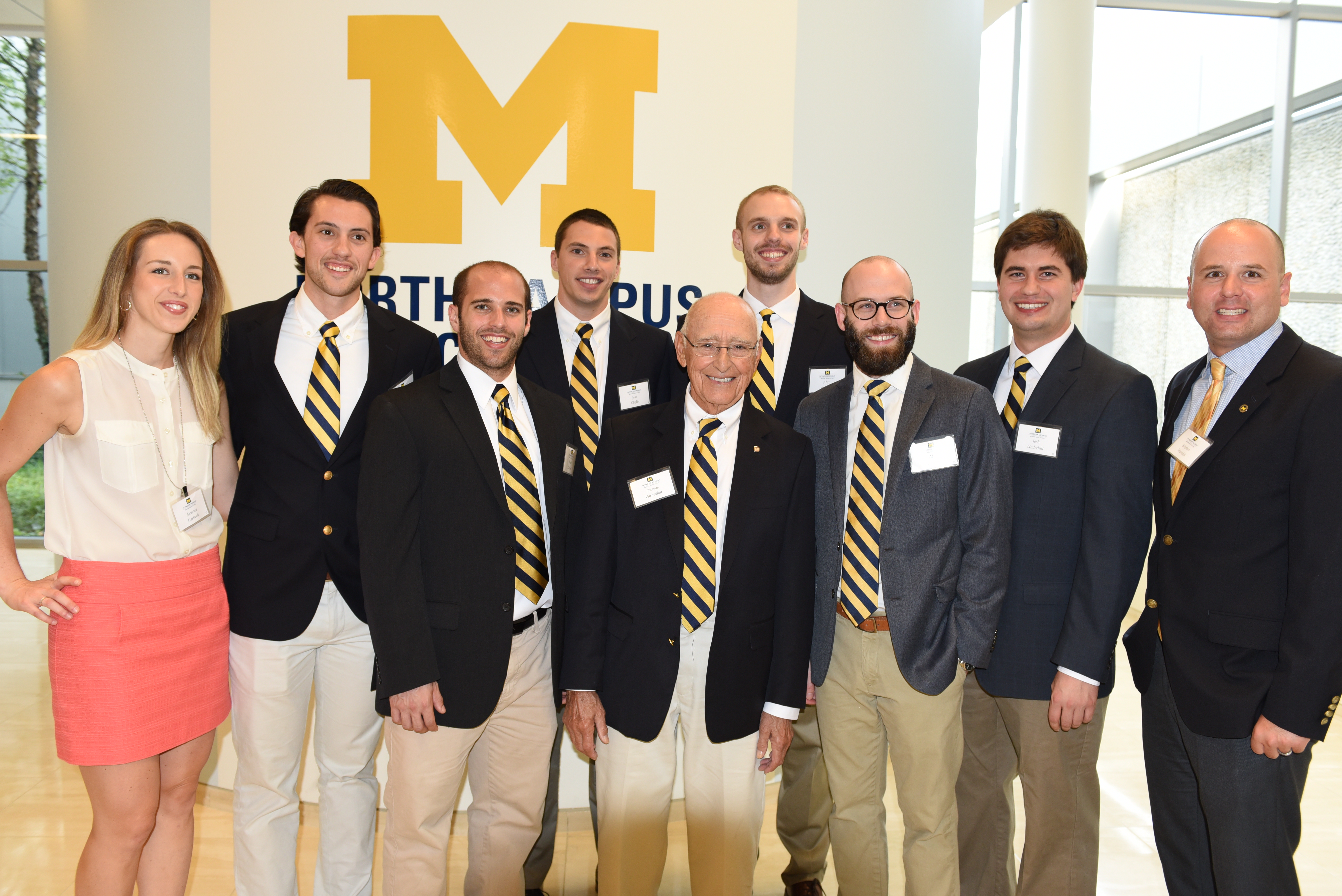
Inspiring Discovery was a celebration at North Campus Research Center focusing on partnerships with donors that fuel education and research. Tom Varbedian, distinguished Michigan alumnus, friend of our department, and retired ophthalmologist was among those honored, in his instance for support of medical students. He has funded 14 students over the years and 4 “Varbedian scholars” are presently here in medical school. [Below: Tom and some of his students]

varbedian-students

The evening was rich in meaningful stories of partnerships between donors and faculty to grow the conceptual basis and technology of health care while educating the next generation. Endowments are the key strength of Michigan’s future as a great academic medical center.

Dow Division Health Services Research Symposium targeted the topic of performance. The program by Jim Dupree, Khurshid Ghani, and Chad Ellimoottil featured our own and other world-wide experts who investigate and innovate health care delivery. This third biennial meeting included around 200 attendees.

screen-shot-2016-09-24-at-4-08-20-pm

Jerry Weisbach Lectureship last month brought Martin Gleave from Vancouver, BC to discuss his extraordinary work co-targeting the androgen receptor and adaptive survival pathways in advanced prostate cancer.

Nesbit alumni weekend featured Freddie Hamdy from Oxford University describing his unique randomized trial of active monitoring, radical prostatectomy, and radiotherapy for localized prostate cancer. Two NEJM papers from his group last month attracted international attention and Freddie’s talk to us was the first public presentation. At the cutting edge of reproductive medicine, Sherman Silber explained how the Y-chromosome is becoming redundant in the light of the incredible accomplishment of creating sperm and ova from skin fibroblasts. Many other talks filled the program. We were honored to have senior urologists Cheng-Yang Chang, Clair Cox, and Mark McQuiggan in the audience. Cheryl Lee (Chair at OSU) and Stu Wolf (Associate Dean at Austin’s Dell SOM) were honored at our alumni dinner and John Park won the John Konnak award for service to our department. A lively Nesbit tailgate party preceded the Wisconsin football game.

hamdy

[Above: Freddie Hamdy presents results of prostate cancer trial. Below: Freddie Hamdy, Marschall Runge, Sherman Silber, Jim Monte & Nesbit attendees]

nesbit-group

After the Nesbit tailgate we saw Michigan edge Wisconsin out 14-7. Next year’s Nesbit alumni reunion will align with the Air Force Academy game here in Ann Arbor.

coxs-wisc-game

[Clair & Clarice Cox tailgating]

The Montie Visiting Professor was Ian Thompson, Jr.,  Director of the Cancer Therapy & Research Center of the University of Texas in San Antonio. Ian (below) spent childhood years (1956-59) in Ann Arbor when his father was on the Michigan urology faculty. A West Point graduate, Ian became Colonel in the U.S. Army and chair of urology at University of Texas San Antonio. He is President of the American Board of Urology. He spoke to us on the future of prostate cancer detection and therapy, and heard superb presentations from our residents and fellows.

montie-thompson

[Ian Thompson, Jim Montie]

This past month has been rich in education. Although these costly events interrupt the clinical work that supplies their main funding, they are educationally essential and important for quality improvement and team alignment. Quality of care is improved by expanding the conceptual basis of medical practice, clinical skills and professionalism of the workforce, and delivery systems. Alignment of healthcare workers is critical to their success in teams. In the face of new technology, new diseases, and a changing socio-economic-political environment these educational efforts cannot be sacrificed to clinical throughput.

Three.           The attendant at the gas station of life was a picturesque metaphor of Dr. Horace Davenport as he taught first year physiology to medical students here in Ann Arbor in the later 20th century (re-quoted by us in July What’s New and Matula Thoughts). The actuality of a physician’s role is more complex, as Dr. Davenport well knew, and the irony of his specific term attendant in the midst of an academic medical center full of attendings was probably intentional. (Another irony is that today’s gas stations, in contrast to those of Davenport’s time, are mostly self-service).

A physician is better understood from the neuroscience perspective with respect to mirror neurons. Humans are not unique in having these sophisticated forms of quorum sensors that facilitate empathy, a phenomenon seen in certain other biologic species such as crows, elephants, and of course fellow primates. Humans, however, have tools, skills, and systems that allow highly developed ways to operationalize empathy.

Physicians can no longer speak so territorially about their roles because health care is provided as significantly by nurses, physician assistants, and other advanced practice providers (APPs). The awkward term health care provider has crept into general use, and while downplaying the physician as a professional, the new terminology is necessary in the team play of modern healthcare. Regulatory and corporate forces reduce health care services to commodity encounters that match diagnostic codes to treatment codes. Many encounters can be delegated to APPs working at high ends of their scopes of practice. While vaccinations, dental cleaning, and sports physicals can readily be commoditized, whether routine “well patient” check ups or visits for uncharacterized problems can be similarly commoditized in 15 to 30-minute encounters remains to be seen. Some patients need the magic of attention and intuition from a health care professional that is not readily translated to check lists or passed down the ladder of expertise.

Effective attendants at life’s service stations hone their skills to observe and listen carefully while practicing their craft. In the process of listening and observing they need not only determine a patient’s diagnosis and an attendant treatment (ICD 10 and corresponding CPT codes), but also must discover relevant issues of the context of that person’s life in terms of livelihood, family, neighborhood, or socioeconomic condition. Context amplifies or minimizes any diagnosis and therapy. Without understanding the patient’s life story, that is the ultimate co-morbidities, an actual encounter in the office may have little value to the patient. All this is to say that effective attendants (physician, medical assistant, nurse, advanced practice provider, etc.) must seek to understand the patient as fully as possible, although such understanding is illusive and always incomplete.

Four.              Rabbit holes in time.   An article earlier this year in The Lancet by Kingshuk Pal, “Could you wait a second,” described a clinic visit with a woman in her mid-thirties. The encounter was allocated for a mere 10 minutes in his National Health Service (NHS) clinic in London, and in spite of an earlier add-on patient Pal was back on time for the last patient of the morning. He assumed the visit would be a simple encounter for a prescription, and indeed things started out that way. In fact, Pal had seen the same lady in brief encounters twice before and his colleagues had seen her other times as well to write prescriptions after going through standardized template checklists. However, Pal noted:

“But things didn’t feel quite right. I interrupted my internal monologue to go back over what she had just said … There was something about the vehemence with which she had expressed herself that jarred.”

Follow-up questions led into a “rabbit hole” that revealed an unexpected terrible social situation of an abusive marriage. Pal called in appropriate support services and eventually the lady became able to take control of her life. The missed opportunities to uncover the critical social comorbidity (spousal abuse) that was the basis of all of the previous encounters with the well-intended NHS physicians surely would be considered errors in other occupations. Pal commented on earlier missed opportunities to rescue the patient:

“… each time we had stuck to our templates. We were focused on her medical needs. We had listened to what she said, but not what she meant. What had been left unsaid was how much she needed kindness, sympathy, and patience. For me to give her a few seconds of my silence so that she could finally break hers. I know if I had been busy, it would have seemed like that would take forever. But the passage of time is a peculiar thing. As strange as in a consultation as it is in Wonderland:

Alice: ‘How long is forever?’

White Rabbit: ‘Sometimes, just one second.” [The Lancet. 387:1900-1901, 2016]

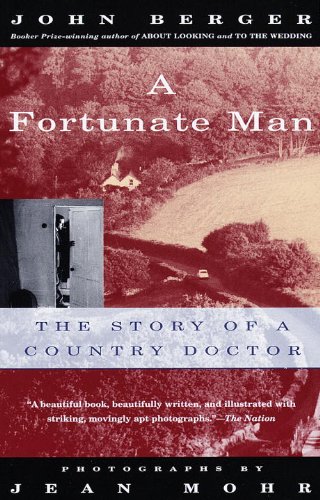
Five.               Attending at the station. John Berger’s factual description of a rural English general practitioner in the 1960s is an understated gem of medical literature. Berger and photographer Jean Mohr spent six weeks with the doctor. More than shadowing him, they embedded in his practice, living with him and his wife in St. Briavels in the Forest of Dean, Gloucestershire. The physician, John Eskell, was named John Sassall for the book, A Fortunate Man: The Story of a Country Doctor, although accounts of patients and the community were otherwise factual. Berger and Mohr observed Eskell/Sassall in his clinic (called the surgery) and dispensary, as well as on his house calls.

a%20fortunate%20man-2

This somber book has underlying themes of optimism in human kindness, meaning, and extraordinary curiosity that some people, such as Eskell possess. Berger explains how the morbidity and comorbidities of patients became the personal burden of Eskell.

“I said that the price which Sassall pays for the achievement of his somewhat special position is that he has to face more nakedly than many other doctors the suffering of his patients and the sense of his own inadequacy. I want now to examine his sense of inadequacy.

There are occasions when any doctor may feel helpless: faced with a tragic incurable disease; faced with obstinacy and prejudice maintaining the very condition which has created the illness or unhappiness; faced with certain housing conditions; faced with poverty.

On most occasions Sassall is better placed than the average. He cannot cure the incurable. But because of his comparative intimacy with patients, and because the relations of a patient are also likely to be his patients, he is well-placed to challenge family obstinacy and prejudice. Likewise, because of the hegemony he enjoys within his district, his views tend to carry weight with housing committees, national assistance officers, etc. He can intercede for his patients on both a personal and bureaucratic level.”

Six.                 Personalized medicine. Comorbidities unquestionably impact illness, and without understanding them in at least some depth, physicians can hardly claim to deal out meaningful advice and therapy. Today we confuse recognition of comorbidities, by our ability to list billing codes, with actual understanding of comorbidity relevance and impact. Prominent in Sassall’s example is the matter of who he is outside the clinic and dispensary. He represents something positive in the community and accordingly he is not quite free to live a life that doesn’t impact favorably on him, his environment, or his profession. He accepted that “trade-off” when he accepted his role as a physician. Berger continues his explanation.

“He is probably more aware of making mistakes in diagnosis and treatment than most doctors. This is not because he makes more mistakes, but because he counts as mistakes what many doctors would – perhaps justifiably – call unfortunate complications. However, to balance such self-criticism he has the satisfaction of his reputation which brings him ‘difficult’ cases from far outside his own area. He suffers the doubts and enjoys the reputation of a professional idealist.

Yet his sense of inadequacy does not arise from this – although it may sometimes be prompted by an exaggerated sense of failure concerning a particular case. His sense of inadequacy is larger than the professional.

Do his patients deserve the lives they lead, or do they deserve better? Are they what they could be or are they suffering continual diminution? Do they ever have the opportunity to develop the potentialities which he has observed in them at certain moments? Are there not some who secretly wish to live in a sense that is impossible given the conditions of their actual lives? And facing this impossibility do they not then secretly wish to die?”  [Berger. A Fortunate Man. 1967. Vintage International Edition 1997. p. 132-133.]

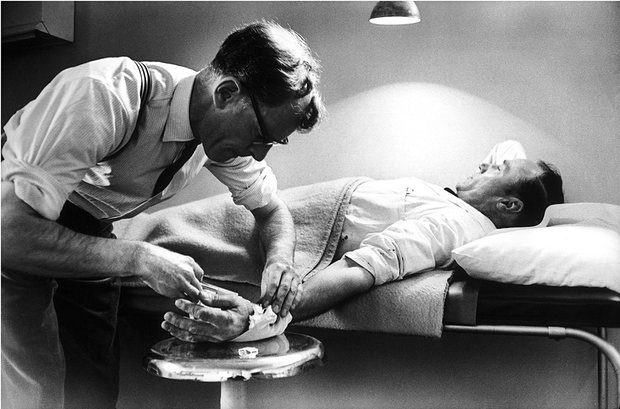
sassall

[Jean Mohr photo p. 50]

The doctor confronts existential issues in these questions. Berger makes the case that Sassall’s biggest inadequacy was an inability to counter the comorbidities that framed the immediate morbidities of his patients. Sassall was an idealist who tried to fix morbidities and co-morbidities patient by patient. His intermittent successes fueled his perseverance.

Seven.           Mistakes. Medical practice in Eskell’s day was mainly the binary proposition of doctor and patient, family “comorbidity” notwithstanding. Physicians had far fewer tools at their disposal than today’s incredible armamentarium, but it requires teams to deploy modern healthcare’s tools. No single John Eskell can deliver today’s miracles, although confoundingly the complex paradigm of multidisciplinary team medicine greatly increases the opportunities for error. The complexity of healthcare today and the multiplicity of people involved in the teams delivering it, has magnified the chance for mistakes in the intervening half century.

The Journal of the American Medical Association recently introduced a new department, JAMA Professionalism, with an inaugural article on disclosure of medical error. The case summary described a dermatologist who had just performed skin biopsies on two patients only to discover that the instruments he had just used had not been sterilized. The ensuing discussion revolved around the issues of disclosure and analysis of the error to preclude its repetition. [W. Levinson, J. Yeung, S. Ginsburg. Disclosure of medical error. JAMA 316(7):764-765, 2016]

A phrase has stuck with me from John Shook, the insightful “zen-master” of lean processes: I can’t remember exactly where or when he said it, but it goes like this: for us to fulfill our role, we have to keep on learning. screen-shot-2016-09-11-at-8-17-58-pm

[John Shook on right with Jack Billi]

Eight.             Retrograde thoughts. Everyone brings a unique identity to their work, and in health care the idiosyncrasies of each practitioner resonate with particular specificity in the nature of his or her practice. The professional motivations, world-view, aspirations, distractions, personal demons, work-ethic, curiosity, consistency, empathy, attention to detail, ability to listen and observe, as well as commitment to community are unique to each practitioner and are manifested distinctly in each practice, and with each patient. A mandate for professionalism is intended to bind all these variables together in the practice of medicine, but this is necessarily a vague aspiration although a national trend seeks to define a professional standard and perhaps reduce it to metrics and benchmarks. A national set of professionalism standards or a GME curricular competency can never replace the role models of John Sassall/Eskell and so many others.

It may be subversive to suggest, in today’s world of measurement and precision in medicine, that if you can’t measure something of importance, you still can (and must) improve it. The discovery of what matters to a patient may not be readily measureable. On the other hand, for things that are measureable a certain degree of precision does not matter. Whether you weigh 170 pounds vs. 169.573 pounds, or whether your creatinine is 1.2 or 1.18746, or if your BP is 120/80 or 117.3/78.4 the precision is irrelevant. However, if your abdominal aortic aneurysm or renal transplant are managed by medications that you are reluctant to admit you can’t afford – that fact really matters.

Nine.              A growing body of literature punctures any remaining illusions of the perfection of medical practice. Atul Gawande’s Complications and Henry Marsh’s Do No Harm are good examples of this genre of story-telling and introspection. This type of work is instructive, although limited to single examples of individuals, sometimes approaching the point of titillation or voyeurism. Anecdotes certainly have value, acting like fables that accrue in our minds and bring us to greater wisdom in future actions. Lacking any real-time peer review and team-based process improvement, however, these personal denouements and anecdotes are unlikely to achieve larger scale in medical practice quality improvement.

Autopsy of errors or failures is more purposeful in driving deliberate changes in the ways we deploy work, whether in the structure of a clinic visit or the steps in an operative procedure. This turns out to be the very holistic idea of the Toyota Process Systems that has translated in western business as lean engineering. Reconsidering that pseudo-scientific phrase, if you can’t measure it you can’t understand or fix it – this adage is useful, but should not become dogma. Of course, measurement is essential to understanding and improving things, but measurement is not central to all sophisticated human processes. Ideas are central to understanding and progress, and measurement is only a tool used along the way to test hypotheses, measure performances, or test results.

henry_chadwick_baseball

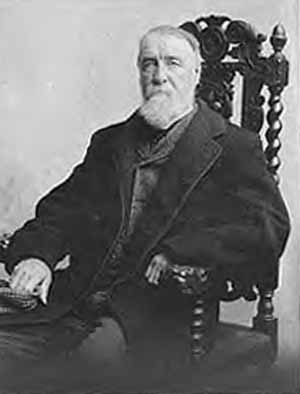
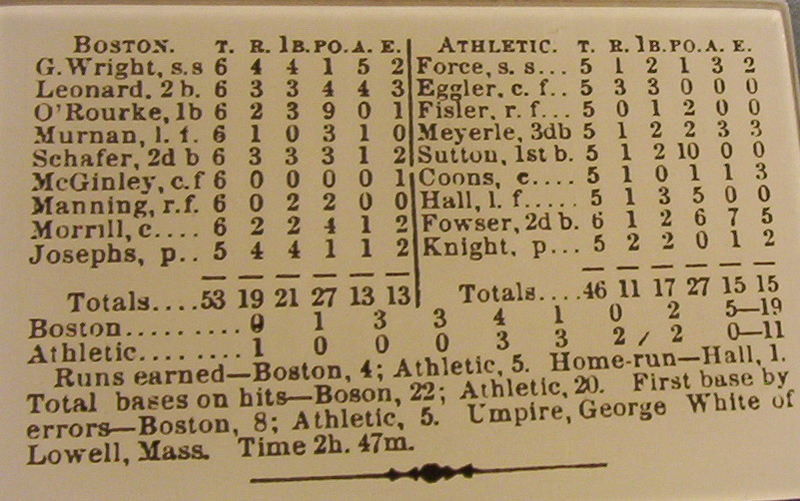
Henry Chadwick (1824-1908) initiated the practice of recording statistics based on his experience in the game of cricket. He applied these methods to baseball after discovering the game in 1856 while “cricket reporter” for the New York Times. His box score for reporting the game, adapted from the cricket box score, has blossomed into contemporary baseball statistics of batting average, runs scored, base on balls, strike outs, runs batted in, earned run average, fielding percentage, and errors, to name a few before falling into the more complex Sabermetrics. Numbers can replicate or model a game, but they cannot substitute for the performance of the game itself.

1876boxscore

[1876 Box score: Wikipedia]


Ten.               Boston surgeon Ernest Amory Codman (1869-1940) was an intellectual successor to Chadwick in the realm of health care, where scoring is more complex than in baseball. [Below: Codman collecting data.]

codman

Eskell and Codman were obsessively committed to their work, but centered on the patient in different ways. Both men were mavericks. Codman focused on measureable outcome, he called this the end result idea, and believed that individual physicians and hospital record systems should keep relevant information. Eskell attended to the patient in the moment and in the environment. Each physician was overwhelmed by his own idea. Codman became alienated from his colleagues and went bankrupt self-publishing his book on the end-result idea, A Study in Hospital Efficiency.  Eskell focused on his immediate performance delivering health care one patient at a time, attentive to their inevitable comorbidities, but he ultimately committed suicide. Whether their unfortunate ends were due to highly sensitive mirror neurons overwhelmed by the woes of the world, or obsessive personalities that closed the door to sufficient joy to offset their burdens is a mystery.

The word detachment caught my attention when I finished surgical residency at UCLA. My inspirational chief was William P. Longmire, Jr. and, just as our completing residents and fellows and the Nesbit Society, I was given a diploma when I finished training. The Longmire Society logo was a symbol with four corners that read: Detachment, Method, Thoroughness, and Humility. At the time (it was 1977) I understood three of the attributes, but found detachment somewhat odd: why include that word?

Over the years. I’ve come to understand it better. Clearly, Codman and Eskell suffered from inadequate detachment. Dr. Longmire, a great surgeon, found the right balance. He knew his patients quite well, but had the necessary detachment to make a grand incision, put his hands in the abdomen, and fix most any problem with exquisite skill and judgment. He felt the need to warn young trainees to develop similar detachment.

The world is different today. Minimally invasive surgery, OR checklists, and electronic health records serve their purposes, but distance us from patients. Indeed, with robots a surgeon never needs to physically touch a patient, surrogates and checklists can stand in the way. Don’t get me wrong, I have benefitted from the robot and I believe in systems (although not obsessively). However, when it is not the surgeon’s hand that makes the incision and it’s not the surgeon’s hands in the body, the doctor-patient relationship is changed, even if in a subtle way. This is reminiscent of the old farmer’s adage: if you have ham and eggs for breakfast, the chicken was involved, but the pig was committed. The new tools, the regulations, scorekeeping, and the economics of health care have created an environment of significant detachment for our trainees. We no longer need to warn them to develop that sense, rather we need to inspire the right extent of involvement and commitment that will lead them into rabbit holes and other avenues of inquiry as caring attendants at the gas stations of life.

Health care performance is now judged by a multitude of variables, some worthy and others less so: patient outcomes may not be evident for years, peer review at M & M conferences drives quality improvement, and performance measures du jour, such as Press Ganey data, remind us of our public responsibility. Ultimately, our game has no final box score. The practice of medicine is an individual art, evolving as knowledge and technology accrue and as self-knowledge notches up, one hopes in lockstep with experience, patient by patient, whether in the springtime or autumn of our careers. Measurements can improve elements of our performances, but will never substitute for artful performance itself.

dsc01844

[Michigan 14 – Wisconsin 7,  Nesbit Weekend 2016]


David A. Bloom

University of Michigan, Department of Urology, Ann Arbor

Matula Thoughts. September 2, 2016.

DAB What’s New Sept 2, 2016

Matula Thoughts. September 2, 2016. News & views.

3821 words


Sept 2016

One.   Summertime news.  Yesterday was the beginning of meteorological autumn and tomorrow is Michigan’s first football game of the season, here at home with Hawaii. Ann Arbor days were hot this summer, but are getting shorter, although not so short yet since we can travel between home and work in daylight at least in one of the directions. [Above: the drive on Huron Drive] September was the seventh month in the old Roman calendar when March served as the first month of ten in the year (see April 1st Matula Thoughts). Calendar reform added January and February to create a 12-month year and September got demoted to the ninth month, but retained its historic name.

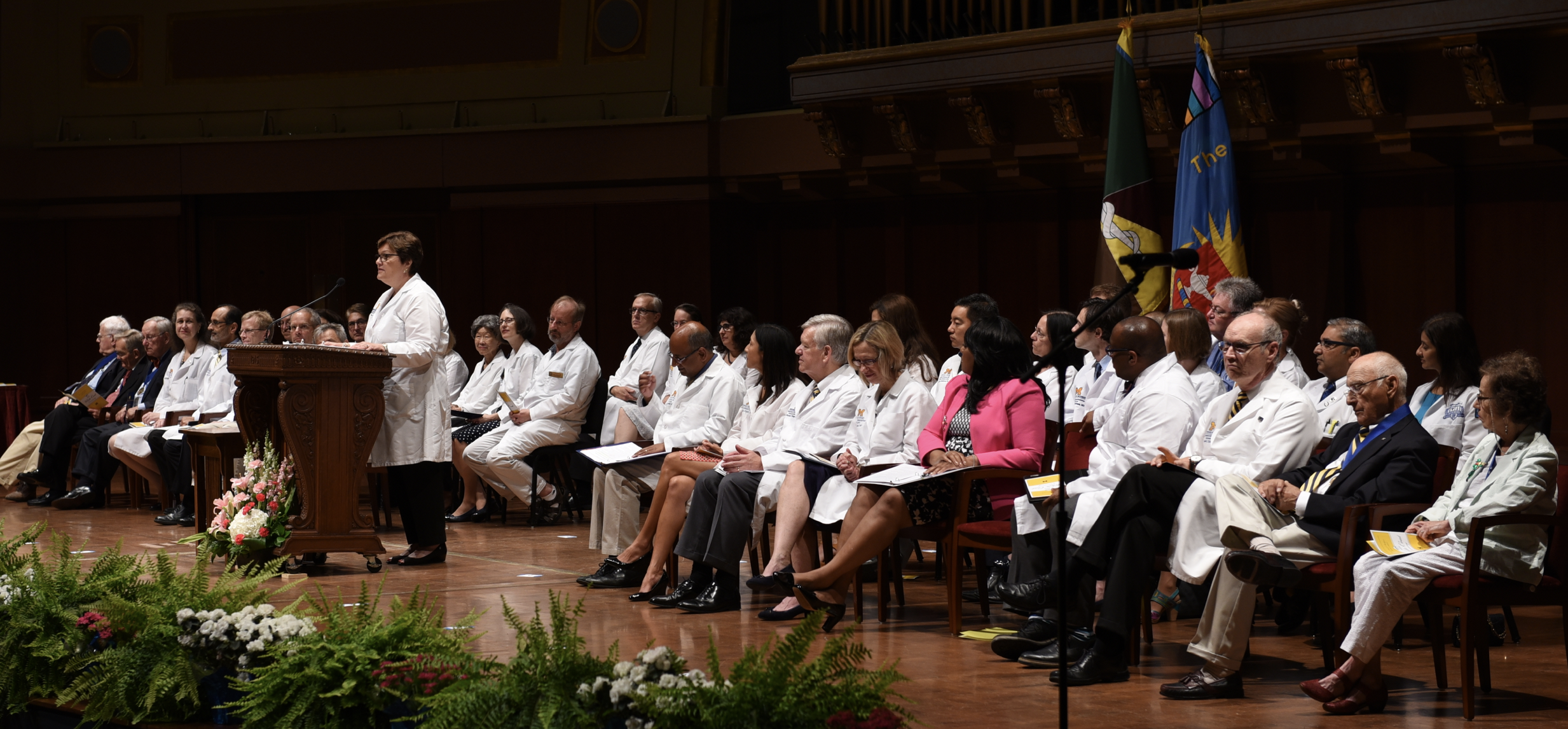
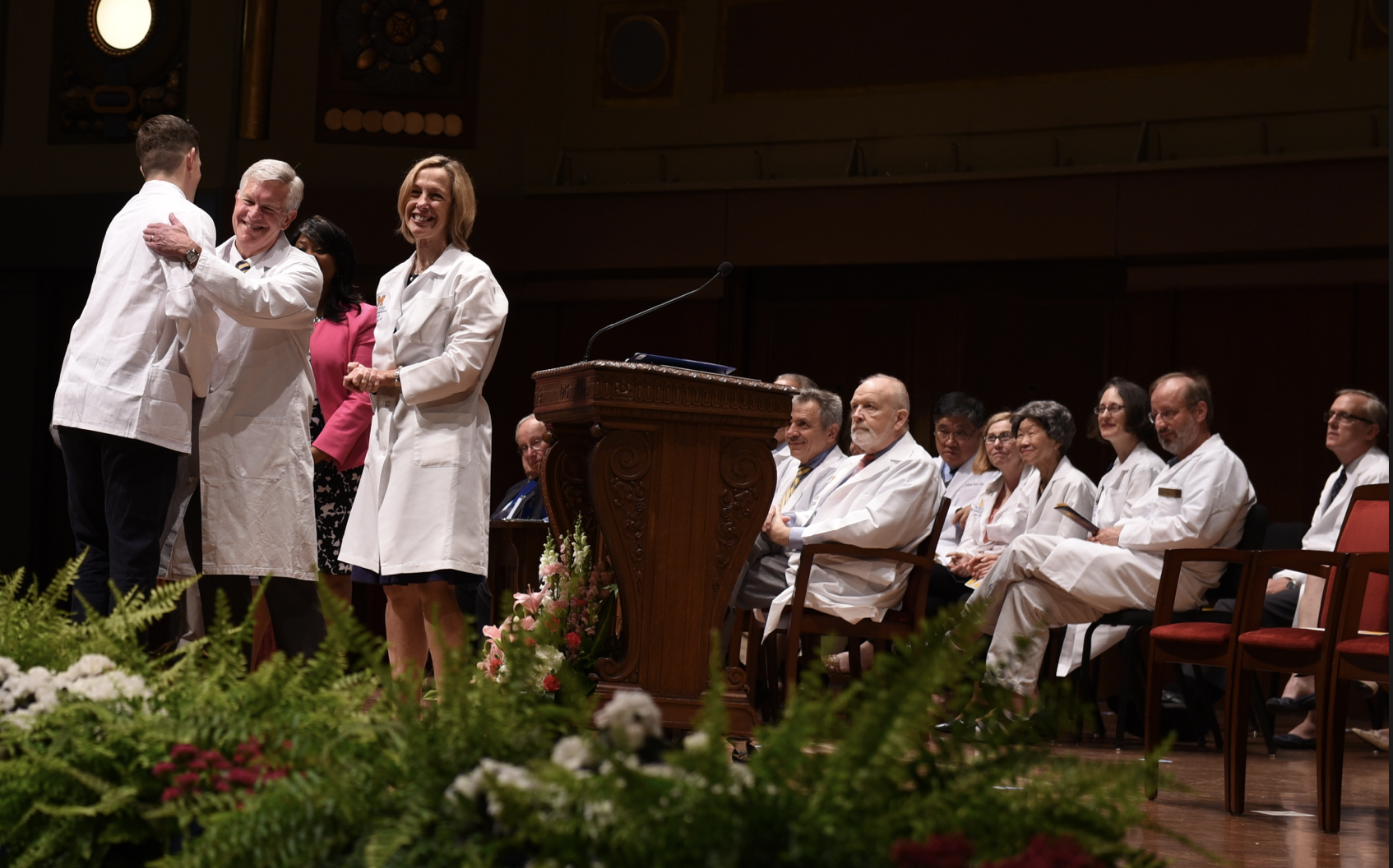
       We had a good summer, overall, in spite of local, national, and worldwide tragedies admixt with the ongoing environmental degradation of which we are no longer innocent. Our particular geographic microcosm, however, has been mostly pleasant and constructive with the entry of new house officers, promotion of their seniors, incorporation of new fellows, and initiation of first year medical students. We enjoyed the Ann Arbor Summer Festival, Art Fairs, Chang-Duckett-Lapides lectureships, White Coat Ceremony, and lovely three-day weekends that come to an end with Labor Day on Monday. A few weeks back Mani Menon from Henry Ford Hospital gave a brilliant Grand Rounds talk on his remarkable achievement of translating radical prostatectomy to the robotic platform, and thus introducing a new paradigm of therapy worldwide (below: Mani Menon, Khurshid Ghani, Andy Brachulis). Stu Wolf had his last day a week ago and will now be doing his part to build a new medical school in Austin, Texas.

Menon

In mid-August we lost a wonderful colleague and pediatric surgeon, Dan Teitelbaum (pictured below), after a difficult struggle with brain cancer. Dan partnered with us in the Disorders of Sex Development program and was a world authority on pediatric gastrointestinal problems both clinically and in the research world. Dan was more than just a colleague, he was a kind, skilled, and reliable partner-in-care and his excellence made us better. We could always count on Dan. Brain cancer, all cancer, is an evil destroyer of the good things in life. We are making progress against cancers on many fronts, but not in time for Dan.

Dan

A road trip this summer to Toronto featured Sick Kids Hospital’s Gordon McLorie symposium for the latest news in pediatric urology. [Below: McLorie Symposium] The Olympics captured much attention during my visit north of the border and, flipping back and forth on television, it seemed that Canadian coverage favored more actual sports and news than broadcaster celebrities and opinions on American networks.

McLorie Symposium

Bruce Hornsby & The Noisemakers appeared back in Ann Arbor at the Summer Festival one evening. Many of us (of a certain age) recall the classic song, The End of the Innocence, Hornsby wrote with Don Henley in 1989. At the Power Center Hornsby and the Noisemakers expanded the piece into an amazing long version with riffs, explorations, and pleasing dissonances. I wondered if the composers intended some reference to Songs of Innocence and Experience by William Blake in 1789 and 1794, but in any case the piece struck me more meaningfully this summer than when I first heard it years ago. Jeff Daniels joined the Hornsby ensemble for an encore and performed his new composition on the iconic environmentalist Henry David Thoreau.

EO & JD

Back in 2009 Daniels and E.O. Wilson received honorary degrees from The University of Michigan (pictured above). Wilson, above on left, is our planet’s most credible spokesman for biodiversity. Recognizing this at a dinner in their honor, Daniels commented self-effacingly something like: “I really don’t know why I am here, for after all, my claim to fame is a film called Dumb and Dumber.” In fact, both honorees are substantial contributors to society and they have comfortably crossed intellectual boundaries. Daniels’ work, for example in The Newsroom, not only entertains, but also speaks to the better nature of mankind, offering an example of a trustworthy television journalist navigating the challenges of corporate broadcasting. Wilson, on the other hand, successfully ventured out from his academic world with the novel, Anthill.

Blake - innocence

[Title page: Songs of Innocence and Experience Showing the Two Contrary States of the Human Soul. 1826 edition. At Fitzwilliam Museum, Cambridge, UK]


Two.   Experience. A new season of academic medicine begins each September and renews the process of turning innocent medical school graduates into experienced urologists. Medical students cram our urology services to test out the idea of careers in urology and audition for 4 available PGY1 (intern) slots, while our residents quickly ascend their ladders of experience and our faculty hone their practices.

Consult DB

Above you see Julian Wan at Grand Rounds presenting awards to residents Duncan Morhardt, Amir Lebastchi, and Parth Shah for their achievements with consults in Julian’s innovative Tour de Consult. The next picture shows faculty and residents that same Thursday morning at 7 AM listening to talks from medical students. The newly redecorated conference room is a big improvement over its previous 1986 version, although we still run out of space.

Grand Round

Our residents, however, are enjoying ample private space in their new residents’ room we gained recently and which was significantly upgraded thanks to contributions by Jens Sönksen (Nesbit 1996) and a number of other alumni. [See picture on our matching departmental Instagram https://www.instagram.com/umichurology/, courtesy Pat Soter]

This autumn we expect 21 clinical clerks (six 4th year medical students from UM and 15 from other medical schools) to rotate with us. The individual Grand Rounds presentations they make during their stints over the course of my career at Michigan get better and better in sophistication of presentation skills and subject mastery, indicating that the next generation of urologists should surpass us. Later this autumn a subset of our faculty will personally interview about 40 other students from a pool of 350 applicants. In December we will rank all applicants just as they will rank us, a computer will do the matching and by February we will know the names of our next 4 entering residents.

Autumn will also be busy with sectional and subspecialty conferences, national meetings of the American College of Surgeons and other organizations. Abstracts will be due for next year’s big clinical congress of The American Urological Association in Boston. Family life restructures for many of our faculty when children head back to school. Also this fall a presidential election will take place, so make arrangements now so you can vote on Tuesday, November 8.  I’ve learned from sad experience that busy clinicians and staff cannot count on finding a voting window during election day unless they have made deliberate plans, like absentee ballots, far in advance. Unprepared, you may get lucky – or not.


Three.

Radio tuner 1920s

Far from the town crier and printed circular, radio was a big step in the dissemination of news. Radio itself began in 19th century, arguably with the wireless telegraphy patent of Guglielmo Marconi in 1896, but the first tuning system, patented a century ago, brought choice and accessibility to the public. Ernst Alexanderson, an engineer for General Electric in Schenectady, New York, developed the selective tuning system. Station choices grew on AM radio [Above: vintage radio tuner c. 1920s, Wikipedia] and later with FM, thanks to generous regulation and commercial competition. When I spent a year training in Great Britain as a resident in 1976-77 only 4 radio choices were available on my radio, in addition to an off-shore “pirate” station, because government tightly controlled airwaves.

1939_RCA_Television_Advertisement-1

[Radio & Television Magazine X (2): June, 1939. NY: Popular Book Corporation]

Television portended the end of radio after the first public television broadcast in 1927 and color TV in the 1960s made the medium even more irresistible. The prophecy was wrong, however, as radio rebounded with multiple new consumer channels and TV became just the newer communication layer. Radio stations provided “narrow networks” of sports talk shows, partisan political commentary channels, business news stations, religious channels, local news, weather, and some splices to television channels. Reemergence of radio’s early variety shows appeared with Garrison Keillor and the ubiquity of NPR gave radio large new audiences; the final broadcast of A Prairie Home Companion this past July 2 completed its extraordinary 42-season run. Commercial satellite radio produced an explosion of new radio species for an astonishing range of human interests from Elvis to POTUS Politics. Cable TV ended the domination of broadcasting networks, although the proliferation of new television channels added only precious few of quality.

Radio and television “news”, however maintained a sense of integrity with trusted journalist/broadcasters such as Edward R. Murrow who told it clean and straight, in contrast to advertising or propaganda. At some point, however, the term “content” subsumed “news” and clarity began to vanish. Entertainment mingled with news broadcasts and trusted news broadcasters appeared in fictional stories further blurring the border between truth and fiction.

Podcasts, cable and satellite media, and other innovations offered content to seriously compete with network television and the movie industry. Home Box Office (HBO) produced its first original movie for cable TV in 1983 (The Terry Fox Story) and other memorable films and series followed including Breaking Bad (2008-2013) and The Newsroom (2012-2014) with Jeff Daniels who should inspire a future generation of good journalists. (What Game of Thrones inspires is not so clear). Personal phones, computers, and video streaming bring yet newer layers and innovations to communication, information, and entertainment. Mini-series binge-watching eroded prime time network television while Netflix’s video streaming expanded into a new model of content production. Abandoning the pilot and sequential release of episodes, House of Cards (2013) offered an entire series for immediate consumption. The bottom line: new communication technologies add new layers rather than replacing the older media.


Four.

Alex Zazlovsky

Quorum sensing.  A few months ago at Grand Rounds Alex Zaslovsky, representing the lab of Ganesh Palapattu, gave an excellent presentation showing how platelets communicate with tumor cells to help them metastasize.

A process much like bacterial quorum sensing seems to be occurring, and perhaps this type of communication is prevalent throughout all life forms, whether gaining a consensus in a microbial biome to release endotoxin or a majority in a society for an election or an action on an issue. Strictly speaking, quorum sensing is a matter of individual gene regulation in response to news of cell population density. In other words, gene expression is coordinated according to the size and needs of the population. In the larger sense, quorum sensing allows individuals, that by themselves may be insignificant, to become superorganisms. Bacteria thus act in congress like multicellular organisms and this process works in bigger species such as social insects, fish, mammals, and likely all biologic creatures in ways we have yet to understand. This phenomenon brings us back to the seminal work of E.O. Wilson who linked ant pheromones to sociobiology and then to human consilience.

Quorum sensing is basically a matter of getting news, that is acquiring information about the environment so as to change or maintain behaviors. Weather (temperature, humidity, and pressure) is a form of news, but news about other creatures (one’s own species and different ones) also has great relevance for the immediate and intermediate future. Just as people learn individualistically, they collect news idiosyncratically. A hurricane or a full solar eclipse in mid-day gets everyone’s attention, but most news we need or crave is more discrete, while the media we employ to collect it are many and increasing in variety. Newspapers, radio, television, personal computers, and smart phones expand human quorum sensing and newsgathering far beyond the wildest expectations of Gutenberg with his printing press. New forms of social media layer upon each other and get tested in the market. Michigan Urology has its regular What’s New email, web site, Facebook page, Twitter Account, Matula Thoughts blog, and will now test out a weekly Instagram photograph that we hope will attract not only viewing interest, but also contributions from the readership.

We started putting Matula Thoughts on a web site three years ago mainly as an archive and an alternate access because our What’s New email list was getting cumbersome. While we don’t know much of our ultimate email audience, due to multiple forwarding, the matulathoughts.org web site provides visibility of readership as seen in the snapshot below of the first 6 months of 2016.

MT readership 2016


Five.   Thoreau away thoughts.  Coming into work one day this summer I was listening to an audio book by Chris Anderson, the head of TED Talks, and had just come to his optimistic conclusion about mankind when I stepped out of my car on the Taubman lot and was offended by a bunch of pistachio nutshells someone had dumped on the deck. My first thought was “What jerk did this?” but after reconsidering I thought Why should I care?

Pistachio

After all I was wearing shoes and those shells weren’t going to hurt my feet. They don’t harm the environment, aside from minor aesthetic degradation, and even so some modern artist might consider the pattern a compelling expression of random human graffiti. Possibly I myself had been such a jerk making similar transgressions in the past, before my sensibilities (presumably) matured. No sharp demarcation exists between the clueless citizen and the clinically certified narcissist, although most of us can tell the difference at any moment. Another label for the parking lot perpetrator springing to mind was the less complimentary anatomical term for the gastrointestinal tract terminus, a word that has an important place in organizational theory (RI Sutton, The No Asshole Rule, The Hachette Book Group, 2007). Thanks to the ubiquitous cell phone camera I was able to record this minor breech of civility for a teaching opportunity. The lesson being that the environment is our nest, but general appreciation of its limits is poor, in spite of great thinkers from Lucretius to Henry David Thoreau to E.O. Wilson who have tried to raise our sensibility.

Thoreau

Thoreau was a curious fellow, best known for his Walden Pond seclusion, possibly because he didn’t consider himself very sociable. The above daguerreotype was taken in response to a request by Calvin R. Greene, a Thoreau disciple living in Rochester, Michigan. Greene began corresponding with Thoreau in January, 1856 and asked for a photographic image, that Thoreau initially denied, saying: “You may rely on it that you have the best of me in my books, and that I am not worth seeing personally – the stuttering, blundering, clodhopper that I am.” Greene’s persistence paid off and in June of that year Thoreau sat for three daguerreotypes at 50 cents each in Worchester, MA at the Daguerrean Palace of Benjamin Maxham. Henry David must have at least liked the third image, sending it to Greene, noting: “… which my friends think is pretty good – though better looking than I.” [Image and description, National Portrait Gallery, Washington, DC]


Six.   News. It’s a nice coincidence that NEWS could be an acronym for north, east, west, and south. The reality, though, is that the English term arrived in the 14th century as a plural form of “new” information. For 14th century English village folk, relevant news included weather, gossip, crop issues, births & deaths, accidents, plague, and war. In turn over time town criers, newspapers, radio, and television carried news among villages, through cities, and across continents. A new profession arose as journalists pieced events together and investigated them to derive factual stories. Photographs and today’s video clips offer powerful encapsulations of news in images and voices. Aggregation of news and targeting it to audiences with narrow interests is not new, we saw it in People magazine, the Racing Form, and Popular Mechanics, but daily news aggregation on the internet compiles information on a global scale and devastated the business model of investigative journalism. The Newsroom attended to the tensions between regurgitated information, narrative truth, and corporate self-interest. Human quorum sensing is immeasurably more complex than that of E.coli, although the basic principles must be quite similar. The variety of ways to collect and disseminate news from quorum sensing to Instagram will continue to expand, and each of our growing number will adapt our own methods and devices to capture what we will.

Newsboys Pose c 1890 copy

[Ann Arbor newsboys c. 1890]


Seven.    Urology news & Ig Nobel Thoughts. Later this month the 2016 Annual Ig Nobel Prize Ceremony takes place at Harvard’s Sanders Theater (September 22) to introduce 10 prizewinners for accomplishments “that make people laugh then think.” We expect no winners from the ranks of UM Urology, although it is worth mentioning that one winner last year was a study of mammalian urination times that found “golden rule” wherein urination times ranged around 21 seconds regardless of the species or bladder volume. This work, published in PNAS (a curious acronymic homonym), begs further investigation to explore gender differences, age effects, and the relations to various pathologies such as BPH [Yang et al Proc Nat Acad Sci 111:11932, 2014]. Notably, the first reference in the paper was Frank Hinman, Jr.’s book On Micturition (1971). The Ig Nobelists, however, missed Hinman’s smaller limited edition book called The Art and Science of Piddling [Vespasian Press, San Francisco, 1999] Hinman (shown below) playfully censored the retromingent stream of the rhinoceros on the book cover. To what end this unusual direction of micturition has evolved remain unclear, but extinction may void the species before an explanation is discovered.

Piddling

Hinman-office copy


Eight.   Photography. If you happen by the National Archives, as we did on a brief visit to Washington this summer, you might spot the Daguerre Memorial on Ninth Street by the Department of Justice. American sculptor Jonathan Scott Hartley (born in Albany, NY 1844, deceased 1912) produced the relief bust of Louis Daguerre honored by a female figure representing fame while a garland encircles the globe in homage to the universality of photography. Harley also made busts of Nathaniel Hawthorne, Washington Irving, and Ralph Waldo Emerson, Thoreau’s friend and colleague.

Daguerr Statue

Daguerreotypes transitioned to portable film cameras and now digital images on universal camera phones that allow great visibility of the particulars of the world. Visual images are fundamental to modern communication and newsgathering. Walking near the Daguerreotype monument we noticed a discarded snuff can in a planter box similar the pistachio shell arrangement shown earlier, further evidence that the great pageant of humanity marches forward and continues to leave its mark, although now subject to universal documentation.

Skoal

A yearly photographic competition of The Lancet, called Highlights,  further opens the door to the world’s cellphones and cameras. Last year’s contest yielded 12 winners detailing: a ruined hospital in western Syria, moments of patient care, community action, a poster showing health advantages of raised beds with mosquito nets, smoking prevention, Ebola hot zone management, road traffic accidents, cleft lip repair, and the politics of social justice. [Lancet. Palmer & Mullan. Highlights 2015: pictures of health. 386:2463, 2015]


Nine.   A somber note. Last month this column concluded with reference to the Hiroshima bomb, an existential threat that has increased since 1945 by many orders of magnitude. There is little question what Henry David Thoreau, among many wise thinkers of the past and present would say on this matter of nuclear weapons: they must be contained and their spread prevented. Failing that, a doomsday scenario is not unlikely and only luck has prevented this from happening so far. A new book, My Journey to the Nuclear Brink by William Perry (US Secretary of Defense 1994 – 1997), explains our precarious situation better than anything else I’ve read. You can understand his point in a “Cliff’s Notes” fashion by going directly to Perry’s website, but his book is quite compelling and readable. Perry, currently emeritus professor at Stanford University and senior fellow at its Hoover Institution, founded the William J Perry Project in 2013(http://www.wjperryproject.org/), a non-profit organization intended to educate the public on the current dangers of nuclear weapons. Addressing close calls of the past, Perry reveals that the Cuban Missile Crisis came far closer to the brink that most people suspected, but for two unreported “mistakes” on both sides of the conflict (USA and Soviet Union) that prevented nuclear deployment. Today the risk is greater and more complex as the weapons are far more massive and numerous than 71 years ago over Hiroshima. Opportunities for accidents, terrorism, rogue nations, territorial disputes, or mistaken perceptions of “responsible” nations are too many to count.

AtomicEffects-p7a

[Above, Hiroshima before blast, above ground zero, with 1000 foot circles marked; below, after the explosion with not much left standing.]

AtomicEffects-p7b


Ten.

Cassandra

Cassandra. In Greek mythology, Cassandra was a curious prophet, who turned out to be an ineffective communicator. Attempting to seduce her, Apollo gave her the power of prophecy, but when she refused his advances he spat into her mouth with the curse that no one would believe her prophecies. Prophecy skepticism has endured since her time. Right or wrong, but forecasts require consideration, especially when backed by information, whether in the form of news or other information. [Cassandra, in front of burning Troy, by Evelyn De Morgan, 1898]

The current likelihood of a nuclear incident is great and in recognition of this an exercise called Mighty Saber was held last year by the Defense Threat Reduction Agency at Fort Belvoir, Virginia to simulate a detonation in a US city and trace the origin of the device. An article by Richard Stone in Science concluded: “… to have any chance of unraveling the details of a nuclear attack, investigators have to lay the scientific groundwork – while hoping it will never be needed.” [Stone. Science. 351:1138, 2016]

The world is full of danger and nuclear devices are but one of a number of catastrophic threats. This fact needs to be acknowledged as people go to the polls to vote for their legitimate self-interests that may involve party loyalties, economic matters, civil rights, first and second amendments, immigration, border security, health care equity, public education, government size, gender issues, free speech, law enforcement, etc. Our ultimate self-interest, however, is immediate survival of our species and the security of our children’s future. With this in mind we individually must make the best choices we can for the elections at hand. Just as importantly we, as a society, must do a far better job of leadership succession to prepare educated and wise future civil leaders rather than leaving succession up to random populists, celebrities, or narcissists who crave power and the ultimate corner offices. Geopolitical and world market stability are severely challenged and we are terribly short of good leaders and great ideas. The grim political landscape at hand, however, doesn’t give anyone of us the right to be aloof from the politics and processes of representational government.

You may ask what does all this have to do with our profession, our patients, our trainees, and our science? The answer is – everything. Our successors won’t consider us innocent if we hand over to them a diminished future in a dysfunctional society on a damaged planet. Join the important political conversations, the next generation is counting on it.


Thanks for reading Matula Thoughts for this first Friday of September, and on future first Fridays if you are so disposed.

David A. Bloom

University of Michigan, Department of Urology, Ann Arbor
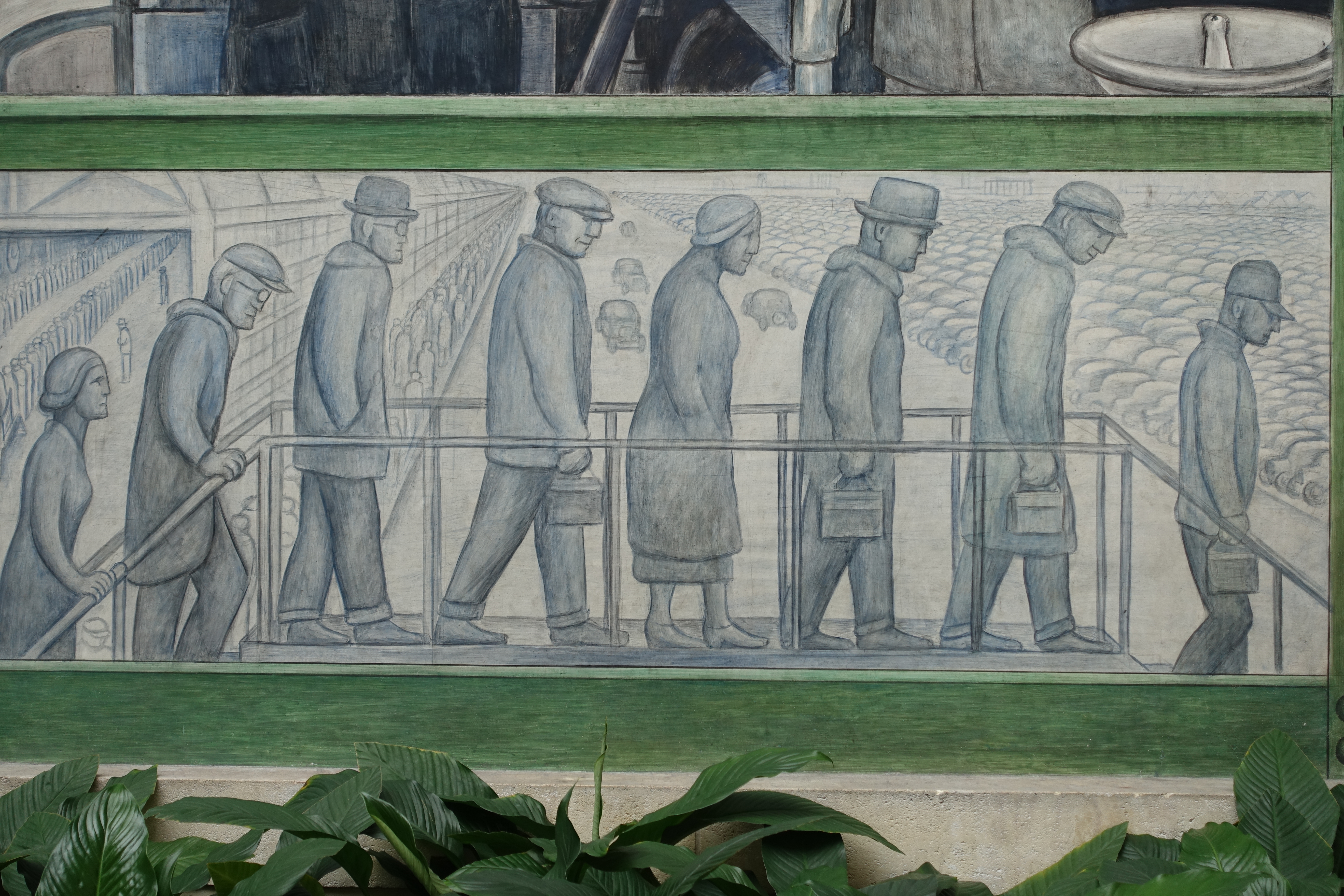
Matula Thoughts August 5, 2016

Matula_Logo1

Matula Thoughts – August 5, 2016


Summertime field notes, superheroes, and retrograde thoughts.
3975 words


Art Fair

Patient experience. Walking through the Art Fairs last month after great lectures from visiting professors, my thoughts wandered to Matula Thoughts/What’s New, this electronic communication that has become my habit for the past 16 years. It may be presumptuous to think that anyone would spend 20 minutes or more reading this monthly packet approaching 4000 words. Certainly, UM urology residents and faculty are too busy to give this more than a glance, and that’s OK by me. Of the 10 items usually offered I’d be happy if most folks just skimmed them and perhaps discovered one of enough interest to read in detail. Conversely, some alumni and friends hold me to account for each word and fact, and they are enough for me to know that this communication (What’s New email and Matula Thoughts website) is more than my whistling in the wind.


The_Doctor_Luke_Fildes copy

One.

Art & medicine. Luke Fildes’s painting, The Doctor, shown here last month, deserves further consideration in the afterglow of Don Nakayama’s Chang Lecture on Art & Medicine. [1892, Tate Gallery]. The duality of the doctor-patient relationship, ever so central to our profession, has gotten complicated by changes in technology, growth of subspecialties, necessity of teams and systems, and the sheer expense of modern healthcare. As Fildes shows, medical relationships in the pediatric world extend beyond twosomes and this actually pertains for all ages, since no one is an island. That nuance notwithstanding, the patient experience through the ages and into the complexity of today remains the central organizing principle of medicine.

Nakayama & Chang

[Dr. Chang & Don Nakayama]

An article in JAMA recently explored the patient experience via the Hospital Consumer Assessment of Healthcare Providers & Systems (HCAHPS) Survey. Delivered to random samples of newly discharged adult inpatients, the 32 items queried are measurements of patient experience that parlay into hospital quality comparisons and impact payments. [Tefera, Lehrman, Conway. Measurement of the patient experience. JAMA 315:2167, 2016]

It is unfortunate that health care systems and professional organizations hadn’t previously focused similar attention on patient experience and only now are compelled to investigate and improve it by the survey. We may chafe and groan at HCAHPS, but it reflects well on representational government working on behalf of its smallest and most important common denominator – individual people.

Everyone deserves a good experience when they need health care whether for childbirth, vaccination, otitis, UTI, injury, other ailments and disabilities, or the end of life. If for nothing more than “the golden rule” all of us in health care should constantly fine-tune our work to make patient care experiences uniformly excellent because, after all, we all become patients at points in life. The individual patient care experience is the essential deliverable of medicine and the epicenter of academic health care centers from the first day of medical school to the last day of practice, after which we all surely will become patients again.


Twitter invasion

Two.

Educating doctors. Last week’s White Coat Ceremony was the first day of medical school class for Michigan’s of 2020. Deans Rajesh Mangulkar and Steven Gay with their admissions team assembled this splendid 170th UMMS class. Unifying ceremonies are important cultural practices and this one is an exciting milestone for students and a pleasant occasion for the faculty who will be teaching the concepts, skills, and professionalism of medicine. Families in attendance held restless infants, took pictures, and applauded daughters and sons. A “doctor in the family,” for most of the audience, happens once in a blue moon, a rare circumstance of joy, and certainly evidence of success and luck in parenting. The attentive audience for the 172 new students entertained only rare social media diversions. Julian Wan represented our department on stage.

Dee at White Coat

Dee Fenner’s keynote talk resonated deeply. She described her career as a female pelvic surgeon and its impact on patients and on herself. Dee talked about the symbolism of the white coat and skewered today’s hype about “personalized medicine”, saying that medicine is always rightly personalized; our ability to tailor health care to the individual genome is just a matter of using better tools.  Alumni president (MCAS) Louito Edje said: “This medical school is the birthplace of experts. You have just taken the first step toward becoming one of those experts.” She recommended cultivation of three fundamental attitudes to knowledge: humility, adaptability, and generosity. Students then came to the stage and announced their names and origins before getting “cloaked.”

Cloaking

The ceremony passes quickly, but is long remembered. Students shortly immerse in intense learning, although medical school is kinder today with less grading, rare attrition, and greater attention to personal success and matters of team work.

New student

My favorite “new medical student story” concerns the late Horace Davenport. He had retired before I arrived in Ann Arbor, but remained active in the medical students’ Victor Vaughn Society that met monthly at a faculty home for a talk over dinner. Davenport, an international expert in physiology, was a superb and fearsome teacher as one student, Joseph J. Weiss (UMMS 1961), recalled from the fall of 1957.

“In our first physiology lecture Dr. Horace Davenport grabbed our attention by announcing that the first person to answer his question correctly would receive an ‘A’ in physiology and be exempt from any examinations or attendance. The question was: ‘What happened in 1623? The context implied an event of significant impact to human knowledge. After a long pause the amphitheater echoed with answers: the discovery of America, the landing of the pilgrim fathers, the death of Leonardo da Vinci. Then Nancy Zuzow called out: ‘The publication of William Harvey’s The Heart and its Circulation’. There was sudden silence. She must be right. How clever of her. Of course a physiologist would see this landmark publication as an event to which we should give homage. Who would have thought that Nancy was so smart? Even Dr. Davenport was impressed. He asked her to stand, and acknowledged that she had provided the first intelligent response. ‘However,’ he noted, ‘that publication occurred in 1628.’ No one could follow up up on Nancy’s response. Dr. Davenport looked around the room, sensed our ignorance, realized we had nothing more to offer, and then said: ‘1623 was the publication of Shakespeare’s First Folio.’ He announced that we would now move on and ‘return to our roles as attendants at the gas station of life”,’ and began his first in a series of three lectures on the ABC of Acid-Base Chemistry.” [Medicine at Michigan, Fall, 2000.  Weiss, a rheumatologist who practiced in Livonia, passed away in October 2015.  Zuzow died in 1964, while chief resident in OB GYN at St. Joseph Mercy, of a cerebral hemorrhage.]

First folio


Three.

New Perspectives. Visiting professors bring different perspectives and last month the Department of Urology initiated its new academic season with several superb visitors. Distinguished pediatric surgeon Don Nakayama gave our 10th annual Chang Lecture on Art and Medicine on the Diego Rivera Detroit Industry Murals. [Below: full house for Nakayama at Ford Auditorium]

Chang Lecture

I’ve been asked what relevance an art and medicine lecture has for a urology department’s faculty, residents, staff, alumni, and friends. Davenport would not have questioned the matter. This year, in particular, the lecture made perfect sense with Don’s discussion of what can now be called the orchiectomy panel in the Detroit Institute of Arts murals. Hundreds of thousands of people have viewed this work since 1933, including the surgical panel that art historians labeled “brain surgery” – a description unchallenged until Don revealed the scene represented an orchiectomy. His Chang Lecture explained the logic of Rivera’s choice.

Nelsons

Grossmans

Drach

[Top: Caleb & Sandy Nelson; Middle: Bart & Amy Grossman, Bottom: George Drach]

The day after the Chang Lecture, Caleb Nelson (Nesbit 2003) from Boston Children’s Hospital and Bart Grossman (Nesbit 1977) of MD Anderson Hospital in Houston delivered superb Duckett and Lapides Lectures. Caleb discussed the important NIH vesicoureteral reflux study while Bart brought us up to date on bladder cancer, greatly expanding my knowledge regarding the rapid advances in its pathogenesis and therapy. George Drach from the University of Pennsylvania provided a clear and instructive update on Medicaid coverage for children. Concurrent staff training went well thanks to those who stayed behind from this yearly academic morning to manage phones, clinics, and inevitable emergencies.

Lapides Lecture

[Above: Lapides Lecture, Danto Auditorium]


Tortise on post

Four.

Observation & reasoning. Don Coffey, legendary scientist and Johns Hopkins urology scholar, retired recently. Among his numerous memorable sayings he sometimes mentioned an old southern phrase: “if you see a turtle on a fencepost, it ain’t no coincidence.” A tortoise on a post isn’t some random situation that happens once in a blue moon, it is more likely the result of a purposeful and explainable action. (Of course, it is also not a nice thing.) Coffey was arguing for the importance of reflective and critical thinking as we stumble through the world and try to make sense of it, whether on a summertime pasture, in an art gallery, or in a laboratory examining Western blots.

[Above: tortoise sculpture on post. Mike Hommel’s yard AA, summer, 2016. Below: Coffey]

Coffey

feynman1

Richard Feynman (above), Nobel Laureate Physicist, offered a related metaphor.

“What do we mean by ‘understanding’ something? We can imagine that this complicated array of moving things which constitutes ‘the world’ is something like a great chess game being played by the gods, and we are observers of the game. We do not know what the rules of the game are; all we are allowed to do is to watch the playing. Of course if we watch long enough we may eventually catch on to a few of the rules… (Every once in a while something like castling is going on that we still do not understand).” [RP Feynman. Six Easy Pieces. 1995 Addison-Wesley. P.24]

Observation, reasoning, and experimentation are the fundamental parts of the scientific method that allows us to figure things out. Feynman’s castling allusion is brilliant.

EO Wilson_face0

[EO Wilson at UM LSI Convocation 2004]

E.O. Wilson went further with his thoughts on consilience, the unity of knowledge.

“You will see at once why I believe that the Enlightenment thinkers of the seventeenth and eighteenth centuries got it mostly right the first time. The assumptions they made of a lawful material world, the intrinsic unity of knowledge, and the potential of indefinite human progress are the ones we still take most readily into our hearts, suffer without, and find maximally rewarding through intellectual advance. The greatest enterprise of the mind has always been and always will be the attempted linkage of the sciences and humanities. The ongoing fragmentation of knowledge and resulting chaos in philosophy are not reflections of the real world, but artifacts of scholarship. The propositions of the original Enlightenment are increasing favored by objective evidence, especially from the natural sciences.” [Wilson. Consilience. P. 8. 1998]


superheroes

Five.

Superheros. Somewhat to our cultural disadvantage our brains are hardwired to favor physical performance, entertainment, and appearances over intellectual leaps of greatness. We celebrate actors, athletes, politicians, musicians, and cartoons far more than great intellects. Worse, intellectuals in many periods of history were deliberately purged.

Coffey, Feynman, and Wilson are real superheroes of our time. Their ideas have been hugely consequential and they individually are role models of character and intellect. Another name to add to the superhero list is Tu Youyou (屠呦呦). My friend Marston Linehan first alerted me to her incredible story and discovery of artemisinin. It is also a story of how the better nature of humanity is subject to the dark side of our species and the nations we let govern us.

Born in Ningbo, Zhejiang, China in 1930 Tu Youyou attended Peking University Medical School, developed an interest in pharmacology, and after graduation in 1955 began research at the Academy of Traditional Chinese Medicine in Beijing. This was a tricky time to be a scientist in Maoist China. Ruling authorities favored peasants as the essential revolutionary class and in May 1966, the Cultural Revolution launched violent class struggle with persecution of the “bourgeois and revisionist” elements. The Nine Black Categories (landlords, rich farmers, anti-revolutionaries, malcontents, right-wingers, traitors, spies, presumed capitalists, and intellectuals) were cruelly relocated to work or forage in the countryside while neo-revolutionaries disestablished the national status quo.

In 1967 as North Vietnamese troops contended in jungle combat with US forces, chloroquine-resistant malaria was taking a heavy toll on both sides. Mao Zedong launched a secret drug discovery project, Project 523, that Tu Youyou joined while her husband, a metallurgical engineer, was banished to the countryside and their daughter was placed in a Beijing nursery. Screening traditional Chinese herbs for anti-plasmodial effects Tu found Artemisia (sweet wormwood or quinghao) mentioned in a text 1,600 years old, called Emergency Prescriptions Kept Up One’s Sleeve (in translation). She led a team that developed an artemisinin-based drug combination, publishing the work anonymously in 1977, the year after the revolution had largely wound down and only in 1981 personally presented the work to World Health Organization (WHO). Artemisinin regimens are listed in the WHO catalog of “Essential Medicines.” Tu won the 2011 Lasker-DeBakey Clinical Medical Research Award and in 2015 the Nobel Prize In Physiology or Medicine for this work.

Artemisia

[Above: Artemisia annua. Below: Tu Youyou with teacher Lou Zhicen in 1951]

Tu_Youyou_and_Lou_Zhicen_in_1951.TIF


Six.

It may be a human conceit to think of ourselves as the singular species on Earth capable of self-improvement. Considering the impact of Coffey, Feynman, Wilson, and Tu among other intellectual superheroes, imagination at their levels seems a rarity in the universe. Yet, any sentient creature wants to improve its comfort as well as its immediate and future prospects, for who is to say that a whale, a dolphin, a gorilla, or an elephant cannot somehow imagine a more comfortable, happier, or otherwise better tomorrow? In anticipation of another day, birds make nests, ants make tunnels, and bees make hives.

We humans have extraordinary powers of language, skill (with our cherished opposable thumbs), and imagination that provide unprecedented capacity to improve ourselves. Accordingly we easily imagine ourselves in better situations, whether physically, materially, intellectually, or morally, and as it is said, if we can imagine something we probably can create it.

Imagination of a better tomorrow is part of the drive for change as we consider our political future, although this can be risky. The intoxicating saying out with the old and in with the new has led to such things as the United States of America in 1776 or the Maastricht Treaty and European Union in 1992. Change, however, does not always produce happy alternatives, as evidenced by the Third Reich, the dissolution of Yugoslavia, the Arab Spring, or Venezuela’s Chavez era. Disestablishment does not predictably improve life for most people. The human construct, at its best and most creative, rests on a fragile establishment of geopolitical, economic, and environmental stability. The status quo that has been established may be imperfect, but is disestablished only at considerable risk.

Representational government and cosmopolitan society seem to be the best-case scenario for what might be called the human experiment wherein various factions of a diverse population come together to create a just social agenda and build a better tomorrow. The threat to this utopian scenario comes from factionalisms and tribalisms that insert narrow self -interests and litmus tests for cooperation into any consensus for agenda. We see this in the mid-east, in the European Zone, and in American presidential election cycles. Generally ignored or forgotten by competing factions and litmus-testers is the worst-case scenario of civil collapse. We experienced limited episodes of this in two World Wars, southeastern Asian catastrophes, central African genocides, Yugoslavia’s dissolution, and the collapse of Syria to name some instances. However sturdy we think human civilization may be, it is only a thin veneer in a random and dangerous universe. Civil implosions of one sort or another occur intermittently in complex societies, however we must become better at predicting them, circumventing them, and most importantly preventing their dissemination. Their catastrophic nature surpasses any sectarian interests or individual beliefs beyond the survival of civilization itself.


Moon June 17, 2016

Seven.

The Blue Moon, mentioned earlier, is a picturesque metaphor for an uncommon event. It’s actually not random, inasmuch as a blue moon is a second full moon in a given month (or other calendar period), so the next one can be accurately predicted. Since a full moon occurs about every 29.5 days, on the uncommon occasions it appears at the very beginning of a month, there is a chance of Blue Moon within that same month. The next Blue Moon we can expect will be January 31, 2018.

The song is a familiar one. It was originally “MGM song #225 Prayer (Oh Lord Make Me a Movie Star)” by Richard Rogers and Lorenz Hart in 1933. Other lyrics were applied, but none stuck until Hart wrote Blue Moon in 1935.

Nothing is visually different between blue moons or any other full moons. I took this picture (above) of a nearly full moon this June after some trial and error. A full moon is a beautiful thing and can’t help but give anyone a sense of the small individual human context. Friend and colleague Philip Ransley, now working mainly in Pakistan, spent much of his career aligning his visiting professorships around the world with lunar eclipses and lugging telescopes and cameras along with his pediatric urology slides. Receiving the Pediatric Urology Medal in 2001, barely a month after the tragic event of September 11, 2001, he spoke on lunar-solar rhythms, shadows, and their relationship to the human narrative: “… I would like to lead you into my other life, a life dominated by gravity and its sales rep, time. It has been brought home to us very forcibly how gravity rules our lives and how it governs everything that moves in the universe.” [Ransley. Chasing the moon’s shadow J. Urol. 168:1671, 2002]

PGR2

[PG Ransley c. 2005]

Ransley is currently working in Karachi, Pakistan at the Sindh Institute of Urology and Transplantation, the largest center of urology, nephrology, and renal transplantation in SE Asia. The pediatric urology unit at SIUT is named The Philip G. Ransley Department. [Sultan, S. Front. Pediatr. 2:88, 2014]


Eight.

Ruthless foragers. Earlier this summer a friend and colleague from Boston Children’s Hospital, David Diamond, brought me along for a bluefish excursion off of Cape Cod. These formidable eating machines travel up and down the Atlantic coast foraging for smaller fish. Like many other targets of human consumption, blue fish are not as plentiful as they once were, although they are hardly endangered today.

BluefishBiomass_Sept2015

[From Atlantic States Marine Fisheries Commission]

Just as we label ourselves Homo sapiens, the bluefish are Pomatomus saltatrix. Both, coincidentally, were named by Linnaeus, the botanist who got his start as a proto-urologist, treating venereal disease in mid 18th century Stockholm. His binomial classification system (Genus, species) is the basis of zoological conversation, although genomic reclassification will upend many assumptions. Also like us, the bluefish is the only extant species of its genus – Pomatomidae for the fish and Hominidae for us. Thus we are both either the end of a biologic family line or the beginning of something new. Our fellow hominids, such as Neanderthals, Denisovans, or Homo floresiensis didn’t last much beyond 30,000 years ago, although they left some of their DNA with us. It may be a long shot, but I hope H. sapiens can go another 30,000 years.

Bluefish

[Bove: ruthless foragers]

Teeth

Like us, Pomatomus saltatrix are ruthless foragers, eating voraciously well past the point of hunger. Their teeth are hard and sharp, reminding me of the piranha I caught on an unexpected visit to the Hato Piñero Jungle when attending a neurogenic bladder meeting in Venezuela some 20 years ago. Lest you think me a serious fisherman, I disclose there’ve not been many fish in between these two.

Pirhana

[one of 4 piranha geni (Pristobrycon, Pygocentrus, Pygopristis, & Serrasalmus that include over 60 species]

Linnaeus gave bluefish a scientific name in 1754, describing the scar-like line on the gill cover and feeding frenzy behavior (tomos for cut and poma for cover; saltatrix for jumper, as in somersault). I learned this from the book Blues, by author John Hersey (1914-1993), who was better known for his Pulitzer novel, A Bell for Adano (1944) or his other nonfiction book, Hiroshima (1946). [Below: Hersey]

Johnhersey

Michigan trivia: Hersey lettered in football at Yale where he was coached by UM alumnus Gerald Ford who was an assistant coach in football and boxing for several years before admission to Yale’s law school. Hersey became a journalist after college and graduate school in Cambridge. In the winter of 1945-46 while in Japan reporting for The New Yorker on the reconstruction after the war he met a Jesuit missionary who survived the Hiroshima bomb, and through him and other survivors put together an unforgettable narrative of the event. The bluefish story came later (1987).


Nine.

Today & tomorrow. Today is the start of the Summer Olympics in Rio de Janeiro, Brazil where 500,000 visitors are expected, presumably well covered and armed with insect repellent due to fears of Zika, an arbovirus related to dengue, yellow fever, Japanese encephalitis, and West Nile viruses.
Tomorrow is a sobering anniversary. I was 11 days old, on August 6, 1945, when, at 8:15 AM, a burst of energy 600 meters above the Aioi Bridge in Hiroshima, Japan incinerated half the city’s population of 340,000 people. Don Nakayama wrote a compelling article on the surgeons of Hiroshima at Ground Zero, detailing individual stories of professional heroism. [D. Nakayama. Surgeons at Ground Zero of the Atomic Age. J. Surg. Ed. 71:444, 2014] We reflect on Hiroshima (and Nagasaki) not only to honor the fallen innocents and to re-learn the terrible consequences of armed conflict, but also to recognize how close we are to self-extermination. A new book by former Secretary of Defense, William Perry, makes this possibility very clear, showing how much closer we came to that brink during the Cuban Missile Crisis. [Perry. My Journey at the Nuclear Brink. Stanford University Press. 2016]


Ten.

Self-determination vs. self-termination. Life, and our species in particular, is far less common in the known universe than Blue Moons, it might be said, although those moons actually are mere artifacts of calendars and imagination. Art and medicine are distinguishing features of our species, Homo sapiens 1.0. The ancient cave dwelling illustrations of handprints on the walls and galloping horses, are evidence of our primeval need to express ourselves by making images. The need to care for each other (“medicine” is not quite the right word) is an extension from the fact that we are perhaps the only species that needs direct physical assistance to deliver our progeny. If our species is to have a future version (Homo sapiens 2.0) we will have to check ourselves pretty quickly before we terminate ourselves, through war and genocide, consumption of planetary resources, or degradation of the environment. While representational government, nationally and internationally, may be our best hope to prevent termination we will have to represent ourselves a lot better. That’s a fact whether here in Ann Arbor, in Washington DC, in China, Africa, Asia, or Europe.

Tribalism resonates with many deep human needs and it has gotten our species along this far, but H. sapiens 2.0 will have to make the jump from tribalist behavior to global cosmopolitanism. Sebastian Junger, a well-known war journalist, has written a compelling book that explores the human need for a sense of community that he describes by the title, Tribe. While we need better sense of community in complex cosmopolitan society, we cannot accept primitive tribalism, sectarianism, or nativism of exclusivity that exacerbate conflict among the “isms.” Tribalism cannot create an optimal or even a good human future whether the version is Brexist or ISIS, paths retrograde to human progress and the wellbeing of humanity in general.

Girl with pearl

[Girl with Pearl Earing, Vermeer, c. 1665, & viewers at Mauritius Museum, The Hague]

Reflections on art and medicine lead to cosmopolitan and humanitarian thought and behavior. Humanistic reflection, shared broadly, should track us more closely to a utopian scenario, rather than to catastrophe that is only a random contingency away.

Tulp

[Anatomy Lesson of Nicolaes Tulp. Rembrandt, 1632. Mauritius Museum, The Hague]


Thank you for reading our Matula Thoughts.

David A. Bloom
University of Michigan, Department of Urology, Ann Arbor

Commencement 2016

DAB What’s New –July 1, 2016

Matula_Logo1

3805 words

 Birthing Couple_16681983_5x5-150dpi

One.  

Like the matula, this African birthing figure is a rich symbol for the healing arts, or “medicine”, if you apply that term as a generality. We hominids, unlike most other creatures, need some help with delivery of babies. Usually, birthing assistants offer emotional support and necessary physical aid while nature takes its course, but sometimes the midwife or physician will be life-saving. Birth assistance, as depicted above, has been going on since the dawn of mankind; each generation teaches its successors how best to do the job, based on experience, knowledge, and the technology available. [Figure: JAMA cover and St. Louis Art Museum. Birthing Couple. C. 1200. Niger Delta]

            Another cycle of teaching the next generation begins today in Ann Arbor as medical students transition into house officers, new fellows morph into subspecialists, and new faculty begin careers as urologists, educators, and leaders. Incoming residents feel a sense of life’s infinite potential, yet their careers will pass by in the blink of time’s eye. These thoughts came to mind as I reflected on the recent loss of Carl Van Appledorn and paused by his residency class picture of 1972.

Van Appeldorn 1972

[Front: 2nd from left Ananias Diokno, Ed Tank 3rd from left, John Konnak 4th, Jack Lapides 5th; top row – Bill Hyndman 4th from L, Carl 7th, Dan Karsch 8th, Lee Underwood 9th, Sherman Silber far right]

My residency training began in 1971 at UCLA and the surgery department picture hangs on my office wall [below]. One of my former senior residents, Jim Skow, still practices thoracic surgery in California, but I think most others senior to me then have hung up their stethoscopes. One chief resident, Mike McArthur, retired to run The Caldwell Family Zoo in Tyler, Texas. A number of my fellow interns are still working: Erick Albert (urologist in Lodi, California), Arnie Brody (hand surgeon in Pittsburgh), Ron Busuttil (Chair of Surgery at UCLA), David Confer (urologist in Tulsa, OK), John Cook (general and vascular surgeon in Billings, Montana), Jon Kaswick (urologist at Kaiser in LA), Doug McConnell (recently retired from cardiothoracic surgery in Long Beach and Redding, CA), Edward Lewis Clark Pritchett III (cardiologist at Duke), and Eric Zimmerman (neurosurgeon in Traverse City). I have lost track of most of the others (we started with 18 surgery interns and ended with 5 chiefs).

DAB 1971

A few faculty who taught me at UCLA are still working. I saw Bob Smith at the AUA last month, Rick Ehrlich maintains simultaneous extraordinary careers in urology as well as photography, and Shlomo Raz is quite busy at UCLA.

DAB, RBS  

[Above: DAB & Bob Smith; below Rick at AAP 2010]

RME

            When I finished training, board certification lasted a lifetime, hospital credentialing was rudimentary, and one’s frame of reference as a physician was largely centered on individual performance, skills, and drive. Relationships to larger systems, while important and necessary, were secondary concerns. Since then the dynamic has reversed and large systems such as the electronic medical record, peer review, MOC, RVUs, and checklists dominate individuals. Credentialing, provider enrollment, and billing have become complex and require substantial infrastructures. Proposed MACRA regulations, replacing the Sustainable Growth Rate method of physician reimbursement and published last April, prescribe financial penalties for single and small (2-9 practitioner) medical practices. The end is probably in sight for the traditional duality of health care with one patient and one provider at a time. For better and for worse, teams and systems are replacing individuals.


Two.

Five UM chief residents and four fellows graduated from our training program last month and we celebrated over dinner at the Art Museum to honor them and their families. Rebekah Beach, Miriam Hadj-Moussa, Michael Kozminski, Amy Li, and Galaxy Shah, plus Abdul Al Ruwaily, Sapan Ambani, Chad Ellimoottil, and Yahir Santiago-Lastra completed residency and fellowships. Their next career steps disperse them to Seattle, Phoenix, Grand Rapids, Duluth, Saudi Arabia, San Diego, and Ann Arbor. Below, 4 chiefs honor our reconstructive urology faculty member Bahaa Malaeb with the Silver Cystoscope Award.

Chiefs 2016

As these trainees leave, a new cycle of health care education begins in Ann Arbor and the UM Health System enters its first fiscal year under a new organizational model. To understand this change, a little history is helpful.      The University of Michigan began in 1817 in Detroit and moved to Ann Arbor in 1837, but didn’t establish a medical school until 1850. Back then, doctors were educated by two years of lectures and anatomy dissection. They studied ancient and fairly static topics, but change was in the air as the modern conceptual basis of medicine was on the verge of consolidation. Germ theory, pathology, biochemistry, physiology, and anesthesiology were joining the conversation of health care. Medical schools became places not just for lectures and anatomy dissection, but places with laboratories for the study of human biology and disease, as well as surgery.

Med School Bldg

[Above: Medical School; below: faculty house/first hospital]

Ist hosp

In 1867, a UM faculty house was converted into a dormitory for patients undergoing surgery in the medical school, making the University of Michigan the first university to own and operate a hospital. The medical school curriculum grew in complexity and length to 4 years, adding “basic science” laboratories and the “clinical laboratories” of bedside instruction. The hospital necessarily enlarged in scale, functions, personnel, and equipment.  By the late 19th century, some medical student graduates began to spend a year or more in the hospital and medical school learning new skills and fields of practice.


Three.          

            The UM AMC. By 1910, when the Flexner report reformed medical education, budgets of UM hospital ($70,000/year) and medical school ($83,000/year) were comparable. Management of the two organizations diverged increasingly in the 20th century, requiring different sets of expertise. Hospital management followed the business model of American industry, centered on the principles of managerial accounting with cost centers, unit margins, accrual accounting, capital allocation, etc. Medical school management more closely followed academic principles of not-for-profit organizations with budgets decentralized to academic units that had their own goals and measures of success.

Cabot copy

Hugh Cabot, world renowned urologist, arrived from Boston in late 1919, attracted by the full-time salary model and opportunity to build a multi-specialty surgery department in Ann Arbor. He became medical school dean in 1921 and by 1926 opened a modern hospital of 1000 beds with specialties that defined the states-of-the art in medicine and surgery. That year Cabot’s first trainees, Charles Huggins and Reed Nesbit, began postgraduate medical education. Cabot’s confrontational personality produced significant backlash as he built his medical mecca, an integrated group practice. He was abrasive and blind to the value of diversity, either in opinions that differed from his own or in people themselves. Regional physicians disliked him and ultimately the regents fired him, “in the interests of greater harmony”, on February 11, 1930.

Hosp 26

Without a dean, the Medical School was run by its Executive Committee for 3 years, and a third financial enterprise became important in addition to hospital and medical school systems. This was the business of professional services. Senior professors then could independently bill for their professional services through their own offices and other employees were paid by those professors or the hospital. The lines between medical school, hospital, and professional offices regarding “who paid for what” were contested.

            It was natural for the hospital to provide outpatient services and in 1953 it opened a new building for the 24 departmentally-based ambulatory clinics (this is now the Med Inn Building) that quickly saw 20,000 patients monthly. While hospitals share many similarities with ambulatory care facilities, the work flows and challenges are actually quite different. Dissatisfaction grew over the next 50 years as physicians found themselves marginalized in the systemic clinical decision-making as medical care became increasingly complex, specialized, and expensive. Accounting methodologies for hospital and medical school differed. Matt Comstock, our Senior Finance Executive, explains it well:The entire university follows GASB (government accounting standards) when filing financial reports.  But the units within the University have had differences in how accounting standards were (and still are) applied internally to “run the business.”  The hospital followed more traditional accrual accounting standards that line up with GASB for external reporting. The UMMS used a  “sources/uses” view (think cash) for many years.” As hospital directors managed the space, capital allocations, and personnel for the departmentally-based outpatient clinics, tensions grew between hospital managerial accountancy and departmental/faculty academic missions.

Another factor arose in the latter half of the 20th century when academic medical centers made NIH funding a priority in the academic mission and failed to recognize that their essential deliverable needed to be patient care. This is the moral epicenter of academic medicine. When done right, it drives the rest of the mission and creates a healthy financial margin. Our motto in the Urology Department has become kind and excellent patient-centered care, thoroughly integrated with education and innovation at all levels. This cannot be accomplished by the providers alone, it requires an integrated systemic effort in this era of complex, team-based health care. An archipelago of cost centers cannot accomplish this task. As Toyota’s Lean Process Systems have taught western business – productivity, efficiency, and workplace satisfaction are maximized when key stakeholders participate in decisions about their work. In other words, process improvement is best accomplished by the people executing the processes.


Four.

            Archipelagos of costs centers. This metaphor comes from my friend Doug McConnell who stopped in AA with his wife Bonny on their retirement tour. We recounted similar experiences in health systems, such as seeing patients on hold in operating rooms after surgery was completed, because the recovery room was full due to nursing staff shortages in an ICU. The costs of an idle staffed OR far outweigh any saved ICU nursing position. Delay or cancellation of subsequent patients adds to cost and frustration. Downstream effects from one “efficient” cost center can sabotage an entire hospital.

Although ambulatory care activities led the way for UMHS restructuring, we still have much to gain in terms of better management of our entire enterprise in a patient-centric fashion. Just as Ford, Chrysler, and GM learned, managerial control by accounting (the archipelago of cost centers managed by regulation of supply and demand) is a failed experiment of western business, and lean process systems as developed by Toyota produces better products, with greater efficiency, and greater satisfaction for all customers.

            In 2007, UM hospital transferred ambulatory care operations to the clinical faculty, organized in the form of a Faculty Group Practice (FGP). Led by dean Jim Woolliscroft and associate dean for clinical affairs David Spahlinger, it consisted of the clinical chairs and elected positions from 5 clinical cohorts. With a book of business of 0.8 billion dollars, it was a risky venture, as the FGP assumed all of the downside risk, half the upside risk (the other half to split with the hospital), and no capital dollars. Ambulatory activities were split into 90 ambulatory care units (ACUs) functioning under the principle of keeping local decisions as close to “where the work is done” as possible.

Before merger of Medical School and Hospital Finance Offices in 2009, the two offices were not only competitive, but in the 1990s were so suspicious of each other that their staffs were prohibited from sharing information. This situation was reflective of systemic dysfunction related to structure, governance, and personality conditions that incented competitive silos. The merger brought Medical School financial reporting to the more traditional accrual view of the world, but also brought clinical and academic values to the processes, personnel, and capital of health care business.

Further changes this year aim to create a more integrated organization with a balanced mission of education, clinical practice, and research, but centered on an essential deliverable of kind and excellent patient care. Entering FY 2017, we have 150 ACUs and are applying our operational ACU principles throughout the larger UM Health System.


Five.

UM AHC reorganization. On January 1, 2016 our EVPMA, Marschall Runge, incorporated the title and functions of Medical School Dean in his office. The new organizational chart under him features 3 senior associate deans: 1.) clinical senior associate dean & president of the UMHS, David Spahlinger; 2.) academic senior associate dean, Carol Bradford, effective July 1; and 3.) scientific senior associate dean, TBD.

            The UMHS under David Spahlinger as its president features 3 operational units: a.) the UM Medical Group (UMMG, formerly the FGP); b.) Hospital Group I (UM Main Hospital and the CVC); and Hospital Group II (Mott & Women’s Hospital). Each hospital group will be managed under a leadership triad consisting of physician, nursing, and administrative leaders with a committee representing key stakeholders, namely “the people who do the work.”  The pieces of this new matrix are still coming into position – it is a work in progress, but the immediate challenges are:

a.)           Maximizing the patient experience and minimizing waste in clinical operations while enhancing the trifold academic mission.

b.)           Consolidation of large health systems around UMHS. Our educational programs (800 medical students & Ph.D. candidates, 1100 residents & fellows in 100 different areas of focused clinical practice, plus many other health education learning groups) require 400,000 covered lives locally and at least 3.5 million lives regionally.

c.)           Changing health care laws and regulations that force reimbursement away from individual professional payments to alternative methods such as bundled payments, episode of care payments, payments (or penalties) based on notions of value and quality (still incompletely defined or understood).

Accordingly, we need urgent investment to increase the scale and work-flow of our clinical operations.


Six.

            A new season begins. Today, July 1, our new residents and fellows enter into this mix of change. The new residents (“interns”) are called PGY 1s (postgraduate year ones) as they enter the career-defining stage of medical education, a time that exceeds the years spent in medical school. New house officers & fellows are in search of competency. Our job as faculty, along with senior residents and fellows, is to help them acquire the skills, professionalism, and hunger for excellence that will distinguish them as our colleagues and successors. It is a tall order and while they seek professional competency during residency, attainment of mastery will be a lifelong pursuit.

            Daniel Pink, in his book Drive, claims that humans need autonomy, mastery, and purpose if they are to achieve success and fulfillment in life. Purpose is readily found in most health care careers. Autonomy, while necessarily threatened by the larger systems and regulations, is still found in medicine. Mastery of a skill, or task, it is said, requires around 10,000 hours of practice. Urology, however, is more than a single skill, and judging empirically from the length of residency and fellowship training, it is easy to extrapolate that the hours necessary for mastery of urology exceeds 30,000. 

            Our profession, however, is the practice of medicine – a continuous process – so self-education is never done. Hunger for excellence drives  good doctors who continue to learn, on a daily basis from patients, from colleagues, and from experiences that fuel curiosity. Drive for excellence is a part of the professionalism that society expects from its physicians and other health care workers.


Seven.          

Summer art fair.  I had lived in Ann Arbor for 10 years before attending an Art Fair and thus deliberately began our Duckett Lecture in Pediatric Urology as the first educational event of each new fiscal/academic year on Friday of the Art Fair. We hold simultaneous staff training for the non-physicians of our department and then give the afternoon free to everyone (except for a skeleton crew to staff the phones, consults, urgencies) as a time to visit the Art Fairs or stay home and “reboot” for the new academic year. It is costly to drop a business day from our books, but we justified this as both an education/training morning and a yearly “afternoon off” birthday gift for our employees. This year (Friday July 22) the Duckett lecturer will be Caleb Nelson (Nesbit 2004), faculty member at Harvard and the Boston Children’s Hospital.

Caleb

[Above: Caleb Nelson. Below: Bart Grossman]

Bart 2016

In 2006 we added the Lapides Lecture to broaden the scope of the morning, and this year it will be Bart Grossman (Nesbit 1997), our former Urology Section Chief (2003-2004), currently professor at MD Anderson Hospital in Houston.

Building on the art fair theme, we added the Chang Lecture on Art & Medicine in 2007 to kick off the academic events. This year, Don Nakayama, a distinguished pediatric surgeon, will be speaking about his novel discovery in the Diego Rivera murals at the Detroit Institute of Arts. This will be on Thursday at 5 PM July 21 in Ford Amphitheater University Hospital.

Nakayama

Don Nakayama


Eight.            

Professions & commodities. Society recognizes a difference between a profession such as medical practice, and a commodity such as pork bellies. The principle value of a commodity is the commodity itself, assumed (although not always accurately) to be of a standard quality. The value of a professional service, while assumed by its status as professional to be of an acceptable standard, is more nuanced. While an acceptable standard is expected, society anticipates a higher level of duty and service than from a commodity and accordingly society allows professions to set their standards and train their successors. Professions are constantly evolving as science, practice, and technology provide new tools and new challenges. Society also shapes new expectations and demands. A pork belly, for the most part, will always be a pork belly whether you hold one in your hands today or imagine one in 50 years. Care of today’s patient with bladder cancer will be very different from that of a patient in another half century. The stories of today’s pork bellies will not be closely intertwined with the commodity 50 years hence. The same is not so true as with treatment of bladder cancer, which will be built upon many stories of discovery, trial, failure, and tragedy going forward.


Nine.

Lasker. One way to understand the practice and science of medicine today, and to anticipate the opportunities and needs of tomorrow, is through stories of discovery. These are represented (although incompletely) in major recognitions such as the Nobel Prize or Lasker Awards and deserve more attention in our cultural literacy, so I like to highlight them from time to time. The Lasker program turned 70 years old last year and its Basic Medical Research Award went to Evelyn Witkin, for work demonstrating responses of bacteria to DNA damage and to Stephen Elledge for showing the molecular mechanisms by which eukaryotic cells recognize and respond to DNA damage. The Lasker-DeBakey Clinical Medical Research Award went to James Allison for enabling T-cells to attack cancer cells by removing “checkpoints” on these “bad guys” that normally inhibit the T-cells. Notice DeBakey’s name enjoined to the Lasker clinical award (DeBakey was mentioned in May’s What’s New/Matula Thoughts). The work celebrated in last year’s Laskers will no doubt influence urology, among other fields, in years to come. Allison’s immunotherapy work has already profoundly changed the face of melanoma management. [Pomeroy. The Lasker Awards at 70. JAMA. 314: 1117, 2015]

            If you go to the Lasker Foundation web page you can find the Essay Contest with three superb essays in 2016 by a Ph.D. student (David Ottenheimer at Johns Hopkins on modern neuroscience tools for psychiatric illness), a second year medical student (Therese Korndorf at U. Illinois Peoria on the bacterial social network and quorum sensing), and a pediatrics resident at LA Children’s (Unikora Yang on DNA editing with CRISPR). This is open to medical students, residents, graduate students, and postdocs. First prize yields $10,000. Maybe one of our learners will get inspired to write a 2017 essay.


Ten.

            Commencement. The first day of medical school is offset for a month after the interns and older residents began their cycle. The White Coat Ceremony marks the start of our next 4-year medical school curriculum when students and families assemble at Hill Auditorium Saturday 10 AM July 30. New students will walk across the stage, announce their names and schools of origin, and receive white coats from the Medical School, pins from the Alumni Society, and stethoscopes provided by clinical faculty and several donors. The short white coats, symbols of medical student education, will be traded for the longer white coats of residents and faculty 4 years from now. The White Coat Ceremony, open to the public, is a lovely occasion to reconnect with our purpose of medical education. It would be a shame for a Michigan faculty member to miss the chance to do this at least once in a career.

The stethoscope inclusion began 15 years ago under Allen Lichter’s deanship, believing that the white coat and pin needed more symbolic weight to match the moment. The stethoscope is today’s “badge of office” for physicians and it’s certainly a substantial gift – the high quality ones we give out cost over $225 each. Stethoscopes connect us to patients and are a fitting metaphor for listening to the patient, in a larger sense than hearing heartbeats. Before the stethoscope was invented (by Laennec in Paris in 1816) the symbol for medical practice was the matula – the glass flask used by doctors to examine urine. This device, evident in paintings and sculptures, was a perfect metaphor for observation: the clinician’s “gaze”. More practically, the matula was the tool of uroscopy.

            The African nativity scene, the uroscopy matula, and now the stethoscope are symbols of the practice of medicine, each reflecting progressive implementation of technology and each reflecting the human skills of comforting, observing, and reflective listening. Economic, social, and regulatory pressures on healthcare professions, medicine in particular, seem to be increasing and are  “commoditizing” services that human culture has, until now, largely left to the realm of the professions. Admittedly, many medical services can be readily commoditized, such as immunizations, screening physical exams, dental hygiene, and podiatry. These are important tasks that all people need and require training and skill, but can be delivered as standard practices. Expertise deploys along a bell-shaped curve of quality, but these can be efficiently standardized by algorithms and check-lists.

            Other medical services such as managing patients with UTIs, hypospadias, neurogenic bladder, stress incontinence, medullary sponge kidney, or prostate cancer involve more than simple checklists or single skill-sets. Even “episode-of-care” approaches will fail to capture the holistic approach that patients need for specific complaints, in the complex context of their comorbidities, families, and lifelong needs and aspirations.

            The Luke Fildes painting of 1891 represents the professional side of medicine better than most images. The artist’s first son, Philip, died of TB in 1877 and the doctor at the bedside inspired this great painting. A later son, Paul, would become an eminent physician with a complex career that encompassed roles both in the discovery of sulphonamide action and the alleged use of Botulin toxin to assassinate top Nazi Reinhard Heydrich in 1942. The toxin story, probably fanciful, doesn’t diminish the richness of the father’s metaphor for the profession of medicine. In fact, the tale expands any related dialogue to an unexpected dimension. Consider dropping in at Hill Auditorium in 4 weeks for our Medical School Commencement (Saturday, this year at 10 AM) and starting conversations with your professional successors as they initiate their journeys.

The_Doctor_Luke_Fildes copy


Thanks for reading What’s New and Matula Thoughts.


David A. Bloom

April First, 2016

DAB What’s New April 1, 2016

Hearts & hoaxes, questions & bells

[matulathoughts.org]

(4073 words)


One.  Noteworthy births.

508px-William_Harvey_2

The first of April  has a small share of notable birthdays for physicians, scientists, and others who impacted the human condition. A name that rings a bell is William Harvey (1578) shown above. This English physician produced the first accurate description of the function of the heart and  circulation of the blood in his book, Exercitatio Anatomica de Motu Cordis et Sanguinis in Animalibus [Painting attributed to Daniel Mytens, 1627. National Portrait Gallery London] Predecessors back to the time of Galen had gotten the physiology wrong, but Harvey was forgiving in his discovery, telling students: “Not to praise or dispraise other anatomists, for all did well, and there was some excuse even for those who are in error.” French mathematician Marie-Sophie Germain (April 1, 1776) produced pioneering work in elasticity theory and Fermat’s Last Theorem. Bismarck (1815) and Rachmaninoff (1873) came along as April firsters in the 19th century. Joseph Murray (April 1, 1919 – November 26, 2012) was a plastic surgeon and close friend of my old professor at UCLA, Willard Goodwin. When I was a resident I naively thought Joe was somewhat out of his league in his yearly travel group of old friends that included Goodwin and Robert McNamara, until Joe got the Nobel Prize for his work with renal transplantation.

DAB Murray copy

[Above: Joe Murray visiting UM & young faculty member out of his league. Below: 2 legendary Michigan coaches – Steve Fisher & Bo Schembechler]

Bo & Fish copy

Bo Schembechler (April 1, 1929 – November 17, 2006) is, of course, legendary for us at the University of Michigan. More controversial is Abdul Qadeer Khan (April 1, 1936), a Pakistani physicist who disseminated nuclear weaponry to rogue nations of the world.

Unlisted so far in the Wikipedia tallies for April first birthdays is Paul Kalanithi (April 1, 1977 – March 9, 2015), author of a current best-seller When Breath Becomes Air. Finishing residency in neurosurgery at Stanford the author discovered he had metastatic lung cancer. The book has a simple structure: a prologue, Part One In perfect health I began, Part II Cease not till death, and then an epilogue by his wife Lucy.

We each quietly contemplate deeply personal questions related to what might be described as the meaning of life, but circumstances gave Kalanithi urgency to come to some resolution. He exposes his thoughts with literacy and without self-pity. The meaning of life he discovered for himself lay in what he called human relationality. The context of one’s life is what matters, he believed, and it is from relationships with others that we derive meaning. Physicians and other health care providers should have a head start in the personal search for meaning, if you accept Kalanithi’s view, although many don’t understand that advantage. A spiritual person at the end of life may derive comfort from a religious faith or from a faith in the order of the universe and, perhaps, a reassuring sense of the circle of life as the Lion King said. On the other hand a cynical person might claim that faith is only a hoax we play upon ourselves and that each of us should grab whatever we can before our individual turns at life are over. No one can genuinely tell anyone else what the truth actually might be, we each must figure it out for ourselves. That individual worldview is what makes each of us what we are, each of our presidential candidates what he or she is, what the pope is, what El Chapo is, and it made Paul Kalanithi what he was.


Two.              Happy New Year.

For reasons lost in the deep recesses of history, the first of April has become a day for harmless pranks and hoaxes. April was the first full month of the new calendar year until only a few centuries ago. In Europe and during the Middle Ages March 25 was considered New Year’s Day. Possibly the natural human bent for trickery consolidated around that yearly transition. Japan begins its new year on the first of April and for this reason Dr. Takahiro Osawa and his family now return to Sapporo after 2 productive years with us in Michigan. We will miss him.

Screen Shot 2016-03-18 at 10.48.00 PM

Taka tells me that April pranks are also a tradition in his country. April foolery has endured around the world since first alleged references in Chaucer’s Canterbury Tales in 1392.

Exactly 40 years ago (1 April 1976) during a BBC broadcast English Astronomer Patrick Moore predicted that a “Jovian-Plutonian gravitational effect” would cause a noticeable short-term reduction on Earth’s gravity. At 9:47 AM on that day (GMT), he announced, a momentary alignment of Pluto and Jupiter would decrease Earth’s gravity such that those who jumped into the air at that moment would experience a floating sensation. Soon thereafter, BBC received hundreds of calls from people who claimed to have had felt the effect. The story was revealed to be a hoax, but Moore was a believable prankster and 4 years later he co-authored a totally factual book on Pluto with Clyde Tombaugh, who had discovered the dwarf planet in 1930.

Pluto

[Pluto, NASA image. North polar region at top. Notice the large bright Tombaugh Regio, nicknamed The Heart, lower right of center.]

The idea of fluctuating gravitational fields was prominent in Kurt Vonnegut’s book Slapstick (published in 1976, the same year as Moore’s hoax) and if you notice cyclic patterns in human behavior you might find some validity in Vonnegut’s satirical hypothesis. A prediction 100 years ago along a similar line was made by Albert Einstein. Stemming from his theory of general relativity he predicted the idea of gravitational waves that could transport energy in the form of gravitational radiation. Hypothesis rather than hoax, it took a full century to prove this idea. On February 11, 2016 the LIGO and VIRGO Collaboratives announced discovery of a gravitational wave from a pair of black holes that spun into each other 1.3 billion light years away. The wave passed by the Earth this past September 14 when it was noticed initially by Marco Drago, a 33-year old Italian Physicist in his office at the Max Planck Institute in Hanover, Germany. [A. Cho. Science. 351:797, 2016] Teams and collaborations of thousands of people spent over 100 years seeking a gravitational wave, although Drago was the first to notice the anomalous signal, and even then his first thought was that it was a glitch or a trick.

Our ability to sort out truth from myth, stories, hypotheses, hoaxes, science fiction, propaganda, and blatant deceit is constantly being tested. April Fools’ Day offers a playful “reset button.”


Three.           The heavy human footprint.

glacier

[USGS Water Science School]

Winter is officially over and while we did have some cold days, it wasn’t quite as cold or snowy as my memory tells me it used to be. Of course all things change and many of them cycle, whether sunspots, seasons, or climate. It is no hoax, though, that the Earth is in a warming spell and that anthropomorphic effects on the planet are driving that and other detrimental changes. Curiously, large swaths of the population, including many elected leaders in our nation, deny the fact of significant environmental change due to human influence.

Earth, with a volume of 2.6 x 10¹¹ cubic miles and a mass of 1.3 x 1025 pounds, is the densest planet in the Solar System with a mean density of 0.2 pounds/cubic inch (5.5 grams per cubic centimeter). While the origin of planetary water is still unknown and it seems so vast, its 3.3 x 10⁹ cubic miles represents only 0.0013% of the earth’s volume, merely a thin wet veneer over part of Earth’s surface. (1 cubic mile = 1.1 trillion gallons)

global-water-volume-fresh

The image above comes from the USGS website (Water Science School). The big blue sphere represents all of earth’s water, the smaller sphere over Kentucky represents total fresh water, and the tiny bubble over Atlanta estimates the fresh surface water in lakes and rivers – this being what most of us 7 billion earthlings have available for drinking or washing. [Credit: Howard Perlman, USGS; globe illustration by Jack Cook, Woods Hole Oceanographic Institution © Adam Nieman.] Ice caps, glaciers, and permanent snow account for 5,773,000 cubic miles or a little less than 5.8 x 10⁷ m3, or 17.6% of the earth’s total water.

During the last ice age, when Michigan was a mile deep below the Laurentide Ice Sheet, sea level was about 400 feet lower than it is today. At the other extreme, if all land and sea ice melted the ocean level would rise 70 meters or 230 feet. However you choose to describe it, the environment is changing rapidly and dangerously due to the heavy human footprint. This is no hoax or conspiracy.

A fragment of a speech from John F. Kennedy has resonated with me throughout my adult life: “For in the final analysis, our most basic common link is that we all inhabit this small planet. We all breathe the same air. We all cherish our children’s futures. And we are all mortal.” I recently asked my colleague and Kennedy scholar Kevin Loughlin for the origin of the quote and he immediately referenced Kennedy’s American University speech (titled A Strategy of Peace) on June 10, 1963. The president at the time had only a little more than 5 months to live. Flawed no more or less than most presidents or the rest of us, JFK did have inspiring intellect, clarity, and a way with words.


Four.             Ann Arbor notes.

In April 1985 my family and I had been in Ann Arbor for less than a year. Having accepted the job here as an associate professor (without tenure) I was still getting over the sting of finding myself demoted to assistant professor by the Medical School Executive Committee after arrival, but that’s another story. The Section of Urology was a terrific environment, Ed McGuire was a great boss, pediatric urology at Michigan was going well, and I loved my colleagues here in the medical school. The community was an excellent fit for Martha and our children, and we quickly found great friends. I distinctly remember the hoopla about a local restaurant, the Pretzel Bell, closing that April. This picture below from the old Ann Arbor News (used recently in Michigan Today) shows people lined up for an auction of Pretzel Bell memorabilia, necessitated by the IRS because of fraud related to employee withholding taxes. The article in Michigan Today by James Tobin explains that the original proprietors, John and Ralph Neelands, hung an old bell, said to have dated back to Civil War times, in the tavern. The story went that Fielding Yost had come to own the bell and gave it to the Neelands, after ringing it at Ferry Field. Ann Arbor has a rich German history and German university beer gardens traditionally featured two signs of hospitality – a bell to call in neighbors and a basket of pretzels.

pretzel bell Apr 1985

New ownership and management is resurrecting the Pretzel Bell and it should reopen soon to delight a new era of aficionados as well as old timers, for whom the name will ring a bell.

The University of Michigan has two bell towers (the original and the one on North Campus). The Bell Tower Hotel, across from the original, was the first place I stayed in Ann Arbor, when Ed McGuire invited me in 1983 to look at a pediatric urology job. A key predecessor of mine in the job had been Ed Tank, and his next-door neighbor back then, Dennis Dahlmann, now owns the hotel and has turned it into quite a gem. Ed Tank has retired in Portland, Oregon after a great career in our field. His excellent surgical results, the trainees he inspired, his academic productivity, and his organizational leadership constituted an extraordinary and admirable career. Ed’s successor in Portland, Steve Skoog, had been my resident at Walter Reed and is now a close friend and colleague. The coincidences in life are often beautiful.

Tank

[Above: Bloom & Tank. Below: Skoog and Dennis Peppas, former student of mine at USUHS, now pediatric urologist University of Texas, San Antonio]

Skoog copy 2

——————————————————-

[Below: Dennis Dahlmann & Bill Martin 2015]

Martin & Dahlmann


Five.              Metrics & mission.

A flawed general assumption in the business world is that an organization can be run, optimally, by cost-based accounting. If, in fact, all decisions could be based on numbers (metrics, as it is often said) then a good computer could replace all managers. Businesses, however, run based on people, relationships, and their stories at least as much as any numbers. Alon Weizer referred with irony to his excellent efforts at managing the Cancer Center ambulatory care unit (the largest in the UM Health System.): “it is easier to manage by metrics, rather than digging down into the stories behind them.” Of course we cannot ignore numbers and have to pay attention to them, they are a key part of our information intake, but they are hardly the only form of our intelligence. The idea of running a business from the central organizing principle of managerial cost-based accounting, rather than managing it according to mission, customer-based deliverables, and lean-centric employee engagement has been a damaging conceit of 20th century industry. Yet, paradoxically, just as managerial accounting is phasing out of forward-thinking businesses as the central operational paradigm, it has been colonizing the brains of health care system managers.

At our Urology Department Retreat 2 days ago, we grappled a bit with the importance of financial margin and the need to defend and expand our markets on one hand, but with the central values of mission and essential deliverable (kind and excellent patient-centered care) on the other hand.

David Spahlinger got us started at noon with an overview of our health system reorganization and urgent strategies. Marschall Runge closed the program around 6:30 with a lively Q & A session. Our health system and medical school are fortunate to have great top leadership at this point in time.

Screen Shot 2016-03-30 at 7.57.18 PM

[Retreat at Michigan Union]


Six.                 Bellmen.

We need leadership but too often find odd characters coming forward offering their services to take charge of our governments and more immediate organizations. Having studied and experienced great and poor leadership I’ve become somewhat cynical of those who have a pressing need to lead me. The cautionary tale of the Bellman is fitting. He was the captain of a ship’s crew in Lewis Carroll’s The Hunting of the Snark. His map of ocean (a blank paper) and contradictory navigational orders did not inspire his crew, but his rule of three (“What I tell you three times is true.”) helped lead them into strange territory. Sometimes it feels like this for those of us taking care of patients in large health care systems.

300px-Lewis_Carroll_-_Henry_Holiday_-_Hunting_of_the_Snark_-_Plate_1

[Cover of first edition Hunting of the Snark by Lewis Carroll 1876. Hendry Holiday, the illustrator born in 1839, died 15 April 1927]

Lewis Carroll, a mathematician, delighted in nonsense and intellectual pranks and he no doubt relished that irony. The beauty of math and science is their pursuit of verifiable truth. Bellmanism may work well in primitive societies, but it fails in free, just, and scientifically-educated societies. A modern bellman can say whatever he or she wants, as many times as they want, but for the rest of us to accept a claim, verification or proof is necessary. Trust but verify, is the adage we often hear. Scientists are rigorous about this way of thinking.

Thinking about statements and proofs, a long time ago Pythagoras proved that a2 + b2 = c2 for any right-angled triangle and most of us not only remember this is true, but we can actually prove it by a few examples or tests. A French lawyer and mathematician, Pierre de Fermat (1601-1655), asked himself: if a2 + b2 = c2 then can this be true for higher integers; in other words does a3 + b3 = c3  and is this equation generalizable for all powers? Fermat thought not and his conjecture was written in the margin note of a book in 1637, but his proof was apparently not recorded although he must have convinced himself that Pythagoras’s hypothesis only holds for special cases (like the number 2). For more than 350 years other mathematicians, including Marie-Sophie Germain, tried to figure it out, but failed until Andrew Wiles successfully proved Fermat’s conjecture in 1994.

Medical practice aspires to evidence and logic over Bellmanism. Nevertheless, much of what we do has to find a balance within a Pythagorean triangle of decision choices. On one side we rely upon our personal training and individual experiences. Another side (with far fewer options) offers evidence-proven therapeutic choices. The third side entices us with cutting-edge innovations. In the fast action of clinical practice we will usually default to the hypotenuse of our training and experience. The reality of clinical practice today falls short of the math; that is present-day clinical evidence plus cutting edge innovative technology does not equate to individual training, experience, and reason. Yet while this larger side may be our first resort, we need to condition ourselves and our students to remain self-critical and vigilant for old faulty dogma and new ideas that are better.

220px-Pythagorean.svg

[a= cutting edge innovation, b= verifiable high level evidence, c= training & experience]


Seven.          Health care questions.

What are the big questions in health care? As health care in this country undergoes significant changes, dictated by a variety of forces, it may be useful for us to consider health care not in the context of metrics (e.g. RVUs, length of stay, and cost per case), but rather in terms of our basic expectations and values. If most citizens and practitioners can understand and agree upon the larger questions of health care, the answers and the structures to provide them may come to us more readily.

I don’t think it should be up to any one subset of “the experts” to tell us the questions, for after all, that’s a sort of Bellmanism. The key questions should be derived more broadly, they do not belong solely to universities, medical schools, or schools of public health. They do not belong to state or governmental legislative or regulatory agencies. They do not belong to the AMA, the ACS, the AUA. They belong to the public – to citizens, patients, health care providers. My first loyalty lies within the last broad categories as a citizen, patient, and physician – memberships that convey measures of authority in offering, just now, a set of basic questions for our collective consideration. Whether these are the right questions is a matter for you to consider. What among them is right, what is wrong, and what is missing?

  • What is health care?
  • How should it be provided?
  • How is it improved and how does innovation occur?
  • How is it taught?
  • How is it funded and how are escalating costs managed?


Eight.            Choices.

While there may be no simple solutions for these questions, and whereas the “devil is in the details” clarity can be found in their deliberate articulation and informed public discussion. The first question is deceptively simple, but what of “health care” is a public good and in the public interest? Certainly vaccination for dangerous diseases, TB surveillance and therapy, mosquito control, and Ebola management should be public goods. When is health care screening – screening for TB, hypertension, or malignancies (which malignancies) – in the public interest? What basic commodities of health care must be assured to the public (to assure the public health) and what are the discretionary choices that should be paid for by the responsible recipients of those services? And what about recipients who are incapable of such responsibility? Is not antenatal, obstetric, and well-child care in the public interest? Who should make these decisions?

The time-worn bogeyman of “socialized medicine” has seen its day; socialized medical care has a heavy footprint in today’s USA and its called Medicare, Medicaid, Tricare, and the Veterans Administration. Pressing questions are related to funding, equity, and scope of each of these systems. The present binary argument between a single payer system or an insurance-based model, in my opinion, is wrong.

A single payer system, while convenient from the point of funding and health policy, is fraught with many problems, among them being loss of personal choice, dependence on politically-set budgets, restriction of innovation, and lack of competition. On the other hand, the idea of building an entire national health-care system on an insurance-based paradigm is faulty since basic health care (this first question, after all) is a complex life-long responsibility extending from antenatal months to the last days of life. Insurance for rare and unexpected catastrophes like liver transplantation, motor vehicle accidents, ALS, renal failure, and serious malignancy makes sense, but not “insurance” for expected life events such as childbirth, vaccinations, dental care, routine checkups, and screening for certain diseases. The bipolar choice could be compared to asking us to choose between the Post Office or Federal Express as the single national mail delivery service. Neither one alone would be a good provider. The competition between them and other delivery services makes each one leaner, more innovative, and more customer-centric. Health care of our population needs many avenues to be universal, fair, excellent, efficient, and innovative.


Nine.            An epilogue.

The epilogue to Kalanithi’s book, written by his wife Lucy, included one phrase that struck me: “Although Paul accepted his limited life expectancy, neurologic decline was a new devastation, the prospect of losing meaning and agency devastating.” [p.203] Ultimately, for most of us, those two things are what life boils down to – the meaning we find in life and our agency to do things that are meaningful to us and to others. Meaning is our ability to make sense of things. Sense-making may be a matter of simple practicality, knowing for example that 1+1=2, or it may be the more existential making-sense of our lives. Kalanithi made fine sense of his shortened existence. Lucy Kalanithi ends her epilogue in the book powerfully enough to make your eyes well up: “Paul’s decision to look death in the eye was a testament not just to who he was but who he had always been. For much of his life, Paul wondered about death – and whether he could face it with integrity. In the end, the answer was yes. I was his wife and a witness.” [p.225]

The content, style, and literacy of Kalanithi’s book makes it compelling and readable. Coincidentally, the book is visually accessible because of its typeface, which is called Bell, after John Bell (1745-1831) who produced the original design, described as: “a delicate and refined rendering of Scotch Roman” at the book’s conclusion (above quotation is bold Bell MT font on my computer, although via email or the WordPress blog site, deformation is expected).


Ten.              Tolling bells.

Cancer, sectarian violence, motor vehicle trauma, and heart disease remain high on the list of the Grim Reaper’s tools. Nearly 400 years ago last month (March 31, 1631) the cleric and poet John Donne died, from stomach cancer it is believed. Born in 1572, 6 years before Harvey, Donne grew up and lived his 59 years through difficult times amidst terrible sectarian conflict that makes our recent western paradigm of separation of church and state so praiseworthy. During the reign of Elizabeth I (1558 -1603) the Recusancy Acts, beginning in 1593, imposed punishment on those who didn’t participate in Anglican religious activity, extending to imprisonment and capital punishment. (These laws were ultimately repealed in 1650, although restrictions against Roman Catholics lasted in England and Wales until full Catholic Emancipation in 1829.) Donne’s parents were Roman Catholics, but the father died when he was four and John’s mother married a wealthy widower, Dr. John Syminges. Donne studied in Oxford and Cambridge but never graduated with a degree as he was unwilling to take the Anglican Oath of Supremacy. He then studied law in London. Donne’s brother Henry, a university student, was arrested in 1593 for harboring Catholic priest William Harrington. Under torture Henry betrayed Harrington who was tortured, hanged, and disemboweled in 1594. Henry Donne died in Newgate Prison of bubonic plague.

John_Donne_BBC_News

[Lots on his mind. John Donne c. 1595. National Portrait Gallery, London]

John Donne became an Anglican minister, Dean of St. Paul’s, and a poet. (His interesting later years were chronicled by Izaak Walton, author of the first book on fly fishing.) What’s relevant from Donne is Meditation XVII in Devotions upon Emergent Occasions that included this familiar phrase that is linked to Kalanithi’s idea of human relationality: No man is an island, entire of itself; every man is a piece of the continent, a part of the main. If a clod be washed away by the sea, Europe is the less, as well as if a promontory were, as well as if a manor of thy friend’s or of thine own were: any man’s death diminishes me, because I am involved in mankind, and therefore never send to know for whom the bell tolls; it tolls for thee.”


Thank you for reading What’s New and Matula Thoughts for this April 1, 2016


Matula Thoughts October 2, 2015

DAB What’s New October 2, 2015

Matula Thoughts Logo2

Change, colors, chloroplasts, mitochondria, & detachment

3048 words


Mich green

1. Michigan’s green landscape is changing now that October is here with the deciduous ritual of autumn colors creeping south at the rate of about 200 miles per week. Autumn colors in Ann Arbor, however, are not just botanic. October brings us deep into the heart of football season when maize and blue attract intense scrutiny. Legend has it that a group of Michigan students decided that the school colors should be azure blue and maize, but school officials didn’t make it official until 1912. Curiously the actual shades of maize and blue differ between the University at large and the Athletic Department.

Sincock Seats

[Above: Fall colors in Ann Arbor. Big House night game from Craig & Sue Sincock’s box. October 11, 2014.  Below: UM seal with distinctive azure blue, courtesy Brad Densen]

Screen Shot 2015-09-18 at 5.17.42 PM


2. Physicians once paid great attention to the green world, as plants were a prime source of medicines. This changed in the later 19th century, when modern medicine evolved with its verifiable conceptual basis of biochemistry, pathology, physiology, microbiology, pharmacology, etc. Before then medications fell into the area of study known as materia medica and botanic knowledge was a necessity for doctors. Leaves are green, by the way, because the dominance of chlorophyll masks out other pigments. As leaves age, green chlorophyll degrades into colorless tetrapyrroles, so that yellow xanthophyll and orange beta-carotene pigments take over visually, although they had been present throughout the leaf life cycle. Red pigments, the anthocyanins, are synthesized de novo as chlorophyll becomes degraded. After the non-green colors show up detachment and recycling of this year’s leaves soon follows.

442px-Pyrrole_structure

[Biochemistry refresher: Pyrrole, the five-membered ring shown above (C4H4NH), a colorless volatile liquid, was first detected by F.F. Runge in 1834 as a coal tar derivative. Pyrrole is a component of chlorophyll, other botanic pigments, as well as the red cell porpyrin heme, a co-factor of haemoglobin. Four pyrroles assemble to make up a porphyrin, and these molecules allow  numerous color options.]

I happened to see my first leaves of the season fall in early September when I was in Nijmegen, Netherlands at the semi-centennial celebration of the splendid urology unit of Radboud University.

Leaves

[Above: detachment in Nijmegen 2 weeks ago.

Below: What we look forward to this month: Ann Arbor foliage October 2014.]
Barton tree


3.  Change is an apt theme right now as it surely is in the air for health care. Coalescing organizations, new regulations, untried payment systems, intensifying competition, narrow networks, tiered access, new technologies, fantastic and fantastically expensive new drugs, are among the factors behind the unprecedented change. These changes are more than seasonal or market changes and they are putting things that we cherish at risk, namely the three dimensions of academic health care – education, research, and quality clinical care. Clinical care is the primary resource engine for academic health care centers (AMCs). This aspect of our mission is the mitochondria of AMCs, providing not just the context for education and research, but also the bulk of its sustaining funding. Furthermore, clinical care is the moral epi-center and the essential deliverable of AMCs.  While American health care is not perfect, it isn’t better in most other places on the globe. Consider the options – in a perfect world how would you manage and fund a piece of society and the economy as necessary, complex, and large as health care? A purely market driven system would leave out a huge chunk of the populace and would not service the interests of the public health at large. Purely governmental systems are perpetually under-resourced, funded at the whim of rotating politicians, bureaucrats, and accountants. Canada, at this moment in time, seems to be the remarkable sole exception to this seemingly natural law. I’ve worked in England’s National Health System (NHS) twice in my life, and am somewhat familiar with its ups and downs, but that natural tendency of impoverished dependence on central governmental funding and accountancy management is inescapable. The NHS was intended to be the exclusive source of health care for the British public, but a growing private sector of health care in the U.K. provides some balance and competition.


4.   My friend Karin Muraszko, chair of our Neurosurgery Department, recently gave me a book called Do No Harm by Henry Marsh, a neurosurgeon in London. I read it cover-to-cover and thought it remarkable. The value of appropriate and necessary detachment for a surgeon is one of three things that jumped out at me from the book. The second is that natural law I mentioned whereby a national health system budgeted by politicians and managed by accountants does not serve patients, families, health care workers, or other essential stakeholders well, or kindly. The third point is that duty hour restrictions enforced by national agencies (governments, regulatory organizations, professional groups, or payers) are not conducive to professional education, competence, or expertise, much less excellence. The 48-hour work-week for neurosurgical trainees in Europe might be compatible only with a 15-20 year period of training, but not much less. While a few older surgeons like Henry Marsh are still around, and perhaps an occasional excellent new neurosurgeon might emerge miraculously from the sad current European training paradigm, I fear for the next generation of patients with neurosurgical problems on the other side of the Atlantic. Even more frightening is the thought of the subsequent generations of neurosurgeon-educators that will emerge. For them duty hours, accountancy management, and patient “hand-offs” may trump the sense of professionalism and duty they might vaguely recall having seen in the vanishing breed of Henry Marsh.


5.   One of the most important rituals of academic medicine is the selection and education of our successors and just now we are in the midst of this with a new cycle of applicant interviews for our residency. Residency training is the career-defining stage of medical education and one could claim it is the signature educational product of an academic health center, usually exceeding (sometimes by more than twice) the time spent in medical school. I don’t think laymen or our central campus friends fully understand this reality.  During our residency training at Michigan young physicians learn the state-of the-art clinical skills of urology, its conceptual basis, professionalism, teamwork, and leadership. They develop the habits of lifelong learning and teaching. When I finished training in general surgery at UCLA, I became a member of the Longmire Society, just as our residents in urology at Michigan become members of the Nesbit Society. The Longmire Society certificate includes a motto that features the words: detachment, method, thoroughness, and humility.

Longmire

These were presumably the ideal characteristics of a Longmire-type surgeon, and indeed suited “the boss” well. Yet the inclusion of detachment as an ideal characteristic puzzled me at first and didn’t seem quite right as it seemed to imply a lack of compassion and empathy, although I’ve since come to understand the importance of detachment with more subtlety. As I write these thoughts the irony of the term “duty hours” strikes me: duty vs. duty hours. Of course, no one can be “on duty” all the time, but people like Henry Marsh, in addition to their sense of necessary detachment, carry their professional duty with them as best they can throughout their careers day-by-day and night-by-night. The on-and-off duty switch is not flicked frequently. Professionalism, nevertheless, carries with it some danger: we become self-righteous in our jobs and professions. We tend to define the limits of our duty more according to the convenience of our job descriptions than by the needs of the public. This does allow us some detachment, but sometimes more for our own sakes than the sake of those among the public who might want our help or kindness.


6.   Change is in the air locally at our own academic health care center in Ann Arbor. We are modestly reorganizing our structure and governance, and a new strategic planning process is in play. As Dwight Eisenhower said: “… plans are worthless, but planning is everything.” (Remarks at the National Defense Executive Reserve Conference. 11/14/1957) We urgently need to figure out how to balance our growing patient population with our mission, with our facilities, and with the changing landscape of health care. At the September 17 Regents Meeting changes were made to our organizational structure that should help us build and execute a strategy that fits us well and secures our success in the brave new world of academic health care. Effective January 1, 2016 Marschall Runge, will add the role of medical dean to his position as Executive Vice President of Medical Affairs. David Spahlinger will become president of the clinical enterprise (a new name for this entity is pending; we have been using the term UM Health System) and Executive Vice Dean of the UMMS for Clinical Affairs. New positions will be recruited for a chief academic officer, a chief scientific officer, and a chief information officer for the academic medical center. A chief value improvement officer has been hired by Dr. Runge. Tony Denton will be the Senior Vice President and COO of the clinical enterprise. [Below: Tony & Marschall] Doug Strong, our former CEO of the hospital and most recently VP for Finance & Business of the University will be retiring after a long run of distinguished service.

Marschall & Tony


7.   300px-Julius_Sachs  Born on this day in 1832 was Julius von Sachs, in Breslau, Kingdom of Prussia. We might not be inclined to celebrate his name now 183 years later, but we really should. A curious youngster, probably just like you once were, he had an early interest in natural history, which in 19th century Europe and North America was the term used for what today we call science. With a Ph.D. from Charles University in Prague in 1856 he embarked on a career in botany. His academic career took him from Dresden to Bonn to Freiburg and then to the University of Würzburg as chair of botany in 1868 where he spent the rest of his career, contributing greatly to the study of plant physiology. He is credited with the discovery of the chloroplast, a subcellular unit in which the chlorophyll pigment packs energy from sunlight into molecules ATP and NADPH while freeing oxygen and producing carbon dioxide. Like mitochondria, chloroplasts have their own DNA and are believed to have been inherited from an ancient ancestor, a photosynthetic cyanobacterium eaten up by ancient eukaryotic cell that happened to be hungry at a certain lucky moment far back in time. A similar moment of ingestion happened somewhere around then when another hungry cell devoured an organism that turned out to be the ancestor of mitochondria, the internal engine for animal cells. Chloroplasts and mitochondria are the resource engines for all life forms beyond the most primitive ones.


8.   I have a friend who sometimes says: “Change is inevitable, but progress is optional.” [On Wikipedia the quote is attributed to Tony Robbins, motivational speaker.] Health systems nationally as well as here locally in Michigan are in the midst of change, but we are hopeful that our local changes, here at least, represent progress. The demand for our clinical services in Ann Arbor is growing. I remember not many years ago our health system clinic visits were well under a million a year and we thought we were busy. Our most recent fiscal year (FY 15) produced 2,123,746 visits – representing a 6.1% increase just over the previous year, of which return visits constituted 4.7% and new patients were up 15.3%. The pressure on our exam rooms, faculty, staff, operating rooms, and hospital beds has been painful. We need to manage our health care enterprise better to fulfill the expectations of patients and our community, as well as to enhance our educational and research missions. This cannot be viewed from an accounting mentality as a zero sum game with one mission at the expense of another, but rather as a synergistic triad, with the clinical mission as the moral center, the context for education and research, as well as the prime economic engine.
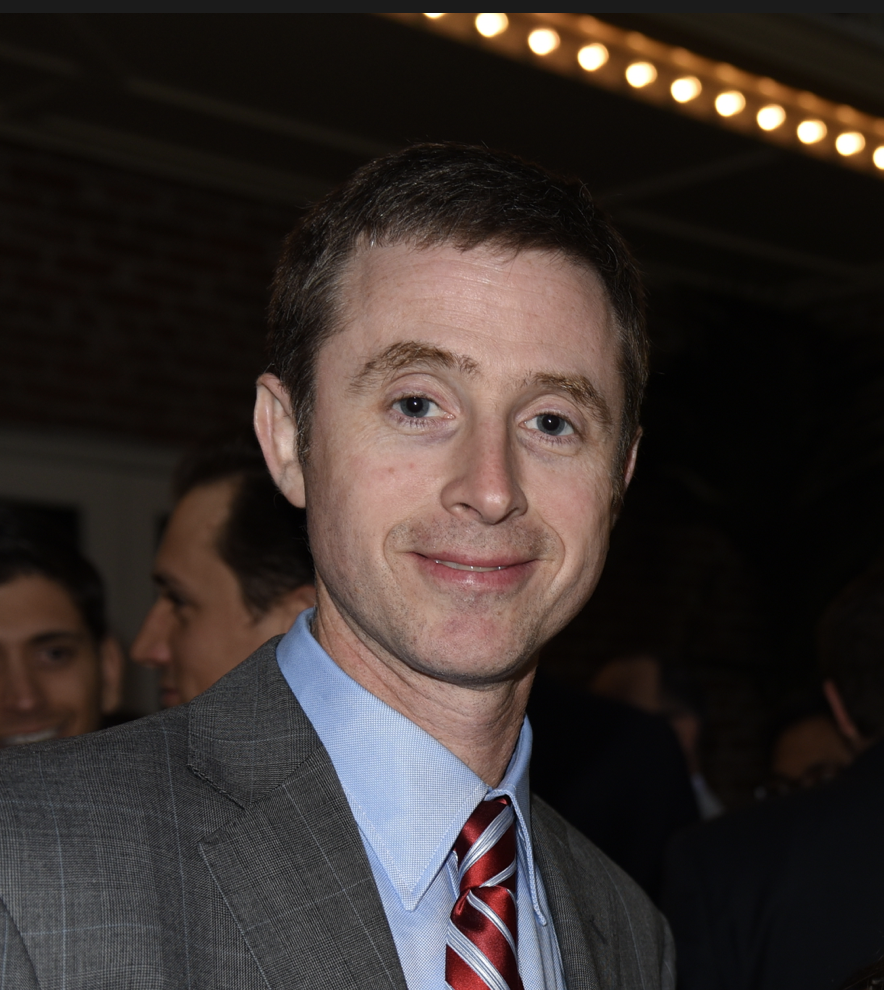
 

9.   My first box of crayons when I was a toddler offered a half dozen colors and I didn’t notice or imagine at the time that many more colors could exist. If you glance quickly at a rainbow or the light from a prism that’s not such a naïve belief.

Screen Shot 2015-09-30 at 11.21.38 AM

[Reflection from a glass door on the floor of my in-law’s house in Waterloo, Iowa. Summer 2015]

However, over time in childhood my crayon boxes got larger with many more colors than I could have imagined. A 64 pack of crayons was astonishing discovery for me.

Standard_Crayon_Ad

220px-Crayola-64

Nowadays, kids on their iPads can sort through literally thousands of colors. This in turn should be no surprise because on inspection the spectrum of light is not an array of discrete quanta of color variations (at least, not that we know!) – it is in reality a spectrum. This increasing complexity derived from our attention is matched throughout the world today in the increasing number of cable TV channels, the proliferation of presidential candidates, the growing number of health care specialties and focused areas of medical practice, the 10-fold increase medical diagnostic codes effective this year (ICD-10), expanding sectarian conflicts, and gargantuan expansion of worldwide refugees.


10.   The 50th anniversary of Nijmegen Urology was a wonderful celebration they shared with international guests from Japan to Italy to Ann Arbor. It gave me some ideas about the upcoming anniversary of Michigan Academic Urology in 2019. My inclusion in Nijmegen was due to the luck of having Wouter Feitz, their chief pediatric urologist, spend three months with us in Ann Arbor many years ago. Nijmegen, the oldest city in the Netherlands, is situated on the nation’s eastern edge, next to the German border. Radboud Medical University contains a superb urologic unit that happens to be an epicenter of European Urology politically as well as geographically. There, under Frans Debruyne, the European Association of Urology got its start and now, headed by Peter Mulders, the urology unit continues to excel.
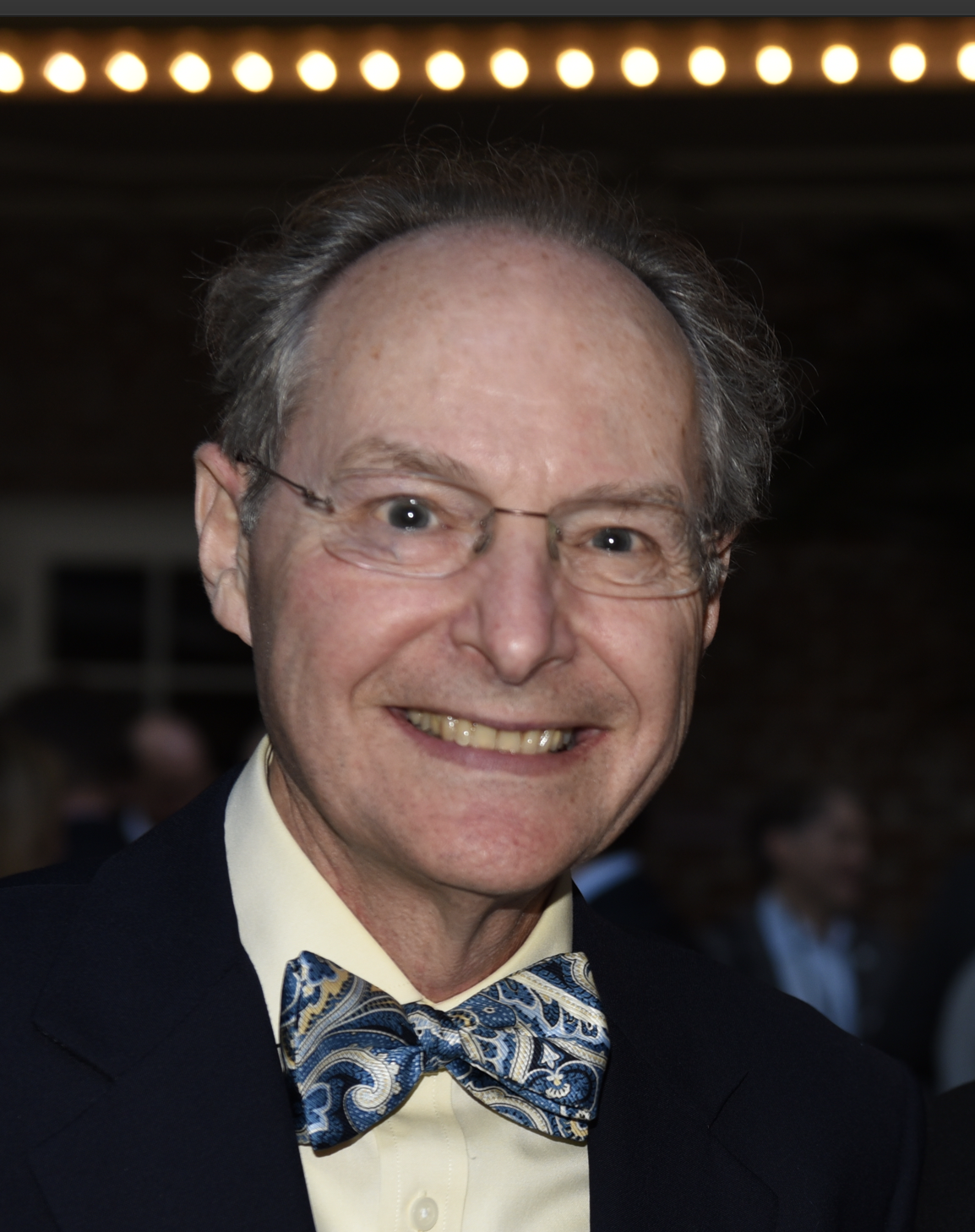
Screen Shot 2015-09-14 at 8.29.59 AM

[Past & present chairs of Nijmegen Urology. Above: Frans Debruyne. Below: Peter & Cindy Mulders]

Peter & Cindy Mulders

The innovative academic celebration was focused around specific patients in the various domains of urology and yet it explored the cutting edges of discovery and therapy. Our pediatric session featured the faculty at Radboud, Wouter Feitz, Barbara Kortmann,  Robert De Gier, and Ivo De Blaauw, with Raimund Stein of Mainz and Mannheim along with myself as guests.

Raimund, Maie-Jose, Wout

[Above: Raimund, Marie Jose & Wout Feitz. Below: Barbara & Robert]

Barbara & Robt


Since our session was on the opening day of the meeting, Wout and I skipped the second day to visit the Mauritius Museum in The Hague, on the western edge of the “Low Country.” The newly restored museum, a lovely historic house in the midst of the complex of government buildings known as the Binnenhof, houses Rembrandt’s great Anatomy Lesson of Nicholas Tulp [below], Vermeer’s Girl with Pearl Earring, and The Goldfinch by Fabritius. These great works and others compel thoughtful attention.

Tulp

Every year on the third Tuesday of September, which occurred the following week in the nearby Ridderzaal (Great Hall), the King delivers The Speech from the Throne. Wout and I happened to walk by after the room was set up for the event and on public display.

Ridderzaal

[Ridderzaal]

This Dutch tradition is mirrored in the State of the Union address in the United States, and in the annual State of the Medical School speech at our local level in Ann Arbor. Jim Woolliscroft (seen below), our medical school dean performed this task admirably for nearly a decade, just as Allen Lichter had done as our previous dean. Both were great leaders, colleagues, physicians, and educators. They have my greatest admiration for their work in guiding the UMMS through challenging times. Marschall Runge is amply up to the task for our next big steps as an academic health care enterprise in the new combined role.

Screen shot 2015-09-20 at 9.12.24 AM


The trees in the Netherlands during my recent visit had just a few patches of autumn colors, although some leaves had already changed enough to detach and fall.

Hague tree

[Above: tree with patch of yellow. Below: early leaves on the ground near Binnenhof]

Hague leaves

From the air as I left the Netherlands the long-lasting and combined effects of those primeval cellular meals of chloroplasts and mitochondria were in full display on the ground below. The green landscape is an obvious credit to the chloroplasts, however the fact that a large percentage of the land, although actually below sea level, is now dry land must be attributed to mitochondrial life forms, especially ours. Thanks to human ingenuity and industry 17% of the Netherlands surface area has been reclaimed from the sea and only 50% of the country’s land is over a meter above sea level. Out of my view from the air and during my brief visit to Holland was the immediate staggering refugee crisis, in Europe below and the world at large. A recent JAMA viewpoint from the UN High Commissioner’s Office on the state of the world’s refugees is worth reading [Spiegel. JAMA 314:445] The UN Refugee Agency counts 60 million forcibly displaced people worldwide at this date and half of them are children. This situation must be charged to the mitochondrial side of the Earth’s ledger and those sorry stories of our failures as a species continue to reshape the planet.

Syrian toddler

[Syrian toddler – heartbreaking picture from last month’s news compelling our attention or detachment]


Postscript. It’s been a busy month academically and just last week I had the honor of being the Lloyd Visiting Professor in Portland, Oregon as a guest of Steve Skoog, John Barry, and Chris Amling. It is a great, storied department and excellent residents presented complex cases. I was mercifully given most of Friday morning off, allowing me to watch the televised visit of Pope Francis to the September 11 Memorial in NYC. The interfaith prayer service was remarkable with its rich array of colors and beliefs, connected by a shared overarching faith in mankind. The Pope’s presence and his comments offer inspiring counterbalance to the sobering image above and destruction memorialized at the Twin Towers sites. The multicultural colors assembled at that prayer service, symbolizing the rich potential of mitochondrial life and humankind, are the most impressive colors of this autumn.

Screen Shot 2015-09-25 at 7.42.50 PM


Thanks for reading What’s New, a posting from the University of Michigan Department of Urology, and Matula Thoughts, its blog version (matulathoughts.org). More on the department can also be found at: medicine.umich.edu/dept/urology.

David A. Bloom

Matula Thoughts September 4, 2015

DAB What’s New/Matula Thoughts September 4, 2015


Matula Thoughts Logo1

Labor & laborers: “Individual commitment to a group effort – that is what makes a team work, a society work, a civilization work.” Vince Lombardi

[This monthly email to faculty, residents, staff, alumni, and friends of the University of Michigan Medical School Department of Urology is alternatively published as an email called What’s New]

3914 words

 1.    September returns a serious tone to the calendar and recent world market volatility adds to the sobriety. With vacations over we buckle down to the work of a new academic year in our evolving academic medical center. The fiscal year has already been in play for 2 months and the numbers look good so far.

Screen Shot 2015-08-29 at 11.51.55 AM

Our Faculty Group Practice, now known as the UMMG (UM Medical Group), is figuring out how to deliver the best care we can in nearly 150 Ambulatory Care Units attuned  to our other missions (education and research), to our inpatient functions, and to the needs of our environment. The UMMG Board meets monthly and delegates operational details to 4 key committees (Executive Committee, Budget & Finance Committee, Clinical Practice Committee, and the Bylaws Committee). [Picture above: David Spahlinger our Executive Associate Dean for Clinical Affairs and Director of the UMMG with Philippe Sammour, Senior Project Manager UMMG. Picture below: UMMG Board of Directors – August 2015]

Screen Shot 2015-08-29 at 11.34.38 AM

The UMMG is a multispecialty group practice of more than 2000 faculty with many other providers and staff in well over a hundred specialties and areas of precisely detailed expertise. The coordination of all these practices among our clinical departments and within our health system at Michigan is a work in progress – and the progress is good. As large as we are, however, we are too small to fulfill the expectations of the patient population we serve today and too small for our research and educational aspirations for tomorrow. Given a steady increase in clinical volume of 6% a year for many years, without infrastructure growth to match, we find ourselves deficient today in terms of clinic facilities, hospital beds, operating rooms (12 short by recent analysis of our daily needs), faculty (at least 250 FTEs short for today’s clinical volume), faculty offices (550 too few today), etc. We also fear that we may be too small to matter in the grand scheme of health care as it is evolving nationally in the face of the Affordable Care Act and the consolidation of networks. In spite of all these problems we are still pretty good compared to our peer institutions as things stand, although modest impending changes in our health system structure and governance will likely bring us much closer to realizing our potential as an unsurpassed integrated health care system and academic medical center – an effective team, a leader, and one of the few truly best. At the University of Michigan we often refer back to our great coach, Bo Schembechler, for his inspiring phrases, notably: “The team, the team, the team.” A fellow great coach, Vince Lombardi who died 45 years ago as of yesterday, echoed some of the ideas of Adam Smith the lead quote this month.

2.     September began last Tuesday and meteorological autumn in the Northern Hemisphere starts this month. Farmers traditionally begin the harvest, schools come into session, and the workday, as we noted, becomes a little more serious. Labor Day anticipates the seasonal transition and brings to mind Adam Smith who famously observed (with the examples of the butcher, the brewer, and the baker) that civilization requires specialization of work, although two millennia earlier Hippocrates made a similar recognition that medical practice requires specialization. In the Hippocratic world that first particular brand of work happened to be urology, manifested back then as lithotomy – the cutting for (bladder) stone. Were Hippocrates to visit us today at UMMG in a time machine, the only specialty he would recognize out of the hundred plus areas of practice would be urology – the single specialty he deferred to “specialists of that art.” The knowhow involved with cystolithotomy was rightly described as an art, just as the practice of medicine today is often still called an art. Artists go even further back in time: cave-dwelling paintings, long before Hippocrates, prove visual artists were among the earliest branches of the human labor force.


3.    Sept Heures

We previously have commented on the beautiful monthly panels illustrated by the Limbourg brothers in a book of prayers called The Très Riches Heures du Duc de Berry. Brothers Herman, Paul, and Johan were Dutch miniature painters from the city of Nijmegen active in early 15th century in Europe. Like Diego Rivera, closer to our time, the brothers travelled to the best sponsors who could commission their art. In 1416 the artists and the Duke of Berry died abruptly (likely from a plague pandemic) and their ambitious Très Riches Heures was completed by others. The September panel, shown above, features a harvest with 5 people picking grapes, while a man and pregnant woman seem to be supervising (the managers?). The grapes are placed in baskets, transferred to mules, then moved to oxen carts. Presumably the actual wine-making processes took place within the castle walls along with other trades and crafts. A fair degree of work specialization was evident at the Castle of Saumur there in the France’s Anjou wine region. Worker productivity was of immediate concern to the Duke or whoever was in charge of the castle, with carrot and stick as the time-honored means of motivation.

 Feb 1848

[February Revolution in Paris at l’Hôtel de Ville. HFE Philippoteaux at Carnavalet Museum]

It was over 500 years later in France before the rights of workers achieved their due attention. The head rolling of the French Revolution was evidence of the disequilibrium between workers and those in charge of them, but it was not until 1864 that French workers obtained a legislated right to strike and in 1866 the right to organize. Louis-Napoleon Bonaparte, nephew of his namesake, was the force behind these workers’ rights. His big moment had come in 1848 when the February French Revolution (an aftershock of the big one in 1789) allowed him to change places in exile in England with the deposed King Louis Philippe who had lost the trust of the citizens. Louis-Napoleon then became France’s first president by popular vote in February, 1848. When his term of office ended in 1852 and he found a second term blocked by the Constitution and Parliament, Louis-Napoleon conveniently organized a coup d’etait, re-naming himself Napoleon III and reigning as Emperor until 1870 (coincidentally wrapping up that term on this calendar day – September 4).

Napoleon III

[Napoleon III by A. Cabanet. At Musée du Second Empire. Compiègne]


 4.     In the heyday of industrialization some types of work were especially dangerous and abusive, although workers had little recourse to ask for safe conditions or fairness. Labor unions arose to occupy the need to balance the worker and employer disequilibrium. Labor Day, to be celebrated next Monday, is a marker for this necessary balance. Forward-looking businesses today embrace the belief that workers themselves are the best source of workplace knowledge and have the best motivation to make better products, with greater efficiency and greater satisfaction for critical stakeholders. This idea is intrinsic to lean process systems that represent the newest evolutionary step in the human labor force. Enlightened leaders have come to realize that the health and happiness of workers are linked to productivity, but more importantly are human rights as well.

Unionization of dangerous occupations makes more sense than unionization of less risky trades – think mine workers versus postal workers – yet, work is work and few can argue that any worker can be abused by any manager or any system. The recent exposé of alleged management abuse of workers at Amazon illustrates this point. Nonetheless, unionization of white collar cognitive professions takes some explanation for, by their very nature, professions have their own intrinsic protections. When professions are commoditized, however, and their members believe themselves treated poorly, unionization becomes a rational step. Unionization of professions might not be necessary in a perfect world, but this world is far from perfect. The Eastern Michigan University faculty are unionized, for example, while the University of Michigan faculty are not. While I am no authority on the EMU story, that particular unionization was likely a direct result of faculty grievances against past administrations. At the University of Michigan, though, the nurses, houses officers, many hospital employees, graduate students, and lecturers are represented by unions. The bottom line is the old story that power has a corruptive tendency and a just equilibrium must exist between labor and management.

EMU AAUP

[Ann Arbor News, August 12, 2015. The 690 EMU AAUP Professors reach a tentative agreement for annual 2.5% raises, changes in health care payments, administrative support, and research incentives]
Administrators and leaders can become self-important and smug (urology chairs are not immune). In the words of the respected Stanford business professor, Robert I. Sutton, some managers are worse than jerks, if you accept the use of his term in his book title.

Sutton RI

[Sutton RI, The No Asshole Rule. 2007 ]


5.     All people, governed or managed, need to believe that they are being treated fairly and that their voices are taken seriously by leadership. No employee can expect to agree with all organizational decisions, but an overall sense of fairness and responsiveness to individual opinion must pertain. Fairness is a fundamental human belief, evident too in many of our fellow primates plus some other mammals, but unique for humans among the eusocial species (bees, ants, etc.), as mentioned here last month in regard to E.O. Wilson’s work. Beliefs and language govern us with greater sophistication than the governance by pheromones and patterned behaviors of the other eusocials. We shouldn’t disparage pheromones, however, as they provide colonies the ability to react to observations of its individual members monitoring the challenges and opportunities of the environment. In this way the colony becomes a superorganism. We humans have infinitely greater communication tools to govern and regulate ourselves using facial expressions, noise, language, audible conversations, writing, music, visual art, customs, manners, beliefs, laws, and other ways of conveying information. When the public shares a general perception of fairness, civil harmony is likely to pertain, if not hell can break out. Just as corrosive to society as abusive work, perhaps even worse, is the inability to find work. A few weeks ago I heard the author Walter Mosley being interviewed on NPR by Renee Montagne about his experiences as a 12-year old boy in Watts during the riots of 1965, just 50 years ago. Mosley said, simply: “You could feel the rage”  – a statement capturing the raw emotion that exploded on the streets after a young man was arrested for drunk driving. [NPR. Morning Edition. Renee Montagne: Walter Mosley remembers the Watts Riots. August 13, 2015] Ten years after the riots I rotated from UCLA to Martin Luther King, Jr. Hospital in Watts and the effects of the riots were still present physically on the streets and emotionally among the people. My time at MLK was personally and educationally a good experience, I liked the hospital and its gritty esprit d’corps. It was quite a contrast to UCLA’s upscale Westwood campus. The full time staff at MLK felt a part of the community, where the daily struggles were still too often very raw. I didn’t fully understand the rawness then. A new book, Between the World and Me, by Ta-Nehisi Coates however, brings one closer.


6.     The first French Revolution of 1789-99 was not the only time in history when it people’s opinions mattered and we see evidence of the power of public opinion again and again. Wise political leaders, administrators, and managers understand that protests, strikes, riots, civil disobedience, or revolutions are unfortunate recourses when public opinion and leadership clash. Political lobbying, referendums, and orderly change of representational governance are more civilized, kinder, and less wasteful. Opinion surveys are another tool to understand stakeholders, with the first documented opinion poll occurring in 1824 when a Pennsylvania “straw poll” found Andrew Jackson leading John Quincy Adams 335 to 169 in the presidential race. Jacksonian democrats thought they had the election in the bag.

John Quincy Adams

[JQ Adams’ daguerreotype c. 1840s; Smithsonian Archives. Although Jackson had more popular votes and expected to win, Adams, a great statesman and politician, gained the support of Henry Clay to win the presidency, serving from 1825 to 1829, when Jackson finally gained the position]

A straw poll is a figure of speech referring to a thin plant stalk held up to the wind of public opinion to see which way it is blowing. George Gallup in Iowa in 1936 added science and statistics to the methodology of opinion sampling. Elmo Roper and Louis Harris entered the field of predictive polling around that time. Perhaps the darkest day for that business was the mistaken prediction of Thomas Dewey’s “defeat” of Harry S Truman in the 1948 presidential election by 5-15 percentage points. Although Gallup explained his error by noting that he concluded polling three weeks before election day, his humiliation endured, demonstrating to us once again that numbers are mere human inventions that may (or may not) approximate reality. All data must be viewed with suspicion, no numbers or numeric manipulations are sacrosanct.

 Deweytruman12

Some thoughts on surveys, but first, a disclaimer: I don’t like spending time on surveys and am quick to delete requests for them in my email. Personal bandwidth in this “age of information” is crowded and in clinical medicine the crowding is especially intense. Last winter I decided to try to list email requests for surveys consecutively over the prospective calendar year, but my effort lasted less than 3 weeks. I gave up after more than 2 dozen such well-intended requests whether from the medical school, the health system, the university, colleagues from other institutions, my professional organizations, etc. The proliferation of surveys, however, is not a bad thing, but rather a reflection of democratic society; others care what we think. Many stakeholders in our work and community want to assess their services to us and hope to discover our opinions of their contributions. The fundamental problem is not their curiosity, but rather our limited bandwidth. No one can satisfy all the requests: you must pick and choose.


 7.     Just about 50 years ago at this time of year, the Rolling Stones released their hit song “I can’t get no satisfaction.” Written by Mick Jagger and Keith Richards the lyrics referred to sexual frustration and commercialization.

220px-Satisfaction-us

Who would have believed that 50 years later the matter of satisfaction in health care (on the part of patients, providers, and employees) would be major matters of national attention? When I was an associate dean, Gil Omenn and Doug Strong asked me to create a faculty satisfaction survey. After a few reminders, I did this with Skip Campbell, aiming for a very brief set of less than 10 questions to assess satisfaction of the faculty regarding their work and environment. To convince faculty to fill this out we sent out a cogent personal initial request with a few reminders and provided a generous window of time. The response rate turned out quite good. Widespread dissatisfaction was discovered concerning the faculty’s ability to deliver the clinical care they deemed appropriate. This data was an important factor in shaping the transfer of ambulatory care management from the hospital administration to a “faculty group practice.” The information obtained also gave the dean an ability to assess the general “faculty temperature” and understand relative degrees of satisfaction in each department. Since then, the faculty satisfaction survey has been shaped to ascertain more granular information at specific worksites and it has grown in size and complexity. Currently at Michigan we have a number of additional  “satisfaction” surveys, but the following ones affect us most directly.

a.)     Faculty satisfaction survey. Take this one seriously – it is important to us. Variances from our past numbers or from other departmental data are  analyzed carefully by the dean, leadership, and our fellow departments.

b.)     Employee satisfaction survey. This gauges how the tens of thousands of employees in the medical school and health system view their work lives and work places. We examine the details at many levels in our administrative hierarchy. The dean also discusses this data with chairs in the yearly evaluation process.

c.)     SACUA administrators survey. This comes from the University of Michigan Faculty Senate and queries faculty about their immediate administrators (in our case, this is me) and all the others in the long line to and including the president. Medical School participation in this has generally been weak, perhaps indicating faculty sense of remoteness from the central campus.

d.)     Patient satisfaction surveys are increasingly tied to clinical re-imbursement. Initially the UM Health System used Press Ganey surveys of patient encounters. This company has a 30-year history of healthcare experience and the consistency of data was useful for year-to-year comparisons, but we are now constrained to switch to the HCAHPS (Hospital Consumers Assessment of Healthcare Providers and Systems) survey, provided by vendors on behalf of CMS. The change disconnected us from our historic data. HCAHPS queries a random sample of patients 48 hours – 6 weeks after discharge and asks 27 questions related to their hospital experiences.

e.)     Those pesky reputation and quality surveys.  The US News and World Reports surveys not only rescued a dying newsmagazine, but also galvanized attention and resources of every major health care system and medical school in the country. How do we stand in 2015 national rankings?  Our Department of Urology is number 10 nationally.

Retreat

[Above: Urology Department Spring Retreat, realigning ourselves and listening to each other]

Our Medical School stacks up as #5 for primary care and #10 for research.  Our Hospital ranked number 10 in pediatric specialties and number 11 in adult specialties (in spite of our stubborn determination over the past 16 years to avoid joining the “nurse magnet hospital” list).

Recent “quality” ratings such as ProPublica are attracting attention. These low hanging fruits of public data commercialization to date offer incomplete information and lack meaningful context. While these products may have commercial and titillational value, on the scale of meaningful data so far they set the bar at the left end (near zero) of the Likert Scale. By the way, the originator of the Likert Scale, Rensis Likert, was a UM alumnus who died 34 years ago as of yesterday (September 3, 1981) at age 78 of bladder cancer here in Ann Arbor. He is buried at Forest Hill Cemetery, just a short walk from our offices. More on him in a future What’s New/Matula Thoughts.


8.     It is wonderful to see a resurgence of high quality labor in Detroit and Shinola is a premier example. Shinola shoe polish originated as a brand in 1907, was trademarked in 1929, and became popular during WWII.  Anyone who was in the military then and for a generation thereafter usually had a can of shoe polish at hand because shoes were expected to have a high shine, outside of combat conditions. A spit shine was literally obtained by spit. (When I was in the Army, however, newer permanently glossy black shoes became available and all you had to do was wipe them clean.) During WWII a colorful phrase developed around Shinola, although its author will probably remain forever unknown. The phrase compared Shinola to a bodily output usually more formed than spit, although much less acceptable in public, even at baseball games or on sidewalks. The phrase established a basic measure of intelligence as the ability to discern that aforesaid product of elimination from Shinola shoe polish. The concept was captured beautifully in a scene in the classic film, The Jerk, with Steve Martin. [The Jerk, 1979, Directed by Carl Reiner] Anyway, in 2001 a venture capital firm in Dallas, Bedrock Marketing, acquired the name Shinola and began manufacturing watches, bicycles, the shoe polish, and leather products – all made in America and usually in Detroit. The company also produces a high-quality note pad that, unlike that of most competitors, has paper that doesn’t “bleed” with fountain pen ink. The pads are made here in Ann Arbor by Edwards Brothers-Malloy. Shinola headquarters in Detroit is in an Alfred A. Taubman Building. Of course that building’s name is well represented on our University of Michigan campus and especially in the medical school. Alfred passed away last year after an extraordinary life that continues to impact us so positively on our campus.
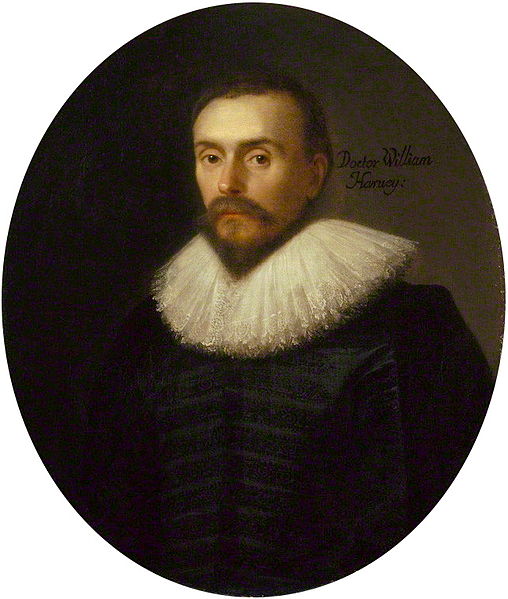
 

9.    Shinola

In this era of expensive but disposable athletic shoes, the well-shined shoe is less common than in the first Shinola era. My old chief of surgery at UCLA, Bill Longmire, would express visible distaste for sloppiness among his house officers, and sloppy shoes were quick to catch his eyes. Army experience made me an average shoe shiner and I still keep polish and a brush in the office. When I am on the road as a “travelling salesman” on behalf of our department I generally give myself time at the airport to see Rick Jackson, a shoe professional I’ve known for 30 years. Rick is at his job daily opposite gate 47 in Detrot’s McNamara Terminal and one of his chairs is my preferred place to sit and converse while at the airport. Rick also keeps track of fellow traveller urologists, such as Mani Menon. Stop by sometime and let Rick make you look more presentable. [Below: our own Gary Faerber and Dan Hayes of Hematology Oncology with Rick]

 Rick


10.    Historically in the University of Michigan Health System, as well as at most other large health care systems, health care workers labored in disequilibrium with administration. All well-intended specialists in the health care labor force (physicians, nurses, managers, residents, hospital employees, researchers, administrators, unionists, etc.) pushed their agendas, but too often the ultimate agendas of patient care, education, new knowledge, and worker satisfaction were side-tracked. Full and effective faculty participation in the daily management of clinical work as well as strategic planning and deployment was an idea advanced here in the 1990s by Mark Orringer, but soundly rebuffed by the dean and hospital administration back then. The concept had legs, as it might be said, for it is a sensible Darwinian evolution and certainly in tune with the modern industrial ideas of lean process systems. The Faculty Group Practice (FGP) emerged around a decade later and has proven successful in its limited application to our ambulatory (outpatient) activities. In practice, however, the division of clinical work into ambulatory and in-patient spheres is artificial and ultimately counter-productive to our real goals of clinical excellence, safety, efficiency, ideal patient experience, education, new knowledge, and ultimate job satisfaction for all employees. With our current EVPMA, Marschall Runge, we sense new alignment of our health system structure and governance. (Marschall, by the way, is the grandson of a 1918 UMMS alumnus.) The FGP, now the University of Michigan Medical Group (UMMG), hopes to be a cornerstone in the alignment of all essential facets of our academic medical center to fulfill those elusive goals of clinical excellence and mission optimization as mentioned above. We should be able to accomplish this here at Michigan as well or better than any other place on the planet. Our history has set that precedence, our people are as good as they come, and we have, I hope, the collective will and drive to come together and get it done now that September is here.  

 Runge, Johnson

[Two UM health care laborers, a cardiologist and a gynecologist/obstetrician: Marschall Runge & Tim Johnson]


Best wishes, thanks for reading What’s New/Matula Thoughts and happy Labor Day.

David A. Bloom


Matula Thoughts August 7, 2015

Fair weather, formicidae, fables, and funambulism

3415 words


 1.   Brehm

August in Ann Arbor with long days of sunlight, warm breezes, and summer clothing is especially sweet by contrast to our winter days. Thanks to generous rains filling our rivers and refreshing the ground water Ann Arbor’s August is immersed in green. [Above: view from the roof of the Brehm Tower of Kellogg Eye Center. Below: kayaks by the Huron]

Kayaks

Birds, cicadas, tree frogs, and lightning bugs create accidental symphonies of sound and light in my neighborhood. Summertime in the Northern Hemisphere brings a measure of balance, relaxation, and sunny public spaces. Vacation allows time to recharge and summer in Ann Arbor is pretty much as good as it gets for doing that.

Golf

[Michigan Stadium from Ann Arbor Golf Outing]
August in parts of Europe is almost entirely set aside as vacation time for many workers, whereas in North America “work-life balance” is stricter with a week or two of vacation, plus the long weekends of Memorial Day, Fourth of July, and Labor Day. These thoughts remind me of an animated cartoon that I loved as a kid called the Grasshopper and the Ants, an ancient fable of Aesop recast by a young Walt Disney in 1934 in The Silly Symphony (you can find it on YouTube – it runs 8 minutes).

220px-The_Grasshopper_and_the_Ants

The gist of the story was that a grasshopper had fun and played all summer, while the neighboring ants aligned industriously to work throughout the sunny days storing up food and preparing for winter. When winter came, the cold and hungry grasshopper realized his sorry situation and came begging to the ants for food and shelter. According to Disney’s version, after a momentary reprimand the ants kindly took in the pitiful grasshopper who then entertained them with his fiddle over the winter. In the Aesopian corpus this story is The Cicada and the Ant (classified as Perry 373). The simplistic moral to the story is a useful lesson for children, but humans, unlike ants, need vacations; motivations in the human sphere differ from those in ant land.


2.   Screen shot 2015-07-18 at 9.09.21 AM

[EOW by DAB 2002]  

Ants and humans, E.O. Wilson teaches us, are among the very rare eusocial species on Earth. These colonial animals live in multi-generational groups where most individuals cooperate to advance the public good and to perpetuate the species into the next generation. In effect, their colonies are superorganisms that transcend  individual biologic lives and create civilizations turned over to successive generations. The meaning of individual lives, then, is simply to be found in their contribution to their tomorrow and the tomorrows of their successors. Ants accomplish this work by communicating via pheromones, chemical signals that Wilson and his collaborators elucidated. Pheromones, added to genetic and epigenetic capabilities, vastly enhance the ability of eusocial organisms to deal with and transmit information. The human luck of spoken and written language allows us to process information (sensory, narrative, and numeric), work cooperatively, and create new information that we deploy and pass along to successive generations. The cultural and scientific ways of thinking that emerged from language have produced creativity that has changed the Earth. Whereas internal motivation and environmental pressures inspire personal creativity, it is largely personal and political freedom that allows its dissemination, thereby expanding civilization intellectually and materially.

Tai Che 2

It is a beautiful thing to see people acting in harmonious synchrony. This picture I took outside the de Young Museum in San Francisco this spring shows a display of T’ai chi (太極拳), a Chinese martial art practiced for its health effects, focusing the mind for mental calm and clarity. No pheromones or visible rewards motivate this alignment, the motivation is internal. T’ai chi is lovely to watch, the harmony and synchrony registering pleasurably in the hardwiring of our brains. This is the stuff of art, the deliberate work of other people that we admire and that sometimes astonishes us. You can find beauty in a myriad of other aligned performances. The Stanley Cup playoffs are one example of exquisite and harmonious alignment of teams. Surgical procedures may fall into this realm; it’s interesting that in Great Britain the operating room is referred to as the surgical theatre. When synchrony is harshly enforced, however, as in the dark vision of industrialism depicted by the Diego Rivera murals in Detroit or the failed experiments of communism, alignment is not so pretty. 


3.  Diego Rivera

The cartoonish stereotype of disheartened industrial assembly line workers in the Rivera murals has been reinforced by generations of business schools and accounting management ideology. The belief was that managers should determine work-flow methodology and set production targets as if assembly lines were machines to be sped up or slowed down as managers deemed necessary. This is the essence of accounting-based management. The Toyota Process System, now embraced world-wide by forward-looking businesses as lean process methodology, turns this paradigm around, having shown that where workers are empowered to think, innovate, and take pride in their work, better products, greater efficiency, and customer satisfaction will result. Ironically, Toyota’s innovation was initiated over 60 years ago when the company’s founder visited Ford’s massive River Rouge plant just as Japan was rebuilding its industrial base after WWII. Where the American managers saw one thing in the Ford assembly line, the Japanese leaders saw something completely different. The following quote explaining “What Toyota saw at the Rouge” comes from an excellent book called Profit Beyond Measure, by H. Thomas Johnson and Anders Bröms: “When Eiji Toyoda told Philip Caldwell that Toyota had discovered the secret to success at the Rouge, his comment implied that what Toyota had perceived about operations at the Rouge was very different than what Caldwell and his Ford colleagues or their counterparts in the other Big Three auto companies had seen. For one thing, it seems that Toyota people did not view low cost at the Rouge in terms of its scale, its throughput, or its managers’ effort to impose external targets for speed and cost on workers in the plant. Instead, they seemed to perceive a holistic pattern permeating every minute particular of the system. On one level, the pattern that caught Toyota’s attention was the overall continuous flow of work in the Rouge as a whole. But at a much deeper level, they observed that work flowed continuously through each part of the system – literally through each individual work station – at the same rate that finished units flowed off the line.” (Caldwell was President of Ford at the time.) Toyoda saw an organic self-learning system in the assembly line, where expertise at work stations is continuously harvested by motivated workers to improve work flow and product. Jeanne Kin and Jack Billi floated this book to my attention a few years ago and it continues to strongly impact my view of organizational systems.


4.   Just as modern industry is embracing the concepts of Toyota Lean Processes, health care systems in their frenzy to cut costs while complying with increasingly onerous regulation are oddly embracing the failed experiments of management accounting that impose cost and throughput targets on health care providers. Data (numeric information) should inform decisions whenever possible, but it cannot be the sole driver of key operational choices. All data must be viewed as suspect for, after all, the numeric information we produce for ourselves is merely an artifact of human invention: numbers and their manipulation may or may not reflect reality accurately. Intense focus on data tends to obliterate stories (narrative information). Truth is elusive and while stories can be just as false or misleading as data can be wrong or misinterpreted, when stories resonate with truth, prove to be genuine, or otherwise offer value they get repeated and stick around. While the accounting mentality examines data for consistency and at its best extracts useful stories from data, the scientific mentality examines and hypothesizes stories and then seeks data to support the story and create a better one. Accounting is a matter of numbers, but science is ultimately a matter of stories. The human brain is hard-wired to relate to meaningful stories, and those ancient ones that endure, such as The Iliad, The Odyssey, and the Bible, endure because they give artful evidence of larger truths, exemplary behavior, or experiences that we keep repeating. Some stories are extremely succinct, but have enough truth that we keep repeating them like: Pythagoras’s story that for a right-sided triangle the area of the square on the side opposite the right angle equals the sum of the areas of the squares of the other two sides. Another durable story is that the area within a circle is its radius squared times an irrational number called pi.One might argue that by its very substance this story is irrational, but it sure seems to have held up through time. A newer story tells of the ultimate connection of light, matter, and energy, that is, is e=mc2. These stories seem to be true and have found their Darwinian niche in the human narrative.


5.   We are indoctrinated by stories since childhood. Fables, short stories with moral lessons, typically feature animals with human qualities. Aesop, supposedly a slave in ancient Greece (620-560 BC) a generation after Pythagoras and a century prior to Hippocrates, is the fabulist best known in the Western world. It is an astonishing demonstration of Darwinian durability that his fables have been repeated to children in most languages for well over 2500 years. Ben Perry, the 20th century authority on Aesop, indexed and edited Aesop’s stories for the Loeb Classical Library in 1952. One of the half dozen fables dealing with health care is The Old Woman and the Thieving Physician. This may have been added to the Aesop corpus rather than an original of the actual fabulist. The tale involves an elderly lady with sore eyes who asks a physician to cure her from anticipated blindness, but her deal was that payment had to await cure. The doctor made repeated house calls to apply salves and with each visit stole anything he could take away from the house. Once the cure was competed the woman refused payment saying that her sight seemed to be worse than ever since she now couldn’t see or find any of her household property. This characterization of the dishonest physician was number 57 of the Perry Index.


6.   Ben Perry was born in 1852 in Fayette Ohio and received his B.A. in 1915 from the University of Michigan and a Ph.D from Princeton in 1919. His early academic posts took him to Urbana Ohio University, Dartmouth, Western Reserve, and then, for the bulk of his career from 1924-1960 at the University of Illinois. He returned to Michigan as visiting professor in 1967 and died back in Urbana, Illinois in 1968. Perry concentrated his work in two minor genres, the fable and the ancient novel. The Perry Index includes all fables related to, ascribed to, or connected to Aesop and goes from #1 The Eagle and the Fox to #584The River-fish and the Sea-fish.  In addition, the Extended Perry Index goes from #585 Sick Lion, Fox and Bear to #725 Fish from Frying Pan into Coals. Curiously Aesop offered tales of all sorts of creatures and many occupations, but only the occasional doctor’s story in addition to the ophthalmologic case: #7 Cat as Physician and the Hens,  #114 The Physician at the Funeral, # 170 Physician and Sick Man,  #187 The Wolf as Physician, or #289 The Frog Physician, and #317The Unskilled Physician. Some of these were matters of impersonations while others like #57 above were character studies of the profession. Perry #427 was the classic Fox and Hedgehog story, resurrected for our time by Isaiah Berlin.


7.   The Art Fair is a special time in Ann Arbor. I lived here for about 10 years before I ever walked around in it – summertime is busy for those who take care of children, pediatric urologists included. In 1997 we started the John Duckett Lecture in Pediatric Urology, in honor of a colleague and a friend of Michigan Urology who had passed away that year. The idea was that this would take place on the Friday morning of the Art Fair, and we would close up most of our clinical and research work for the day. Our staff would simultaneously have Staff Education Day in the morning and the afternoon free for the Art Fair or whatever, as their annual birthday present. Over the years we have expanded the intellectual part of our Art Fair week with the Chang Lecture on Art and Medicine Chang on the Thursday and usually added a Lapides Lecture to the Friday session. This year we asked one person, Pierre Mouriquand from Lyon France, to do both the Chang and Duckett Lectures. In effect this was asking Pierre to walk a tightrope between two intellectual towers, and he navigated the line beautifully.  As a great pediatric urologist and a painter of substance and daily practice, he is well qualified on both fronts. The Chang Lecture consisted of Pierre’s story Slowly down the Rhône: the River and its Artists. He produced a magnificent talk bringing together not only art and medicine, but also geography.

Screen Shot 2015-07-20 at 7.40.50 AM

His Duckett Lecture was Understanding the Growth of the Genital Tubercle: Why it is relevant for the Hypospadiologist.  Here he showed his mastery of the field with a brilliant update on embryology and challenging thoughts on surgical reconstruction of difficult dysfunctional anatomy. He fielded a series of case presentations from residents and later in the day attended our Disorders of Sex Development (DSD) team meeting and lunch, where he challenged the modern terminology and presented some videos that showed new concepts in reconstruction. In the evening at dinner our residents and the pediatric urology team got to know Pierre and his wife Jessica mixing technical talk, health systems discussions, and seeing how a couple successfully navigates the challenging world of life, family, and academic medicine. 

Pierre & Jessica

Regarding this first academic event of the new season of residency training (also called Graduate Medical Education or GME) I need to invoke a sports metaphor and say that “Pierre hit it out of the park.” Events like these fulfill the essential duty of the university: sharpening inquisitiveness, disseminating ideas, widening cosmopolitanism, and educating our successors.


8.   Chang Lecture on Art and Medicine 2016. Our speaker next year will be Don Nakayama, former chair of the Surgery Department at West Virginia. He wrote an interesting article in Pharos last year on the Diego Rivera murals at the Detroit Institute of Arts. [The Pharos 77: 8, 2014] Perceptively, he recognized that the so-called Surgery Panel on the South Wall was not a depiction of “brain surgery” as art historians have claimed, but rather an illustration of an orchiectomy, a procedure much more attuned to Rivera’s view of the Rouge Plant workers. It is a great testimony to the vision of Edsel Ford to have brought Rivera, arguably the world’s best muralist of the time and an ardent communist, to Detroit to produce the work in 1932. Things didn’t go so well later in New York City when Rivera tried to repeat the experiment with the Rockefellers, but that’s another story.

Orch

[Lower right mural on the South Wall: the orchiectomy]

Caleb Nelson will be doing the Duckett Lecture and Bart Grossman will be doing the Lapides Lecture next year for an all-Nesbit Line up on that Friday of the 2016 Art Fair.


9.   Little Red Hen  Disney’s Silly Symphonies also included The Wise Little Hen, a version of a Russian folk tale more popularly known as The Little Red Hen. The nugget of the story was that the hen finds a grain of wheat and asks the other animals on the farm to help plant, grow, and harvest it. None chose to help, but after she harvests the wheat she asks again for help threshing, milling, and baking, but none step forward. After the bread is done, she asks who should help eat it – and of course everybody volunteers. The hen, however, says sorry “if any would not work, neither should he eat.” (The Wise Little Hen  included the debut of Donald Duck.) President Ronald Reagan referred to this story in 1976, citing a politicized version  in which the farmer chastised the hen for being unfair. After the hen was forced to share her bread, she lost the incentive to work and the entire barnyard suffered. This twist on the story made it a cautionary tale slamming the welfare state. While the story teaches children the importance of doing their part in terms of the daily work of the community it lacks the complexity of reality. Modern society is far more complicated than a barnyard and the line between personal responsibility and public beneficence (i.e. government) is tricky to arbitrate. Furthermore, many in society experience tragic bad luck beyond their control or are unable to assume personal responsibility. Reagan’s farmer had the un-antlike characteristic of compassion, a human quality that must have long-preceded even our biblical days. A society has to nurture personal freedom, creativity, and individual responsibility if it is to be successful, but without kindness and compassion a civilization is not a human one. After all, when Disney anthropomorphized his ants he gave them not just language, but also compassion.

Where do we draw the lines regarding personal freedom and such things as immunization mandates, smoking, drug use, obesity, and dangerous behavior? Should motorcyclists have to wear helmets? How do we provide health care to the indigent and incapable? How do we create health care equality and affordability? These questions ultimately get arbitrated in the political arenas regionally and nationally, generation after generation. Our nation walks on a tightrope between the cartoonish ideologies of the welfare state and what some might call individualism, capturing the beliefs of libertarianism, laissez-faire capitalism, and ethical egoism. Obviously neither the welfare state nor any “ism” has it right – the best path for a just, creative, and cosmopolitan civilization is a path in between the cartoons. The bad news of today (and maybe this is the bad news for every human era) is that cartoonish people find their ways to leadership and compel the rest of us along irrational paths that threaten  the future we want to turn over to our next generation. All citizens need to step up their understanding of the issues of public policy and health care as well as involving themselves in its regional and national discussions. We can no longer let politicians, accountants, and pundits alone shape the critical decisions.


10.  Funambulism. On this day, August 7, in 1974 a 24-year old Frenchman named Philippe Petit walked across a high wire he had rigged between the Twin Towers of the World Trade Center. He actually crossed the wire 8 times, performing for 45 minutes to the amazement of on-lookers in the towers. He must have looked like an  ant to those on the ground, and vice versa. Petit’s funambulism represents a perfection of self-alignment in terms of balance that few can achieve, yet it is also an astonishing display of self-confidence, clandestine preparation, and admirable civil-disobedience. Curiously funambulism defines tightrope walking and a show of mental agility interchangeably. Few can deny that serious tightrope walking is as much a matter of mental as physical agility and you have to admire the internal drive that motivated Petit to accomplish this heroic feat. That was art.

Pettit

Postscript: With the start of August we saw the retirement of Jack Cichon, our departmental administrator, and Malissa Eversole is now steadily in place on the job. Jack managed the business and operational affairs of Michigan Urology for 20 years with great loyalty, integrity, and (at some challenging times) extraordinary courage under pressure. He becomes an honorary member of the Nesbit Society and we hope to continue to see him in the course of our departmental events, noting his broadened smile of relief from the administrative pressures of the University of Michigan Medical School and Health System that he served so admirably.   

Cichon 2015

Thanks for spending time with What’s New and Matula Thoughts.

David A. Bloom, MD

Department of Urology, University of Michigan Medical School

Ann Arbor