What’s New September 6, 2013

The University of Michigan Department of Urology

3875 Taubman Center, 1500 E. Medical Center Drive, SPC 5330, Ann Arbor, Michigan 48109-5330

Academic Office:  (734) 232-4943   FAX: (734) 936-8037   www.urology.med.umich.edu    https://matulathoughts.org/

Matula Thoughts Logo1


 What’s New September 6, 2013


A monthly communication to the faculty, residents, staff, and friends of the University of Michigan Urology Family.


Michigan Traditions


 22 Items, 1 Attachment, 1 Web Link, 10 Minutes

1.    Academic medicine revolves around a lovely cycle. This cycle is distinct from a fiscal cycle that is generally not so pleasant, although the two are keenly intertwined. The financial margin of clinical care has supported the academic cycle for the past century if not longer. Some health systems have been managed so well that they provide large and even huge financial margins that can be reinvested in the academic mission although that has not been a big part of our history in Ann Arbor.  Those large margins are under attack from some, such as Charles Grassley in the Senate, who rightfully question the “not-for-profit” status of organizations with multimillion dollar CEO salaries plus bonuses, corporate jets, and all the other accoutrements of the “for profit” world.  While the “for profit” sector normally pays taxes, the social good of not-for-profit businesses is the justification for sparing them routine taxation.  On the other hand, those “normal” taxation responsibilities are regularly evaded by the corporate world via legal loopholes cleverly placed by self-interested legislators and lobbyists. As Captain Renault, played by Claude Rains in the film Casablanca, said with great irony: “I’m shocked, shocked to find that gambling is going on in here!” (as a casino worker walks up to the captain with a wad of money and says: “Your winnings sir.”).  Anyway, the world is changing and new fiscal reality threatens academic medicine.

2.    A recent Wall Street Journal article exposed the large mark up of expensive drugs purchased at discount by some educational institutions. This has been one way some institutions have been able to achieve those grand margins at the end of the fiscal year. The Time magazine single-issue-exposé by Steven Brill this past February, tells this story well and in great detail. We at Michigan have not been so clever, perhaps even to a fault if you look at our meager margins, but that is another story, for another day.

3.    Academic medicine’s cycle, although entwined with fiscal reality, has distinct cultural mileposts. We begin (coincidentally with the fiscal year) when new residents (interns or postgraduate year-one trainees – PGY1’s) start their work, usually unceremoniously around July 1. The next step is the White Coat Ceremony, when entering medical students formally began medical school and receive symbols of their new profession – short versions of the white coat and a very good stethoscope. We started the stethoscope program for incoming students around ten years ago and between generous donors and the clinical departments and faculty come up with the $25,000 to buy the top grade stethoscopes each year. This event and gesture should be especially meaningful for urologists because the stethoscope, after its invention in 1816 by Laennec in Paris, replaced the urological matula as the symbol of physicians. (For a refresher on matulas see our blog MatulaThoughts.org.)

4.    This year the White Coat Ceremony was held Sunday, August 4 in Hill Auditorium.  This and Graduation are the bookends of the medical school experience and they are wonderful events – well worth experiencing or re-experiencing from time to time even if you are a seasoned physician or anyone else in the Michigan Urology Family.  Family, in fact, was much of the theme of the White Coat Ceremony.  Most if not all entering students had family members present who often vigorously cheered as their son or daughter announced his or her name, hometown, and college.  The student then crossed the stage where the Dean helped them put on a white coat and faculty members presented each one a stethoscope.  Dean Jim Woolliscroft talked about enlarging importance of “The Team” in health care, echoing Bo Schembechler’s cry for “The team, the team, the team!”  President of the Medical Center Alumni Society (MCAS), Bob Evani (UMMS MD 1986) also talked of “family” – emphasizing the family of this particular class of 2017 and the family of MCAS. Michigan Urology with its Nesbit Society is our specialty team, a form of the team that we understand especially well in Ann Arbor.

White Coat Ceremony1

White Coat Ceremony2

5.    MCAS. One unusual and excellent thing that we have here at Michigan is the Medical Center Alumni Society. Whereas in most other medical schools the alumni are considered graduates of the medical school specifically, here at Michigan MCAS embraces the residency graduates equally and vigorously. This makes great sense in that we have somewhere around 700 medical students at a time and well over 1000 residents simultaneously. Furthermore, the medical students are here for usually 4 years, but residents average more than that time, many are here twice as long or longer. This has been one way that the University of Michigan, in aggregate, can probably boast the largest and most active university alumni in the world.

6.    Labor Day, a U.S. federal holiday since 1894, celebrates workers.  The triggering event for the unanimous vote by Congress to institute Labor Day was the wildcat Pullman Strike. The massive boycott that grew affected most rail lines west of Detroit and led to sabotage, riots, $80 million in property damage, and at least 30 deaths largely at the hands of military troops and U.S. Marshals. President Grover Cleveland, who had stepped in earlier to end the strike and called in the federal troops when an injunction to cease the strike was ignored, signed the holiday into law just 6 days after the strike ended. Labor Day this past Monday 119 years after its inception was a nice break from clinic for me and is for all of us a pleasant way to mark the end of summer and prepare for the more frenetic days of fall.

7.    Football season. With autumn comes thoughts of the Big House. An excellent season is forecast. This is relevant to us at Michigan Urology for a number of good reasons. First, Wolverine Football is a central feature of the fall environment in Ann Arbor. It brings pride to our community, our students, our faculty, and our alumni. Pride in one part of our university extends to all parts – each unit wants to be equally successful in its own game. Football is a feature of our alumni reunions (the Nesbit Reunion in particular). For some reason a successful football season seems to boost applications to most of our schools and colleges (I’m not a sociologist, so I offer no explanation). Sports educate us. We see how a genuine sense of “The team, the team, the team” (Bo Schembechler’s enduring quote once again) enhances performance far better than any drug or phony slogan.

8.    Urology Recruiting w coaches
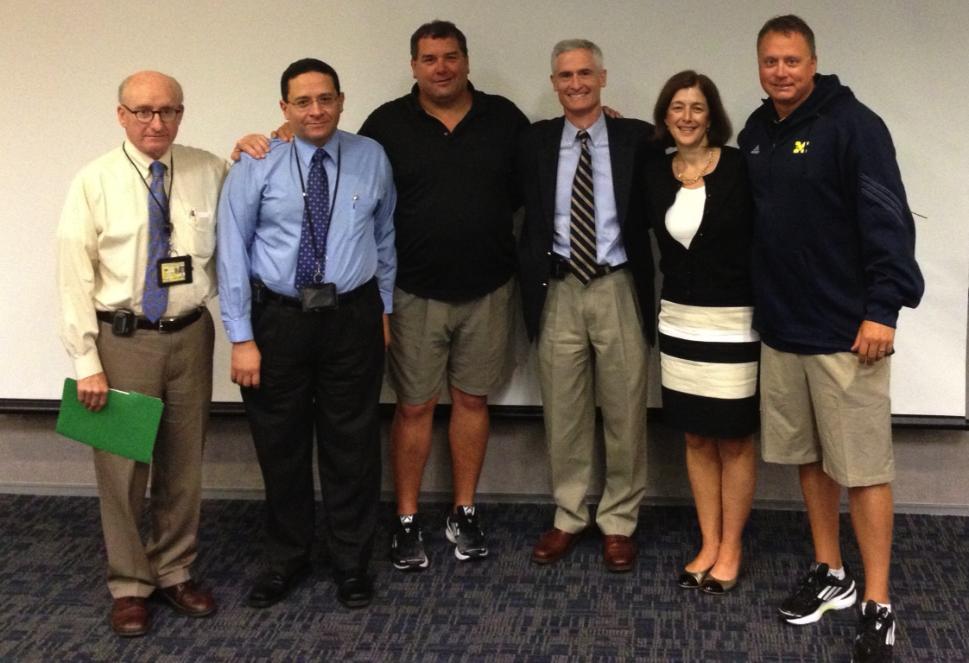
Urology recruiting.  Last month Gary Faerber (Associate Chair, Education), Khaled Hafez (Residency Program Director), Kathy Cooney (HemOnc Division Head and Urology Joint Faculty) and I spent a morning with Brady Hoke (UM Football Coach), Jeff Hecklinski (Wide Receivers Coach and Recruiting Coordinator), and Chris Singletary (Director of Player Personnel) to learn about their amazing work as our own residency recruiting season is about to heat up. Coach Hoke has built up a superb team with a very sophisticated recruiting system and a genuine approach to team development. They gave us nearly an entire morning of play-by-play instructions leaving us energized for our next campaign to recruit our Urology Class of 2019. Michigan Urology will be 100 years old then by the time this next class graduates, by my reckoning (looking at the arrival of Hugh Cabot in 1919), and Michigan Football will be 140 years old then, looking at 1879 as the start of Wolverines Football competition. Michigan joined the Big Ten at its inception when it was known as the Western Conference in 1896. The Wolverines have had the most all-time wins and the highest winning percentage in college football history. Michigan Football coaches have been Fielding Yost, Harry Kipke, Fritz Crisler, Bennie Oosterbann, Pete Elliott, Bo Schembechler, Gary Moeller, Lloyd Carr, Rich Rodriguez, and now Brady Hoke.

9.    Coach Hoke is very big on the study and celebration of history, something that may have slipped a bit in the preceding coaching regime. Schembechler Hall, now in the midst of serious renovation, is a living testimony to the rich and inspiring tradition of Michigan Football. Of course I can’t mention Coach Bump Elliott without recalling his brother Pete, another great Big Ten football coach and the father of my good friend Bruce Elliott, a local attorney and premier girl’s field hockey coach. Both Bump and Pete were great UM athletes. Pete was an All-American quarterback on the undefeated 1948 Michigan football team that won a national championship. He is the only Michigan athlete in history to have earned 12 letters in varsity sports (football, basketball, and golf). After his own great coaching career, he served as the Executive Director of the Football Hall of Fame, in Canton, Ohio, where he died earlier this year at age 86. (Picture with brother Bump Elliott on the right). Pete was not just an extraordinary athlete, coach, and teacher, but he was simultaneously a true gentleman in the highest sense of the word.

Pete and Bump Elliott

10.    Last month Dean Woolliscroft held a ceremony for Bill Smith who stepped down as chair of Biological Chemistry. It seems like yesterday since Bill returned to Ann Arbor as chair, hired then by Dean Lichter. Bill has been a great chair and happily will be remaining on the faculty to do his work as professor, which he does so well. One of the things he said in his remarks that struck me in this day of clinical trials, health services research, and disease-focused research programs was: “Let’s not forsake curiosity-driven science.” An astute comment from another true gentleman.  David Engelke is Bill’s worthy successor as chair.

11. In one of the tensest times of the Cold War, thirty years ago, around this time (actually Sept 1, 1983), military pilots of the Soviet Union shot down a commercial Korean Air Flight KAL-007 on the way to Seoul, Korea. The USSR stated that the pilots did not recognize KAL-007 was a civilian aircraft when it apparently violated Soviet airspace. Of course, conspiracy theorists have proposed alternative explanations, although I’ve come to realize that as a human endeavor military incompetence is more likely than competent conspiracy.

12.   On that flight was US Congressman Lawrence McDonald. Former President Richard Nixon was supposed to have been on that flight as well, assigned a seat next to McDonald, but must have decided near the last moment not to attend the 30-year anniversary ceremonies of the U.S. – Korea Mutual Defense Treaty. Senator Jesse Helms of North Carolina, Senator Steven Symms of Idaho, and Representative Carroll J. Hubbard, Jr. of Kentucky were aboard sister flight KAL 015, which flew 15 minutes behind KAL 007.  McDonald was an ardent anticommunist and one conspiracy theory had it that the flight was shot down to kill this vocal senator.

13.   McDonald was born and raised in Atlanta. His father Harold McDonald, Sr. was a prominent urologist. Larry studied history at Davidson College, medicine at Emory (MD 1957) and had a year or two of surgery at Grady Memorial Hospital followed by two years in the Navy. As a flight surgeon stationed in Iceland he met and married an Icelandic national. While in Iceland he developed a keen concern about communism that would define much of the rest of his life. He came to Michigan to train under Reed Nesbit in Urology, following his older brother Harold McDonald, Jr. Their father, a friend of Reed Nesbit, undoubtedly encouraged the Ann Arbor training due to his regard for Nesbit and the reputation of the program.

14.     Larry’s anxiety over the influence of communism had led him to join the John Birch Society and he became a leader of the organization in SE Michigan. Fellow residents recall that hospital rounds often became “political rounds” and McDonald was known to attend political night meetings throughout the region, sometimes returning home in the early morning hours just in time to get to the operating room. He finished residency in 1966 and returned to Atlanta to practice in the McDonald Clinic. He is recalled as having been a strong advocate of the compound laetrile as an anti-cancer agent. McDonald’s passionate preoccupation with politics was said to be a factor in divorce from his wife. He made one unsuccessful run for Congress in 1972 before being elected in 1974. In 1975, he married Kathryn Jackson, whom he met while giving a speech in California. In 1974, McDonald ran for Congress against incumbent John W. Davis in the Democratic primary as a conservative who was opposed to mandatory federal school integration programs. McDonald won the primary in a surprise upset and was elected in November 1974 to the 94th United States Congress. Interesting how things change – he was an ardent Democrat.
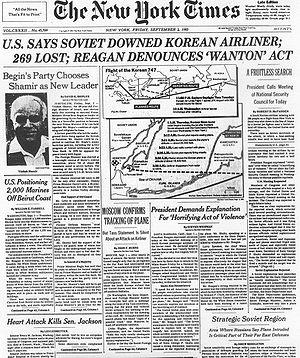
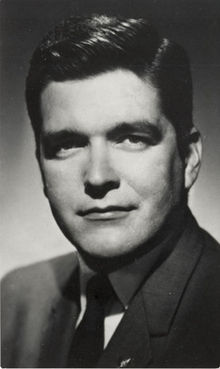
New York TimesMcDonald

15.   Harold McDonald, Larry’s older brother, finished training under Nesbit in 1963. Roy Correa (Nesbit ’65) recalls Harold as a “type A extrovert” as well as a clinical innovator and excellent bridge player. Harold incurred Nesbit’s wrath when he fell behind 250 operative report dictations, but must have completed that work well enough to regain the good graces of “the Boss” and obtain an academic job at New York Down State Medical Center in Brooklyn as an assistant professor. Ultimately, he returned to Atlanta to practice with his father and brother at the McDonald Clinic. He died of a stroke while playing golf in California. Thanks to Roy Correa, Betty Konnak, and David Skeel for help putting together these recollections. I noted there is a Wikipedia page for Larry McDonald, but not for Reed Nesbit. This needs to be corrected!  Volunteers?

16.   Roy Correa offered me some more interesting Michigan Urology history during our communications about the McDonalds.  “Not sure if you got my first reply relating to Larry and Harold McDonald. I am at our vacation house and writing on an old computer… The thing I left out was the air crash that killed John Wear [the Chicago crash – American Airlines flight 191 May 25, 1979].  John was a resident three years ahead of me along with Bruce Stewart and Barry Breakey. They were a great trio (Nesbit class of ’61).  John was the son of the Urology department chairman at the University of Wisconsin.  His death was a real tragedy as was Bruce’s premature death to prostate cancer; don’t tell me that we should not screen for CAP, probably the best pair of urologists in the country died from it (Stewart / Straffon – ‘59).

17.    Strange that major airline catastrophes (statistical rarities) took the lives of 2 Michigan Urology graduates in such a short interval of time. The 1979 Chicago accident was due to several factors. First, the number one engine separated from the plane shortly after takeoff because a pylon attachment (that held the engine to the wing) had been damaged earlier due to faulty maintenance. Apparently American Airlines, Continental Airlines, and United Airlines had begun to use a maintenance procedure that saved 200 man-hours per aircraft and furthermore (from a positive safety point of view) reduced the number of disconnects of hydraulics, fuel lines, electrical systems etc. from 72 to 27.  This was lean thinking ahead of its time.  The new procedure, however, was difficult to execute and involved stress on the pylon during its support by a forklift during detachment from the wing.  So sometimes “lean” for its own sake may miss a critical piece of context that ultimately voids the value of the “lean change.”

18.   Even so, the aircraft (DC-10) was designed to withstand the loss of an engine and Flight 191 should have been able to return to the air field on its two remaining engines. Wikipedia tells us that “Unlike other aircraft designs, however, the DC-10 did not include a separate mechanism to lock the extended leading edge slats in place, relying instead solely on the hydraulic pressure within the system. In response to the accident, slat relief valves were mandated to prevent slat retraction in case of hydraulic line damage. Wind tunnel and flight simulator tests were conducted to help to understand the trajectory of flight 191 after the engine detached and the left wing slats retracted. Those tests established that the damage to the wing’s leading edge and retraction of the slats increased the stall speed of the left wing from 124 knots to 159 knots. The DC-10 incorporates two warning devices which might have alerted the pilots to the impending stall: the slat disagreement warning light, which should have illuminated after the uncommanded retraction of the slats, and the stick shaker on the captain’s control column, which activates close to the stall speed.”  (The stick shaker has come into recent attention due to the failed landing in San Francisco this summer.) In the Chicago tragedy (AA Flight 191) of 1979, however, both of these warning devices were powered by an electric generator driven by the number one engine. Accordingly, both systems became inoperative after the loss of that engine.

19.   Belts and suspenders.  The first officer’s control column was not equipped with a stick shaker at the time of the Chicago crash, although that alone probably would not have made a difference then as stick shakers were powered from that number one engine. (The stick shaker device was offered by McDonnell Douglas as an option for the first officer, but American Airlines chose not to have it installed on its DC-10 fleet. Stick shakers for both pilots have since became mandatory in response to this accident.)  With these issues we see an essential interplay between industry and regulation. The proportional balance is a matter of constant arbitrage. On one hand in the airline industry the dual stick shaker mandate is probably a public good, with little downside, yet on the other hand in health care the EHR legislation and ironic “meaningful use” constraints (perhaps well-intended) have been premature (the law implementation preceded mature EHR products) and have increased costs and decreased safety from my perspective so far.

20.    The physician is custodian to the human condition.  No checklist, set of duty hours, electronic medical record, or set of regulations or systems can alleviate that prime professional responsibility.

21.  Upcoming Visiting Professorships:

a.) James E. Montie Visiting Professorship: Friday, September 20 from 3:30-5:30 pm, CVC Danto Auditorium.  This year’s Visiting Professor is W. Marston Linehan, MD, Chief of Urologic Oncology Surgery and the Urologic Oncology Branch at the National Cancer Institute in Bethesda, Maryland.

b.) Reed M. Nesbit Urologic Society & Visiting Professor Meeting: Thursday, October 17 – Saturday, October 19, 2013.  Attached is a copy of the meeting schedule.  A great program has been planned and this year’s Visiting Professor is Raymond Costabile, MD, Senior Associate Dean for Clinical Strategy, Jay Y. Gillenwater Professor of Urology and Vice Chairman at the University of Virginia. We are hoping to see many alumni at this event in which we will be recognizing those who completed their training in 2003, 1993, 1983, etc.  For more information and to register contact Sandra Heskett by phone at 734-232-4943 or by email at sheskett@umich.edu.

22.   Last month our internal weekly “What’s New” profiled Julian Wan (Reed Nesbit Professor of Urology, Pediatric Urology Division), Stuart Wolf (David A. Bloom Professor of Urology, Associate Chair for Surgical Urologic Services, Chief, Endourology Division), John Hollingsworth (Assistant Professor, Endourology Division and Health Services Research) and an update from two new joint faculty members Jonathan Dillman (Assistant Professor, Radiology and Urology) and Hal Morgenstern (Professor, Epidemiology, Environmental Health Sciences, and Urology). Website: http://www.med.umich.edu/urology/about/MonthlyNewsletter.html.

Best wishes, and thanks for spending time on “What’s New” this weekend.

David A. Bloom, M.D.

The Jack Lapides Professor and Chair

Department of Urology

TEL: 734-232-4943

Email: dabloom@umich.edu

What’s New July 3, 2013

Matula_Thoughts_F1

The University of Michigan Department of Urology

3875 Taubman Center, 1500 E. Medical Center Drive, SPC 5330, Ann Arbor, Michigan 48109-5330

Academic Office:  (734) 232-4943   FAX: (734) 936-8037   www.urology.med.umich.edu    https://matulathoughts.org/


 What’s New July 3, 2013


A monthly communication to the faculty, residents, staff, and friends of the University of Michigan Urology Family.


Happy Fourth of July, recap of June, cicadas, meaningful use avatars, and more.


 22 Items, 1 Web Link, 15 Minutes

1. 4th of July

National holidays are treasured interruptions of the work cycle and the Fourth of July is a favorite of mine. Granted that the fireworks, lawn mower accidents, trampoline injuries, and water sports traumas put an extra burden on our emergency departments and personnel on call, I still enjoy the long weekend and chance to think about the luck of our national circumstance. I’m neither a political scientist nor professor of law, but even pediatric urologists can have (should have) political opinions and appreciations.

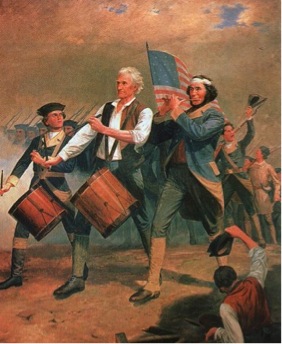
2. When the status quo of colonial America was disrupted by a critical mass of disaffected individuals, that diverse and feisty group somehow came together around a set of principles and rules that was larger than their individual selfish interests, yet still served those interests, for the most part. Those principles and rules have held up well for 237 years, requiring tweaking by only 27 amendments (the first 10 comprise the “Bill of Rights”) from 1791 through 1992 and one terrible civil war to correct a grievous error of political compromise in the writing of the Constitution, namely the acceptance of slavery. The resulting rules and principles, along with the public acceptance of them, are largely the reasons we don’t behave as a nation like Syria, Argentina, North Korea, or many other nations you might name (not that we are perfect as a nation). So, happy Fourth of July to all of us. (Painting by Archibald MacNeal Willard c. 1875. “The Spirit of ’76. Location: Abbott Hall, Marblehead, MA)

3. What will the future hold for us and other nations? Can we go for another 237 years? This matter of contingency and possibility depends on far more things than I can understand, but whatever plays out will follow a Darwinian path that some might call survival of the fittest.  This, of course, requires military fitness, but that by itself alone works only in the short run as demonstrated in ancient Egypt, Rome, the lands of Genghis Khan, the Spanish Armada, the Third Reich, etc. A national military needs to be balanced by a civilian representative government to best serve its citizens and stakeholders, including its neighbors. Citizens must have education and opportunity within a stable and fair environment. Somehow, we have managed to get this fairly right in the United States, and we hope the model is gaining worldwide traction.

4. Darwin is credited with understanding how a multitude of tiny variations tweak the descendants of a species over time so that some descendants better fit a future environment that is prospectively unknown. Conventional wisdom is that these tweaks are genetic mistakes.  In reality, however, they are hardly mistakes but intentional programmatic gambles on the future. Nature tries to provide a diversified portfolio of options for each tomorrow. The source of that intent is our greatest mystery. Scientific inquiry, mankind’s useful tool for comprehending the world, has proven the opinion of James Ussher in 1650, namely that the world most likely began in 4004 BC, was somewhat off target.  Everyone is entitled to his or her opinions and we have to credit Ussher for trying to be as precise as he could using the best evidence he had available. Better evidence today tells us that the known universe dates back to some sort of big bang 13.792 billion years ago. Since then the world on any given day has been a matter of contingency and possibility, driven by and resulting in neverending change.

5. Contingency, a noun, is a rather ephemeral (transitory) concept. Like happiness it describes a state of being, but the particular state depends on other things happening or having happened. A contingency may be an event that is neither certain to occur, nor certain to not occur. It depends on some thing. Possibility is an essential part of human happiness. More fundamentally, it is the reason the world exists, starting with some fundamental energy that led to space, time, and matter. For us, in our narrow playground of human interest, the possibilities that human imagination has created are what allows us to control parts of the world and procure better futures for ourselves and our children. Humans turn imagination into reality. That imagination may be small and immediate, or it can be grand and play out over years or generations. We talked about how imagination extends reality two months back in the discussion of Claude Shannon. Dreams and fiction can quickly transform into truth. Look at what a century of science, technology, ingenuity, industry, and government did to the fantasies of Jules Verne.

6. I’ve strayed far from my field and department, so forgive this riff on the Fourth. We are now entering a new fiscal year, approaching a new academic year, and are stepping into a new era of health care in the USA. The world of academic medicine is contingent on the expansive and expensive new possibilities of health care, the changing world economy, and the emerging realities of recent governmental legislation. The world in which our trainees will practice is rapidly taking shape and it will be quite different from that we have known.

7. Our new PGY1s are in action and our new chief residents are on the home stretch, finalizing their plans for next year.  The training cycle for our immediate residents is 5-6 years, but many (last year all of them) take additional training in terms of fellowships to prepare for the contingencies of tomorrow’s urology. It’s interesting to me that we are producing only a few more finished urologists per year in this country as were produced when I completed my training. Many people today argue that we should be producing many more, considering the evolving demographics of the world. Yet, in my years of evaluating electronic billing records for the ABU certification and recertification candidates, I found this country seems to have plenty of urologic manpower for the actual urological surgical “work” in terms of operative cases that require a well-trained urologist. What keeps our 14,000 or so practicing urologists in the USA busy and compensated is largely the office work and small cases that fill their days. So thus we seem to have a conflict between the needs of the public, the free market, and the needs of a profession.

8. Cicada

Cicada mania is sweeping the East Coast with Brood II of the 17-year swarm popping up. It is a great curiosity of biology and example of contingency and possibility that some species have 17-year cycles and others have 13-year cycles.  For some Darwinian reasons the eggs they lay and grubs they become stay underground for these cycles and then appear in such abundance that they overwhelm the unprepared predators for enough cicadas to mate and deposit enough eggs sufficient to keep their game going. I remember the last major Michigan cicada brood swarm in 2004. The tree in our back yard, where I photographed this fellow back then, is gone since we had to chop it down when our deck was replaced. It seemed useful to turn the tree into logs that kept our home warmer for a few winters, although that process moved carbon from our back yard to your atmosphere. The yard was a noisy place in the summer of 2004 and those strange creatures with red eyes were all over the place. That Michigan cicada cohort, Brood X, will be back in 2021.

9. Michigan Urology was different back in our last cicada year. We were smaller, having grown from a little division of the Surgery Department just a few years earlier when we gained departmental status under Jim Montie in 2001. When the brood hatches next it will occur in 2021 – the world will be even more greatly changed. By then the Accountable Care Organization model may be gone and MiChart may be recalled as an awkward federally mediated experiment of the past. I bet a few oddballs like me will still be using 3×5 cards and some sort of pencil or ink to keep track of their patients in addition to the next generation electronic health record (EHR) that possibly may be wonderful and intuitive allowing deep archiving, prompt communication at a national level, and full storytelling in a limited number of optical fields.  Electricity, however, will be more expensive and likely less reliable.

10. Is Moore really less? Moore’s law is the observation that, over the course of computing hardware history, the number of transistors on integrated circuits doubles every two years. Derivative from that is the idea that computing systems get equivalently smaller and cheaper in that interval. However, the smaller and cheaper idea may work at the end user level, but the large data bank farms with their requisite temperature control systems seem to more than offset the elegant capacity, tiny size, and minimal energy needs of your smartphone.  By 2030 Planet Earth will have enormous energy hunger and we will be close to tapping out known oil and gas reserves, plus we will probably have “fracked” everything frackable.

11. Part of my gripe with the expensive, primitive, and encumbering electronic record system we were forced to buy and implement (for quarter of a billion dollars here at UM) is that it is not easy to find the story of a patient. Many visual screens disperse the parts of the story so no single optical field is likely to capture the key elements to understand it quickly. The “filtering” systems can create individual idiosyncratic overviews, but no useful generalization has been found for the 2000 practitioners at UM. It is largely left to each of the 2000 to figure it out themselves. I have found the company unhelpful with my implementation. The expensive and plentiful subcontractors we employed a year ago were clueless regarding the needs of our clinicians’ workflows. To add insult to injury we found that the system we purchased couldn’t “talk to” the same company’s system in Kalamazoo, where some members of our department also see patients (“that would require a special upgrade” – but wasn’t such broad inter hospital communication one of the main points of the federal EHR regulation?). Many of us wondered how it could be that very obvious and basic problems we encountered in our EHR implementation that affected daily workflow, patient convenience, and physician efficiency were not experienced by other health systems that purchased the same system. Obviously they were, but any learning that must have occurred was not translated to us in Ann Arbor. We were told that such things were “proprietary.” Anyway, time to stop griping, today’s EHR is what it is. Our workflow, at least mine and much of what I see in our department and others, is noticeably slower, more painful, and more distant from the actual patient.

12. I recently got a new car. A Ford product from Joe Sesi. The cost was pretty much the same as the cost per physician of the mandated EHR. However, my car is not just an amazing manufactured product that also contains a huge amount of software and complex, yet interactive, electronic systems. Customer service, from Darin Ballenger the salesman, Joe Sesi the dealer, and Ford nationally (by direct phone line to a person) is terrific and ongoing. Anything I need help with in terms of the car mechanically, its software, or my understanding of its operation is readily available from any or all three of those resources from the source. Ford gets it.

13. Workflow is important in health care. If it is efficient, lean, and value-stream oriented it is most likely to give satisfaction to all stakeholders and less prone to error.  As human beings imperfection is part of our reality – to deny this is to step away from reality. Yet, as good and conscientious health care providers (or citizens, for that matter), we want to minimize errors, especially grievous ones.

14. It is a naïve supposition to assume that any electronic medical record can or should capture all of the myriad facets and transactions in the work flow of health care. An interesting paper in the Journal of the American College of Surgeons (“30-day outcomes support surgical safety checklists” by Bliss, Ross-Richardson, Sanzari et al JACS 215:766, 2012) illustrates this point. The authors arranged for surgical cases to be monitored for “safety-compromising events.” In 73 surgical cases they observed 511 such events. My point is that those 73 cases must have also included literally thousands of other “events”, transactions, or interactions that went well. Many interactions between patient and someone in the health care system are routine and some are very complex. However, it is the nature of health care that even routine transactions such as moving or positioning a patient, afford opportunities for error or damage. No system, EHR, or checklist can shelter a physician from the ultimate professional responsibility and perpetual anxiety to “first do no harm.” I fear, however, that a generation of commoditized health care providers will come to believe they are so sheltered from that personal responsibility if they follow guidelines, observe checklists, and dutifully type in their parts of the EHR.

15. We once criticized physicians (often ourselves) who got so wrapped up in numbers and systems that they began to mistake lab tests or pathologies for actual patients. Thus a resident in clinic might go from “a small renal mass” in one room, to a “high PSA” in another, and then take a consult for a case of “unexplained hematuria.” This could be called a matter of statistical physiognomy in which clinical data replaces the “face of a patient.” Today’s new iteration of this error is the substitution of the computer screen for the actual patient, an error we might call “LED physiognomy” or the “meaningful use avatar.” I believe Michigan Urology residents, faculty, and Nesbit alumni graduates will not fall easily into that trap. What distinguished Cabot, Nesbit, Lapides, and our faculty and trainees who followed, was their ability to see beyond the limitations of their colleagues, economics, and systems of their times so as to deliver innovative urologic care, thoroughly integrated with education and scholarship. Statistical and LED physiognomies are the false deities of our era. They may be alluring traps for some medical geeks, but they are certainly bogus.

16. chief residents

Our graduating chief residents Ray Tan, Jon Ellison, George Schade, and Gareth Warren with Lora Allen who was recognized by the residents for doing a great job as residency coordinator.

Chief Residents Dinner

As I looked at our graduating class of 4 residents and 1 fellow during the dinner we held for them at the Michigan Union last month I saw the best of the best of the next generation of urologists, who will lead the way in our field with the tri-part mission implicit in our art and science. That is to a.) care for patients kindly, well, and innovatively; b.) integrate education thoroughly throughout that care, thus training the next generation of physicians; and c.) expanding the conceptual basis of our field including the systems of health care delivery. Michigan did it well for this class just as has been the case for a long line of classes back to 1926.

17. Michigan Men’s Football is one of our key funding vehicles for prostate cancer research. This idea derived from Jim Montie and Dave Brandon and is dependent on the generosity and enthusiasm of the football coaching staff and our participants.  We had a terrific two days in June with 58 participants and some 21 coaching staff. We will have room for twice as many participants next year and hope many of our readers will either participate or generously send someone out on the turf.

18. campbell faerber

The McGuire Professorship was inaugurated in June and Gary Faerber was installed as its first recipient. Pictured above from the ceremony are Brian and Mary Campbell with Gary.  Brian and Mary among a number of other friends, faculty, and Nesbit alumni helped fund this professorship.  Gary was trained by Ed, had been our Residency Program Director for 10 years, and is Associate Chair for Education. He is a “urologist’s urologist” and is always among the first to take on another patient in need and add to his clinic or OR schedule without so much as a grumble. Ed McGuire’s mark on Michigan Urology is indelible. He was a perfect and most worthy successor to Jack Lapides and impacted a generation of residents and fellows, thousands of patients, and the basics of urologic knowledge.  Ed retired last month and is now an Active Emeritus Professor.  Ed has held the Reed Nesbit Professorship and we will ask the Regents if it may go to Julian Wan, one of Ed’s early residents, and much like Ed and Gary, a versatile “stand-up” urologist, an innovative thinker, and an essential citizen of our department.

Wan McGuire

19. Last month we wrote about the importance of medical journals insofar as they take new ideas, vet them through the process of peer review, and publish them for inspection. The peer review part requires thoughtful and generous peers to review submissions, and in this respect some of our faculty really excel. Bill Steers, the Editor of the Journal of Urology, recently sent me a note telling me that 5 of our faculty were among the handful of reviewers honored this year by the “Best Reviewer” Award. I am in awe of these five, who accept and review, with clarity and promptness, a large number of manuscripts each year. My hat is off to Quentin Clemens, John Hollingsworth, Kate Kraft, David Miller, and Julian Wan.

20. Last month our internal weekly “What’s New” profiled Khaled Hafez in the Division of Endourology, Corey Longley the development officer for urology, and an update on the Neurourology and Pelvic Reconstructive Surgery Division directed by Quentin Clemens. Website: http://www.med.umich.edu/urology/about/MonthlyNewsletter.html.

21. This will be our seventh year for the Chang Lecture on Art and Medicine in which we honor the extraordinary Chang family who link Chinese art and Michigan Urology.  Dr. Richard Prager, Professor of Cardiac Surgery and Head of the Section of Adult Cardiac Surgery at the U of M, will present “Art as an Expression of the Human Condition” on Thursday, July 18 at 5:00 PM in the Ford Auditorium of the University Hospital.  We hope to see many of you there and a reception will follow. Friday, July 19 is the Duckett/Lapides Lectureships from 9:00 AM-12:30 PM in the MCHC Auditorium. The visiting professors are Dr. Thomas Kolon, Associate Professor of Urology in Surgery from the Children’s Hospital of Philadelphia (Duckett) on “Cryptorchidism and Germ Cell Preservation” and Dr. Wayland Hsiao, Assistant Professor of Urology at Emory University School of Medicine (Lapides) on “After childhood fertility preservation, what are the state-of-the-art options.”

22. While the faculty and residents are at the lectureship the staff will have their annual training and education day from 8:00 AM to Noon at the BSRB. We welcome back Brian Blasko, a highly motivated, nationally known speaker and trainer, who will present The Car Key Factor in Creating Your Comfort Zone With Communication.  The afternoon is free to enjoy the Art Fair as our annual “birthday” present to our staff (recognizing that a few will have to stay behind to cover phones and emergencies).

Best wishes, have a wonderful 4th of July holiday, and thanks for spending time on What’s New this week.

David A. Bloom, M.D.

The Jack Lapides Professor and Chair

Department of Urology

TEL: 734-232-4943

Email: dabloom@umich.edu
What’s New May, 2013

Michigan Urology Family

The Shannon number & retrograde thoughts

  1. May greetings from Michigan Urology. We are getting very close to fiscal year 2014 when many of the changes in health care due to the Affordable Care Act will be set into motion. Even without this act, American health care has been changing substantially due to the effects of the mandated electronic medical record, soaring costs, coalescing health care organizations, expensive new technology and drugs, escalating regulation and bureaucracy, as well as a new consumerism.  That last item, new consumerism, is the result of many influences of social media and 21st century human psychology expressed in direct-to-consumer advertising (for prescription drugs, specific bits of medical technology, individual heath care entities) as well as optimized web-based search engines. Little of this is good for the care of patients, the care of populations, the rational use of health care dollars, the profession of medicine, or health care education.
  2. At serious risk is the academic health care organization such as ours.  Our niche is precarious and there is little positive transformative change on the horizon. I expect some academic places will fail to negotiate that impending cliff, but I hope Michigan Urology will do as we have done in the past – that is to continue “to lead and be among the best.”  That will take transformative change from within our organization, emanating from our smart, creative, and engaged workforce of faculty, residents, health care providers, staff, researchers, alumni, and friends of the department. That change will also test the limits of our philanthropic base (good as it is) and our ability to generate a positive financial margin in the constrained fiscal years ahead.  But, I believe in the power of human imagination, especially in our department.
  3. Let me call your attention to the recent 97th anniversary of the birth of Claude Shannon (April 30, 1916 – February 24, 2001), the source of the concept of the Shannon number. Shannon, considered the father of information theory, was a Michigan Man. He was born in Petoskey in 1916, graduated from Gaylord High School in 1932, and got his B.S. in mathematics and electrical engineering from The University of Michigan in 1932. He traveled to MIT for a Ph.D. in mathematics in 1940 and then went to work at the famed Princeton Institute for Advanced Study. During WWII he worked at Bell Laboratories on matters of importance to the war effort, including cryptography. Shannon worked side by side with some of the best minds in 20th century science and had an enormous influence in creating the modern world of communications.
    Shannon
  4. A paper he wrote in 1950, “Programming a computer for playing chess”, is the source for the concept of the Shannon number. This represents the number of different possibilities in chess, that is the number of different possible games of chess. The number is said to be 10 to the 10 to the 50th power (1010 to the 50th).  I couldn’t put this into Microsoft PowerPoint as I can’t figure out how to do a double superscript. Anyway, it’s a huge number. Now, somewhere I’ve read that the number of atoms in the observable universe is 1087.  Whether these numbers are precisely true or not, they provide a great metaphor for the idea that human imagination (even just the tiny example of chess!) is far greater (numerically) than physical reality (particles in the universe).  Consider the thought that if chess offers such great possibility, what about language – and which language? What about basketball games? What about musical compositions? Human imagination is a whole different dimension beyond the three that we normally consider traveling through time and space. Human imagination is infinite.
  5. We had a faculty retreat late in April that centered around an analysis of our Urology Department’s clinical footprint.  Michigan Urology began and flourished in a public medical school that was created to teach the next generation of physicians for what was then, in 1850, a young state in a growing nation. Since then it has gotten more complex to produce that next generation of practitioners, going from a mere 2 years of classroom instruction in 1850, to 4 years of medical school that included laboratory investigations plus bedside instruction by 1890. Now 120 years later those 4 years of medical school are only a prelude to the residency and fellowship training that can add up to another 10 years of clinical and research experience to produce that finished product of “the next generation of medical professional.” Some medical schools, such as the University of Iowa that I just visited, have broadened their educational portfolio to include Physician Assistants (PAs) in the medical school cohort, resulting in a very high quality PA. At a place such as ours, it seems right to have such an ambitious educational portfolio, that is to want to produce the leaders and best of all important parts of the health care work force. We also must come to understand that in health care there is no such thing as a “finished educational product.” We and those we have trained must always be watching, learning, and changing. Of course, that’s hardly a new idea – people have been talking about the “practice of medicine” for hundreds of years.
  6. All this is to say that the point of my mini-sabbatical studies, the point of my “A3 analysis” with its sequelae that will unfold, and the point of the faculty retreat is that in this world of rapid change we need to understand the potential of the Shannon number and imagine a different future for the way we deliver, teach, and investigate health and health care. In concrete terms, the A3 analysis leads to the conclusion that we must understand, deconstruct, and reconstruct our clinical operations with a “value-stream” mentality. Everything we do (all of our clinical processes and “products” such as the patient’s call to the call center, the new patient visit, the diagnostic procedure, the inpatient experience, the clinical trials, patient educational materials, etc.) need to be inspected, recrafted for better value to the individual patient, recrafted for better value to the other customers, made leaner, and thoroughly integrated with innovation and education. This work will be best performed by those closest to each product and process. The possibilities are endless as Claude Shannon might have predicted. Although we are already late in the game in starting this, our first step is the engagement of the work force of Michigan urology and the belief in one unifying simple essential deliverable.
  7. Above all our analyses, mission statements, visions, goals, plans, and strategies I found from the discussions with faculty and staff, and from the A3 analysis, one single unifying idea. You might call this our essential deliverable. This is why we come to work each day, it is what the public expects first and foremost, and it is most likely a very central aspiration of most of us in the department whether clerk, MA, nurse, PA, NP, administrative assistant, physician, resident, fellow, statistician, or researcher. I believe the essential deliverable of the University of Michigan Department of Urology and its faculty and staff individually is KIND AND EXCELLENT PATIENT-CENTERED CARE THOROUGHLY INTEGRATED WITH INNOVATION AND EDUCATION AT ALL LEVELS.  If we get this right, everything else will follow.
  8. Two books I read on my mini-sabbatical caught my attention. “Intuition in Medicine” is a rather dense read and it sent me back to the dictionary many times. The author, an MD and Ph.D. named Hillel Braude gets into the mechanisms of reasoning, namely induction, deduction, and a process he calls abduction. The other book, called “Justice for Hedgehogs” (by Ronald Dworkin) intrigued me because I’ve long liked the idea that people tend to be either foxes or hedgehogs in terms of their reasoning as to how the world works. The idea was popularized by the great thinker Isaiah Berlin, who attributes it to a thinker from ancient Greece.
  9. Braude’s book had one great take-away concept for me, although that may not have been his central intention with the book. He introduced the idea of statistical physiognomy. Physiognomy is the archaic idea of looking at a person’s face and discerning their character. It is roughly analogous to phrenology whereby a physician could feel the shape of someone’s skull to diagnosis their illness. According to Braude statistical physiognomy is the implication that numeric data can be a surrogate for the actual patient. This is even worse than the classic metaphor of mistaking an actual patient for the disease.  The idea to me is that physicians first and foremost should look at, see, and talk to the patient. This was the concept that Michael Foucault called the “clinical gaze.” We should not confuse the patient for his or her disease. We cannot mistake a patient for a lab test. And today most especially we must not let ourselves substitute the computer screen and electronic medical record with the human being under our care.
  10. The author of “Justice for Hedgehogs”, Ronald Dworkin, was Professor of Law and Philosophy at NYU, but died just this past February. This is an amazing piece of work that focuses, as a hedgehog must, on one big thing. That big thing is something that concerns us centrally as physicians, but even more so it concerns us as generic human beings. The thing is simply and hugely “value.” The value that we seek in life encompasses truth, meaning, morality, justice, goodness, and freedom, to name some essential attributes. Morals are principles or habits that relate to right or wrong conduct that should be consistent. EO Wilson writes of the “biology of morality,” expressing the idea that these principles are built into us.  Whether built into us by means of evolutionary natural selection or breathed in at the time of Creation, is a metaphysical matter.  Physicians are assumed to have a strong moral sense, although we see it expressed in some degree of spectrum. Ethics are specific rules of conduct, that are defined according to some consensus and may differ for different groups. Thus the Hippocratic Oath outlines a set of 8 ethical rules for physicians. Maritime captains will share a somewhat different code of ethics.
  11. Dworkin, a legal scholar at heart, takes a very broad view of justice and links it fundamentally to something to which we all aspire – living a good and meaningful life. This is surely served well by that essential deliverable we discussed earlier. A phrase toward the end of Justice for Hedgehogs ties it all together well.
  12. Dworkin’s phrase. “But remember finally the truth as well as its corruption. The justice we have imagined begins in what seems an unchallengeable proposition: that government must treat those under its dominion with equal concern & respect. That justice does not threaten it expands – our liberty. It does not trade freedom for equality or the other way around. It does not cripple enterprise for the sake of cheats. It favors neither big nor small government but only just government. It is drawn from dignity & aims at dignity.  It makes it easier & more likely for each of us to live a good life well. Remember too that the stakes are more than mortal. Without dignity our lives are only blinks of duration. But if we manage to live a good life well, we create something more. We write a subscript to our mortality. We make our lives tiny diamonds in the cosmic sands.”
  13. The months fly by.  The current academic season is winding down as our chief residents prepare for their next steps and our incoming PGY1s prepare for “internship.”  Residents and fellows are the reason we exist as a department of urology – specifically, we are here to create the next generation of leaders in urology.  The context, milieu, or substrate for that education, however, is clinical care – which becomes the moral trump card for everything else on our plates at any moment. The best education requires the best clinical care – clinical care that is innovative if not at the cutting edge, clinical care that is safe, clinical care that is efficient, clinical care that is patient-centered, and clinical care that is kind.
  14. When the resident applicants come by in the late autumn for their interviews, I have been giving them a little slide talk about urology and the history of our department. The other day I was thinking about our “expectations” for residents and thought I’d add those thoughts to the slide show. What do I look for, and try to predict from their applications and interviews? It really came down to 5 things: character, drive, intellect, sociability, and productivity. As I made the slide it occurred to me that we expect no less of ourselves as faculty and clinical providers, research staff, and administrative staff.
  15. Our future as a department will largely depend on the intellectual and clinical productivity of our faculty in addition to the industry and success of our residents. I’ve been thinking about this a lot. My job is to optimize these things in an environment that is neither predictable nor even conducive to our work and ambitions. As a department, as a Faculty Group Practice, as a medical school and as a health system we try to learn from the best practices of our peers, from the academic community and from the business world. Amidst the cacophony of catch phrases of the day, we find some enduring concepts of value such as continuous quality improvement, lean process thinking, Gemba walks, SWOT analysis (strengths, weaknesses, opportunities, threats), and elimination of waste.
  16. David Spahlinger at our FGP retreat showed a TED Talk by Simon Sinek, and Fritz Seyferth at our 2012 urology retreat showed an excerpt from the film “Emperors’ Club.” These clips inspired me as they pulled my focus from the immediate and pressing issues of the moment to the submerged considerations of meaning and deep value in life. Modern daily life, especially in an academic health center, is complex and intense. But at the end of the day how do we integrate these central three things that ultimately matter most: a.) finding meaning in our lives, b.) supporting ourselves and families (– for most of us this means getting a paycheck), and c.) enjoying the day while planning for the future?
  17. Some of our best faculty have been asking the big “whys” of their careers and moved to other opportunities that we couldn’t match.  Ken Pienta is our most recent loss. While his primary appointment was in the Department of Internal Medicine, he had a joint appointment in the Department of Urology and in many ways was the intellectual epicenter of our uro-oncology research for more than 15 years. He has joined Johns Hopkins, which has enjoyed intellectual enrichment from its start – after all of its first 8 faculty in its medical school in 1893, 4 came from the University of Michigan. So Ken continues that great tradition of keeping that fine medical school in the game!
  18. From Ken. ”I am currently the Donald S. Coffey Professor of Urology and Professor of Oncology and Pharmacology and Molecular Sciences.  I serve as the Director of Research for the Brady Urological Institute at Johns Hopkins University.  My laboratory will continue to be involved in research to develop new therapies for prostate cancer through defining the tumor life-cycle utilizing ecological principles. We will especially be emphasizing the study of disseminated tumor cells as an invasive species to bone, and why they become dormant as well as start to proliferate in some patients.”
    Ken Pienta
  19. Ken’s new position is attached to the name of his beloved mentor, the inestimable Don Coffey who directed the urology research laboratories at Johns Hopkins. Don was a visitor here to Ann Arbor on a number of occasions and I especially recall one cold evening after a lecture and dinner when he and I drove to Borders Bookstore so I could get him a copy of E.O. Wilson’s mind-bending book “Consilience.” Both Wilson and Coffey have bent my mind most wonderfully. After conversations with them my head sometimes has felt a little soggy, as if edematous after over use, just as my inner ear feels after too much loud noise (Dads’ weekends at Indiana University with the Delta Gamma daughters visiting fraternity parties – my advice to the next generation of dads: carry ear plugs.)
    Picture 1
  20. I love this quote from Northrup Frye: “the human word is the power that orders our chaos.”  Words are more than just the tools of our communication, they shape our thought. One of my favorite words, retrograde, links astronomy and urology. Retrograde is a word of distinguished provenance having early been used, if not invented, by William Shakespeare who used it first in Hamlet (1599-1602) when Claudius tries to dissuade his nephew (and step-son) the prince from returning to school in Wittenberg, saying of that intent: ”It is most retrograde to our desire  –And we beseech you, bend you to remain –Here in the cheer and comfort of our eye…”  Later, in All’s Well that Ends Well (1604-1605), Helena says “When he was retrograde, I think, rather.”  Although a less memorable quote, Helena’s comment still gives a full sense of the term.
  21. Astronomy as a field also uses the term, most usually in relation to orbiting planets and their moons. Thus eight planets in our solar system orbit the sun in one direction called “prograde” (counterclockwise as viewed from the pole star, Polaris), while Venus and Uranus have retrograde orbits. Medicine did not embrace the term “retrograde” until after 1906 when Voelcker and von Lichtenburg described a happy marriage between Mr. Roentgen’s pictures and urology as they passed a cystoscope into the bladder, catheterized a ureter, and injected a contrast agent so as to “shoot” a retrograde pyelogram and visualize the upper urinary tract. When, exactly, “retrograde” was actually applied to this technique is a matter of further study for me.
  22. I bring this matter of words up, because of the use of the word “terror” recently, particularly in relation to the Boston Marathon tragedy of April 15.  Geopolitics and terrorist activities have brought the idea to the public that this tragedy was “an act of terror.” That term was first out of the gate in news reports and it may be coupled with this event throughout our attempts to bring the perpetrators to justice and thereafter in the historical accounts. The use of the terrorism card did allow full weight of federal resources (the FBI and federal attorney jurisdiction) to come into play, resources that undoubtedly are necessary to deal effectively with any crime on such a large scale.  In reality, though, the disruption of the marathon was fundamentally a matter of mass assault, battery, and murder. No political excuse can be accepted. No excuse of mental illness can be accepted. No excuse of cultural alienation can be accepted. These were petty hooligans who resented the good fortune and happiness of other people. Bomb-building allowed these small-time closet thugs to achieve 15 minutes of notoriety in the news media of the day, at outrageous cost to hundreds of people they never knew. This behavior is not compatible with civilized people, it is not compatible with civilization. It is retrograde.
  23. Health care is in the midst of a storm of epic proportion, although perhaps this will come to be viewed as a period of creative destruction. The meteoric effects of the federally mandated electronic health record may prove to benefit the greater good of mankind someday, although they mainly now seem to be benefiting the specific good of a few companies whose products (literally) fit the legislated bill of “meaningful use.”  I’ll leave retrograde thoughts to your imagination here.
  24. Most destruction is not creative. Now that we are in tornado season it’s wise to keep an eye out the window or on the media for bad winds and tipping points. On this day in 1999 a portion of Oklahoma City was devastated by an F5 tornado, killing forty-five people, injuring 665, and causing $1 billion in damage. The tornado produced the highest wind speed ever recorded, measured at 301 +/- 20 mph (484 +/- 32 km/h) and was one of 66 in the 1999 Oklahoma tornado outbreak that included the picture shown below on the same day near Anadarko. Storms of epic proportions are freak anomalies of the atmosphere, just like the retrograde anomalies of human behavior that created the tragedy we saw in Boston last month. As we study these anomalies imaginatively and robustly, we should come to understand them and predict them better in the future.
    images
  25. Facebook & Blog. A reminder that we now have a Facebook page, called (as you might have guessed) Matula Thoughts. We will try to post something relevant to Michigan Urology several times a week and would be grateful for any observations or pictures that you (Nesbit alumni, friends of the department, staff, health care providers, researchers, residents, faculty, or colleagues) would be kind enough to send me for inclusion. This blog will be the site for the global “What’s New” we send out at the beginning of each month, usually around the first Friday. Of course, comments regarding these present Matula Thoughts, will be gratefully received.

Best wishes, and thanks for spending time on “What’s New” this weekend. I hope to see many of our friends & alumni on Sunday at the Nesbit Reception in San Diego and will give you an update on that next month.

David Bloom,  Department of Urology, University of Michigan, Ann Arbor

What’s New April 5

What’s New April 5, 2013

Michigan Urology Family 

Looking at things – asteroids, racehorses, A3s, and other matters.

220px-Earth_and_2012_DA14_-_2013.svg

  1. I’m very glad to be back to work after my mini-sabbatical. What was I doing during this hiatus from day-to-day tasks? Mainly I was focused on an analysis of what I think is an existential threat to our department, specifically a gap between our current clinical footprint today and where our clinical footprint needs to be to serve the needs and aspirations of our department. The time away from our front office allowed me to take a 30,000-foot view of Michigan Urology. Plus I was able to read and think deeply, as well as to reflect and set a course for the balance of my term as chair. I’m appreciative to John Wei and our two other associate chairs Gary Faerber and Stuart Wolf as well as my pediatric urology colleagues who covered for me. I last had a mini-sabbatical at home in 2000, just before my 7 year interlude as Associate Dean. This time I went to Charleston, SC for 2 months. A friend visiting asked me: “What do you want to accomplish?” My answer: “Three things. One, I want to complete my A3 analysis of the departmental gap I’ve been worrying about. Two, read deeply, and three, come back with new energy and ideas obtained from one and two.” One small product of the time away had been this blog which will house our monthly “What’s New” broadcasts and offer a chance for your comments. On the table you can see the A3s in preparation –> IMG_5339
  2. Michigan Urology is centered on a four-part mission that we have been fine-tuning for a good number of years.  We recently hammered out a new version of our mission statement that considers the key components of education, clinical care, discovery, and leadership. Of course once we assume the responsibility for clinical care it then becomes the moral trump card that can displace any of the other parts of the mission at any given moment or day. The essential deliverable of our mission thus becomes patient care – kind and excellent patient care, integrated with innovation and education at all levels.
  3. The A3 analysis is a method from the Toyota Production System that I learned at our Lean Training here at UM and at the Lean Enterprise Institute in Cambridge, MA last summer when I attended with John Park. As a health system, as a Faculty Group Practice, and as a department we have been heavily engaged in these ideas and methods. The A3 (named for a size of paper on which one executes the problem solving) is an excellent method of analysis that is just as suitable to health care and academia as it has been for manufacturing industries. My A3 is titled: “Our clinical footprint is falling short of our needs and aspirations as a department of urology.” My reading list evolved into a talk for our Senior Clinical Management (SCM) Group and the A3 Report will be the subject of our Faculty Retreat on April 26. If you are interested let me know and I’ll send you a copy of the SCM talk. The A3 turned out to be one primary A3 and four separate “baby A3s.”
  4. History has much to teach us, it is sometimes greatly entertaining and stimulating, and it can be reassuring. For example, we have confidence in today (April 5, 2013) and the week ahead because history allows us to guess that a hurricane, devastating earthquake, or catastrophic meteor impact are unlikely. The guessing is not random, it is a matter of prediction or forecasting that depends upon data, analysis, and intuition. Of course we recall the recent hurricanes Sandy, Irene and Katrina, or winter storm Nemo, none of which came out of the blue – all were predicted reasonably well. However, this week and indeed the next few months should be free from hurricane anxiety. Charleston was hit by a devastating intraplate earthquake August 31, 1886 of an estimated 7.3 magnitude. History and science allow us to predict that a large magnitude earthquake is a 1-in-600 year event for Charleston (although a 1-in-30 year event for Anchorage, AK). Nearly everyone knows about the meteor impact that wiped out the dinosaurs and the 1908 meteor that flattened a forest 2/3 the size of Rhode Island in Tunguska, Siberia. Yet the world was surprised just six weeks ago on February 15 when astronomers were tracking a known asteroid called “2012 DA 142” (the size of a football field and a half) as it was about to pass within 17,100 miles of Earth. The surprise was that unexpectedly from another direction a different unknown asteroid (the size of a bus) slammed into our atmosphere (thus becoming a meteor) and exploded over Chelyabinsk, Siberia injuring over 1200 people. (Why Siberia so often? Is it just big, or unlucky, or both?) So, while history can give us some predictive confidence in the future, prediction is not necessarily reality or truth.
  5. cave_painting_V1_240x160 copyOf course, from catastrophe and destruction come novelty, innovation, and evolution.  An alleged meteor (10 kilometer or 6.2 miles in diameter traveling 30 km/sec) impacted off the Yucatan peninsula 65 million years ago) and caused a mass extinction that knocked off the dinosaurs giving evolutionary opportunity to small mammals, then larger ones including primates.  A few primates expanded the use of tools, communication, and imagination far beyond their predecessors and here we are. The artwork of our earliest forefathers, dating back nearly 30,000 years, is astonishing. The horse illustration shown above from the Cave de Chauvet, of which I’ve spoken here before, is a prime example. What was the ancient artist trying to communicate? To my eye it seems to be horses in motion, although the artist was clever enough to achieve that sense without showing the legs of the horses. Horse racing is a beautiful thing and an evocative image. Organized horse races might have been a wild dream for some of those cave dwellers – the idea of controlling wild horses and holding a race must have been a wild fantasy at first, but it soon became reality soon after the first horses were domesticated.  Imagination, innovation, team play, and leadership over the millennia that followed brought that dream and hundreds of thousands of other fantasies to fruition.
  6. The silver lining of the great meteor and mass extinction took more time to play out than you and I have at hand so in our short-term view a big meteor slam would be very bad news. Extending the possibilities of natural disaster a bit more, one could argue that the seeds of our potential destruction could come not just from out of nowhere (asteroids) or from within (earthquakes). Equally destructive disaster can come laterally from our atmosphere (hurricanes, tornados, and tropical storms).  In an analogy for Michigan Urology the asteroids might be the world and national socioeconomic threats, perhaps even reflecting the sequelae of climate change. The earthquakes might be internal disruptions and instabilities arising in our university and health system. The atmospherics could be construed as turbulences within our department. If our powers of forecasting and prediction were better for asteroid impacts, earthquakes, or the weather we could take that information to the bank and craft strategies and tactics to protect ourselves. If my own predictive powers were better I could guarantee protection of our mission.
  7. Most mission statements throughout our medical school and health system are tripartite, beginning with our founding educational mission as a university and as a medical school. Of course great education must begin with self-education and discovery, thus discovery and research are surely part of our mission. Furthermore, unlike many other types of education, medical education cannot be separated from its practice. Within only 19 years of its founding, the University of Michigan Medical School realized that it needed a hospital to stay ahead in the game of medical education. Thus UM became the first university to own and operate a hospital, which has today become a multi-billion dollar health system. Medical education at Michigan began with a single “product” of the MD,  but it soon came to include residency education that today is the career-defining element of medical education. While we have around 650 students in our medical school we have over 1100 residents and fellows training in our health system at any given moment.  Somewhere along the line, UM picked up the slogan “leaders and the best.” This is really more than a slogan, it is a fact attested to by our history and our present belief in our medical students, residents, and faculty today.  So it seemed proper and fitting to add leadership to our mission statement as a fourth attribute.
  8. Gimcrack detail copyLeadership implies a contest or race, something of interest to our species since our earliest days. Of course we can never know anything of the life of that artist in the cave in what is now southern France, but he had a sharp eye and keen talent. This next painting shown is a detail is from a work by George Stubbs in 1765 of the horse Gimcrack on Newmarket Heath. Stubbs was then considered the greatest painter of horses. In the century after Stubbs, the understanding and representation of equine motion was no different, as this second race scene, by an artist named Charles Newdigate, shows (courtesy of the Edmondston-Alston House, Charleston, SC).         DSC_1585
  9. While our senses are pretty good at showing us how the world works, they are not perfect. Technology has given us more information. For example, Steve and Faith Brown, UM Fans extraordinaire, gave me an amazing book on the eye and art that got me thinking about art and illusion (“The Artist’s Eyes” by MF Marmor and JG Ravin). This led me to recall the groundbreaking photographic studies of motion by Eadweard Muybridge (1830-1904). Until his stop-action photos of a horse running, we humans had absolutely no idea how horses actually ran. Their gallop was too fast for our brains to sort out the position of their feet at any instant and at that airborne moment in particular.  Stubbs, Newdigate, and the rest of us consistently imagined the airborne moment inaccurately with the horse’s front legs extended forward and rear legs extended backwards. In 1872 Muybridge settled a bet for Leland Stanford and came upon the truth.
  10. Muybridge was born in Kingston-upon-Thames in England and emigrated to San Francisco, still the Gold Rush Capital, in 1855 becoming a successful bookseller. By 1867 he had become a successful photographer. In 1872 the former governor of the state, Leland Stanford, asked Muybridge to help him settle the question of whether all 4 feet of a horse were simultaneously off the ground while galloping. Stanford believed in the controversial idea that horses were capable of “unsupported transit.” The resulting photographic series of Stanford’s horse, Occident, not only proved the contention of unsupported transit, but also showed that at the unsupported moment during gallop all four legs were collected under the body rather than extended ahead of and behind the body as had been commonly represented in art. Stubbs and Newdigate’s work was terrific for their times, but artists can do better today, in terms of accuracy and representation of reality.Horse gallop copy
  11. Things that we have accepted and that worked well enough in the past, can be improved. In the world of health care many things must be improved as they no longer fit the changing world. How can we better understand patient care in terms of value stream analysis? What are the essential transactions of health care delivery and how can we improve them?  How do we standardize our clinical transactions without losing the professionalism of medicine and commoditizing the doctor-patient relationship? How do we better understand our other customers of health care – those parties beyond the patient such as the referring physician, the patient’s family, the third party payers, the patient’s employers? How do we eliminate waste? How do we make each and every clinical product rewarding to the patient, consistent and efficient? (What do I mean by clinical products?  These include that very central and essential interaction after the doctor closes the exam room door to talk to and examine the patient, but also informational web sites, the conversations with the call center, the check-in process, diagnostic procedures, operative procedures, consultations with colleagues, the consoling of a family, etc., etc.)  These matters need our immediate attention. Our clinical products are not as good as we have thought they are. Our attention, already spread thin, is being squandered by political-federal shenanigans, wasteful electronic medical records, bureaucratic claims processing, and the heavy footprint of corporate medicine among other ills.  We must reconstruct healthcare nationally – but that remains to be seen and is beyond my job description.  We can, however, reconstruct it locally in our own department.
  12. Let’s take, for example, the new patient visit and deconstruct it so as to reconstruct it. We have each developed and individually come to cherish patterns of clinical performance based on our teachers, role models, and personal experiences. But how sure are we that our performances and systems are equally cherished by patients. How consistent and efficient are we? What worked well enough in the past is unlikely to be the best in show of the future. So for the new patient visit, what are the 5 (let me pick arbitrary boundaries) initial greetings and ice breakers that patents value most? What is the typical “structure” of a new patient visit, what are its elements?  How can you be assured consistently, that patients have their questions addressed and fears allayed? What is the amount of “speaking time” that patients need in a typical visit – have you thought about that and how can you consistently create that? How do you structure your recommendations and plan? How do you hand off the patients to medical assistants, residents, nurses, or check-out clerks? What about the summary letter – does it clearly serve the needs of patient and referral physician, or is it an ugly, lengthy and formulaic computer-driven piece of epic nonsense? However, you answer these questions, it is beyond doubt that we can improve our game, make it more valuable, kind and consistent for patients, and eliminate waste.
  13. Life is short and we want to spend it valuably. This is as true for providers as it is for patients, and of course all providers at some times will become patients. In health care we want to do things well, efficiently, and valuably. Yet value is something that is ultimately very personal. Value is in the eye of the beholder. Economic value is a measure of benefit from a good or a service. (This is not the same as price.) More broadly value can mean a fair equivalent, it can mean the perception of relative worth or importance, it can be a numerical value, or it can be a human value. Personal and cultural values are more difficult to define. Personal values inform our individual sense of what is good, useful, helpful, important, or desirable. In the aggregate of a team, community, or society a set of values emerges to allow a collective sense of what is good, useful, helpful, important, or desirable.  Value theory distinguishes moral goods from natural goods (such as physical materials). When we ask “what does the patient value?” we ask a complex question, but it is the central question.
  14. Health care is in the midst of a period of creative destruction. The meteoric effect of the federally mandated electronic health record may prove to benefit the greater good of mankind someday, although it mainly now seems to be benefitting the specific good of  a few corporations. We are still recovering from the steep initial drop in clinical productivity and are learning to practice within the rigid burdens of the new systems. The present creative destruction, however, extends far beyond the electronic record with other powerful acronymic meteors such as the SGR, GDP, ACO, along with manpower concerns, millions of new “covered lives”, millions still uncovered, unfunded mandates, the crime of health-care forced personal bankruptcies, impoverished states, national deficit, and the impotence of partisan gridlock. Whew! There’s a lot on our health care plate. Our best response is really not a matter of stepping up our game, rather one of changing our game. I hope my A3, the A3s that follow, social media integration now in the works, as well some experiments to retool our clinical products will give us a leg up (like all 4 legs of the racehorse Occident) in this new world that’s upon us now.
  15. Department notes. I returned to the front office of  a changed Michigan Urology. John Wei has done a yeoman’s job of dealing with the daily work. We did experience a big loss as our esteemed professor, Jill Macoska, answered the call of the University of Massachusetts to move her laboratory to Boston and assume the Alton J. Brann Endowed Chair as Professor of Biological Sciences. This is a huge and well-deserved honor for her and, of course as Bo Schembechler would have said: Jill will always be a Michigan Woman.Screen shot 2013-03-28 at 1.31.46 PM
  16. More department notes. Last week Visiting Professor Dr. Rosalyn Adam, Associate Professor of Surgery, Associate Director of Urology Research from Harvard Medical School/Children’s Hospital Boston gave a great talk at Grand Rounds on “Signaling Networks in the Bladder: Implications for Cancer and Benign Disease.”  Last month our internal weekly “What’s New” profiled Gary Faerber, Associate Chair for Education; an update from Stuart Wolf and Quentin Clemens on the recent Urology Joint Advocacy Conference (JAC) in Washington, DC; Division of Endourology and Stone Disease update; and John Stoffel in the Division of Neurourology and Pelvic Reconstructive Surgery. Website: http://www.med.umich.edu/urology/about/MonthlyNewsletter.html.
  17. Even more department notes. In the spirit of change we are putting a toe into the social media world and we now have a Facebook page “Matula Thoughts” and we will be putting versions of the monthly What’s New here on this blog: matulathoughts.org.

Best wishes and thanks for spending time on “What’s New” this weekend, and welcome to the MatulaThoughts Blog. I am grateful that others beyond my immediate team and family are willing to slog through these monthly “What’s New” essays. Naturally, my intent is to keep them interesting and your thoughts are welcomed.

David A. Bloom

First Post of Matula Thoughts

Reed Nesbit logoMatula Thoughts

Throughout the millennia of human history clues to predict the future have been highly prized, especially so when that future related to prognosis of disease and disability. External cues from the heavens, in the weather, via tea leaves, or with playing cards have played major parts in the prediction of health. The logic of using more immediate evidence from physical signs or bodily fluids was evident to early practitioners. Humans share the trait with most other mammals of daily personal interest in their urine and in situations of illness scrutiny of it was obvious. Hippocratic writings documented uroscopy, as it came to be called, 2500 years ago and over the ensuing centuries the practice attained imaginative prognostications as healers examined the gross characteristics of urine in flasks called matulas and speculated on the course of illness.  The visual image of a “piss prophet” gazing at a matula served as the main symbol of physicians in art until only about 200 years ago when the stethoscope replaced the flask as medicine’s badge of office.

We begin this electronic journal with a respectful tip of the matula to that original essayist Michel Eyquem de Montaigne who began his eclectic personal observations around  in 1572 when he was around 39 years of age. It is likely that Montaigne was well acquainted with physicians and matulas, as his father purportedly died of urinary stone disease and Montaigne himself began to suffer from them in 1578.

What impulses compel us humans to share our observations and thoughts may someday be revealed through the matula’s diagnostic successors such as the MRI and other marvels of imagination, but there is no arguing that those impulses are strong and prevalent in our species. This blog (finally, I have used the awkward term) is a new forum for the monthly email broadcast I called “What’s New” that I started in 2007 in our Department of Urology at the University of Michigan and with the help of friends have continued regularly since then.

These little spaces and sentences will be filled by things that a.) catch my attention and b.) I hope will interest some readers. For the most part this will be an alternative space and presentation of “What’s New.”

David A. Bloom March 26, 2013