Matula Thoughts October 3, 2014

Matula Thoughts October 3, 2014

Michigan Urology Family

Aspirations, bandwidth, clinical value, & existential epidemics.

3379 words, 12 items.

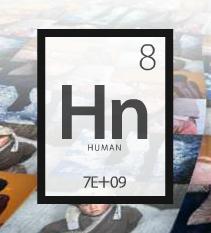
1. Human FactorWith the colder and less sunny days of October at hand, it’s refreshing to come back to this aspirational symbol that the Dow Corporation developed to describe what they call “THE HUMAN ELEMENT.” This implies something unique and emergent to our species. Mankind’s days, even on the cold and dark ones, are distinguished by human aspirations that extend beyond the basic drives, common to all life forms, of survival and comfort. Those of us with health care careers are especially compelled by the more complex human drives and aspirations that Adam Smith, Scottish philosopher and pioneer economist, noted in his book The Theory of Moral Sentiments in 1759: “How selfish soever man may be supposed, there are evidently some principles in his nature, which interest him in the fortune of others, and render their happiness necessary to him, though he derives nothing from it except the pleasure of seeing it.” Then and now, Scotland has been an important intellectual and economic part of the British Empire, although its days within the empire nearly ended just last month.

2. Tough days. Days are getting shorter by this point in the year and we find ourselves halfway to that time in the northern hemisphere when human optimism encounters its great celestial challenge from the shortest diurnal stretch of daylight. With the calendar now in its final quarter we can tally a good measure of notable human accomplishments for 2014, although these are counterbalanced by terrible existential threats for mankind including viral contagions and epidemics of extremist sectarianism. Ebola is likely to be a game-changer for civilization and the terrorism perpetrated by fanatic groups is no less horrific, although with less capacity to become global in a matter of days. Curiously both of these threats are infectious diseases – one due to a virus and the other an infectious disease of human thought. The responses of the civilized modern world to these contagions will set the stage for 2015 and thereafter. We have dealt with game-changing infectious diseases before and can overcome these new ones as well, but not without much pain and tragedy. A TED talk by the astronomer Martin Rees filmed in March 2014 touches on human existential concerns and well worth 7 minutes of your time, leaving you with both anxiety for our ultimate fate and optimism for the potential bright side of the human element [Rees. Can we prevent the end of the world? TEDGlobal 2014].


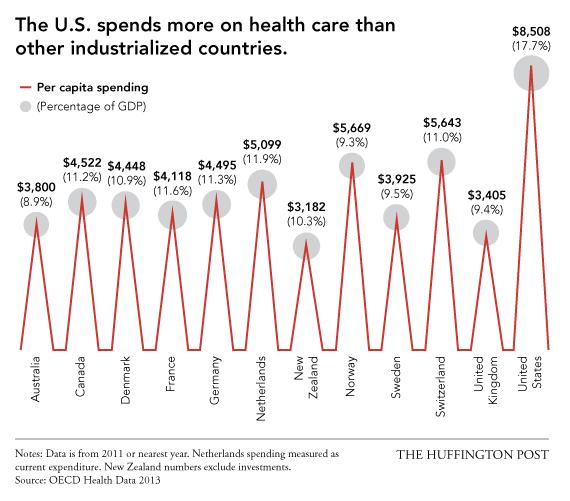
EbolaCycle-1

300px-Filovirus_phylogenetic_tree.svg

220px-Ebola_virus_virion

[Ebola cycle, family of viruses & the actual virus – from CDC]

3. Data & information. The positive side of the 2014 ledger to date must include the Second Dow Health Services Research Symposium we held in mid-September. The meeting focused on big data and its implications for health services research. While information may be sensory, narrative, or numeric, it is the numeric information that we call “data.” Big data is the current phrase for data sets too large and complex to manage with simple calculators, tools or traditional data processing applications. Detail about our symposium is beyond the scope of today’s message, so write me if you want a CD of the proceedings. I will come back in future months to the concepts of information and data, but let me cherry-pick a few highlights of the meeting at this time. Stewart Wang presented the amazing morphomics model he built out of big data to manage patients with major traumatic injuries. He also challenged analysts to consider “what is not there” in the data – for example the critical social element behind any information.  Jason Owen-Smith explained the importance of social networks to physicians and health care. John Ayanian discussed big data in health care reform. Charles Friedman talked about “learning health systems” and analyzed the Panama Canal as a complex project requiring many forms of data integration including that of social factors, political forces, and infectious diseases. He highlighted Dr. William Gorgas, the chief sanitation officer on the canal project, as the hero of the infectious disease mitigation necessary for success. Craig Sincock, CEO of Avfuel Corporation here in Ann Arbor, showed that a passionate human element is necessary to translate data and ideas into excellent execution of any job, or in the larger success of any business or organization. He explained how context counts; no one can know everything and a team with a diverse crowd of talents on board is able to solve problems far better than a team consisting only of a single set of skills and world-views. Caprice Greenberg spoke about models of learning and new concepts of experiential “student-driven” learning for surgeons to make personal progress on the “asymptotic curve of mastery” (Daniel Pink’s metaphor). While we are focused intensely on data, and big data is a current favorite bit of jargon on the center stage, it is only its interpretation and utility to the human element that gives it meaning and makes it matter. As Craig Sincock told us, and as his company Avfuel proves, it takes enthusiasm and passion to parlay data into meaningful and great results. The symposium was superb, so feel free to take me up on the offer of a CD.

4. Pictures from a symposium.
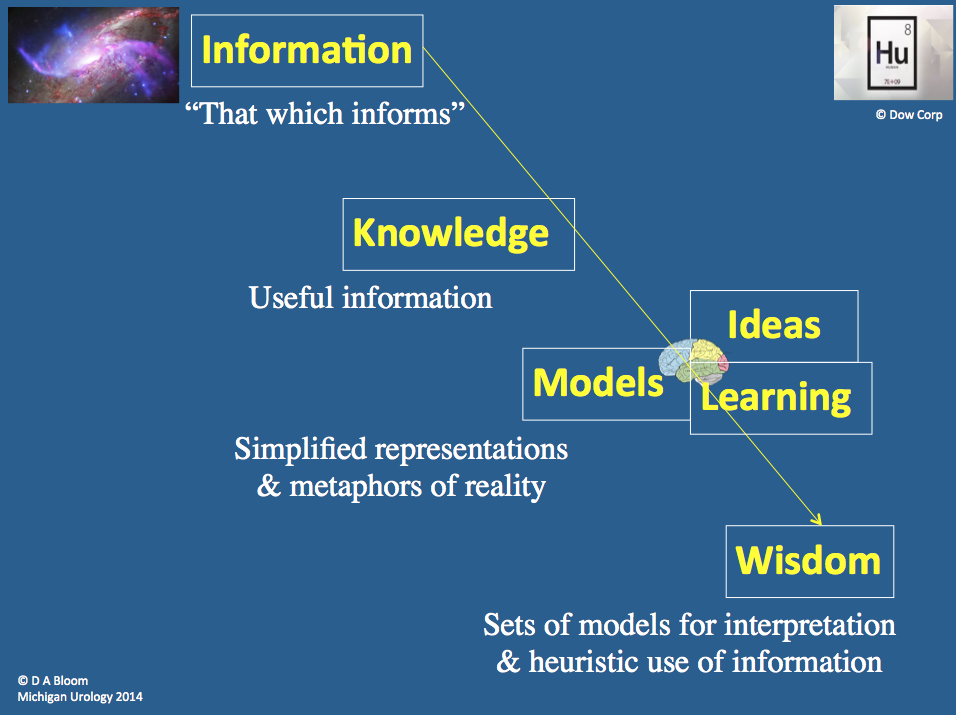
Knowledge

[My view of the information to wisdom highway]

Miller HSR

[David Miller addressing our second HSR symposium]

Back of room

[From the back of the room]

Wang etc.

[Dave Miller, Stewart Wang, John Gore, Khurshid Ghani]
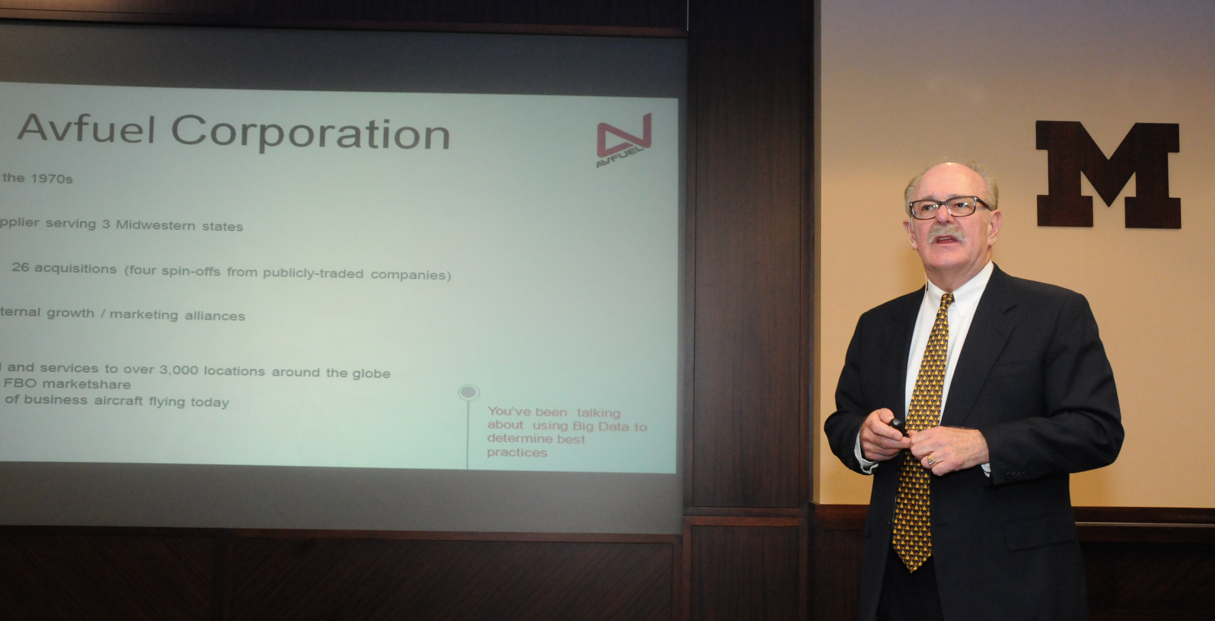
Sincock

[Craig Sincock, CEO of Avfuel, explaining how passion creates great performance from data]
Ayanian

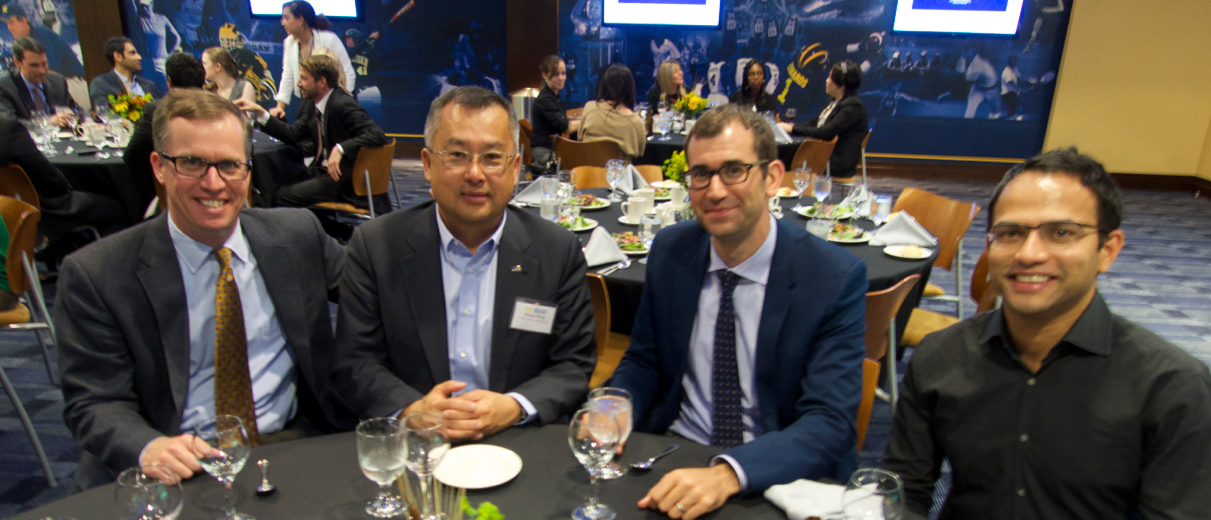
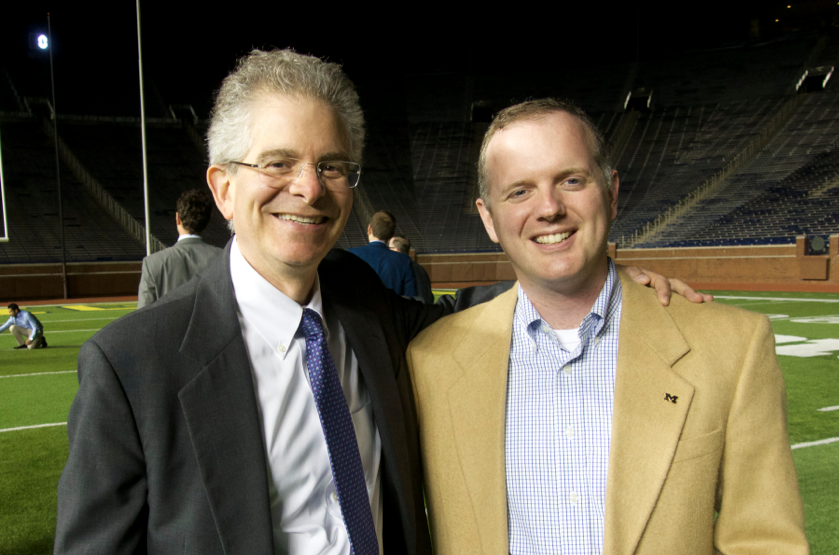
[John Ayanian and John Hollingsworth in the Big House after Craig’s talk]

5. Bandwidth. A geek might say that soon we will exhaust the calendar bandwidth of 2014. Actually, you and I use that term equally comfortably as it has moved from the world of techno-speak to the vernacular of nearly everyone. Such is the mutability of language, bandwidth now fills an essential niche in modern life. That linguistic space was previously but inadequately filled by terms such as attention or time. We often heard statements like: “You didn’t pay attention to me” or “I don’t have time for this.” These phrases carry the intended message, but wrongly imply a social shortfall of personal needs – the attention that I need or the time that I have. We have come to discover, learning through the technology that we invented, that the real problem is physical limitation – the width of our band – namely the limited capacity of our 8-pound cerebral neuronal network to manage the ambient information.
Shannon's Gen comm system

[Claude Shannon’s diagram of a general communications system c. 1949]

6. Attention pollution. Our brains have been hardwired over hundreds of thousands of years to contend with strengths, weaknesses, threats, and opportunities in changing environments. The parameters of change, however, were finite – limited mainly to feast or famine, cold or heat, predators or parasites, rain or drought, hurricaines or earthquakes, occasional eclipses, and rare meteor impacts. People interacted in finite ways and within finite social units. Complex civilization and modern technology now offer nearly infinite possibilities of change, including interactions with thousands of unwanted friends and linked-in pals. The information available to mankind today, evidenced by the Shannon number (see Matula Thoughts May 3, 2013 on Claude Shannon at matulathoughts.org) and Wikipedia, defines comprehension. Our wireless brains, like our home wireless networks, are limited by the physical constraints of our individual bandwidths. This is especially problematic for modern health care workers, particularly in academic medical centers with triple missions. The doctor-patient relationship has grown unbelievably more complex as the essential transactions of health care, including its educational, discovery, regulatory, and financial facets, now occupy most bandwidth of patients and providers. Personal bandwidth in clinical medicine is terribly crowded and we need to strip out the nonsense that detracts from the essential transactions of patient care. Attention pollution has become a quality and safety concern. Alarms from public address systems, bedside monitors, pagers, smart phones, fire alarm testing, and beepers distract from consistent thought and focus. Federally mandated electronic record systems have further diverted attention from the patient to the keyboard and created avatars of patients made from cut and pasted scripts, dot phrases, and drop down menus that are phony models for actual authentic patients.
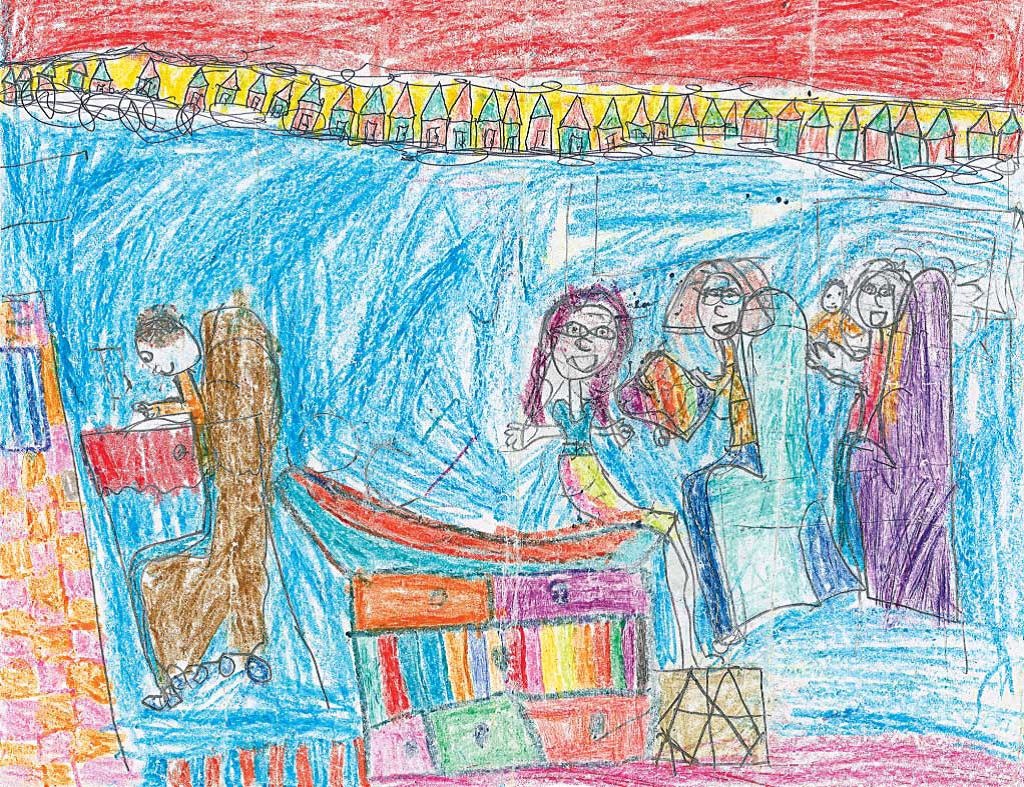
Crayon drawing

[again let me show this picture from Elizabeth Toll: The cost of technology. JAMA 307: 2947, 2012. © TG Murphy]

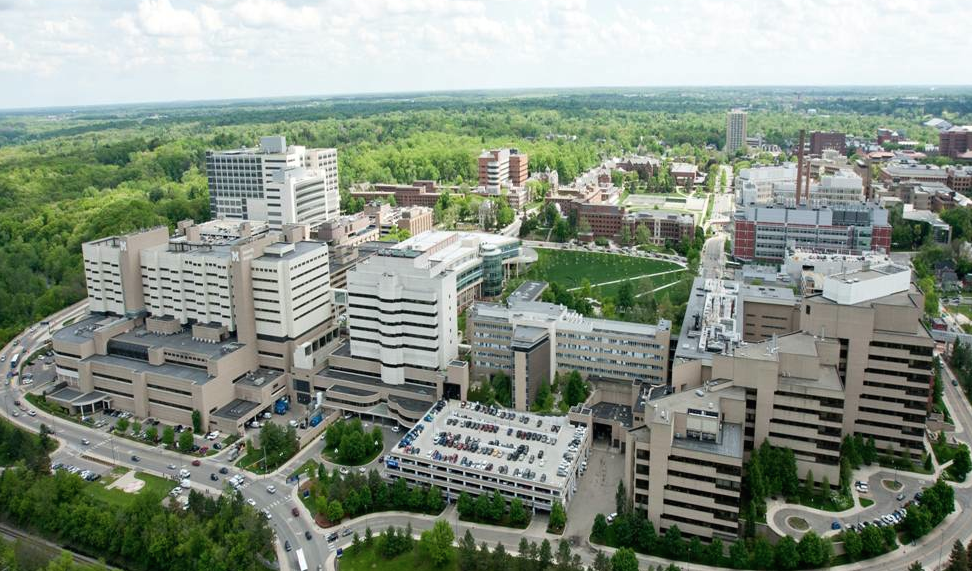
7. Screen Shot 2014-10-01 at 12.24.52 PMBig healthcare. We work in a complex and large environment that is short of physical bandwidth and attention bandwidth relative to the essential transactions of healthcare. Last month for the first time in history, our Emergency Department was so overwhelmed on one day that the clinical departments were asked to divert their emergencies to other hospitals. On many other days, it is a standing condition that our ICUs, operating rooms, and hospital beds are fully loaded such that transfers cannot be accepted or routine OR cases have to be deferred. On top of our facility overload we have to factor in the overload of individual bandwidth of health care providers by electronic medical record perversions, regulatory constraints, and all that noise around us. A new normal condition of professional attention deficit disorder is at hand. I was recently asked to bring two renal failure patients from other healthcare organizations into our system at Michigan. One pediatric patient was from another country  while the other was a local pre-transplant patient, the wife of a local business owner, and already a patient at a competing system of ours. I think I struck out on the first patient, trying with a number of calls and conversations to hand it off to others to make the connection and get it organized. Regarding the second patient, however, a single call to a colleague did the trick and brought her to UM where she now is in place waiting for next steps in her care.
In de-briefing the family, I rediscovered a few useful facts. Fact number one: most colleagues and services lines here at Michigan are reliable and even though not “hungry for new patients” they are hungry to help. Yes, our facilities and manpower are sadly insufficient for our daily clinical needs. More patients want clinic visits and more of them need operative procedures than our capacity easily allows. Faculty, at considerable personal cost, mitigate this mismatch every day. Too often it takes heroic deeds to solve trivial problems. This mismatch has existed for well over a decade, but it keeps getting worse. Why the mismatch exists is not a complex question. Our organizational structure and leadership(myself included) have not been able to match institutional capacity to accommodate daily clinical needs and seasonal variation.

8. Time. Fact number two: time is important to patients. This should hardly be a surprise, time is important to everyone. For someone facing a kidney transplant who wants to come to the UM, an entry appointment in 1-2 weeks is far more acceptable than one in 6 weeks, even if the actual transplant is not imminent. The time to first appointment for a new patient is a surrogate for “concern” or interest of the clinical service and its physicians (and by extension – “concern of the UM”). Fact number three: people appreciate preparation – and some visible evidence of preparation on the part of the clinician is another surrogate for “concern.” The husband of the second patient said they were quite satisfied with the first visit. My colleagues “squeezed” her into their busy schedules and saw her promptly. I asked what the negatives might have been with the visit (there are ALWAYS negatives – but unless we dig for them we may not understand them). Not wanting to seem ungrateful, the husband said that they liked our doctors and had enough confidence to transfer her care here. However, I could tell there were some negatives and asked what we could have done better. He said that one thing that had impressed him and his wife when visiting our competitor was that those physicians had looked at the notes and chart before they walked into the room. I confess that I haven’t always done this – my bandwidth seems to be pretty full even before I squeeze another patient onto my schedule. However, I believe I need to make this adjustment to make a semblance of introductory conversation that indicates familiarity with the issue at hand. Even cursory preparation allows me to walk in the room with necessary materials – for example if a new patient is a child with posterior urethral valves, I can walk in the room and say something like “I see from Dr. Jones’s note that your child has posterior urethral valves – and I have some reading materials on the problem for you. But first tell me from your point of view what’s been going on.” Patients usually hate to be asked: “why are you here?” (It may sound like – “Why are you bothering me?” to them.)

9. Time again. Fact number two again, we can’t overstate this: time is important. The other thing the husband reluctantly told me is that the visit took 7 hours. As a customer-oriented businessman, while very grateful to have been “squeezed in,” he thought 7 hours was “kind of” a lot more time than necessary. We have become prisoners to our systems and facilities and are not good at creating efficiency for ourselves and our patients. This is part of the so-called value proposition. I think we need to find a way to “concierge” our patients through each stage of care. At the UM we have somehow managed, through the design of our workflows and our facilities to squander time for both our patients and our providers. Other competitors, like the Mayo Clinic, long ago figured that the provider is a crucial rate-limiting factor in clinical care. So if you visit Rochester, Minnesota you see systems built and organized to maximize the efficiency of providers and maximize value to patients. Clinical value is largely a matter of time, perception of expertise, and ability to satisfy a patient’s needs. In my opinion patients want three main things: expertise, kindness, and convenience. The business school rhetoric may be that charges and true costs are key features of the value equation, but clinical value must be viewed from the patient’s perspective, which is rooted in time, perceived expertise, and satisfaction of expectations. We must find ways to mitigate these internal stresses and “self-inflicted wounds” in healthcare of our systems and mindsets because the external stresses are likely to increase.

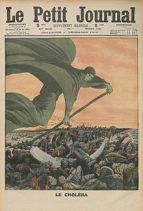
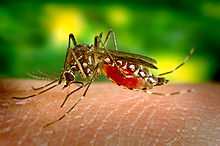
10. Infectious diseases. Among the external stresses we face in health care are the infectious diseases that shape the world. This is nothing new, for they have shaped civilization, individual nations, and even the University of Michigan. Two diseases are of particular interest. The university began its operations in Detroit in 1817, but had to cease operations several times in the 1830s, closing its doors because of raging cholera epidemics in southeast Michigan. This instability set the stage for the relocation of the university to Ann Arbor in 1838. While cholera, a bacterial infection caused by Vibrio cholera, was transferred by ingestion of contaminated water here in Michigan, further to the south on this continent a different contagion, yellow fever, had a another means of spread. This RNA Flavivirus is transferred from person to person by female mosquitoes of the Aedes aegypti species and in severe epidemics yellow fever mortality exceeded 50%. Today, a safe and effective vaccine is available for yellow fever, and mosquito control limits the vector in much of the world. Cholera can be easily eliminated by sanitation and clean water, the very basics of civilization. Nonetheless Vibrio cholera caused the deaths of Peter Tchaikovsky, James Polk, and Carl von Clausewitiz, nearly 10,000 Haitians after the 2010 earthquake, and currently well over 100,000 a year worldwide in a world we have called civilized. Curiously, cholera was unknown in Haiti until aid workers brought in to help after the quake introduced the bacilli via poor sanitation facilities. You can read about it in an article in Science just a few weeks ago: the specific workers were from Nepal where the bacillus is endemic. [Kean. S. As cholera goes so goes Haiti. Science. 345:1266-1268, 2014] As cynics say – no good deed goes unpunished. Cholera remains a huge public health issue in Haiti – in spite of the fact that its prevention is a mere matter of keeping poop from the water and food people ingest. Currently another frightening new threat is in the news – enterovirus D-68. In this day of smart phones and other technological accomplishments of the human element, it makes one wonder why big pharma seems focused on blockbuster life-style drugs with their direct-to consumer advertising instead of looking into the biology, prevention, and treatment of our real existential threats. The same criticism can be leveled at us in universities.
300px-Cholera_bacteria_SEM  220px-Cholera [Cholera & 1919 poster]
230px-YellowFeverVirus  220px-Aedes_aegypti_bloodfeeding_CDC_Gathany  [Yellow fever virus & vector Aedes aegypti]

11. This day in history. Every calendar day has its historic overtones, some universally recognized and others obscure, but significant. Back in 1854 in Toulminville (near Mobile), Alabama, William Crawford Gorgas (1854-1920) was born on this particular day. His name is familiar to you as the U.S. Army surgeon of essential importance to the completion of the Panama Canal. Gorgas had parlayed the ideas of Walter Reed (who in his own turn had parlayed the ideas of Cuban physician Carlos Finlay) into eradication of yellow fever and malaria in Havana after the Spanish-American War in 1898. Based on that success he was appointed chief sanitation officer of the Panama Canal construction project in 1904 where he successfully implemented sanitation and mosquito control. He later became president of the American Medical Association (1909-1910) and Surgeon General of the U.S. Army (1914). He died in London on July 3, 1920 shortly after receiving an honorary knighthood from King George V. While the story of Gorgas is of interest, so too is that of the doctor who delivered him as an infant on this day in 1854.  [Picture: US Army Center of Military History. The Panama Canal: An Army’s Enterprise. 2009 p. 36. CMH Pub 70-115-1]

12. A curious coincidence. The obstetrician was Josiah Clark Nott, an obscure name today but one I encountered in recent historical studies. Yellow fever was a big problem in South Carolina, Alabama, and Louisiana, where Nott had worked during much of his career. In 1848 he wrote an astonishing paper in the New Orleans Medical and Surgical Journal entitled “Yellow Fever contrasted with Bilious Fever – Reasons for believing it a disease sui generis – Its mode of Propagation – Remote Cause – Probable insect or animalicular origin. etc.” [4:563-601, 1848] This predated the germ theory, Koch’s postulates, Semmelweis’s experiment, Lister’s antisepsis proofs, and the confirmation by Finlay and Reed that yellow fever was transmitted by a particular mosquito species. Ironically, Nott lost 4 of his own children to yellow fever within a single week in 1856 even though he had moved his family out to the country from Mobile hoping to escape an epidemic of Vibrio cholera. Nott’s enduring intellectual history was subsequently framed and marred by his misguided advocacy of polygenesis and white supremacy. Yet Nott’s legacy as a physician, like that of most physicians, is unknowable in terms of the lives he impacted as a caregiver and teacher. The lucky coincidence of Gorgas’s birth as well as the visible remnants of his patient care and teaching evidenced in a few historical documents are all that remains. As with most physicians, however, their impact on the lives of others, perhaps a cardinal motivating factor in their entry into the field of medicine, although incalculable, is a sustaining feature of civilization. We feel this fact most acutely today in the accruing numbers of physicians in West Africa who are succumbing to the effects of the new terrible epidemic that they are trying to mitigate in their patients. Regardless of our individual bandwidths or that of modern society, Ebola and other bad actors are at hand and it will be dealt with – how well we deal with them will be define us. Doctors without Borders and other international volunteers embody the better aspirations of mankind and Adam Smith’s observation that “However selfish soever….” We are hopeful that a few modern-day Gorgas’s or vaccines will turn up to stem the tide of these impeding devastations.
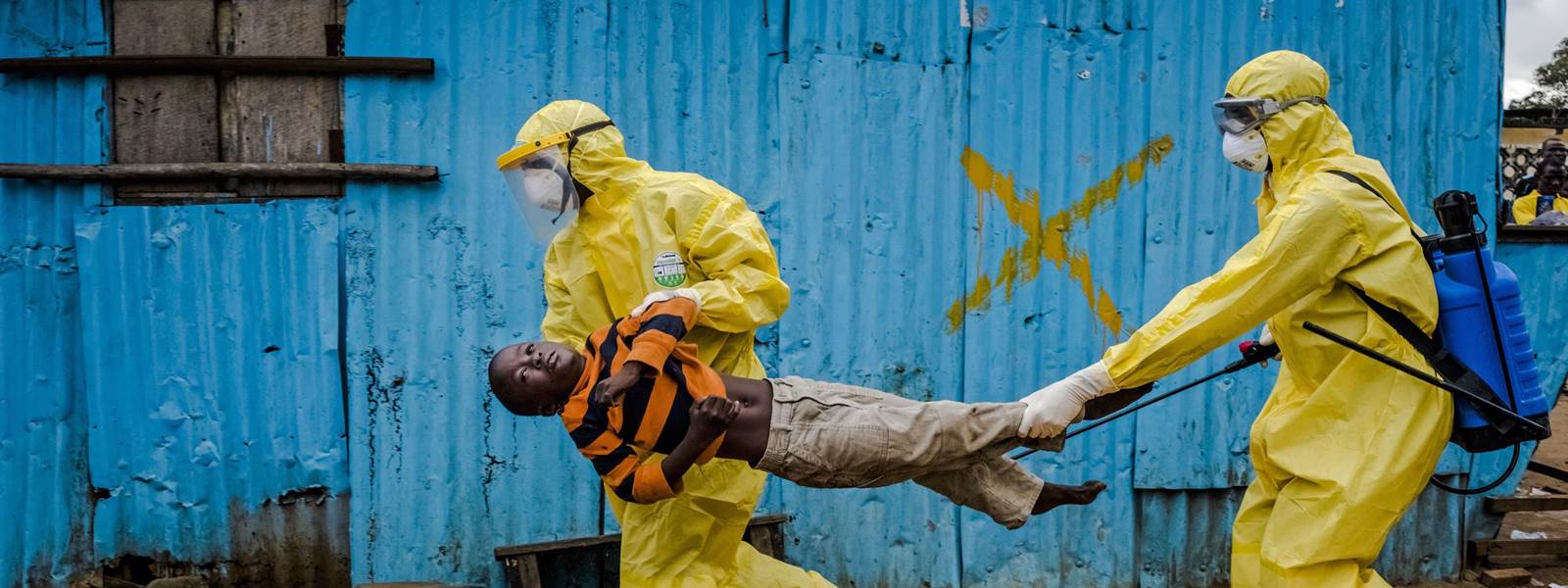
Ebola scene  Hn8

[NBC News DANIEL BEREHULAK / REDUX PICTURE]


Best wishes, and thanks for spending time on “Matula Thoughts.”

David A. Bloom

Matula Thoughts August 1, 2014. Art & medicine.

Matula Thoughts August 1, 2014: Art & medicine

This is the blog format of the monthly email communication called “What’s New” from the University of Michigan Urology Department.


1.  Drive home

My drive home from work in the summer is likely to occur in cheerful sunlight, even when the hour is late. A good piece of this seasonal pleasure still remains for us at the start of August. July 2014 has come to a close and with it the celebration of the Fourth, the Ann Arbor Art Fairs, and the Chang-Duckett-Lapides Lectureships of the Urology Department. Our PGY1s (interns) class of 2019 began at least five years of residency training that may easily extend by several additional years with fellowships that many of our graduates undertake. The lectureships we hold every year around this time add some formality and socialization as the new academic season of residency training commences. Andrew Kirsch of Emory University gave a remarkable Duckett Lecture on his work with magnetic resonance urography (MRU) and Kassa Darge of the Children’s Hospital of Philadelphia produced a superb Lapides Lecture on the wide scope of urologic imaging and his experience with MRU. We had excellent attendance and wonderful discussion. MRU is clearly the new IVP. Yes, it is at present much more costly, but as we saw in the discussions, a careful history and physical exam with high quality GU ultrasonography in the hands of well-trained and experienced clinicians will answer anatomic questions well enough to deal for most problems we see. In complex situations, however, the detailed anatomic and functional information from the MRU is unsurpassed. George Drach of the University of Pennsylvania presented a clear discussion of a muddy topic – the Affordable Care Act. He promised that the topic will get even muddier next year as complex add-on legislation accrues in the year ahead.

Kirsch

[Andrew Kirsch, Duckett Lecturer, with Susan Kirsch]

Duckett Drach Darge

[Peggy Duckett, George Drach, & Kassa Darge, Lapides Lecturer]


2.    The Chang Lecture on Art and Medicine (our 8th) was given by James Ravin, a well-known ophthalmologist from Toledo who had trained here in Ann Arbor. I first learned about him through his book, The Artist’s Eyes, which had been sent to me by Steven and Faith Brown, Michigan alumni and strong supporters of Michigan Urology. The lecture was amazing and we can mail you a CD of the lecture if you send us a note. Before Dr. Ravin took the microphone, I asked the audience: Why should a urology department care about the link between art and medicine? My answer was twofold and I’d like to repeat it here. The first reason is simply the matula. This long-standing symbol of the medical profession is the flask used for the macroscopic examination of urine. Not insignificantly that is also the name we selected for this blog. The second reason is that this linkage is hardwired in our species. Genetics and epigenetics demand this attention from us. Maybe this is a presumptive conceit, but most people believe our existence among life forms is unique and that the distinctive human condition we claim is built upon our curiosity, our creativity, and our tendency to reflect upon ourselves as well as our fellows. These traits have led to our ability to solve problems cooperatively and accomplish complex tasks like building cathedrals, performing symphonies, writing encyclopedias, or doing cystectomies and urinary diversions. Art is part of all human performances, most especially the medical arts.

Chang's

[Hamilton Chang, James Ravin – Chang Lecturer, & Dr. Cheng-Yang Chang]


3.    That the study of art should occur in a university is no surprise, universities are the primary stewards of the future – the human future and the global future. Universities educate tomorrow’s builders, thinkers, and citizens. They and their graduates are the primary sources of tomorrow’s ideas and inventions. No other institution in society has such a broad mandate, much less fulfilled it so well over centuries as universities. Ben Shahn, an American Artist of the second part of the 20th century, put together an essay in a book called The Shape of Content in 1960, where he specifically addressed the matter of visual art in universities, writing: “What can any artist bring to the general knowledge or theoretical view of art that has not already been fully expounded? What can he say in words that he could not far more skillfully present in pictorial form? Is not the painting rather than the printed page his testament? Will he not only expend his energies without in any way increasing the general enlightenment? And then, what can an audience gain from listening to an artist that it could not apprehend far more readily simply by looking at his pictures?” While Shahn was specific that his comments related to visual art, his point extends more broadly.


4.    Shahn answers his own questions in the essay, developed from lectures at Harvard College and offers two reasons why universities (and by extension medical schools and their departments) should be interested in art. First, the product of universities, educated persons, should have what he called the accomplishment of perceptivity – a necessity for tomorrow’s international citizens. His second reason is that the universities, themselves, are enriched by bringing art, he says, into the circle of humanistic studies. This point anticipates the vision that E.O. Wilson called consilience, the idea of global village of knowledge in which boundaries between fields of study are mere human conceits. Wilson contends that the most important findings for our species will be made at the interfaces and boundary waters among the fields. Shahn expands on this second point in his essay, saying that bringing art into the circle of humanistic studies serves the: “… general objective of unifying the different branches of study toward some kind of a whole culture. I think it is highly desirable that such diverse fields as, let us say, physics or mathematics, come within the purview of the painter, who may amazingly enough find in them impressive visual elements or principles. I think it is equally desirable the physicist or mathematician come to accept into his hierarchy of calculable things, … [the] nonmeasurable and extremely random human element which we commonly associate with poetry or art.” [Shahn p. 9]


5.    Visiting professorships are an important part of academia, bringing the best insights of established thought leaders, as well as the newer voices and controversial ideas of those who challenge the status quo. We do this fairly well at Michigan Urology throughout the year in each of the disciplines within our field. It is equally and especially important for universities to offer periodic public lectures on broad themes such as Ben Shahn provided at Harvard for general audiences on topics that offer important humanistic insights, cut across fields of study, and stimulate conversation and cultural curiosity. We try to fulfill our part with the Chang Lecture and if you missed it this year, consider holding that calendar slot next year on the Thursday of the Art Fairs. Our speaker will be Pierre Mouriquand of Lyon, France. He is an extraordinary pediatric urologist, a deep thinker, and a committed artist who paints nearly every day.


6.    A number of years ago I came across a wonderful statement made by the late and great Michigan faculty member and world-class physiologist, Horace Davenport. A student recalled him telling a medical class that “physicians are the attendants at the service station of life.” Of course, in Dr. Davenport’s days the gas stations were true service stations where someone pumped your gasoline, checked your oil and tires, washed your windows, and actually fixed problems with your automobile. Notwithstanding the dated image of the service station, it is an appealing metaphor. While the current phrase patient-centered care is bandied about as though it were a new idea, the consideration of “what the patient wants” has really never been far from the minds of good physicians. While we all have seen instances of domineering and inconsiderate medical care, the idea of a “patient-centric” approach is hardly revolutionary and new. It is unfortunate, albeit useful, that we need to proclaim that the health care we offer in our organizations is “patient-centric.” As health care has become more complex, specialized, and team-based it is easy to retreat onto islands of our professional turfs and focus on the solutions of isolated clinical problems. This professional convenience, however, turns patients and their inevitable co-morbidities of modern life into mere packages of DRGs in search of CPTs. The complex billing systems we dignify with the phrase modern electronic medical records are more than innocent co-conspirators in this crime. The success of the modern health care enterprise will depend on its ability to simultaneously fulfill the desires and needs of each patient in the contexts of their physical, emotional, and social problems. This will require teams and systems that are at once lean and adaptive.


7.    Long before science impacted the work of physicians, medicine was described as an art and I believe there still is much art to our work insofar as you might look at art as anything that is choice. Science and evidence cannot and will never define all of our choices in medicine. Two fundamental questions define modern health care. The first is: what does the patient (and family) really need and want? The second is: what does society want from its health care enterprise? The answers to the two questions are quite different. It is the first question that drives our essential transactions in health care, patient-by-patient and family-by-family. Of course these transactions must exist in the framework of society and the sense of what is right and reasonable to do for each individual patient. On the other hand as we create public policies and deploy health care systems, the second question comes heavily into play and begs the question: how much should a nation spend on the well-being of its people? So is 20% of GDP, for example, too much or is it not enough? It’s interesting to compare health care to food expenses. In some nations, families spend 60% of their household income on food, while in the USA food accounts for less than 10%. Granted that individual household expenses and national GDP are very different “apples and oranges” and the constraints of a nation differ from those of a household, it is clear that the more one expense dominates a budget the less remains for other necessary and desirable expenses. As a matter of public policy, however, ideally how much should a nation spend on its health care? How much on the education of its next generation? How much on its self-defense, on its research & development, on its infrastructure depreciation, or on its service of past debt? However you answer these questions, it is a fact that in the USA we are moving towards 20% of GDP for health care, and other advanced nations are not terribly far behind and moving towards us. That being said – a good third of the expense is generally recognized as waste – money spent that helps neither patients nor society.

Table from The Economist

[Table from The Economist]

Huffington Post

[Huffington Post July 10, 2014]


8.    An interesting point of view, written 2 years ago in the New England Journal of Medicine by MJ Barry and S Edgman-Levitan, called Shared Decision Making discussed a Picker Institute report that identified eight characteristics of care as the most important indicators of quality and safety from the perspective of patients. These characteristics are: respect for patient values, preferences & expressed needs, coordinated & integrated care, clear information & education of high value for the patient & family, physical comfort with alleviation of fear & anxiety, appropriate involvement of family & friends, continuity, and access to care. This list mirrors a more simple set of things that I believe patients want, since these are the simple things I want from my personal physicians: kindness, expertise, and convenience. Perhaps the attributes you might list would differ in number or terminology, but I think most people want roughly the same things. [MJ Barry and S Edgman-Levitan, Shared Decision Making. NEJM 366:780, 2012]


9.    Crayon drawing

I’ve shown this picture before in our Department of Urology “What’s New” column, but am compelled to share it again. The picture appeared on the cover of JAMA, a fact that dates this work since for the past year or so the new editor of the journal, Howard Bauchner, while he retained the art feature, moved it from its long-standing place on the cover of each issue. [JAMA 3017:2497, 2012. Toll E. The cost of technology. Copyright 2011 Thomas Murphy] Change is inexorable, however, and I have to say that he has done a superb job with the journal, both in format and in topic selection. The illustration shown (with previous permission of the author, Elizabeth Toll) shows a crayon drawing of a scene in a doctor’s office. The 7-year old artist drew her sister sitting on the examining table looking at the viewer in a most Vermeer-like fashion. Mother, with a younger child on her lap, is seated at the far right. The artist sits in between, at work on her picture, but also gazing intently at the viewer. The astonishing feature of the artwork however is the physician sitting at the far left, totally absorbed at the keyboard in the technology that is mandated in healthcare. The software has become a surrogate for the patient. The artist told it as it was and, no doubt the physician felt some shame on viewing the artwork. The enormous sums of money we have been forced to expend on clunky and dated software, compliance for poorly fashioned regulation, and the turmoil of the restructuring of a massive industry are a significant part of the waste. What will the next generation of health care look like when we leave behind the RVU, meaningful use, EPIC, and ICD-10? Such a world cannot be too far away. We hope academia, industry, and public policy can put together systems that are accessible, fair, lean, adaptive, and good for patients.

Halter, Bauchner, Malani Kerr

[Jeff Halter, Howard Bauchner, Preeti Malani, & Eve Kerr at a reception at   Preeti’s home 2013]


10.   The well patient exam has been challenged as “unnecessary.” So too has the routine pelvic exam, the PSA testing, and even routine urinalysis. This brings me to the question, what is the point of healthcare? As physicians we like to solve and fix problems of patients, but is that all that patients really want? Yes, often a patient comes with a very specific problem, but very often not all the problems are evident and sometimes they are deeply entangled with the other issues we like to call co-morbidities. This brings me back to Dr. Davenport’s thought. People and their cars have to stop at service stations from time to time. Sometimes they need gas or have a flat tire. At times the car isn’t working well and help is needed of one sort or another, but the problem isn’t immediately evident and the attendant must diagnose before repair. It is also useful, at other times, to have an expert look at the car, see how it runs, listen to the engine, and check under the hood. Preventive maintenance and inspections may discover occult issues for which early intervention can prevent serious harm. I can’t believe this isn’t true for human bodies and minds. People need to stop by the service stations of life from time to time just as well, for after all we are susceptible to far more ills than our motor vehicles. A doctor, or other health care provider, can look, listen, counsel, advise, and teach. The pastoral side of a doctor’s art should still be a major part of the toolkit. Not every problem discovered needs remedy, but every person should be seen, listened to, and examined periodically by some kind and expert attendant at the service stations of life where art and medicine converge. This is how we care for the human condition.

Gas Station

[1936 Union Gas Station. Main & Weatherlow. Lassen County History. Wikipedia – Historic gas stations]


Best wishes, and thanks for spending time on “Matula Thoughts.”

David A. Bloom, Department of Urology, University of Michigan


Matula Thoughts June 6, 2014

Matula Thoughts Logo1
Challenges of FY 14, leadership, conflicts, & our successors.

1. Not so long ago fiscal year 2014 loomed large as an ominous transition point in health care with the collision of multiple forces of major impact. The rising rate of spending relative to GDP, the struggling world economy, climate change, expensive new pharmaco-technology, increasing economic and healthcare disparities, aging populations, the growing complexity of the health care work force, unintended consequences of large scale legislative health care legislation, underfunded necessities of research and education, duty hour dysregulation, are only some of the many forces that quickly come to mind. Other factors are less immediately obvious, but no less significant. New appreciation of the complexities of chronic disease management has rendered our models of health care delivery archiac (e.g. the primary care-specialty care model, employer based coverage, and even the very idea of “an insurance model” to manage health care for a large population). The effects of gerrymandering in determining election outcome, and hence legislation and public policy, similarly have impaired the public good. All of these things have come together now, more than ever before, to destabilize the economy and structure of healthcare in the United States.

2. Nevertheless, this feared watershed fiscal year is in it’s final month and, for the most part, the essential transactions of health care delivery – clinic visits, medication prescription, diagnostic testing, operative procedures, provision of supplies, education, research, and innovation are still happening on a daily basis even though this work seems to be done against the grain with increasing difficulty. We will soon have our FY 14 numbers (patient visits, operative procedures, RVUs, grant dollars, satisfaction scores, papers written, patents claimed, operational margins, days of cash on hand, etc.) and analysis of these will show us where we stand. However it comes out, even if our fiscal head is above water which we expect, we will be standing well below our potential as a department, as a medical school, as a health system, as a university, as a state, and as a nation. Irrespective of the constraints of the larger environment (including our self-inflicted wounds of the HITECH Act, legislative gridlock, and reactive regulation such as the duty hours story) we have the ability and duty to our patients, trainees, employees, community, and our children to do our work better. While the FY 14 boogeyman didn’t bring the world to a screeching halt, we still need to rapidly find new ways to maintain the missions of academic medicine – clinical care, education, and research. Underpinning all this is our essential deliverable: kind and excellent patient-centered care, thoroughly integrated with education and innovation at all levels. If we get this right, one patient at a time as well as one system at a time, then most everything else we want will follow.

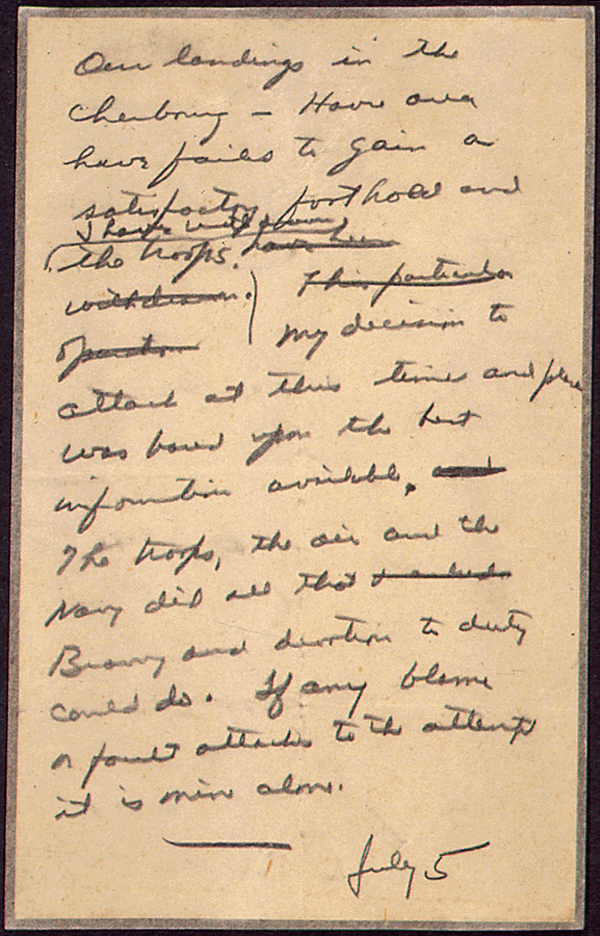
3. Today’s date, June 6, is a big anniversary for a far more monumental watershed point in time for mankind. Operation Overlord was launched on this day in 1944. Had this massive organizational feat failed the world would be very different today. In fact it’s leader, Dwight David Eisenhower, was not so sure of success given the myriad contingencies in play beginning at the launch of Overlord exactly 70 years ago and he accordingly prepared an alternative brief statement on July 5 to be released in case of failure: “Our landings in the Cherbourg-Havre area have failed to gain a satisfactory foothold and I have withdrawn the troops. My decision to attack at this time and place was based on the best information available. The troops, the air and the Navy did all that Bravery and devotion to duty could do. If any blame or fault attaches to the attempt it is mine alone.” Eisenhower offered no optics, spin, or scapegoats.
Eisenhower
[The Eisenhower mea culpa never needed to be sent.]

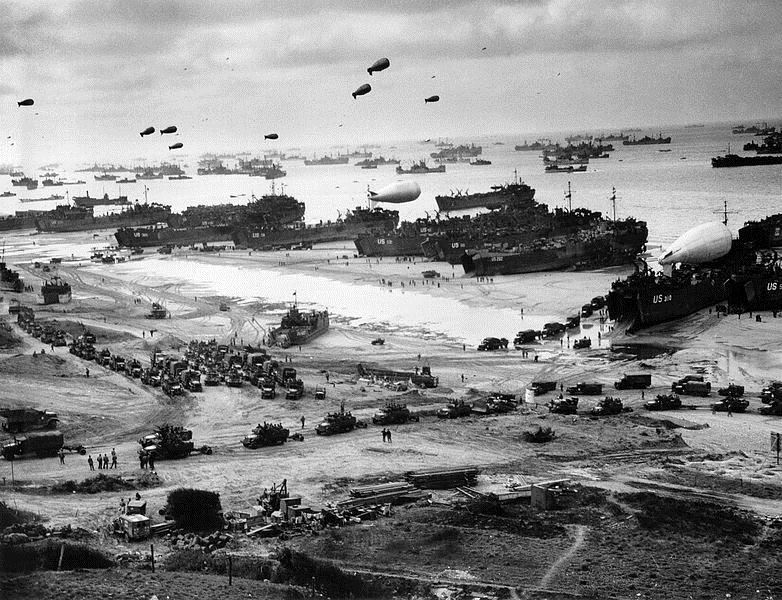
4. Eisenhower was not unchallenged as a leader or soldier even though he had the trust of Roosevelt and Churchill. His British counterparts were demeaning: Bernard Montgomery said “Nice chap, no soldier” and Alan Brooke proclaimed that Eisenhower knew nothing about strategy and was “quite unsuited” to be Supreme Commander. In retrospect, those comments seem to reflect mere petty jealousies as the outcomes of Eisenhower’s leadership at that key point in time dwarf any accomplishments of those detractors. Leadership matters greatly. While leaders have great latitude in times of relative peace and stability, they have consequential impact when times get tough. The world today would most likely be very different had it not been for Eisenhower, Roosevelt, and Churchill seventy years ago, and the same holds true as such for Lincoln and Washington in their times as well. Much more recently and locally look at Bill Ford and Alan Mulally for extraordinary leadership success. On the other end of the spectrum leaders of very different character such as Pol Pot and Adolph Hitler hijacked their constituencies and neighbors into terribly dark days. This is evidence of the problematic duality of our species. We are the only one of the rare eusocial species who can deliberately select leaders and determine our governance – but that is another story, better told by E.O. Wilson. [Two books of reference: a.) Anthony Beevor. D-Day. The Battle for Normandy. b.) Edward O. Wilson. The Social Conquest of Earth.] [Pictures – Normandy beach 70 years ago and same beach and American Cemetery on my visit in 2010]
battlefield
screenery
Screen Shot 2014-06-05 at 3.10.40 PM

5. Leadership was at play last month at the AUA national meeting in Orlando, on many podiums and in many committee sessions. One noteworthy example was the Michigan Urological Surgery Quality Collaborative (MUSIC) conceived by Jim Montie and “Eisenhowered” by David Miller. At the MUSIC session I saw urological colleagues participating from around the state including a number of our own former students and residents. Dr. Miller and Dr. Brian Stork gave excellent presentations, highlighting the beautiful social/scientific collaboration of urologists who have, through trust and hard work, pooled their individual and local experiences to figure out to deliver better care at better value in collaboration with Blue Cross/Blue Shield. This should be a model for the future in health care. Especially inspiring was to see how MUSIC has brought private practitioners to podium presentations and to authorship positions thus erasing the “barrier” between the academic and non-academic sides of urology. Leadership has also been in play with Stuart Wolf’s amazing work overseeing the AUA guidelines. Prominently visible was the running video on guidelines showing Michigan faces throughout the AUA including Stuart, Quentin Clemens, and Ann Gormley. John Park’s Mott video was also running outside the pediatric sessions, showing Julian Wan, Vesna Ivancic, and Kate Kraft as well as John Park and Carla Garwood, representing our pediatric nursing team. A video also showed members of the prostate SPORE group. The Reed Nesbit Society held its reception on Sunday night. This has become a lovely annual habit and is financed by both the Department of Urology and the Nesbit Society. This year we hosted around 120 people. Friends of the department, new and old alumni, faculty, and residents acquaint or re-acquaint themselves. If you missed it this year consider joining us in 2015 in New Orleans on Sunday, May 17. Perhaps the biggest news of the meeting was the awarding of the AUA Gold Cystoscope to our Associate Professor Will Roberts later in the convention. Ed McGuire received this honor back in 1982, so out of a total of 38 Gold Cystoscopes, Michigan Urology now accounts for two. David Miller was awarded the Society of Urologic Oncology (SUO) Young Investigator Award. Ted Skolarus, Jeff Montgomery, Florian Schroeck, and Khurshid Ghani were awarded Best Abstract at the 2014 VA Forum. Bahaa Malaeb, Aruna Sarma, and Rod Dunn received Best Poster Award for their work on the relationship between diabetes and sexual dysfunction.
Roberts
[Photo by Wendy Roberts]

6. National meetings of specialties are the fundamental marketplaces for the ideas, products, and talents of healthcare processions. Large organizations such the AUA, ACS, ASCO, AAP, EAU, or SUO may seem like an alphabet soup to outsiders, but they are the interfaces between today and tomorrow for medical specialties. Each year in between the meetings faculty, residents, and research teams develop ideas, create hypotheses, test products, and perform other acts of scholarship even while doing the never-ending daily work of clinical care and education of our successors. The chance to stand at a podium and present one’s observations to the world of urology at large is a big moment for residents, and aggregation of those moments develops reputations and careers for faculty. Michigan Urology had a big year at Orlando’s AUA meeting. We used to try to count the number of appearances for our faculty, residents, and students at this meeting and found the count running well beyond 100, but this year I won’t even try that little exercise of hubris. The bottom line is that Michigan Urology’s people and ideas are a major force in this marketplace of urology. I had too much fun talking and taking pictures at our Nesbit reception so I deferred my brief “State of the Department” presentation for an appendix in this “What’s New.”

7. The AUA national meeting is heavily subsidized by urologists as well as the corporate world. We and our departments spend big dollars on the research that produces the talks. We also pay travel expenses for the faculty, residents, and nurses who give the talks and listen to others. The practice of urology is a profession that exists within the social industry of healthcare. We depend upon social opportunities such as this annual meeting to exchange and stimulate new ideas, to see new products, to network for new opportunities, to find jobs for our trainees, and to develop collaborations. While replete with opportunities, the interfaces of the medical profession, industry, and academia have ethical risks. We are all human, and some of us test boundaries of self-serving behavior more than most others. A smaller number, reflecting the dark side of our duality, wander into territories of mischief or even deliberate wrongdoing thus rules are necessary. We recoiled when we read about the Ivy League professor promoting his (unacknowledged) proprietary antihypertensive drug to a class of medical students as THE drug of choice, or learn of an orthopedic surgeon routinely using his own invention in patients without full disclosure of his commercial interest. Our own institution is not blameless as seen recently by the professor in another department who gave confidential drug trial results to hedge fund operators that allowed insider trading. These people are scoundrels and dirty our profession. Not all conflicts are purely monetary and some are conflicts of commitment. It is not uncommon for many of us to try to wear too many hats, even though our heads are only finite in dimension. In fact we each actually do need a few hats, for rain, cold, construction work, mosquito protection, etc. Ego, however, makes us overestimate our head size tempting us to accept a few too many. You could call this phenomenon the hat trick of ego or perhaps “the blinding effect of arrogance”, a risk for each of us.

8. Academia and industry need to intersect for the public good. We sometimes manage this intersection well and other times not so well. One good example is histotripsy, a technology invented here at Michigan by a team including our own Will Roberts, along with radiology and biomedical engineering colleagues. As a department, Michigan Urology has invested a decade of time and money in Will and this idea. Ultimate product development, however, exceeded our capacity and required initial venture capital to the tune of $11 million. Within only about four years now clinical trials for BPH are underway (with full disclosure) at a number of sites – Tim Schuster in Toledo (Nesbit 2004) did the first histotripsy prostate enucleations. We have a thorough conflict management plan that details the extent of our departmental involvement in this product development and its trials. We are doing this well and properly. It is important to develop good standards to manage conflicts of interest and conflicts of commitment, although ultimately we must depend on shared values and appropriate behaviors. [Actually, and somewhat unfairly, the University of Michigan through its policies rather than our Department of Urology, will assume most of any financial gain if HistoSonics Corporation is successful.]

9. Although I was present at the discussions and votes around our medical school’s new conflict of interest policy, I was uneasy supporting the stipulation that faculty, residents, and nurses must refuse hosted social occasions at national meetings. As we prepared to go to the AUA meeting messages went out that our new conflict of interest policy warned against accepting food or drinks from the pharmaceutical and industrial representatives who otherwise would be with us in Orlando supporting the meeting. In the past I have freely enjoyed the hospitality of, for example, the Olympus Corporation with our representative Bill Herpek while on other occasions I’ve picked up the check for the burgers he and I had at the concession stands in the exhibit halls. Bill has become a friend and colleague for 25 years, quickly available for replacement scopes in the OR when urgent repairs are necessary, or finding us good deals (in the world of competitive bidding) when we need new technology. The extent of our mutual hosting has really been nickel and dime, not paid excursions, serious gifts, or stock options. (In full disclosure he did give me a wildlife calendar once.) Might someone assume that our friendship or the burger I bought him translated into a sweeter deal for the cystoscopes we purchased? Doubtful – but our relationship does provide a basis for fair deals and open communication. It’s not just our own Michigan policies that don’t seem quite right. When we had Marston Linehan here recently for a Von Hippel Lindau symposium, NIH policy required him to pay for his own dinner at the event. Given the shenanigans of Congressional and other leaders, I am embarrassed by the double standards. Our colleague here at the University of Michigan Charles Eisendrath tells us that in his journalism career the self-imposed standard was that “if you can’t eat it or drink it, you shouldn’t take it.” On the other hand the egregious exploits related to insider trading I mentioned earlier involved far more than cheeseburgers, but I’d contend they didn’t begin on the ”slippery slope of a lunch” at a national meeting, but rather involved cozy self-serving deceit right from the start. How about participation on heavyweight national boards by university leaders? I have heard the many “pros” of the argument, but really our top academic and health system jobs are not only quite well compensated but they also seem to be demanding enough on a 24/7 basis. Yes the interface between academia and industry needs to be somewhat fluid, and yes leaders “can learn things” and develop relationships on major boards. On the other hand, proper board service is demanding of time and commitment, things that might be more reasonably offered when individuals are no longer in the pilot’s seat for a major enterprise. The hat trick of expertise is an alluring illusion and we are each susceptible to its temptations. No policies or laws can substitute for a good internal compass, although any compass can be swayed by strong elemental forces (iron, silver, or gold). An essential part of our jobs as teachers and role models in the health care industry is the duty of imparting a strong moral compass to our successors. As I look at our Nesbit alumni – it seems that Michigan Urology has done this well for nearly 100 years.

10. Our foundational mission at the University of Michigan Medical School and Department of Urology is to train our successors, and the evidence of our success is beautifully visible each year at the Nesbit AUA Reception. As you know, the context for education of our successors is necessarily the practice of medicine amidst the innovation of the science, technology, and systems of healthcare. Our essential deliverable of all this is kind and excellent patient-centered care, thoroughly integrated with innovation and education at all levels. The basic building blocks of education are medical school and residency training. Michigan’s medical school graduation took place just a few weeks ago and our 169 graduates will go out to start their residencies in the next few weeks. Michigan students are highly prized in training programs around the country, reflecting the excellence of our medical school and the departments in which students discover their careers. The match rate this year was 100%, meaning that all Michigan students were accepted by the training programs they sought. Of these 28% will stay at Michigan for training and 32% will remain in our state. The others will go to top programs around the country.

Five Michigan medical students went into Urology this year: Denise Asafu-Adjei to Columbia University Physicians & Surgeons in New York, NY; Spencer Hiller to Beaumont Health System in Royal Oak, MI; Zachary Koloff to University of Michigan in Ann Arbor, MI; Kola Olugbade to SUNY Downstate Medical School in Brooklyn, NY; and Brian Orr to Indiana University Medical Center in Indianapolis, IN.

Of our four new urology interns coming to our program: Ella Doerge from Baylor College of Medicine in Houston, TX; Zachary Koloff from University of Michigan Medical School in Ann Arbor, MI; Ted Lee from New York University School of Medicine in New York, NY; and Parth Shah from University of Texas Medical School at Houston, TX. Michigan residencies pick the strongest students from other schools as well as ours – of the interns that entered in 2013 for all specialties here 41% were members of AOA, the medical school honorary society.

We have three new fellows: Sapan Ambani from University of Michigan for a two-year endourology fellowship, Lindsey Herrel from Emory University for a three-year urologic oncology fellowship, and Yahir Santiago-Lastra from Massachusetts General Hospital in Boston as a clinical program trainee in the female medicine and reconstructive surgery (urology) for two-years.

Graduating Chief Residents: Sapan Ambani will be staying with us for an endourology fellowship. Dan Miller will be doing a fellowship in endourology and minimally invasive surgery at the University of California San Diego/Kaiser Permanente. Jackie Milose is going to Northwestern in Chicago for a GURS Fellowship. Matt Smith is headed to Muskegon to work with the team of urologists at West Shore Urology. Fellows: Nina Casanova is completing her pediatric urology fellowship. Florian Schroeck is joining the faculty as an Assistant Professor in the Department of Urology at Geisel School of Medicine at Dartmouth. Anne Suskind is headed to UCSF on the faculty as an Assistant Professor in the Department of Urology.

The highest step in the academic ladder is the rank of Professor and this title was granted by the University to Quentin Clemens, Khaled Hafez, Brent Hollenbeck, and John Park. Jeff Montgomery became an Associate Professor. Academic promotions are recommended and approved by each departmental promotion and appointment committee, then by one of the three Dean’s Advisory Committees (the faculty vote on memberships for these), then by the Medical School Executive Committee (also elected by faculty vote), then by the Provost, and finally by the Regents. These promotions are effective September 1.

Best wishes, and thanks for spending time on “Matula Thoughts.”

David A. Bloom, M.D.

Matula Thoughts May 2, 2014

Matula Thoughts May 2, 2014

Endurance


  1. May is here at last, a month encompassing the anticipation of summers, vacations, family time, and recreation unfettered by heavy clothing. We have endured another winter in Ann Arbor, this one more challenging than average. Yet our seasonal challenges are nothing compared to those in other parts of the world where climate, geology, society, local economy, and government are less stable. With Independence Day two months away we have to be thankful for the serendipity of our national circumstances. Serendipity is a word defined by two components – luck and sagacity. The United States of America has had the good luck of great resources and sagacious founders with unusual wisdom, although that luck and wisdom were not shared with the indigenous Native Americans and generations of imported slaves.
  1. Democratic government, hardly perfect as we exercise it, is a work in progress. Yet for all its flaws it appeals to people around the world who want fair and rules-based government that allow people to speak their minds, have a fair shot at playing out their lives, and creating good futures for their children. Democracies tend to be richer than non-democracies, less corrupt, and less likely to resort to war. Yet for all of its appeal, democracy is under threat through a.) imperfections in its various deployments, b.) failure to “stick” where they have recently been initiated such as after the Arab Spring, or c.) competition from other belief systems of government. The alternatives of oligarchy, military dictatorship, kleptocracy, communism, sectarian rule, despotism, or royal ascendency are hardly preferable to most people. The aspirations we have for government at national scales hold true at the local levels and indeed within nearly all organizations including the University of Michigan and the American Urological Association – two organizations of immediate interest. Academia is no different from other organizations, in spite of its long history and self-ordained privileges. How we govern ourselves at any level matters deeply to the individuals involved and their ability to reach their potentials of performance and happiness.
  1. What about the May seconds of the past? Of the many events to consider the following caught my attention. In 1536 Anne Boleyn, Queen of England, was arrested and imprisoned on charges of adultery, incest, treason, and witchcraft. While we have to thank her husband, King Henry VIII for giving the Company of Barber Surgeons the Royal Charter just 4 years later, things didn’t go so well for Anne. Henry’s successor in England, King Charles II on 2 May 1670 somehow felt he had the right and authority to give a permanent charter for the Hudson’s Bay Company to open up fur trade in North America without consideration of the indigenous economies. Friendly fire wounded Stonewall Jackson in 1863 while reconnoitering at the Battle of Chancellorsville on the second of May and he died 8 days later. In 1885 the Congo Free State was established by King Léopold II of Belgium, presaging untold more human misery. On 2 May 1933 Hitler banned trade unions (Gleichschaltung) and on that date in 1945 the US 82nd Airborne Division liberated the Wöbbelin concentration camp finding 1000 dead prisoners, most of whom starved to death – sad bookends to the Third Reich. In 2011 May second was the last day for Osama bin Laden.
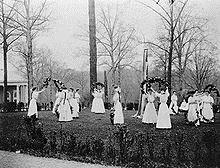
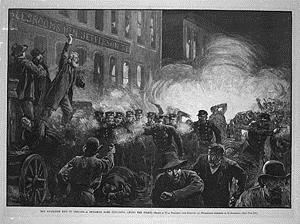
  2. Mayday           Engraving May Days have been traditional times of celebration. Many are cheerful festivals of spring. Some are more somber rememberences. May Day in Chicago celebrates the labor movement and is known as International Workers’ Day, in commemoration of the Haymarket massacre of 1886. This occurred (actually on Tuesday May 4) at a labor demonstration when workers went on strike for an eight-hour workday and someone threw a dynamite bomb at police as they tried to disperse the crowd. Seven police officers and 4 civilians were killed, many others were injured. Eight anarchists were accused of the crime and of these 7 were sentenced to death and one to a term of 15 years in prison. Of the death sentences, 4 were hanged, one committed suicide in prison, and the other 2 were commuted by the governor to life in prison. So in terms of life, it wasn’t quite an eye for an eye. May Days show humans at our best and worst. [Pictures from Wikipedia. On left: Mayday festivities National Park Seminary, Maryland 1907. On right: Engraving from Harper’s Weekly]
  1. Neighbours                Hn8 A friend recently told me about a provocative short film (8 minutes) by Norman McLaren (1914-1987) that encapsulates the bright and dark duality of the human condition. Born in Scotland McLaren developed a career in Canada as an animator and film director. His 1952 film Neighbours won an Oscar (in 1953) for best documentary. You can find this and watch it via Wikipedia or buy it via iTunes. My appreciation to Harry Cross, fellow Ann Arborite, for turning me on to McLaren, whose other work – particularly the short film Pas de Deux – is equally worth watching. By the way, if you use Wikipedia like I do, you should consider a voluntary donation to help support it. It is an amazing and living library, and although imperfect, it gives you the tools to improve it. One of our newer faculty members, Khurshid Ghani noticed it didn’t contain an entry for Reed Nesbit, our great professor in urology here at Michigan. Khurshid figured out how to get an entry into Wikipedia and got it done. Speaking of Nesbit we will be having our annual AUA Nesbit Society Reception on Sunday, May 18 from 5:30-7:30 PM at the Hilton Orlando in the Sun Garden. We look forward to seeing many of you there and if you haven’t RSVP’d please do so to Sandy Heskett by email at sheskett@umich.edu. [Photo on left – McLaren’s Neighbours. On right – Dow Chemical’s logo for our species]
  1. A while back two articles in The Lancet caught my attention. The first was the single-page piece by the editor, Richard Horton called “Offline: Social chaos – the ignored tragedy in global health.” [The Lancet 283:111, 2014]  The second was a two-page article by Arthur Kleinman in The Art of Medicine Section called “How we endure.” [The Lancet 283:119, 2014] The first article talked about the fierce debates regarding universal health coverage, Millennium Development Goals, non-communicable diseases, and social determinants of health. Yet, Kleinman observed: “…almost the entire field that is global health today has built an echo chamber for debate that is hermetically sealed from the political reality that faces billions of people worldwide. That reality is social chaos: the disruption, disorder, disorganization, and decay of civil society and its institutions. Social chaos erodes societies, destroys communities, eviscerates health systems, and eliminates any remaining vestiges of hope individuals might have for better lives. And yet social chaos is nowhere on the global health agenda. It is systematically ignored, marginalized, or censored.”
  1. Arthur Kleinman was chair of the Department of Social Medicine at Harvard Medical School and is an MD with an MA in Social Anthropology. A medical anthropologist, he brings personal as well as professional insight to his discussion of “How we endure.” The essential concepts in his essay are missing from standard medical education curricula, indeed they are left out of most formal educations society offers today. Kleinman’s broad view identifies a core element of the human condition, namely suffering. He writes: “ … for billions of poor people in our world, enduring pain, misery, and suffering is not only a description of their everyday reality but the moral message that they share with their children. And this is true as well of many people in rich societies who must endure seriously debilitating illnesses, disabling accidents, terminal organ failure, end-stage neurodegenerative conditions, and the final days of dying.”
  1. Kleinman illustrates his article with a single photograph that you will recognize immediately. It is Dorothea Lange’s image in the Migrant Mother series, showing Florence Thompson with two of her children in 1936. Kleinman’s concluding paragraph begins: “Assisting family and professional caregivers as well as patients to endure may not be assessed today as a measure of the cost-effectiveness of health-care systems, and yet it is at the very core of what human experience is about and what caregiving should be about. Our cultural images today seem blinded to life’s limits and dangers. While emphasizing human flourishing and celebrating happy outcomes, they obscure the reality of human conditions. Physicians can work hard at achieving the best outcomes, while still acknowledging that their patients, like themselves, must prepare for lives lived under some degree of constraint. This means that each of us at some point must learn how to endure: the act of going on and giving what we have.”
  1. As physicians, especially in our younger years, we buffer ourselves with the binary illusion that disease and disability, may be sitting on the examination cot or operating room table while we stand in our healthy professional space spared from such misfortune. Of course this is a convenient self-delusion. The extent of our ability to imagine that the healer/patient duality is ultimately a singularity is related to our ultimate success as physicians. The additional buffer of our specialization as urologists adds to the delusion. We, no less than our patients, must endure many challenges and burdens though our lives, and our personal and professional successes can be synergistic. If these thoughts intrigue you, read The Lancet paper, or even go a little deeper in the internet to hear and watch Kleinman’s William James Lecture from December 5, 2011 called “The Unfulfilled, Yet Not Unfulfillable, Quest for Moral Wisdom in Academic Life: Why William James Still Matters.” It is an interesting title, “the quest for moral wisdom in academic life.” Then check out Wikipedia on William James who, by the way, was educated as a physician although he never practiced medicine. (Harvard Medical School 1869).


Best wishes, and thanks for spending time on “Matula Thoughts.”

David A. Bloom