Matula Thoughts November 6, 2015

DAB Matula Thoughts November 6, 2015

Seasons, Movember, Nesbit reunion, the dimensions of academic medicine, politics, feline lives, & other disparate thoughts

3452 words

 

Nov leaves

[Self portrait with dog. Nov 8, 2013]

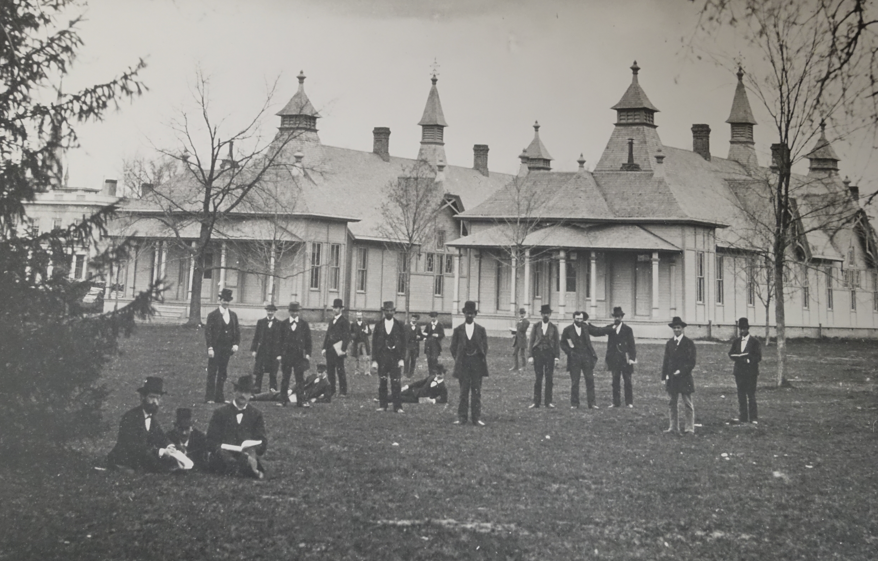
 1.    Shadows are longer in November, days are colder, and it gets dark noticeably sooner as 2015 winds down. Autumn foliage, so spectacular this season, is detaching from the trees and recycling on the ground. Most of us are getting ready to hunker down and bundle up for the business of winter ahead as we begin to contemplate 2016. We meter out our lives in seasons and cycles, so with November we enter a sort of fin de l’année, playing off on the French term for the end of a century. Fin de siècle most notably applies to the end of the 19th century, an era around the 1880s and 1890s that was only well understood decades later when historical perspective could account for its significance. The photo below shows Michigan medical students and the hospital in 1880 on a cloudy late autumn day much like today. Their big news would have been the election of James Garfield as president.
Old Hosp - fall  

[UM Bentley Library. Med students in front of hospital c. 1880]

This was the UM Medical School’s 31st season. The 1880 class, recently graduated, was already practicing medicine throughout the state and beyond. The medical school curriculum had transitioned from a 2-year set of lectures to a 3 and then 4-year program of graduated instruction with laboratory and patient care experience. Today when you walk from our “new” main hospital (it was new in 1986) to the Cancer Center you will pass the class of 1880 picture showing 60 students including 24 women, by my count. Only 4 of the men have moustaches or beards that became so fashionable a decade later (when you continue to view the pictures) and will be more common this month in November due to the world-wide Movember Movement.

UMMS 1880

A decade later in the 19th century fin de siècle on a similar autumn day these Ann Arbor newsboys are getting ready to hawk the morning papers. That year was midway between presidential elections of Grover Cleveland (first term) and Benjamin Harrison. Newsboys are gone, their jobs made obsolete by technology and nowadays people get their news via NPR, television, or smartphones. Urologists, however, have had Darwinian persistence in the human workforce and technology has actually expanded their reach and role.

Newsboys Pose c 1890

[AA newsboys 1890. I can’t give credit to the photographer who obtained this image without a lot more investigation, but after 135 years I figure this must be “fair use.”]

The medical school and hospital have changed much since then and now in our 167th season the signature educational product of our academic medical center has expanded from medical students alone to include residents and PhDs who collectively outnumber the students two to one. Our mission of education, clinical care, and health care discovery remains unchanged since that fin de siècle, but to fit that mission to today’s world we are re-organizing our medical school and hospital under the single aegis of an Executive President for Medical Affairs and Dean, Marschall Runge. The success of this structural change in terms of the optimization of our mission will depend upon three major variables: the operational details currently under construction, the people selected to execute those details, and the productivity (clinical, educational, and scholarly) of our health care enterprise as a whole.

Political rhetoric continues to heat up this month even though major voting is a year away. The U.S. elections are held on the Tuesday after the first Monday of November and the president is elected in even-numbered years at 4-year intervals, so November 8, 2016 will be a big decision point. The contest today looks stranger than ever with providential outsiders competing against highly seasoned and lightly seasoned professional politicians. The consequences of our elections will roll out to residency training programs, medical record systems, and payment methodologies of the not-so-distant future. More importantly, the consequences will be reflected in geopolitical stability and the international economy.


 2.     The initial urology experiences for most medical students come during third year rotations and fourth year electives when students take clerkships or subinternships at their home schools and visit other places that attract them. At Michigan we had over 350 actual applications for our 4 residency positions. The applicants are clearly the best of the best, although excellent medical school performance and test scores do not automatically equate to great residents, teammates, superb urologists, and Nesbit alumni. It is our job to transform our selected applicants through 5-6 years of residency and subsequent fellowships into extraordinary urologists, educators, and innovators.

The personal statements of our candidates are articulate, show amazing personal accomplishments, and often reflect on the attractions of urology, especially the ability to fix distinct problems with technical wizardry. Yet, I worry how this generation will do with the distractions of the mounting numbers of comorbidities of patients that complicate their “urology issues.” Will urologic detachment blind our next generation of urologists to the inevitable co-morbidities of their patients?  Conversely, will patient comorbidities distract young physicians from urologic-decision making or immobilize them to necessary action? How do we teach our successors to understand and even seek out comorbidities so as to attend to their solutions whilst doing the “urology”? Will the growing administrative burdens, including the mandates of the electronic record and duty hour restrictions, further exacerbate their detachment?

As I was reading transcripts, writing letters of recommendation, and thinking about this new season of applicants, I began to reconsider the characteristics we expect of ourselves as people, physicians, urologists, and educators. Seven key attributes seem to apply equally to residents as well as our best selves. To my list of the seven essential attributes for an excellent urology resident I added a bibliography:

A. Kindness. (P. Ferrucci: The Power of Kindness)

B. Authenticity. You are whom you seem to be. (HG Frankfurt. Two books: On Truth, On Bullshit)

C. Cosmopolitanism (KA Appiah: Cosmopolitanism)

D. Curiosity (EO Wilson: Consilience)

E. Literacy. (S Fish: How to write a sentence)

F. Teamwork & leadership. (DJ Brown: The Boys in the Boat) 

My little list may or may not prove useful for a “book club.” Although we don’t have time for this in the 80-hour weeks “allowed” for resident education, perhaps our best trainees will pursue this list or one like it, surreptitiously off the grid, for “extra credit.”


Nesbit 2015

3.    Nesbit meeting background. Reed Miller Nesbit was the first official head of urology at Michigan. His teacher, Hugh Cabot, had arrived here in late 1919 to lead the Surgery Department and in short order also became medical school dean. Cabot, a genitourinary surgeon of international stature at this time, was such a catch for the university that the regents gave him the president’s house to live in until he got settled. Nesbit and Charles Huggins were Michigan’s first 2 urology trainees, and Cabot seemed to have trained them well. Cabot’s innovative ideas and outspoken nature offended many and he was fired by the regents in 1930.

Nesbit was then named official head of urology within the Surgery Department and he soon became a pivotal figure in American surgery. Huggins focused on prostate cancer research, developed his career largely at the University of Chicago, and earned a Nobel Prize in 1966. Our Nesbit Society was created in 1972. Faculty, UM urology trainees and UMMS students who got their urology start here, but trained elsewhere, are members of the Nesbit Society.

Residency training is an intense period of work, study, and friendships that reverberate for a lifetime. It is a fact lost on lay people and many in the academe that residency training is the career-defining stage of medical education and the signature product of an academic medical center. It is where the professional knowledge base, values, and skills of the next generation of physicians are forged. Whereas UM has close to 700 medical students and 200 Ph.D.s in health sciences at any time, we have 1200 residents and fellows. [Picture above – day one of Nesbit Meeting 2015 in Sheldon Auditorium; below – day two at North Campus Research Complex]

Nesbit - NCRC

Nesbit 2015. Our Nesbit academic Thursday & Friday were among the best continuing medical education events I’ve experienced and far too much went on to be summarized here. Attendance topped 100 including Tom Koyanagi from Japan, Dave Bomalaski from Alaska, and Jens Sønksen from Copenhagen, along with many other Nesbit alums and MUSIC colleagues from around Michigan. Faculty, resident, and fellows gave superb presentations. Appropos of November, Daniela Wittmann’s talk included details of the worldwide and Ann Arbor impact of the Movember Movement, including significant scientific funding and collaborations for us in AA. Since 2003, Daniela noted, 5 million Movember participants worldwide have raised over $650 million for men’s health, targeted heavily to prostate cancer. Jerry Andriole, our visiting professor from Washington University in St. Louis, gave superb talks on prostate cancer and PSA.


Harden et al

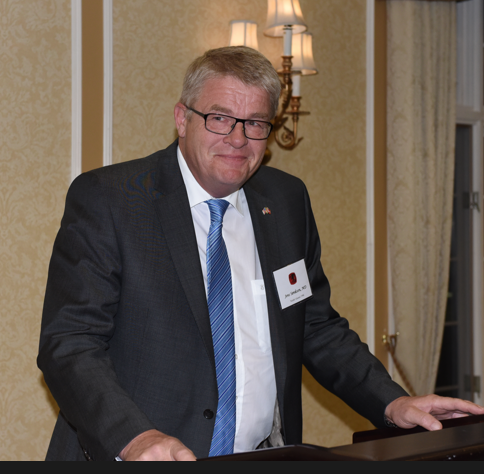
Greg Harden, our featured speaker, was extraordinary. [Above from left: Gary Faerber, Mike Kozminski, Dave Burks, Greg Harden, DAB] Long-time psychologist to our Athletic Department Greg spoke about need to fine-tune our personal “critical self-assessments” and extended the idea of fitness holistically to the three domains of physical, mental, and spiritual fitness – noting  the factor of recovery time: the better fit we are, the quicker our recovery from exercise or exhaustion. During the business meeting Gary Faerber, Associate Chair for Education, announced plans for a new resident’s room. While the hospital is footing the half million dollar overall cost, Gary believed that the dinky regulation lockers and minimal amenities should be upgraded so he announced a campaign for Nesbit alums to fund lockers or computer workstations, etc. Many stepped up to the challenge and Jens Sønksen (picture below; Nesbit 1996 and close colleague of Dana Ohl) put us over the top with an amazing gift.
Jens

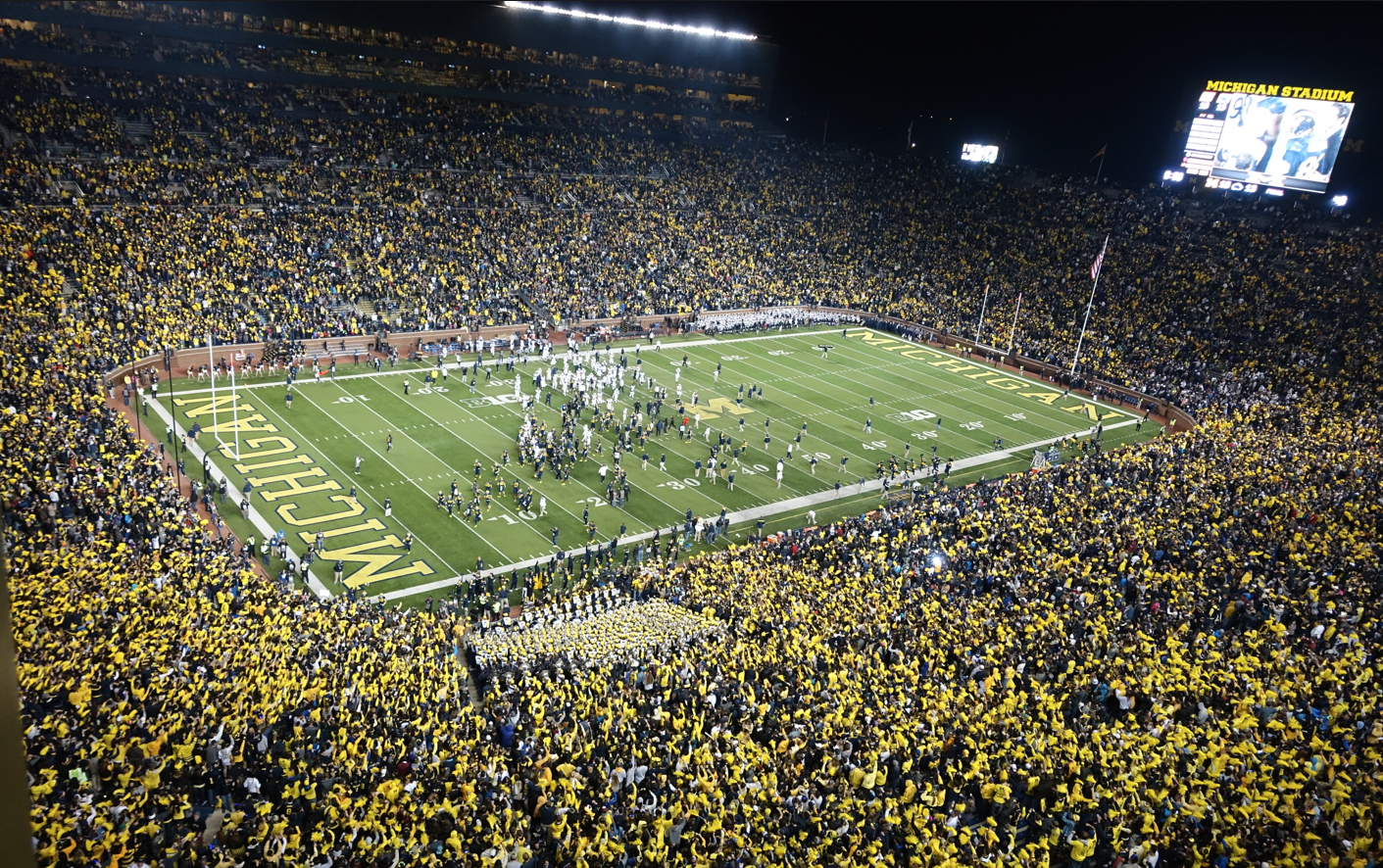
Julian Wan will be turning over the Nesbit presidency to Mike Kozminski next May at our Nesbit AUA Reception and John Wei will become Secretary-Treasurer. In the Big House Michigan led Michigan State until only the final few seconds when a terrible anti-climactic error cost us the game. No doubt the football team will be doing a thorough post-mortem analysis of that game to look for missed opportunities and analyze mistakes. Just like the rest of the university, the Athletic Department is ultimately an educational unit.
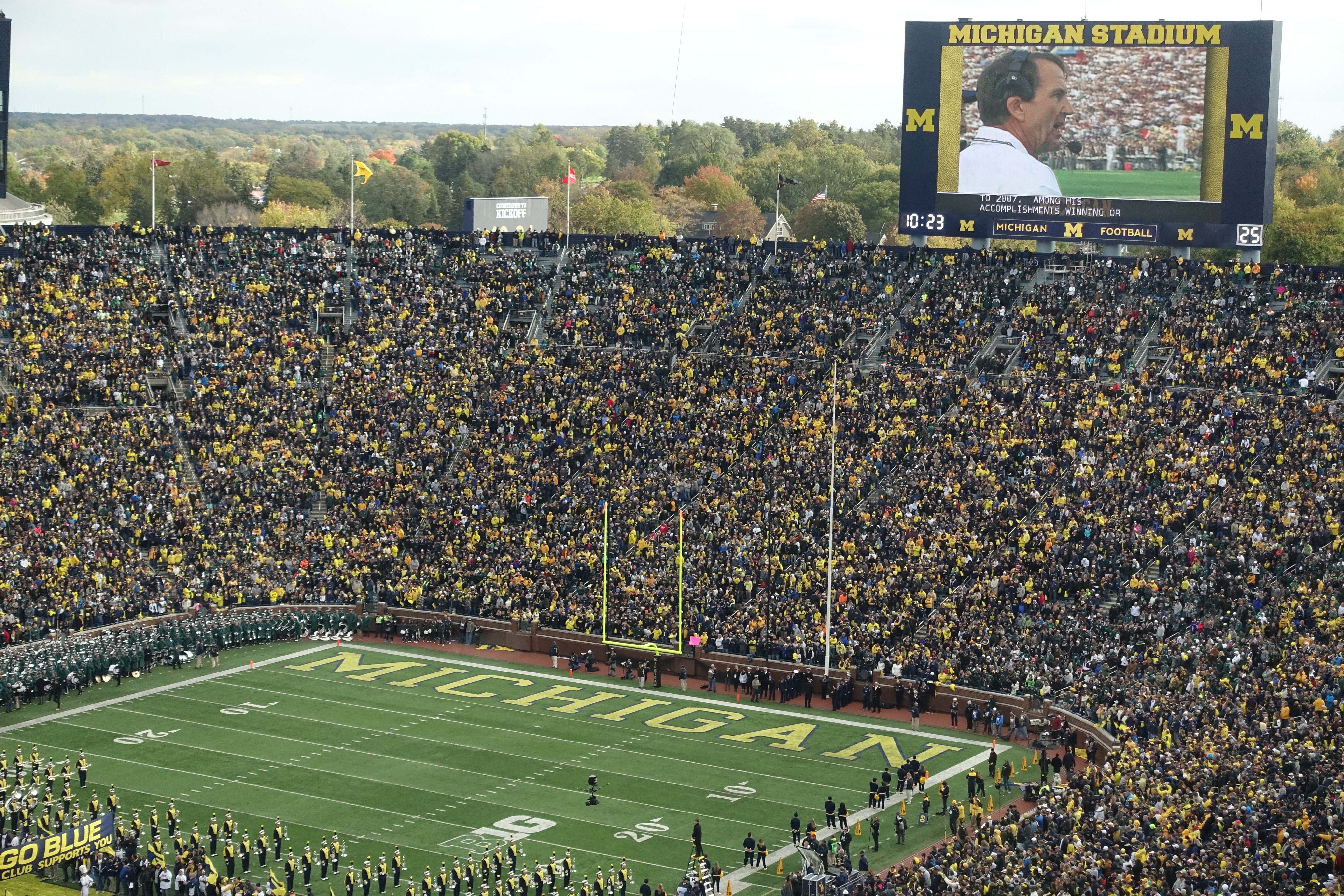
UM vs. MSU  

[Opening of UM vs. MSU game 2015. Lloyd Carr is honored]


M&M

4.     We too analyze our mistakes and untoward events. The Morbidity and Mortality Conference is a key ritual of academic medicine. Once a month we have a 7 AM Grand Rounds-type meeting where our residents stand up and present serious complications and deaths that occurred in our urology department. Faculty and residents discuss what might have been done differently and what factors contributed to each complication or death. Lay readers should not be surprised – every week deaths are likely to occur in UM hospitals at large and among our outpatient population; several million people a year pass through the doors of our health system, tens of thousands of operative procedures occur, and hundreds of thousands of people with serious illnesses are hospitalized. Our daily work is serious, not just the actual care of patients, but also the education of our successors with the expectation that they will be better tomorrow than we are today in this serious business of healthcare. Just as important as patient care and physician education, no less essential is the need to expand the knowledge base of urologic health and disease, in addition to improving therapies and delivery systems. These are the three dimensions of academic medicine. As specialists we hone in with great intensity on the urology issues presented to us, but must also probe efficiently for the context of the urology problem – the comorbidities of health and life.


 5.     The lives of patients are far more complex than the urologic problems that bring them to our clinics. With specialization comes our conceit of detachment. Living in an era of specialty knowledge and skills, we specialists concentrate on our specific fields and as urologists these are urologic matters. It is easiest to do this in isolation from all the other stuff around a patient’s life, but of course we also need to listen to them and recognize, for example, such things as sadness about recent loss of a parent, delaying traffic jams on the way to appointments, awful parking situations, or perhaps unusual heartburn experienced after a rushed breakfast to get to the appointment on time. These issues are not necessarily irrelevant to, for example, the small renal mass that brings a patient in to see us, although we still need to focus on that immediate issue – and the clock is running while other patients are checking in and you may shortly be called to the OR. On the other side of the coin we have all referred patients with unexplained problems to other services only to be told dismissively by a colleague: “it is not cardiac” or “it is not GI” or “it is not surgical.” We get exasperated when other doctors fail to “consider the whole patient.”


6.     Few urological problems, few medical problems of any sort, are isolated conditions. Everyone has lives and comorbidities that complicate the medical conditions under inspection in our clinic. These may be dire social situations, family matters, or other specific medical comorbidities.  A recent Perspective in The Lancet by Todd Meyers of the Department of Anthropology at Wayne State University offers a compelling view of this additional dimension of our health care paradigm.

 “Comorbidity is a clinical and conceptual problem. It is simultaneously a problem of how to describe multiple morbidities – clinically or epidemiologically – and a problem of how individuals themselves conceptualise and wrestle with their polypathia … Through the play of disorder and circumstance (and presentation and expectation), to treat is to capture, to arrest symptoms in a particular moment, but rarely is there enough time or resource to discover where these symptoms fit within the complex lattice that makes up the individual experience of comorbidity.” [Permission of Todd Meyers. The art of medicine. How is comorbidity lived? T. Meyers. The Lancet. 386:1128-1129, 2015]

You and I will never find the perfect balance between truly understanding a patient in terms of comorbidities of life and body and the immediacy of the person’s urologic condition. The art, however, is in our effort to try as we practice medicine patiently, one patient at a time.


 7.     Comorbidity, as a term and idea, is attributed to internist and epidemiologist Alvan Feinstein who spent his career at Yale School of Medicine. His reputation has been challenged due to some statements during a period of his career when he minimized the negative effects of smoking, even though he had been sponsored by the industry. [Feinstein, Alvan R. (1970). “The pre-therapeutic classification of co-morbidity in chronic disease”. Journal of Chronic Diseases 23 (7): 455–68] It is easy to pile on indignantly to this criticism now, in 2015, but the overwhelming evidence today of the destructive effects of tobacco smoke was not so apparent back then. Later in his career, particularly as editor of the Journal of Clinical Epidemiology, he became more critical of tobacco. Smoking looked cool in the mid-nineteenth century, and the makers of cigarettes naturally tweaked the composition of their product to enhance the addictive features. Ironically, smoking has turned out to be a major contributor to today’s medical comorbidities.

Feinstein, born in Philadelphia December 4, 1925, died just about 15 years ago (October 25, 2001). He obtained bachelor’s, master’s, and medical degrees at the University of Chicago, where he probably interacted with former UM trainee Professor Charles Huggins. In spite of that likely intersection, Feinstein chose internal medicine for a career and trained at the Rockefeller Institute, becoming board certified in 1955.  [Picture from Yale Bulletin & Calendar Nov. 2, 2001] After a few years at what would later become the NYU Langone Medical he moved to Yale in 1962 and became founding director of its Robert Wood Johnson Clinical Scholars Program in 1974.
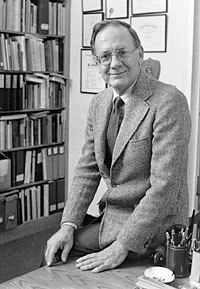
Feinstein 


Freedom_from_Want

8.     November brings Thanksgiving to mind. The Norman Rockwell painting Freedom from Want (discussed on these pages last March) had its debut on March 6, 1943 as a Saturday Evening Post cover. This was number three in his Four Freedoms series of oil paintings inspired by Franklin Delano Roosevelt’s 1941 State of the Union Address. Rockwell started this particular painting the previous Thanksgiving in 1942, depicting actual friends and family at the table. We are too comfortable today to feel as viscerally about the four freedoms as Roosevelt, Rockwell, and most Americans did during the darkest days of WWII or as the world’s 60 million refugees must feel today, but we should beware that our comfort rests on only a thin veneer of civilization. As specialists we are also sometimes too comfortable in our professions. We enjoy not only the four freedoms of Roosevelt (freedom of speech, freedom of worship, freedom from want, and freedom from fear), but also freedom to choose one’s work, in our case the specialty of urology. Board certifications and hospital credentialing processes define our scopes of practice, while varying degrees of personal detachment allow us to focus specifically on urologic disorders and their treatment.


9.     On this particular day in history two now-obscure events left countless social and physical comorbidities reverberating still today. In 1965 Cuba and the United States agreed to an airlift for Cubans who wanted to come to the United States. When the Cuban revolution began in 1959 the U.S. government initially reacted favorably to it, but after hundreds of executions and Fidel Castro’s embrace of communism relations soured and by 1965 the Communist Party was governing Cuba. Amazingly, Castro is still around, having survived as Cuba’s leader parallel to 11 American presidents for 16 terms of office. By 1971, 250,000 Cubans had made use of this program. Only now, 50 years later, do we find signs of improvement in relations with that nation of 11 million people only 90 miles away from Key West, Florida. A second historic coincidence occurred exactly 40 years ago on the other side of the Atlantic. The Green March was a strategic mass demonstration in November 1975, coordinated by the Moroccan government, to force Spain and General Franco (ailing despite recent recovery from a serious bout of phlebitis) to hand over its colony, the disputed, autonomous Spanish Province of Sahara. Some 350,000 Moroccans advanced several miles into the Spanish Sahara territory, escorted by nearly 20,000 Moroccan troops and met very little initial response from either Spanish forces or the Sahrawi Polisario Front, an independence movement backed by Algeria, Libya, and Cuba which was fortified by Soviet arms. The Spanish Armed Forces were asked to hold their fire so as to avoid bloodshed and they removed mines from some previously armed fields. Nevertheless, the events quickly escalated into a fully waged war between Morocco, Mauritania, and the Polisario, once Spain left the territory. The Western Sahara War, as it came to be known, lasted for 16 years. The color green was incorporated to invoke Islam. A cease-fire agreement reached in 1991 remains monitored by the UN Mission for the referendum in Western Sahara (MINURSO). What these two events have in common is the disruption of people’s lives when colonialism, regionalism, and independence movements collide and become playing grounds for larger international proxy conflicts. Sound familiar?


 10.    November refers to the number nine in Latin, a quantity recalling the alleged lives of a cat. Reflecting back over the shoulder of human time, you can’t help but think that our species has been testing the limits of our existence with far more numerous close calls than a cat’s. The Cuban missile crisis was just one close call, among other instabilities around the planet from Africa, to the mid-East, and in far too many other places. The feline proverb  dates back at least to Ben Johnson’s play written in 1598, Every Man in his Humor. William Shakespeare performed in that play and then used a similar phrase a year later in his own play Much Ado About Nothing: “What, courage man! What though care killed a cat, thou hast mettle enough in thee to kill care.” The actual intent of the word care, was worry or sorrow, but somehow over the intervening centuries curiosity became the perpetrator of the cat’s demise. Possibly the belief in 9-lives is related to the ability of cats to land on their feet. In fact their spine is more flexible than that of humans; while like most mammals cats have 7 cervical vertebrae, they have 13 thoracic, 7 lumbar, and 3 sacral vertebrae. We humans have 3-5 caudal vertebrae fused into an internal coccyx, but cats have a variable number of caudal vertebrae in their tail.

English_tabby_cat

[English tabby cat. 1890. Popular Science Monthly Vol. 37] 

 It is also curious, if we may re-employ the term without penalty, that while cats may have 9 lives and often have amazing moustaches (that remind us of Movember throughout the year), dogs unequivocally remain mankind’s best friends.


Thanks for considering our Matula Thoughts once again.

Best wishes for Movember, 2015.

David A. Bloom


Matula Thoughts October 2, 2015

DAB What’s New October 2, 2015

Matula Thoughts Logo2

Change, colors, chloroplasts, mitochondria, & detachment

3048 words


Mich green

1. Michigan’s green landscape is changing now that October is here with the deciduous ritual of autumn colors creeping south at the rate of about 200 miles per week. Autumn colors in Ann Arbor, however, are not just botanic. October brings us deep into the heart of football season when maize and blue attract intense scrutiny. Legend has it that a group of Michigan students decided that the school colors should be azure blue and maize, but school officials didn’t make it official until 1912. Curiously the actual shades of maize and blue differ between the University at large and the Athletic Department.

Sincock Seats

[Above: Fall colors in Ann Arbor. Big House night game from Craig & Sue Sincock’s box. October 11, 2014.  Below: UM seal with distinctive azure blue, courtesy Brad Densen]

Screen Shot 2015-09-18 at 5.17.42 PM


2. Physicians once paid great attention to the green world, as plants were a prime source of medicines. This changed in the later 19th century, when modern medicine evolved with its verifiable conceptual basis of biochemistry, pathology, physiology, microbiology, pharmacology, etc. Before then medications fell into the area of study known as materia medica and botanic knowledge was a necessity for doctors. Leaves are green, by the way, because the dominance of chlorophyll masks out other pigments. As leaves age, green chlorophyll degrades into colorless tetrapyrroles, so that yellow xanthophyll and orange beta-carotene pigments take over visually, although they had been present throughout the leaf life cycle. Red pigments, the anthocyanins, are synthesized de novo as chlorophyll becomes degraded. After the non-green colors show up detachment and recycling of this year’s leaves soon follows.

442px-Pyrrole_structure

[Biochemistry refresher: Pyrrole, the five-membered ring shown above (C4H4NH), a colorless volatile liquid, was first detected by F.F. Runge in 1834 as a coal tar derivative. Pyrrole is a component of chlorophyll, other botanic pigments, as well as the red cell porpyrin heme, a co-factor of haemoglobin. Four pyrroles assemble to make up a porphyrin, and these molecules allow  numerous color options.]

I happened to see my first leaves of the season fall in early September when I was in Nijmegen, Netherlands at the semi-centennial celebration of the splendid urology unit of Radboud University.

Leaves

[Above: detachment in Nijmegen 2 weeks ago.

Below: What we look forward to this month: Ann Arbor foliage October 2014.]

Barton tree


3.  Change is an apt theme right now as it surely is in the air for health care. Coalescing organizations, new regulations, untried payment systems, intensifying competition, narrow networks, tiered access, new technologies, fantastic and fantastically expensive new drugs, are among the factors behind the unprecedented change. These changes are more than seasonal or market changes and they are putting things that we cherish at risk, namely the three dimensions of academic health care – education, research, and quality clinical care. Clinical care is the primary resource engine for academic health care centers (AMCs). This aspect of our mission is the mitochondria of AMCs, providing not just the context for education and research, but also the bulk of its sustaining funding. Furthermore, clinical care is the moral epi-center and the essential deliverable of AMCs.  While American health care is not perfect, it isn’t better in most other places on the globe. Consider the options – in a perfect world how would you manage and fund a piece of society and the economy as necessary, complex, and large as health care? A purely market driven system would leave out a huge chunk of the populace and would not service the interests of the public health at large. Purely governmental systems are perpetually under-resourced, funded at the whim of rotating politicians, bureaucrats, and accountants. Canada, at this moment in time, seems to be the remarkable sole exception to this seemingly natural law. I’ve worked in England’s National Health System (NHS) twice in my life, and am somewhat familiar with its ups and downs, but that natural tendency of impoverished dependence on central governmental funding and accountancy management is inescapable. The NHS was intended to be the exclusive source of health care for the British public, but a growing private sector of health care in the U.K. provides some balance and competition.


4.   My friend Karin Muraszko, chair of our Neurosurgery Department, recently gave me a book called Do No Harm by Henry Marsh, a neurosurgeon in London. I read it cover-to-cover and thought it remarkable. The value of appropriate and necessary detachment for a surgeon is one of three things that jumped out at me from the book. The second is that natural law I mentioned whereby a national health system budgeted by politicians and managed by accountants does not serve patients, families, health care workers, or other essential stakeholders well, or kindly. The third point is that duty hour restrictions enforced by national agencies (governments, regulatory organizations, professional groups, or payers) are not conducive to professional education, competence, or expertise, much less excellence. The 48-hour work-week for neurosurgical trainees in Europe might be compatible only with a 15-20 year period of training, but not much less. While a few older surgeons like Henry Marsh are still around, and perhaps an occasional excellent new neurosurgeon might emerge miraculously from the sad current European training paradigm, I fear for the next generation of patients with neurosurgical problems on the other side of the Atlantic. Even more frightening is the thought of the subsequent generations of neurosurgeon-educators that will emerge. For them duty hours, accountancy management, and patient “hand-offs” may trump the sense of professionalism and duty they might vaguely recall having seen in the vanishing breed of Henry Marsh.


5.   One of the most important rituals of academic medicine is the selection and education of our successors and just now we are in the midst of this with a new cycle of applicant interviews for our residency. Residency training is the career-defining stage of medical education and one could claim it is the signature educational product of an academic health center, usually exceeding (sometimes by more than twice) the time spent in medical school. I don’t think laymen or our central campus friends fully understand this reality.  During our residency training at Michigan young physicians learn the state-of the-art clinical skills of urology, its conceptual basis, professionalism, teamwork, and leadership. They develop the habits of lifelong learning and teaching. When I finished training in general surgery at UCLA, I became a member of the Longmire Society, just as our residents in urology at Michigan become members of the Nesbit Society. The Longmire Society certificate includes a motto that features the words: detachment, method, thoroughness, and humility.

Longmire

These were presumably the ideal characteristics of a Longmire-type surgeon, and indeed suited “the boss” well. Yet the inclusion of detachment as an ideal characteristic puzzled me at first and didn’t seem quite right as it seemed to imply a lack of compassion and empathy, although I’ve since come to understand the importance of detachment with more subtlety. As I write these thoughts the irony of the term “duty hours” strikes me: duty vs. duty hours. Of course, no one can be “on duty” all the time, but people like Henry Marsh, in addition to their sense of necessary detachment, carry their professional duty with them as best they can throughout their careers day-by-day and night-by-night. The on-and-off duty switch is not flicked frequently. Professionalism, nevertheless, carries with it some danger: we become self-righteous in our jobs and professions. We tend to define the limits of our duty more according to the convenience of our job descriptions than by the needs of the public. This does allow us some detachment, but sometimes more for our own sakes than the sake of those among the public who might want our help or kindness.


6.   Change is in the air locally at our own academic health care center in Ann Arbor. We are modestly reorganizing our structure and governance, and a new strategic planning process is in play. As Dwight Eisenhower said: “… plans are worthless, but planning is everything.” (Remarks at the National Defense Executive Reserve Conference. 11/14/1957) We urgently need to figure out how to balance our growing patient population with our mission, with our facilities, and with the changing landscape of health care. At the September 17 Regents Meeting changes were made to our organizational structure that should help us build and execute a strategy that fits us well and secures our success in the brave new world of academic health care. Effective January 1, 2016 Marschall Runge, will add the role of medical dean to his position as Executive Vice President of Medical Affairs. David Spahlinger will become president of the clinical enterprise (a new name for this entity is pending; we have been using the term UM Health System) and Executive Vice Dean of the UMMS for Clinical Affairs. New positions will be recruited for a chief academic officer, a chief scientific officer, and a chief information officer for the academic medical center. A chief value improvement officer has been hired by Dr. Runge. Tony Denton will be the Senior Vice President and COO of the clinical enterprise. [Below: Tony & Marschall] Doug Strong, our former CEO of the hospital and most recently VP for Finance & Business of the University will be retiring after a long run of distinguished service.

Marschall & Tony


7.   300px-Julius_Sachs  Born on this day in 1832 was Julius von Sachs, in Breslau, Kingdom of Prussia. We might not be inclined to celebrate his name now 183 years later, but we really should. A curious youngster, probably just like you once were, he had an early interest in natural history, which in 19th century Europe and North America was the term used for what today we call science. With a Ph.D. from Charles University in Prague in 1856 he embarked on a career in botany. His academic career took him from Dresden to Bonn to Freiburg and then to the University of Würzburg as chair of botany in 1868 where he spent the rest of his career, contributing greatly to the study of plant physiology. He is credited with the discovery of the chloroplast, a subcellular unit in which the chlorophyll pigment packs energy from sunlight into molecules ATP and NADPH while freeing oxygen and producing carbon dioxide. Like mitochondria, chloroplasts have their own DNA and are believed to have been inherited from an ancient ancestor, a photosynthetic cyanobacterium eaten up by ancient eukaryotic cell that happened to be hungry at a certain lucky moment far back in time. A similar moment of ingestion happened somewhere around then when another hungry cell devoured an organism that turned out to be the ancestor of mitochondria, the internal engine for animal cells. Chloroplasts and mitochondria are the resource engines for all life forms beyond the most primitive ones.


8.   I have a friend who sometimes says: “Change is inevitable, but progress is optional.” [On Wikipedia the quote is attributed to Tony Robbins, motivational speaker.] Health systems nationally as well as here locally in Michigan are in the midst of change, but we are hopeful that our local changes, here at least, represent progress. The demand for our clinical services in Ann Arbor is growing. I remember not many years ago our health system clinic visits were well under a million a year and we thought we were busy. Our most recent fiscal year (FY 15) produced 2,123,746 visits – representing a 6.1% increase just over the previous year, of which return visits constituted 4.7% and new patients were up 15.3%. The pressure on our exam rooms, faculty, staff, operating rooms, and hospital beds has been painful. We need to manage our health care enterprise better to fulfill the expectations of patients and our community, as well as to enhance our educational and research missions. This cannot be viewed from an accounting mentality as a zero sum game with one mission at the expense of another, but rather as a synergistic triad, with the clinical mission as the moral center, the context for education and research, as well as the prime economic engine.


9.   My first box of crayons when I was a toddler offered a half dozen colors and I didn’t notice or imagine at the time that many more colors could exist. If you glance quickly at a rainbow or the light from a prism that’s not such a naïve belief.

Screen Shot 2015-09-30 at 11.21.38 AM

[Reflection from a glass door on the floor of my in-law’s house in Waterloo, Iowa. Summer 2015]

However, over time in childhood my crayon boxes got larger with many more colors than I could have imagined. A 64 pack of crayons was astonishing discovery for me.

Standard_Crayon_Ad

220px-Crayola-64

Nowadays, kids on their iPads can sort through literally thousands of colors. This in turn should be no surprise because on inspection the spectrum of light is not an array of discrete quanta of color variations (at least, not that we know!) – it is in reality a spectrum. This increasing complexity derived from our attention is matched throughout the world today in the increasing number of cable TV channels, the proliferation of presidential candidates, the growing number of health care specialties and focused areas of medical practice, the 10-fold increase medical diagnostic codes effective this year (ICD-10), expanding sectarian conflicts, and gargantuan expansion of worldwide refugees.


10.   The 50th anniversary of Nijmegen Urology was a wonderful celebration they shared with international guests from Japan to Italy to Ann Arbor. It gave me some ideas about the upcoming anniversary of Michigan Academic Urology in 2019. My inclusion in Nijmegen was due to the luck of having Wouter Feitz, their chief pediatric urologist, spend three months with us in Ann Arbor many years ago. Nijmegen, the oldest city in the Netherlands, is situated on the nation’s eastern edge, next to the German border. Radboud Medical University contains a superb urologic unit that happens to be an epicenter of European Urology politically as well as geographically. There, under Frans Debruyne, the European Association of Urology got its start and now, headed by Peter Mulders, the urology unit continues to excel.

Screen Shot 2015-09-14 at 8.29.59 AM

[Past & present chairs of Nijmegen Urology. Above: Frans Debruyne. Below: Peter & Cindy Mulders]

Peter & Cindy Mulders

The innovative academic celebration was focused around specific patients in the various domains of urology and yet it explored the cutting edges of discovery and therapy. Our pediatric session featured the faculty at Radboud, Wouter Feitz, Barbara Kortmann,  Robert De Gier, and Ivo De Blaauw, with Raimund Stein of Mainz and Mannheim along with myself as guests.

Raimund, Maie-Jose, Wout

[Above: Raimund, Marie Jose & Wout Feitz. Below: Barbara & Robert]

Barbara & Robt


Since our session was on the opening day of the meeting, Wout and I skipped the second day to visit the Mauritius Museum in The Hague, on the western edge of the “Low Country.” The newly restored museum, a lovely historic house in the midst of the complex of government buildings known as the Binnenhof, houses Rembrandt’s great Anatomy Lesson of Nicholas Tulp [below], Vermeer’s Girl with Pearl Earring, and The Goldfinch by Fabritius. These great works and others compel thoughtful attention.

Tulp

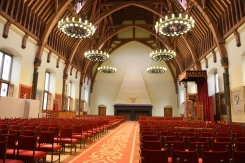
Every year on the third Tuesday of September, which occurred the following week in the nearby Ridderzaal (Great Hall), the King delivers The Speech from the Throne. Wout and I happened to walk by after the room was set up for the event and on public display.

Ridderzaal

[Ridderzaal]

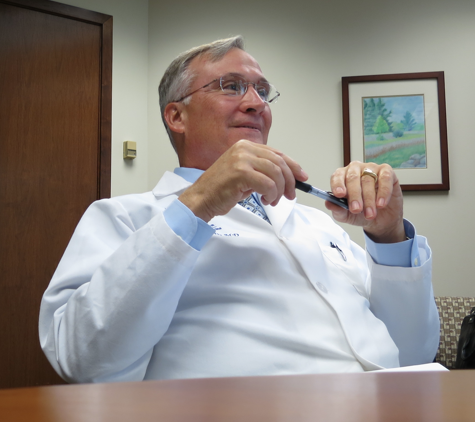
This Dutch tradition is mirrored in the State of the Union address in the United States, and in the annual State of the Medical School speech at our local level in Ann Arbor. Jim Woolliscroft (seen below), our medical school dean performed this task admirably for nearly a decade, just as Allen Lichter had done as our previous dean. Both were great leaders, colleagues, physicians, and educators. They have my greatest admiration for their work in guiding the UMMS through challenging times. Marschall Runge is amply up to the task for our next big steps as an academic health care enterprise in the new combined role.

Screen shot 2015-09-20 at 9.12.24 AM


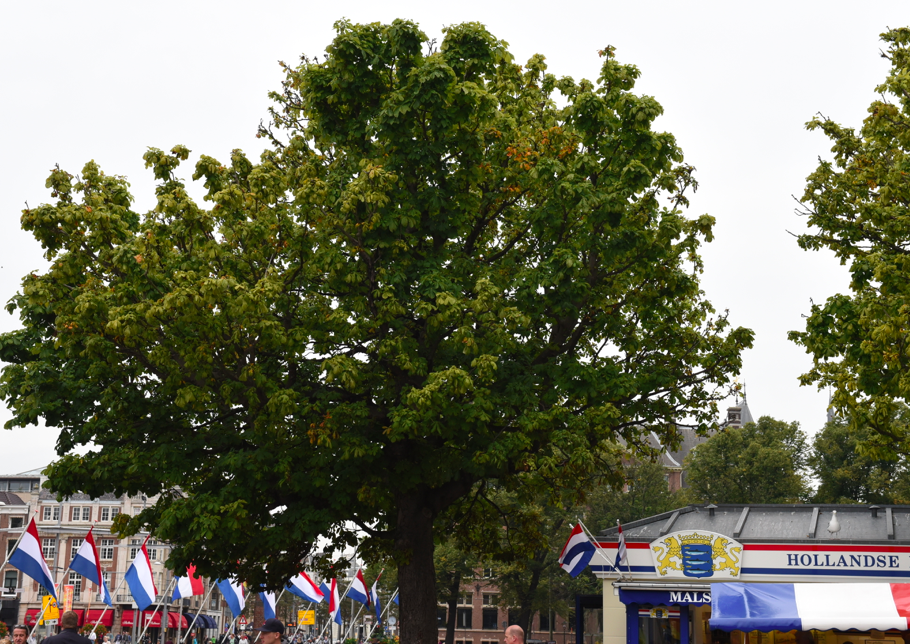
The trees in the Netherlands during my recent visit had just a few patches of autumn colors, although some leaves had already changed enough to detach and fall.

Hague tree

[Above: tree with patch of yellow. Below: early leaves on the ground near Binnenhof]

Hague leaves

From the air as I left the Netherlands the long-lasting and combined effects of those primeval cellular meals of chloroplasts and mitochondria were in full display on the ground below. The green landscape is an obvious credit to the chloroplasts, however the fact that a large percentage of the land, although actually below sea level, is now dry land must be attributed to mitochondrial life forms, especially ours. Thanks to human ingenuity and industry 17% of the Netherlands surface area has been reclaimed from the sea and only 50% of the country’s land is over a meter above sea level. Out of my view from the air and during my brief visit to Holland was the immediate staggering refugee crisis, in Europe below and the world at large. A recent JAMA viewpoint from the UN High Commissioner’s Office on the state of the world’s refugees is worth reading [Spiegel. JAMA 314:445] The UN Refugee Agency counts 60 million forcibly displaced people worldwide at this date and half of them are children. This situation must be charged to the mitochondrial side of the Earth’s ledger and those sorry stories of our failures as a species continue to reshape the planet.

Syrian toddler

[Syrian toddler – heartbreaking picture from last month’s news compelling our attention or detachment]


Postscript. It’s been a busy month academically and just last week I had the honor of being the Lloyd Visiting Professor in Portland, Oregon as a guest of Steve Skoog, John Barry, and Chris Amling. It is a great, storied department and excellent residents presented complex cases. I was mercifully given most of Friday morning off, allowing me to watch the televised visit of Pope Francis to the September 11 Memorial in NYC. The interfaith prayer service was remarkable with its rich array of colors and beliefs, connected by a shared overarching faith in mankind. The Pope’s presence and his comments offer inspiring counterbalance to the sobering image above and destruction memorialized at the Twin Towers sites. The multicultural colors assembled at that prayer service, symbolizing the rich potential of mitochondrial life and humankind, are the most impressive colors of this autumn.

Screen Shot 2015-09-25 at 7.42.50 PM


Thanks for reading What’s New, a posting from the University of Michigan Department of Urology, and Matula Thoughts, its blog version (matulathoughts.org). More on the department can also be found at: medicine.umich.edu/dept/urology.

David A. Bloom

Matula Thoughts September 4, 2015

DAB What’s New/Matula Thoughts September 4, 2015


Matula Thoughts Logo1

Labor & laborers: “Individual commitment to a group effort – that is what makes a team work, a society work, a civilization work.” Vince Lombardi

[This monthly email to faculty, residents, staff, alumni, and friends of the University of Michigan Medical School Department of Urology is alternatively published as an email called What’s New]

3914 words

 1.    September returns a serious tone to the calendar and recent world market volatility adds to the sobriety. With vacations over we buckle down to the work of a new academic year in our evolving academic medical center. The fiscal year has already been in play for 2 months and the numbers look good so far.

Screen Shot 2015-08-29 at 11.51.55 AM

Our Faculty Group Practice, now known as the UMMG (UM Medical Group), is figuring out how to deliver the best care we can in nearly 150 Ambulatory Care Units attuned  to our other missions (education and research), to our inpatient functions, and to the needs of our environment. The UMMG Board meets monthly and delegates operational details to 4 key committees (Executive Committee, Budget & Finance Committee, Clinical Practice Committee, and the Bylaws Committee). [Picture above: David Spahlinger our Executive Associate Dean for Clinical Affairs and Director of the UMMG with Philippe Sammour, Senior Project Manager UMMG. Picture below: UMMG Board of Directors – August 2015]

Screen Shot 2015-08-29 at 11.34.38 AM

The UMMG is a multispecialty group practice of more than 2000 faculty with many other providers and staff in well over a hundred specialties and areas of precisely detailed expertise. The coordination of all these practices among our clinical departments and within our health system at Michigan is a work in progress – and the progress is good. As large as we are, however, we are too small to fulfill the expectations of the patient population we serve today and too small for our research and educational aspirations for tomorrow. Given a steady increase in clinical volume of 6% a year for many years, without infrastructure growth to match, we find ourselves deficient today in terms of clinic facilities, hospital beds, operating rooms (12 short by recent analysis of our daily needs), faculty (at least 250 FTEs short for today’s clinical volume), faculty offices (550 too few today), etc. We also fear that we may be too small to matter in the grand scheme of health care as it is evolving nationally in the face of the Affordable Care Act and the consolidation of networks. In spite of all these problems we are still pretty good compared to our peer institutions as things stand, although modest impending changes in our health system structure and governance will likely bring us much closer to realizing our potential as an unsurpassed integrated health care system and academic medical center – an effective team, a leader, and one of the few truly best. At the University of Michigan we often refer back to our great coach, Bo Schembechler, for his inspiring phrases, notably: “The team, the team, the team.” A fellow great coach, Vince Lombardi who died 45 years ago as of yesterday, echoed some of the ideas of Adam Smith the lead quote this month.

2.     September began last Tuesday and meteorological autumn in the Northern Hemisphere starts this month. Farmers traditionally begin the harvest, schools come into session, and the workday, as we noted, becomes a little more serious. Labor Day anticipates the seasonal transition and brings to mind Adam Smith who famously observed (with the examples of the butcher, the brewer, and the baker) that civilization requires specialization of work, although two millennia earlier Hippocrates made a similar recognition that medical practice requires specialization. In the Hippocratic world that first particular brand of work happened to be urology, manifested back then as lithotomy – the cutting for (bladder) stone. Were Hippocrates to visit us today at UMMG in a time machine, the only specialty he would recognize out of the hundred plus areas of practice would be urology – the single specialty he deferred to “specialists of that art.” The knowhow involved with cystolithotomy was rightly described as an art, just as the practice of medicine today is often still called an art. Artists go even further back in time: cave-dwelling paintings, long before Hippocrates, prove visual artists were among the earliest branches of the human labor force.


3.    Sept Heures

We previously have commented on the beautiful monthly panels illustrated by the Limbourg brothers in a book of prayers called The Très Riches Heures du Duc de Berry. Brothers Herman, Paul, and Johan were Dutch miniature painters from the city of Nijmegen active in early 15th century in Europe. Like Diego Rivera, closer to our time, the brothers travelled to the best sponsors who could commission their art. In 1416 the artists and the Duke of Berry died abruptly (likely from a plague pandemic) and their ambitious Très Riches Heures was completed by others. The September panel, shown above, features a harvest with 5 people picking grapes, while a man and pregnant woman seem to be supervising (the managers?). The grapes are placed in baskets, transferred to mules, then moved to oxen carts. Presumably the actual wine-making processes took place within the castle walls along with other trades and crafts. A fair degree of work specialization was evident at the Castle of Saumur there in the France’s Anjou wine region. Worker productivity was of immediate concern to the Duke or whoever was in charge of the castle, with carrot and stick as the time-honored means of motivation.

 Feb 1848

[February Revolution in Paris at l’Hôtel de Ville. HFE Philippoteaux at Carnavalet Museum]

It was over 500 years later in France before the rights of workers achieved their due attention. The head rolling of the French Revolution was evidence of the disequilibrium between workers and those in charge of them, but it was not until 1864 that French workers obtained a legislated right to strike and in 1866 the right to organize. Louis-Napoleon Bonaparte, nephew of his namesake, was the force behind these workers’ rights. His big moment had come in 1848 when the February French Revolution (an aftershock of the big one in 1789) allowed him to change places in exile in England with the deposed King Louis Philippe who had lost the trust of the citizens. Louis-Napoleon then became France’s first president by popular vote in February, 1848. When his term of office ended in 1852 and he found a second term blocked by the Constitution and Parliament, Louis-Napoleon conveniently organized a coup d’etait, re-naming himself Napoleon III and reigning as Emperor until 1870 (coincidentally wrapping up that term on this calendar day – September 4).

Napoleon III

[Napoleon III by A. Cabanet. At Musée du Second Empire. Compiègne]


 4.     In the heyday of industrialization some types of work were especially dangerous and abusive, although workers had little recourse to ask for safe conditions or fairness. Labor unions arose to occupy the need to balance the worker and employer disequilibrium. Labor Day, to be celebrated next Monday, is a marker for this necessary balance. Forward-looking businesses today embrace the belief that workers themselves are the best source of workplace knowledge and have the best motivation to make better products, with greater efficiency and greater satisfaction for critical stakeholders. This idea is intrinsic to lean process systems that represent the newest evolutionary step in the human labor force. Enlightened leaders have come to realize that the health and happiness of workers are linked to productivity, but more importantly are human rights as well.

Unionization of dangerous occupations makes more sense than unionization of less risky trades – think mine workers versus postal workers – yet, work is work and few can argue that any worker can be abused by any manager or any system. The recent exposé of alleged management abuse of workers at Amazon illustrates this point. Nonetheless, unionization of white collar cognitive professions takes some explanation for, by their very nature, professions have their own intrinsic protections. When professions are commoditized, however, and their members believe themselves treated poorly, unionization becomes a rational step. Unionization of professions might not be necessary in a perfect world, but this world is far from perfect. The Eastern Michigan University faculty are unionized, for example, while the University of Michigan faculty are not. While I am no authority on the EMU story, that particular unionization was likely a direct result of faculty grievances against past administrations. At the University of Michigan, though, the nurses, houses officers, many hospital employees, graduate students, and lecturers are represented by unions. The bottom line is the old story that power has a corruptive tendency and a just equilibrium must exist between labor and management.

EMU AAUP

[Ann Arbor News, August 12, 2015. The 690 EMU AAUP Professors reach a tentative agreement for annual 2.5% raises, changes in health care payments, administrative support, and research incentives]

Administrators and leaders can become self-important and smug (urology chairs are not immune). In the words of the respected Stanford business professor, Robert I. Sutton, some managers are worse than jerks, if you accept the use of his term in his book title.

Sutton RI

[Sutton RI, The No Asshole Rule. 2007 ]


5.     All people, governed or managed, need to believe that they are being treated fairly and that their voices are taken seriously by leadership. No employee can expect to agree with all organizational decisions, but an overall sense of fairness and responsiveness to individual opinion must pertain. Fairness is a fundamental human belief, evident too in many of our fellow primates plus some other mammals, but unique for humans among the eusocial species (bees, ants, etc.), as mentioned here last month in regard to E.O. Wilson’s work. Beliefs and language govern us with greater sophistication than the governance by pheromones and patterned behaviors of the other eusocials. We shouldn’t disparage pheromones, however, as they provide colonies the ability to react to observations of its individual members monitoring the challenges and opportunities of the environment. In this way the colony becomes a superorganism. We humans have infinitely greater communication tools to govern and regulate ourselves using facial expressions, noise, language, audible conversations, writing, music, visual art, customs, manners, beliefs, laws, and other ways of conveying information. When the public shares a general perception of fairness, civil harmony is likely to pertain, if not hell can break out. Just as corrosive to society as abusive work, perhaps even worse, is the inability to find work. A few weeks ago I heard the author Walter Mosley being interviewed on NPR by Renee Montagne about his experiences as a 12-year old boy in Watts during the riots of 1965, just 50 years ago. Mosley said, simply: “You could feel the rage”  – a statement capturing the raw emotion that exploded on the streets after a young man was arrested for drunk driving. [NPR. Morning Edition. Renee Montagne: Walter Mosley remembers the Watts Riots. August 13, 2015] Ten years after the riots I rotated from UCLA to Martin Luther King, Jr. Hospital in Watts and the effects of the riots were still present physically on the streets and emotionally among the people. My time at MLK was personally and educationally a good experience, I liked the hospital and its gritty esprit d’corps. It was quite a contrast to UCLA’s upscale Westwood campus. The full time staff at MLK felt a part of the community, where the daily struggles were still too often very raw. I didn’t fully understand the rawness then. A new book, Between the World and Me, by Ta-Nehisi Coates however, brings one closer.


6.     The first French Revolution of 1789-99 was not the only time in history when it people’s opinions mattered and we see evidence of the power of public opinion again and again. Wise political leaders, administrators, and managers understand that protests, strikes, riots, civil disobedience, or revolutions are unfortunate recourses when public opinion and leadership clash. Political lobbying, referendums, and orderly change of representational governance are more civilized, kinder, and less wasteful. Opinion surveys are another tool to understand stakeholders, with the first documented opinion poll occurring in 1824 when a Pennsylvania “straw poll” found Andrew Jackson leading John Quincy Adams 335 to 169 in the presidential race. Jacksonian democrats thought they had the election in the bag.

John Quincy Adams

[JQ Adams’ daguerreotype c. 1840s; Smithsonian Archives. Although Jackson had more popular votes and expected to win, Adams, a great statesman and politician, gained the support of Henry Clay to win the presidency, serving from 1825 to 1829, when Jackson finally gained the position]

A straw poll is a figure of speech referring to a thin plant stalk held up to the wind of public opinion to see which way it is blowing. George Gallup in Iowa in 1936 added science and statistics to the methodology of opinion sampling. Elmo Roper and Louis Harris entered the field of predictive polling around that time. Perhaps the darkest day for that business was the mistaken prediction of Thomas Dewey’s “defeat” of Harry S Truman in the 1948 presidential election by 5-15 percentage points. Although Gallup explained his error by noting that he concluded polling three weeks before election day, his humiliation endured, demonstrating to us once again that numbers are mere human inventions that may (or may not) approximate reality. All data must be viewed with suspicion, no numbers or numeric manipulations are sacrosanct.

 Deweytruman12

Some thoughts on surveys, but first, a disclaimer: I don’t like spending time on surveys and am quick to delete requests for them in my email. Personal bandwidth in this “age of information” is crowded and in clinical medicine the crowding is especially intense. Last winter I decided to try to list email requests for surveys consecutively over the prospective calendar year, but my effort lasted less than 3 weeks. I gave up after more than 2 dozen such well-intended requests whether from the medical school, the health system, the university, colleagues from other institutions, my professional organizations, etc. The proliferation of surveys, however, is not a bad thing, but rather a reflection of democratic society; others care what we think. Many stakeholders in our work and community want to assess their services to us and hope to discover our opinions of their contributions. The fundamental problem is not their curiosity, but rather our limited bandwidth. No one can satisfy all the requests: you must pick and choose.


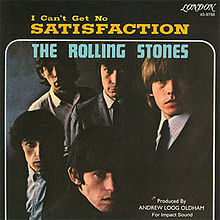
 7.     Just about 50 years ago at this time of year, the Rolling Stones released their hit song “I can’t get no satisfaction.” Written by Mick Jagger and Keith Richards the lyrics referred to sexual frustration and commercialization.

220px-Satisfaction-us

Who would have believed that 50 years later the matter of satisfaction in health care (on the part of patients, providers, and employees) would be major matters of national attention? When I was an associate dean, Gil Omenn and Doug Strong asked me to create a faculty satisfaction survey. After a few reminders, I did this with Skip Campbell, aiming for a very brief set of less than 10 questions to assess satisfaction of the faculty regarding their work and environment. To convince faculty to fill this out we sent out a cogent personal initial request with a few reminders and provided a generous window of time. The response rate turned out quite good. Widespread dissatisfaction was discovered concerning the faculty’s ability to deliver the clinical care they deemed appropriate. This data was an important factor in shaping the transfer of ambulatory care management from the hospital administration to a “faculty group practice.” The information obtained also gave the dean an ability to assess the general “faculty temperature” and understand relative degrees of satisfaction in each department. Since then, the faculty satisfaction survey has been shaped to ascertain more granular information at specific worksites and it has grown in size and complexity. Currently at Michigan we have a number of additional  “satisfaction” surveys, but the following ones affect us most directly.

a.)     Faculty satisfaction survey. Take this one seriously – it is important to us. Variances from our past numbers or from other departmental data are  analyzed carefully by the dean, leadership, and our fellow departments.

b.)     Employee satisfaction survey. This gauges how the tens of thousands of employees in the medical school and health system view their work lives and work places. We examine the details at many levels in our administrative hierarchy. The dean also discusses this data with chairs in the yearly evaluation process.

c.)     SACUA administrators survey. This comes from the University of Michigan Faculty Senate and queries faculty about their immediate administrators (in our case, this is me) and all the others in the long line to and including the president. Medical School participation in this has generally been weak, perhaps indicating faculty sense of remoteness from the central campus.

d.)     Patient satisfaction surveys are increasingly tied to clinical re-imbursement. Initially the UM Health System used Press Ganey surveys of patient encounters. This company has a 30-year history of healthcare experience and the consistency of data was useful for year-to-year comparisons, but we are now constrained to switch to the HCAHPS (Hospital Consumers Assessment of Healthcare Providers and Systems) survey, provided by vendors on behalf of CMS. The change disconnected us from our historic data. HCAHPS queries a random sample of patients 48 hours – 6 weeks after discharge and asks 27 questions related to their hospital experiences.

e.)     Those pesky reputation and quality surveys.  The US News and World Reports surveys not only rescued a dying newsmagazine, but also galvanized attention and resources of every major health care system and medical school in the country. How do we stand in 2015 national rankings?  Our Department of Urology is number 10 nationally.

Retreat

[Above: Urology Department Spring Retreat, realigning ourselves and listening to each other]

Our Medical School stacks up as #5 for primary care and #10 for research.  Our Hospital ranked number 10 in pediatric specialties and number 11 in adult specialties (in spite of our stubborn determination over the past 16 years to avoid joining the “nurse magnet hospital” list).

Recent “quality” ratings such as ProPublica are attracting attention. These low hanging fruits of public data commercialization to date offer incomplete information and lack meaningful context. While these products may have commercial and titillational value, on the scale of meaningful data so far they set the bar at the left end (near zero) of the Likert Scale. By the way, the originator of the Likert Scale, Rensis Likert, was a UM alumnus who died 34 years ago as of yesterday (September 3, 1981) at age 78 of bladder cancer here in Ann Arbor. He is buried at Forest Hill Cemetery, just a short walk from our offices. More on him in a future What’s New/Matula Thoughts.


8.     It is wonderful to see a resurgence of high quality labor in Detroit and Shinola is a premier example. Shinola shoe polish originated as a brand in 1907, was trademarked in 1929, and became popular during WWII.  Anyone who was in the military then and for a generation thereafter usually had a can of shoe polish at hand because shoes were expected to have a high shine, outside of combat conditions. A spit shine was literally obtained by spit. (When I was in the Army, however, newer permanently glossy black shoes became available and all you had to do was wipe them clean.) During WWII a colorful phrase developed around Shinola, although its author will probably remain forever unknown. The phrase compared Shinola to a bodily output usually more formed than spit, although much less acceptable in public, even at baseball games or on sidewalks. The phrase established a basic measure of intelligence as the ability to discern that aforesaid product of elimination from Shinola shoe polish. The concept was captured beautifully in a scene in the classic film, The Jerk, with Steve Martin. [The Jerk, 1979, Directed by Carl Reiner] Anyway, in 2001 a venture capital firm in Dallas, Bedrock Marketing, acquired the name Shinola and began manufacturing watches, bicycles, the shoe polish, and leather products – all made in America and usually in Detroit. The company also produces a high-quality note pad that, unlike that of most competitors, has paper that doesn’t “bleed” with fountain pen ink. The pads are made here in Ann Arbor by Edwards Brothers-Malloy. Shinola headquarters in Detroit is in an Alfred A. Taubman Building. Of course that building’s name is well represented on our University of Michigan campus and especially in the medical school. Alfred passed away last year after an extraordinary life that continues to impact us so positively on our campus.


9.    Shinola

In this era of expensive but disposable athletic shoes, the well-shined shoe is less common than in the first Shinola era. My old chief of surgery at UCLA, Bill Longmire, would express visible distaste for sloppiness among his house officers, and sloppy shoes were quick to catch his eyes. Army experience made me an average shoe shiner and I still keep polish and a brush in the office. When I am on the road as a “travelling salesman” on behalf of our department I generally give myself time at the airport to see Rick Jackson, a shoe professional I’ve known for 30 years. Rick is at his job daily opposite gate 47 in Detrot’s McNamara Terminal and one of his chairs is my preferred place to sit and converse while at the airport. Rick also keeps track of fellow traveller urologists, such as Mani Menon. Stop by sometime and let Rick make you look more presentable. [Below: our own Gary Faerber and Dan Hayes of Hematology Oncology with Rick]

 Rick


10.    Historically in the University of Michigan Health System, as well as at most other large health care systems, health care workers labored in disequilibrium with administration. All well-intended specialists in the health care labor force (physicians, nurses, managers, residents, hospital employees, researchers, administrators, unionists, etc.) pushed their agendas, but too often the ultimate agendas of patient care, education, new knowledge, and worker satisfaction were side-tracked. Full and effective faculty participation in the daily management of clinical work as well as strategic planning and deployment was an idea advanced here in the 1990s by Mark Orringer, but soundly rebuffed by the dean and hospital administration back then. The concept had legs, as it might be said, for it is a sensible Darwinian evolution and certainly in tune with the modern industrial ideas of lean process systems. The Faculty Group Practice (FGP) emerged around a decade later and has proven successful in its limited application to our ambulatory (outpatient) activities. In practice, however, the division of clinical work into ambulatory and in-patient spheres is artificial and ultimately counter-productive to our real goals of clinical excellence, safety, efficiency, ideal patient experience, education, new knowledge, and ultimate job satisfaction for all employees. With our current EVPMA, Marschall Runge, we sense new alignment of our health system structure and governance. (Marschall, by the way, is the grandson of a 1918 UMMS alumnus.) The FGP, now the University of Michigan Medical Group (UMMG), hopes to be a cornerstone in the alignment of all essential facets of our academic medical center to fulfill those elusive goals of clinical excellence and mission optimization as mentioned above. We should be able to accomplish this here at Michigan as well or better than any other place on the planet. Our history has set that precedence, our people are as good as they come, and we have, I hope, the collective will and drive to come together and get it done now that September is here.  

 Runge, Johnson

[Two UM health care laborers, a cardiologist and a gynecologist/obstetrician: Marschall Runge & Tim Johnson]


Best wishes, thanks for reading What’s New/Matula Thoughts and happy Labor Day.

David A. Bloom